admin
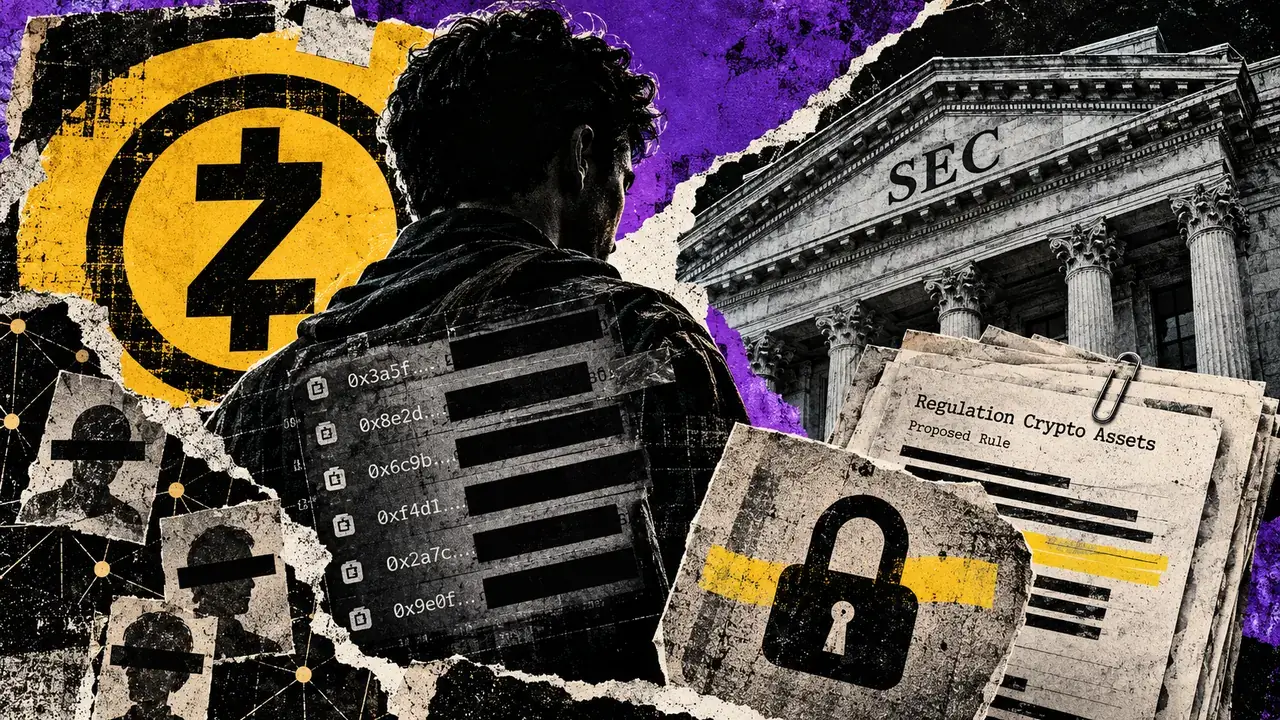
A prominent Zcash policy advocacy group has formally requested that the U.S. Securities and Exchange Commission (SEC) revise its proposed framework for crypto asset disclosures, arguing that token issuers should be able to substantiate their fundraising claims without being compelled to reveal unrelated wallet activity. This submission by Pretty Good Policy for Zcash (PGPZ) presents a real-world test for the SEC’s nascent regulatory approach, particularly concerning the financial privacy arguments previously articulated by former SEC Commissioner Paul Atkins. In a detailed Oct. 20 filing, PGPZ contends that the evidence required to verify fundraising claims should be narrowly focused on the assertions themselves, rather than demanding an unfettered view of an issuer’s entire financial history.
The core of PGPZ’s argument centers on the distinction between proving adherence to a network’s rules and demonstrating the responsible allocation of investor capital. The group emphasizes that merely verifying that a transaction complied with a blockchain’s protocol does not, in itself, answer the critical question of how an issuer utilized investor funds. Consequently, PGPZ asserts that traditional accounting records or other forms of financial evidence may still be indispensable for a comprehensive assessment.
This stance echoes sentiments previously expressed by former Commissioner Paul Atkins, who, in remarks on December 15, articulated a vision for regulatory tools that could facilitate compliance verification while safeguarding financial privacy. Atkins highlighted technologies such as zero-knowledge proofs, selective disclosure mechanisms, and innovative wallet designs as potential avenues for demonstrating adherence to regulations without necessitating the surrender of an entire financial ledger. It is important to note that at the time of his remarks, Atkins explicitly stated that his views were personal and did not necessarily represent the official position of the SEC or its other commissioners.
PGPZ’s submission seeks to imbue this privacy-conscious approach with concrete policy directives. The group advocates for public disclosures that meticulously detail material holdings and potential conflicts of interest, supported by evidence that specifically substantiates these claims without inadvertently exposing unrelated financial activities. They are urging the SEC to codify this precise methodology into its final regulations.
As of October 26, the SEC’s official docket still categorized "Regulation Crypto Assets" as a proposed rule, with the October 20 comment deadline having passed. PGPZ’s suggested protections, therefore, represent recommendations for the final rule text, rather than an established compliance pathway. The proposed rule, issued on August 18, aims to create exemptions for certain cryptocurrency offerings. It outlines a startup exemption for offerings up to $5 million over a four-year period and a broader fundraising exemption for amounts up to $75 million over 12 months. Issuers qualifying for these exemptions would benefit from a streamlined path around traditional securities registration requirements, although they would still be subject to disclosure mandates and federal anti-fraud and anti-manipulation provisions.
Disclosure Requirements Under Proposed Rule 103
The proposed Rule 103 would establish narrative disclosure requirements for issuers leveraging these exemptions. Specifically, paragraph (b)(7) of this rule addresses material token economics and allocations. This section mandates disclosures concerning token supply, pricing strategies, lock-up periods, distribution methodologies, holdings of related persons, and schedules for token releases. Furthermore, it requires descriptions of the mechanisms employed for generating and destroying tokens, alongside methods for verifying their transaction history.
Beyond token-specific details, other provisions within Rule 103 cover the intended use of proceeds from offerings, information about the issuer’s management team, details of related-person transactions, and identified conflicts of interest. Requirements also extend to the description of any transfer or resale restrictions applicable to related persons’ holdings.
Crucially, Rule 103(a) introduces flexibility by allowing disclosures to be tailored to the specific circumstances of the issuer. It stipulates that disclosures need not be provided if a particular requirement is not applicable or if the responsive information is not known or reasonably available.
PGPZ’s Focus: The Privacy-Conundrum in Verification
PGPZ’s submission zeroes in on a critical tension within the proposed disclosures: the extent to which underlying financial activity must be made public to render an issuer’s account meaningful. While a description of token supply can offer a foundational understanding, it can be significantly diminished in value if it omits material insider allocations or conflicting interests.
The Zcash policy group argues for a specific instruction that explicitly permits the use of accounting records, cryptographic proofs, and selective disclosure of relevant records. They propose that issuers should be required to explain the purpose of the chosen verification method and acknowledge its limitations.
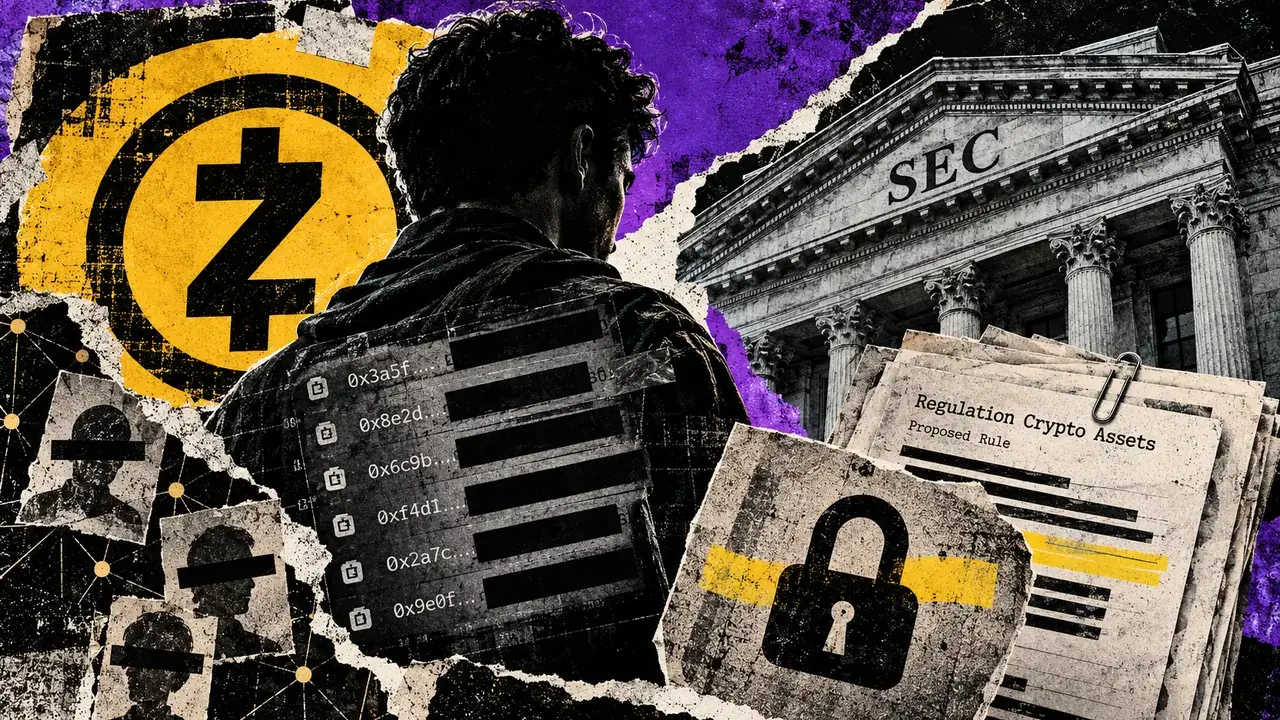
The group’s rationale is that a transaction’s compliance with network rules does not inherently resolve the issuer-accounting question concerning the use of investor funds. PGPZ posits that accounting records or other distinct financial evidence are often necessary to substantiate these claims. Therefore, they advocate for a model where privacy-enhancing technologies can coexist with conventional financial records, with the choice of evidence being dictated by the specific assertion being made.
PGPZ’s request aims to draw a clear distinction between the information investors require in public disclosures and the supporting records that auditors or regulators might need to examine. Their submission explicitly upholds applicable audit standards, suggesting that the intended audience for the evidence should be a factor in its selection, alongside the factual assertions it aims to prove.
A significant concern raised by PGPZ is the potential for a cryptographic "key," even one that cannot be used for spending, to inadvertently expose extensive and unrelated financial activity. To mitigate this, they are requesting narrower forms of evidence rather than defaulting to broad key access. Furthermore, they seek clarification that the SEC does not intend to mandate the public disclosure of complete financial histories or the sharing of viewing and spending keys. Rule 103(b)(7) currently lacks an explicit requirement for the delivery of viewing keys, and PGPZ’s submission aims to clarify how the proposed verification language would be satisfied without such demands.
Navigating Privacy Protections within Public Disclosure Frameworks
The SEC’s proposed instructions for Form 1-CRYPTO Item 15 offer a potential avenue for privacy protection. This item permits the redaction of required exhibits where disclosure would constitute a "clearly unwarranted invasion of personal privacy," with crypto wallet addresses explicitly listed as an example.
PGPZ is urging the SEC to apply this privacy protection consistently across all Rule 103 disclosures, related forms, and associated websites. Item 15 also provides an alternative route for redacting specific terms within exhibits under paragraphs 6 or 7 if the issuer customarily and actually treats the information as private or confidential, and the omitted information is immaterial.
This privacy provision requires issuers to identify the redaction and use brackets to indicate where information has been removed. Commission staff would retain the authority to request unredacted copies and the issuer’s supporting analyses, with the potential to require the restoration of inadequately supported redactions. This framework aims to limit public exposure of sensitive information without placing the underlying records beyond the reach of regulatory scrutiny. It is important to note that this protection would not establish a general right to omit material narrative disclosures from other parts of the regulatory framework.
The final instructions would need to ensure consistency in the application of these privacy requests. PGPZ indicates its acceptance of aggregate amounts and narrative descriptions when these adequately explain holdings, relationships, and transactions, provided they do not obscure material concentrations, preferential terms, or conflicts of interest.
Where an individual’s identity is material or explicitly required by regulations, PGPZ’s submission suggests disclosing the identity while omitting unnecessary financial identifiers. The omission of an extraneous wallet address, for instance, could serve to protect unrelated activity. The critical condition, as articulated by PGPZ, is that investors must still gain a clear understanding of material relationships, concentrations, and conflicts.
Rule 103 is intended to apply to issuers utilizing the proposed exemptions. PGPZ, however, maintains its position that Zcash itself is not a security and explicitly does not assume that an organization within the Zcash ecosystem would necessarily require these exemptions or the associated safe harbor.
The SEC’s ultimate decision on how to address verification methods and privacy considerations within its proposed disclosure regime will be a significant indicator of the Commission’s commitment to balancing regulatory oversight with the evolving needs for financial privacy in the digital asset space. The fundamental test lies in whether founders can effectively safeguard unrelated financial activities while still providing investors with a credible and transparent account of their holdings, potential conflicts, and the utilization of invested funds. This ongoing dialogue between industry advocates and regulators underscores the complex challenges in crafting effective and equitable rules for the burgeoning cryptocurrency market.