admin
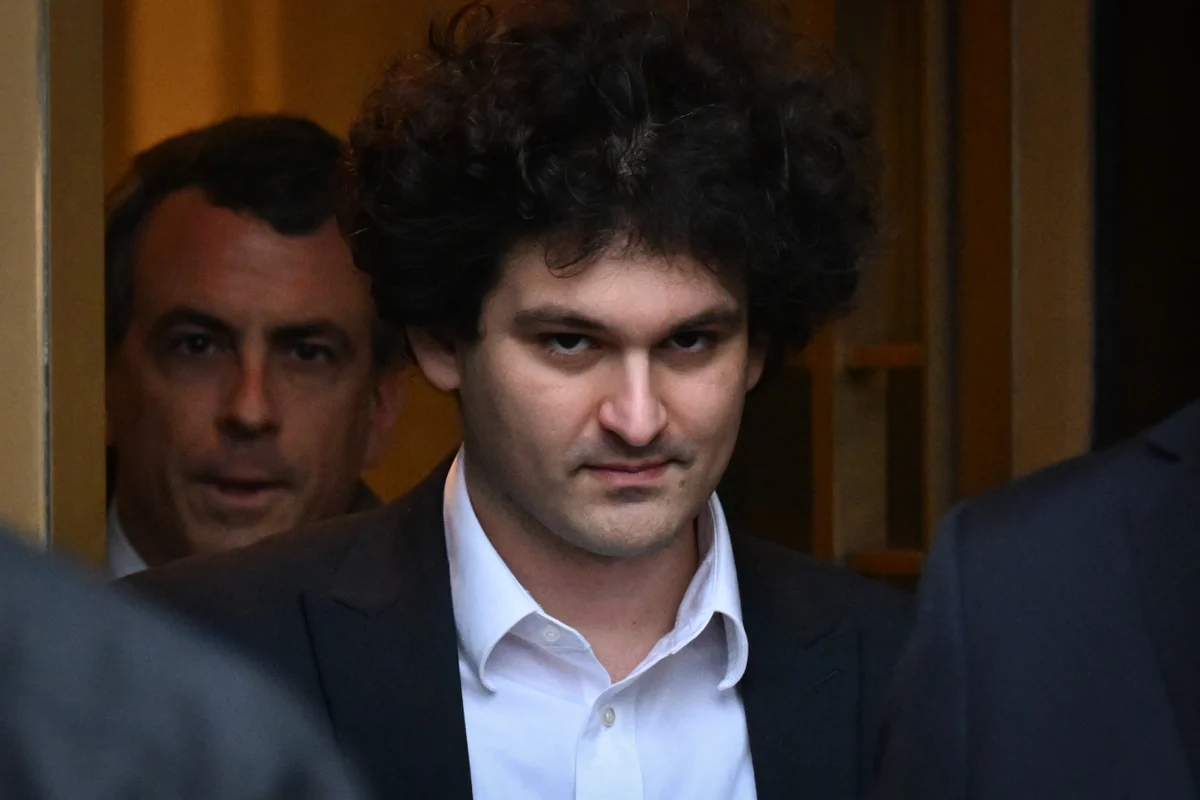
Sam Bankman-Fried, the disgraced co-founder and former CEO of the collapsed cryptocurrency exchange FTX, has officially submitted a petition for a presidential pardon to the United States Department of Justice’s Office of the Pardon Attorney. The application, which marks a significant turn in one of the most high-profile financial fraud cases in American history, seeks a reprieve from the 25-year federal prison sentence Bankman-Fried is currently serving. The move was first confirmed through the Justice Department’s public database and subsequently reported by Bloomberg News, signaling the beginning of a complex legal and political process that could redefine the boundaries of white-collar accountability in the digital age.
Bankman-Fried’s conviction in late 2023 and subsequent sentencing in March 2024 followed a whirlwind trial that exposed a multi-billion-dollar scheme involving the misappropriation of customer funds. As he now seeks a pardon from President Donald Trump, the case enters a new phase that intersects with the broader trends of executive clemency observed during the current administration’s second term. With the federal government having already granted hundreds of pardons—many to individuals convicted of significant financial crimes—Bankman-Fried’s request poses a critical question regarding the consistency of the American justice system and the influence of political considerations on criminal sentences.
The Conviction of a Cryptocurrency Titan
The legal troubles for Sam Bankman-Fried began in earnest in November 2022, when a liquidity crisis at FTX revealed a massive hole in the company’s balance sheet. Investigators quickly discovered that billions of dollars in customer deposits had been diverted to Alameda Research, a hedge fund also owned by Bankman-Fried, to cover trading losses, fund venture capital investments, and facilitate massive political donations.
In March 2024, U.S. District Judge Lewis Kaplan sentenced Bankman-Fried to 25 years in prison, characterizing his actions as a "brazen" and "extraordinary" fraud. The jury had previously found him guilty on seven counts of fraud, conspiracy, and money laundering. During the sentencing, Judge Kaplan noted that Bankman-Fried had shown a lack of genuine remorse and had committed perjury during his testimony. The judge also ordered a forfeiture of $11 billion, representing the scale of the losses incurred by FTX’s customers, investors, and lenders.
The 25-year sentence was seen by legal experts as a significant message to the burgeoning cryptocurrency industry. However, it fell short of the 40 to 50 years sought by federal prosecutors, who argued that Bankman-Fried’s conduct warranted a punishment comparable to those given to architects of the largest Ponzi schemes in history. Bankman-Fried’s defense team had argued for a much lighter sentence of roughly six years, citing his neurodivergence, his perceived intent to eventually repay customers, and the ongoing efforts of the FTX bankruptcy estate to recover assets.
A Chronology of the FTX Collapse and Legal Proceedings
To understand the context of Bankman-Fried’s pardon application, it is essential to trace the timeline of FTX’s rapid ascent and even faster disintegration:
- May 2019: Sam Bankman-Fried and Gary Wang found FTX, positioning it as an exchange "by traders, for traders."
- 2021 – Early 2022: FTX reaches a peak valuation of $32 billion. The company secures high-profile endorsements from athletes and celebrities and purchases the naming rights to the Miami Heat’s arena.
- November 2, 2022: A leaked balance sheet from Alameda Research reveals that the hedge fund is heavily reliant on FTT, a token created by FTX. This sparks concerns about the solvency of both entities.
- November 8, 2022: Binance, a rival exchange, announces it will liquidate its FTT holdings, triggering a massive "bank run" as FTX customers attempt to withdraw their funds.
- November 11, 2022: FTX, Alameda Research, and dozens of affiliated companies file for Chapter 11 bankruptcy. Bankman-Fried resigns as CEO.
- December 12, 2022: Bankman-Fried is arrested by authorities in the Bahamas at the request of the U.S. government. He is later extradited to the United States.
- October 2023: The criminal trial begins in New York. Former close associates, including Caroline Ellison and Gary Wang, testify against Bankman-Fried, alleging he directed the misappropriation of funds.
- November 2, 2023: A jury finds Bankman-Fried guilty on all seven counts after less than five hours of deliberation.
- March 28, 2024: Judge Lewis Kaplan sentences Bankman-Fried to 25 years in federal prison.
- Present: Bankman-Fried officially files for a presidential pardon through the DOJ’s Office of the Pardon Attorney.
Trends in Executive Clemency and White-Collar Crime
Bankman-Fried’s decision to apply for a pardon comes at a time when President Trump’s use of executive clemency has come under intense scrutiny. Data analyzed by NBC News indicates a notable trend in the types of crimes forgiven during the current administration. Since returning to office, the President has granted hundreds of pardons, with more than half of individual grants directed toward those convicted of white-collar offenses, including money laundering, bank fraud, and wire fraud.
This pattern represents a shift from traditional clemency practices, which often focused on non-violent drug offenses or cases of clear judicial error. The NBC analysis highlighted that many of the recipients of these pardons were individuals whose crimes resulted in hundreds of millions of dollars in financial damages. For Bankman-Fried, whose crimes involved billions, this precedent may serve as the foundation for his petition.
Furthermore, Bloomberg News has noted that a significant number of individuals pardoned by the President have historical ties to his political campaigns or have donated substantial sums to related causes. While Bankman-Fried was a prolific political donor—contributing tens of millions of dollars to both Democratic and Republican causes prior to his arrest—his team may face an uphill battle in framing his actions as worthy of a pardon, given the public outcry following the FTX collapse. Notably, unlike many other high-profile figures who have received pardons, Bankman-Fried followed the formal channel of applying through the Justice Department’s Pardon Attorney Office, rather than relying solely on direct informal appeals to the White House.
The Case for and Against Clemency
The pardon application likely rests on several key arguments that Bankman-Fried’s legal team has maintained since the beginning of the bankruptcy proceedings. Central to their narrative is the claim that FTX was not a traditional Ponzi scheme, but rather a mismanaged business that was "solvent" at the time of its collapse if given more time to liquidate assets.
The Restitution Argument
The FTX bankruptcy estate, led by CEO John J. Ray III, has made significant strides in recovering assets. Recent filings suggest that many customers may eventually receive a 100% recovery of their claims based on the value of their holdings at the time of the bankruptcy filing. Bankman-Fried’s advocates argue that if the "victims" are made whole, the 25-year sentence is disproportionately harsh. However, prosecutors and Judge Kaplan have countered that the "recovery" of funds is largely due to the rise in the value of remaining assets (such as Solana and AI startup Anthropic) and does not excuse the original act of theft.
The Political and Altruistic Context
Before his downfall, Bankman-Fried was the face of "Effective Altruism," a movement dedicated to using evidence and reasoning to figure out how to benefit others as much as possible. His supporters may argue that his intent was never personal enrichment, but rather the accumulation of wealth to solve global crises. Additionally, they may point to his cooperation with some aspects of the bankruptcy process as a sign of his desire to mitigate the damage.
The Opposition
Conversely, the Department of Justice and the Securities and Exchange Commission (SEC) have maintained that the severity of the fraud—involving the calculated deception of millions of people—requires a strict adherence to the judicial sentence. Opponents of the pardon argue that granting clemency to a billionaire who gambled with customer funds would set a dangerous precedent, suggesting that the wealthy can buy or lobby their way out of accountability.
Potential Implications for the Financial Industry
A potential pardon for Sam Bankman-Fried would have far-reaching implications for the cryptocurrency industry and the broader financial sector. It would likely ignite a firestorm of criticism regarding the "two-tiered" justice system, where corporate executives face different standards than ordinary citizens.
From a regulatory perspective, a pardon could complicate the efforts of the SEC and the Commodity Futures Trading Commission (CFTC) to enforce stricter oversight on digital assets. If the most high-profile perpetrator of crypto-related fraud is granted clemency, it may embolden other actors in the space to bypass traditional compliance measures, under the assumption that political intervention remains a viable exit strategy.
Furthermore, the impact on public trust in the financial markets cannot be overstated. The FTX collapse wiped out the life savings of thousands of retail investors. For many of these victims, the 25-year sentence represented a form of closure and a validation of the rule of law. A reversal of that sentence through a presidential pardon could be perceived as a betrayal of those who suffered the most from the exchange’s downfall.
Official Responses and Next Steps
The White House has not yet issued a formal statement regarding Bankman-Fried’s specific application. However, a spokesperson for the Department of Justice noted that all pardon applications undergo a rigorous review process by the Office of the Pardon Attorney, which then provides a recommendation to the President.
Legal experts suggest that the process could take months, if not longer. During this time, the Pardon Attorney will evaluate the nature of the crime, the petitioner’s post-conviction conduct, and the impact of the pardon on the public interest. Given the high-profile nature of the case, the decision will likely be made at the highest levels of the administration.
As of now, Sam Bankman-Fried remains incarcerated at a federal facility. His legal team continues to pursue other avenues of appeal simultaneously with the pardon request. Whether the President chooses to exercise his constitutional power of clemency in this instance remains one of the most anticipated decisions of his current term, one that will undoubtedly leave a lasting mark on the legacy of the FTX saga and the American legal system.