admin

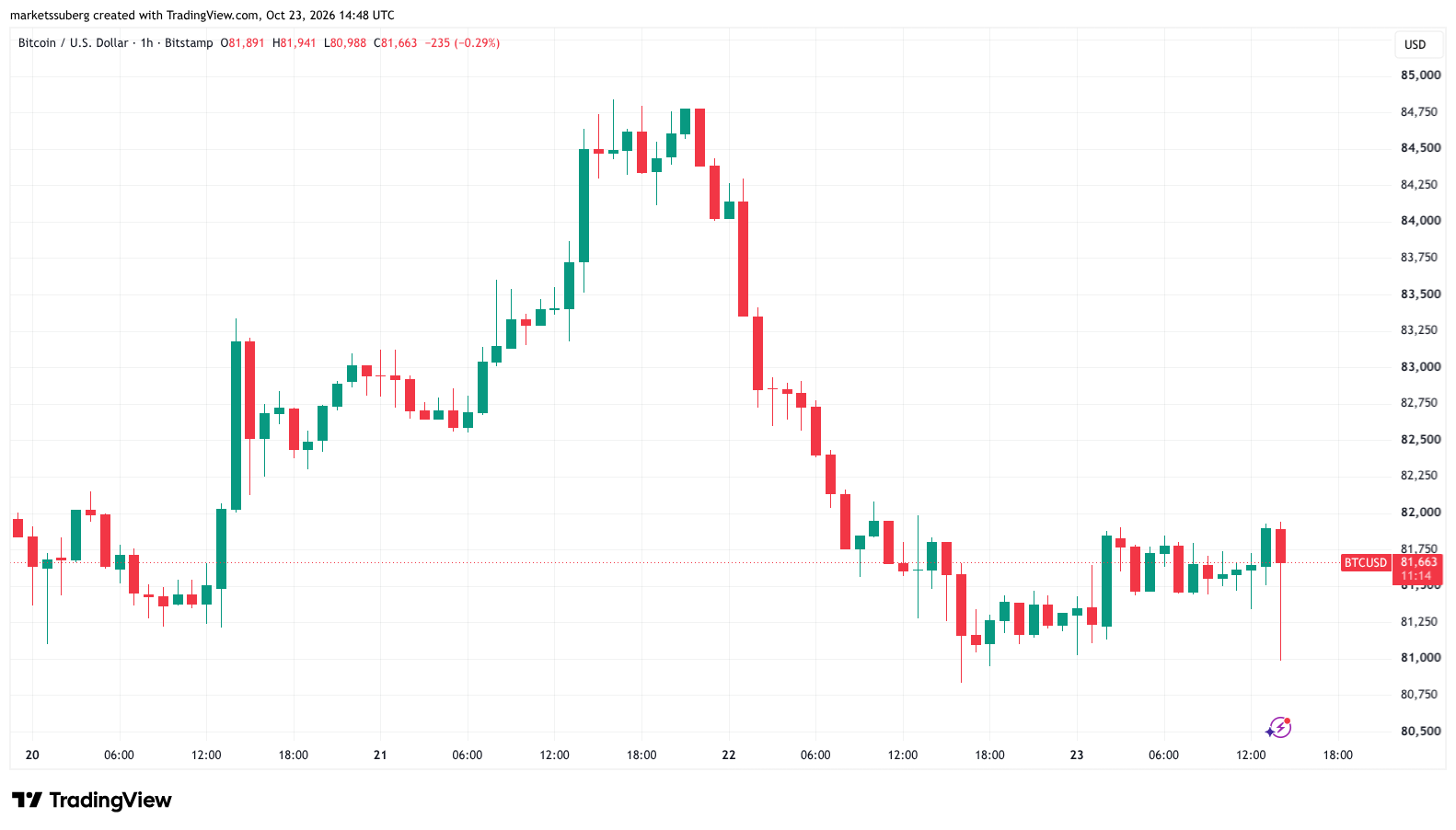
Bitcoin (BTC) experienced a notable decline, dipping below the $81,000 threshold on Friday following the opening of Wall Street, a movement observed concurrently with Brent crude oil ascending to new seven-month highs. This synchronized market activity underscored a period of heightened investor caution, driven by a complex interplay of geopolitical concerns, inflationary pressures, and shifting risk appetites across global financial markets. The leading cryptocurrency momentarily touched $80,988 before stabilizing slightly to trade around $81,600, reflecting immediate market reactions to the unfolding macroeconomic landscape.
Bitcoin’s Price Action and Key Technical Levels
The digital asset market, particularly Bitcoin, frequently exhibits sensitivity to broader macroeconomic trends and geopolitical developments. On Friday, the immediate impact was a swift downturn for BTC/USD, which, according to data from TradingView, momentarily fell to $80,988. This dip occurred swiftly after the Wall Street open, indicating a potential correlation between traditional financial market sentiment and cryptocurrency performance during periods of uncertainty. Following the initial sell-off, Bitcoin demonstrated a modest recovery, climbing back to approximately $81,600 as market participants assessed the evolving situation. This resilience, albeit slight, highlights the underlying demand and the presence of buyers ready to step in at perceived support levels.
From a technical analysis perspective, the $81,000 mark has garnered significant attention. Crypto trading platform Material Indicators cofounder, Keith Alan, highlighted that BTC/USD had slipped below its crucial 50-day Simple Moving Average (SMA), which stood at $81,781. The 50-day SMA is a widely watched technical indicator, often signaling short-to-medium-term trend health. A sustained break below this level can suggest a weakening bullish momentum or the potential for further downside. Alan noted that bulls were attempting to reclaim this trend line by the daily close, a critical maneuver for maintaining upward trajectory. Should this effort fail, he anticipated a potential retest of support within the $78,000 to $80,000 range, an area that technical analysts and traders would closely monitor for signs of consolidation or further breakdown.

Adding another layer of significance to this price range, earlier reports from Cointelegraph indicated that the zone between $80,000 and $81,500 represents the aggregate cost basis for investors in the spot Bitcoin exchange-traded funds (ETFs). This makes the area a psychologically and financially important support level. A break below this aggregate cost basis could trigger increased selling pressure from ETF holders aiming to limit losses, while a successful defense of this level would reinforce its importance as a foundational support for the current market cycle. The interplay between technical indicators like the 50-day SMA and fundamental investor cost bases creates a complex dynamic that influences Bitcoin’s short-term price movements.
The Geopolitical Undercurrents Driving Oil Prices
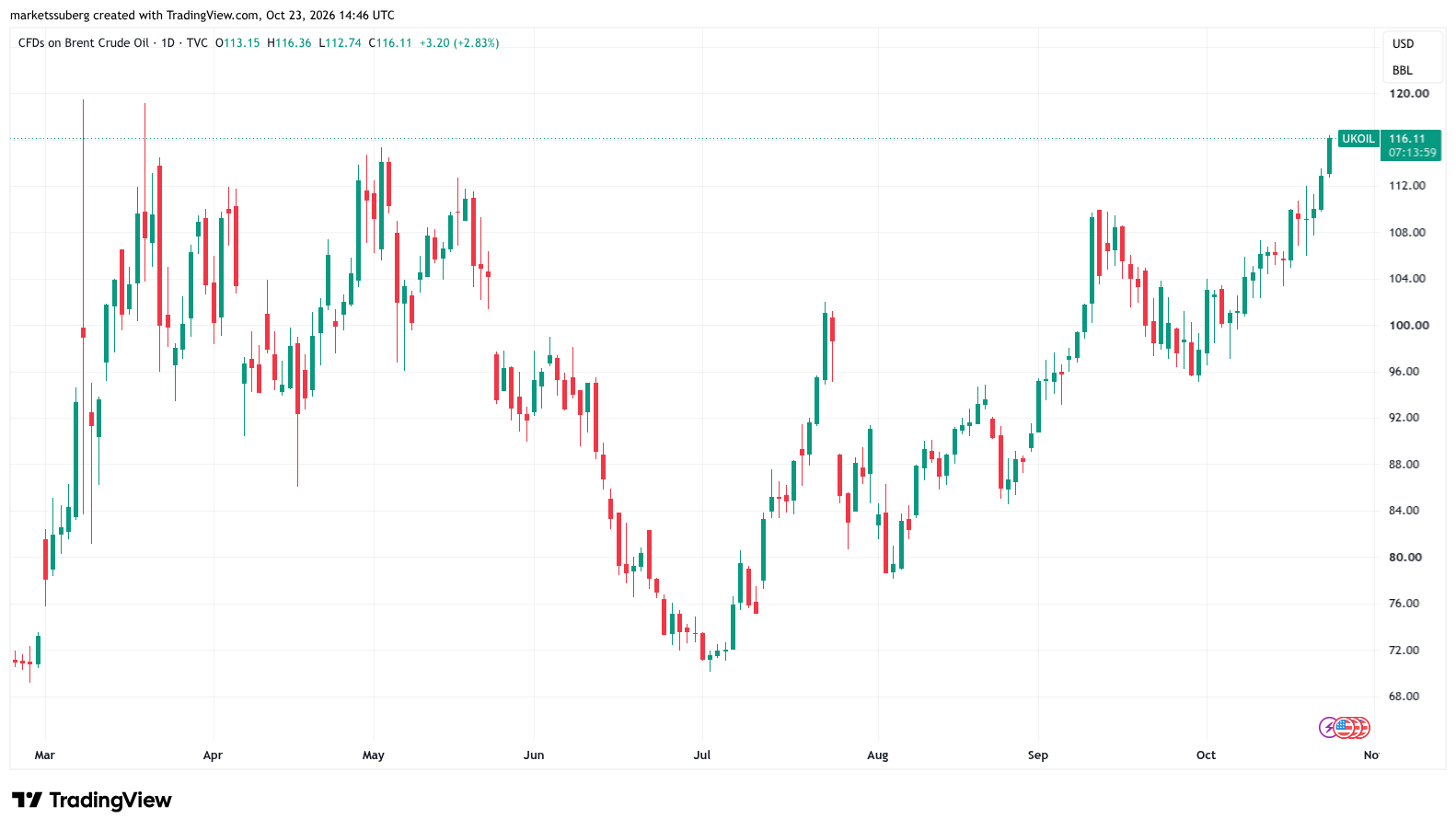
A primary catalyst for the observed market turbulence was the dramatic surge in global oil prices, which reached multi-month highs. Brent crude oil, the international benchmark, saw a sharp rise of nearly 3%, climbing to $116 per barrel – a level not witnessed since mid-March. Simultaneously, West Texas Intermediate (WTI) crude, the U.S. benchmark, surged past $102 per barrel, marking its highest point since September 16. This significant upward movement in oil prices was largely attributed to escalating geopolitical tensions, specifically concerns surrounding potential renewed military strikes involving the United States and Iran, particularly as midterm elections approached.
The historical context of U.S.-Iran relations and their impact on global energy markets is crucial for understanding this surge. Iran, a major oil producer, is strategically located along the Strait of Hormuz, a critical maritime chokepoint through which a substantial portion of the world’s seaborne oil passes. Any perceived threat to stability in this region or potential disruption to oil flows can trigger immediate and substantial price hikes due to supply concerns. The specter of renewed military action, even if speculative, injects a significant "risk premium" into oil prices, reflecting traders’ fears of supply chain disruptions, increased production costs, and reduced availability. This geopolitical risk premium tends to overshadow fundamental supply-demand dynamics in the short term, driving prices upward irrespective of actual physical flows.
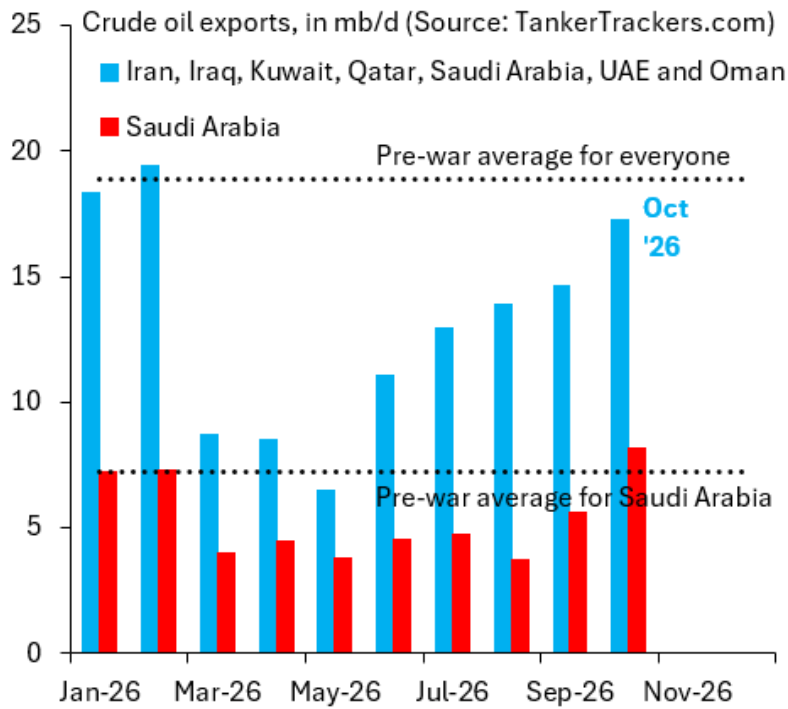
Economist Robin Brooks provided insightful commentary on this phenomenon, observing a notable "decoupling between prices and flows." Brooks pointed out that despite the rise in prices, oil flows through the Persian Gulf were approaching pre-war levels for many nations, and Saudi Arabia’s production had surpassed its pre-war average. This discrepancy led him to conclude that markets were incorporating a "huge risk premium." A risk premium, in this context, refers to the additional compensation investors demand for holding assets that carry a higher perceived risk. In the oil market, this means buyers are willing to pay more per barrel due to the elevated uncertainty surrounding future supply, even if current supply remains stable. This suggests that the market’s primary concern was not an immediate shortage but rather the potential for future disruptions, highlighting the powerful influence of geopolitical narratives on commodity pricing.
Traditional Markets Under Pressure: Stocks and Bonds React
The ripple effects of rising oil prices and geopolitical anxieties extended deeply into traditional financial markets, prompting a wave of risk aversion across Wall Street. Upon Friday’s open, major U.S. stock indices registered significant declines, reflecting investors’ unease. The S&P 500, a broad market indicator, was down 0.6%, while the tech-heavy Nasdaq Composite Index, often a barometer for growth stocks, saw a 0.2% reduction. The Dow Jones Industrial Average, representing 30 large U.S. companies, experienced the most pronounced drop, falling by 1.4%. These movements collectively signaled a broad-based retreat from equities as traders sought to de-risk their portfolios in the face of escalating uncertainty.
Several factors contributed to this downturn in stock markets beyond just the oil surge. Lingering "AI-sector expenditure woes" played a role, hinting at investor apprehension regarding the sustainability of high valuations within the rapidly expanding artificial intelligence industry. Concerns could stem from potential overinvestment, future regulatory scrutiny, or the sheer capital expenditure required to maintain growth, leading some investors to question long-term profitability and valuation multiples. Such concerns, when combined with broader macroeconomic instability, can lead to a sector-wide re-evaluation and profit-taking.
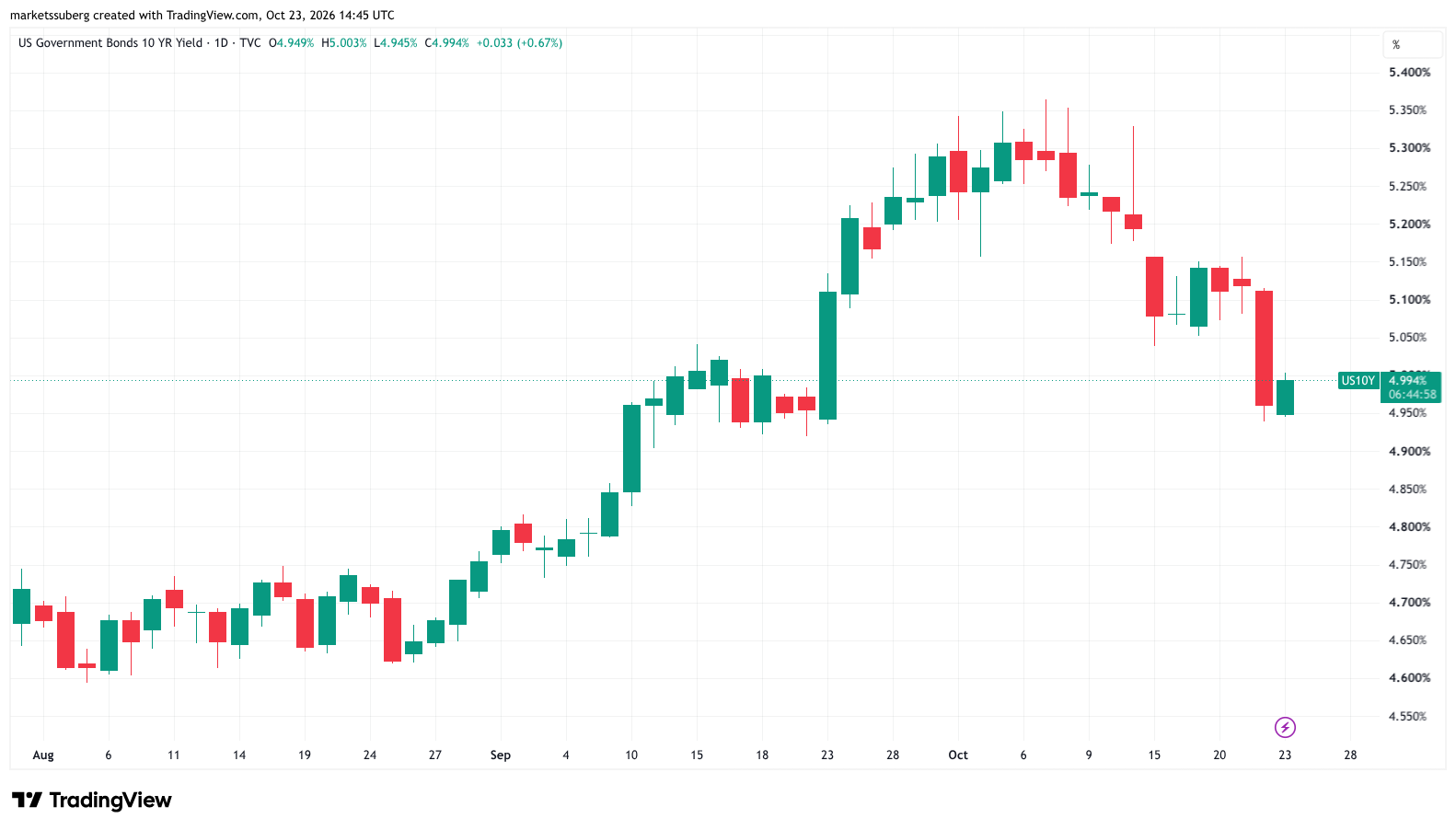
Amidst this backdrop of declining equities and increased risk aversion, the bond market presented a contrasting picture. The yield on the 10-year U.S. Treasury bond cooled, staying below 5% and reaching 4.939%. This marked its lowest level since September 23. In financial markets, bond yields typically move inversely to bond prices. When investors flee riskier assets like stocks, they often seek refuge in safer government bonds, driving up demand for these instruments. Increased demand for bonds pushes their prices higher, which in turn causes their yields to fall. This "flight to safety" dynamic indicates that investors are prioritizing capital preservation over higher returns in a volatile environment. The cooling bond yields also suggest that market participants might be anticipating a slowdown in economic growth due to the inflationary impact of higher oil prices, or potentially even a more dovish stance from central banks if supply-side inflation risks stifling broader economic activity. The simultaneous decline in stocks and cooling of bond yields underscores a cautious market sentiment, where investors are bracing for potential economic headwinds.
Technical and Fundamental Outlook for Bitcoin
The recent dip in Bitcoin’s price has prompted renewed scrutiny from market analysts, who are dissecting both technical indicators and fundamental factors to predict its near-term trajectory. As highlighted by Keith Alan of Material Indicators, the failure of BTC to hold above its 50-day Simple Moving Average (SMA) at $81,781 signals a potential weakening of bullish momentum. For many traders, the 50-day SMA serves as a dynamic support or resistance level, and a decisive move below it can trigger further selling pressure. If Bitcoin cannot reclaim this crucial moving average by the close of the daily candle, the market could see a retest of lower support levels, with Alan specifically pinpointing the $78,000-$80,000 range as a likely target. This zone is critical, as it would test the resolve of buyers and potentially establish a new consolidation phase or precipitate a further decline.
Beyond technical indicators, fundamental market structure also provides key insights. The area between $80,000 and $81,500 holds significant importance as it represents the aggregate cost basis for investors who have bought into the spot Bitcoin exchange-traded funds (ETFs). The introduction of these ETFs has brought a new class of institutional and retail investors into the Bitcoin market, and their collective entry price points can act as strong psychological and technical support levels. Should the price fall below this aggregate cost basis, it could lead to increased selling from these investors who might seek to minimize losses, thereby exacerbating downward pressure. Conversely, if this level holds firm, it could signal a strong conviction among ETF investors and provide a floor for price action.
The broader crypto market sentiment remains cautious, heavily influenced by the prevailing macroeconomic climate. Bitcoin, often dubbed "digital gold," has historically been seen as a hedge against inflation and geopolitical instability. However, its increasing integration into the mainstream financial system means it is also susceptible to the same risk-off sentiment that impacts traditional assets. When global liquidity tightens, or when investors seek refuge in traditional safe-havens like U.S. Treasuries, riskier assets such as cryptocurrencies often experience outflows. This dynamic suggests that Bitcoin’s short-term movements will continue to be closely tied to developments in oil prices, geopolitical events, central bank policies, and broader inflationary trends. Analysts are therefore observing a blend of on-chain data, technical patterns, and global macro indicators to form a comprehensive outlook for Bitcoin’s performance in the coming weeks.
Broader Economic Implications and Investor Sentiment
The confluence of surging oil prices, geopolitical tensions, and declining stock markets carries significant broader economic implications, extending beyond the immediate fluctuations in asset values. The sharp rise in crude oil prices directly contributes to inflationary pressures across economies. Higher energy costs translate into increased expenses for transportation, manufacturing, and consumer goods, ultimately pushing up the cost of living. This can erode purchasing power, dampen consumer spending, and potentially slow down economic growth, creating a challenging environment for businesses and households alike. Central banks, already grappling with persistent inflation, face a dilemma: tighten monetary policy further to curb inflation, risking a recession, or ease off, potentially allowing inflation to become entrenched.
Investor sentiment has decidedly shifted towards risk aversion. The widespread decline in equities, coupled with the flight to safety evident in the bond market, indicates a collective desire among investors to reduce exposure to volatile assets. This "risk-off" environment is characterized by capital moving out of growth-oriented investments (like tech stocks and, to some extent, cryptocurrencies) and into more stable, lower-yielding assets. Such shifts can create a self-reinforcing cycle, where initial declines trigger further selling, as market participants anticipate continued volatility and potential economic slowdowns. The uncertainty generated by geopolitical developments, particularly those involving critical energy supply regions, creates an unpredictable landscape that deters long-term, high-risk investments.
The interconnectedness of global markets is profoundly evident in this scenario. A geopolitical event in one part of the world can instantaneously send shockwaves through commodity markets, impacting inflation expectations, central bank policy, equity valuations, and ultimately, the digital asset space. Bitcoin, once viewed as an uncorrelated asset, has increasingly shown sensitivity to these macro factors as its market capitalization and institutional adoption grow. Investors are now keenly aware that their cryptocurrency portfolios are not immune to the forces shaping traditional finance. This integrated market environment necessitates a holistic approach to investment analysis, where geopolitical risk, commodity price trends, and macroeconomic indicators are considered alongside specific asset fundamentals. The current climate underscores the ongoing challenge for investors to navigate a complex web of global forces, making informed decisions in an era of heightened uncertainty.
Navigating the Volatile Landscape: Expert Insights and Forward Gaze
The current market environment, characterized by Bitcoin’s price volatility, surging oil costs, and a cautious stance in traditional equities, highlights the intricate dance between geopolitical events and global financial markets. Investors are grappling with a complex web of factors that demand vigilance and adaptability. The immediate future for Bitcoin will likely be heavily influenced by its ability to hold key technical support levels, particularly the 50-day Simple Moving Average and the critical $80,000-$81,500 aggregate cost basis for ETF investors. A failure to consolidate above these points could signal further downside potential, while a successful defense might pave the way for a more stable recovery.
Looking ahead, market participants will be closely monitoring several critical developments. Geopolitical tensions, especially those involving major oil-producing regions, will remain a paramount concern, as any escalation could further destabilize energy markets and exacerbate inflationary pressures. Central bank rhetoric and actions regarding interest rates and quantitative tightening will also be crucial, as their decisions directly impact liquidity and risk appetite across all asset classes. Economic data, including inflation reports and employment figures, will provide further clues about the health of global economies and the potential for a soft landing versus a more pronounced downturn.
The interplay between these factors underscores that the digital asset market is maturing and becoming increasingly intertwined with the broader global economy. Bitcoin’s journey reflects not just its intrinsic technological value but also its role within a global financial ecosystem responsive to both macro-economic shifts and geopolitical tremors. For investors, this period calls for a balanced approach, integrating robust risk management strategies with a deep understanding of the global forces at play. The road ahead is likely to be marked by continued volatility, making informed decision-making and a long-term perspective essential for navigating the evolving market landscape.