Dwi Wanna
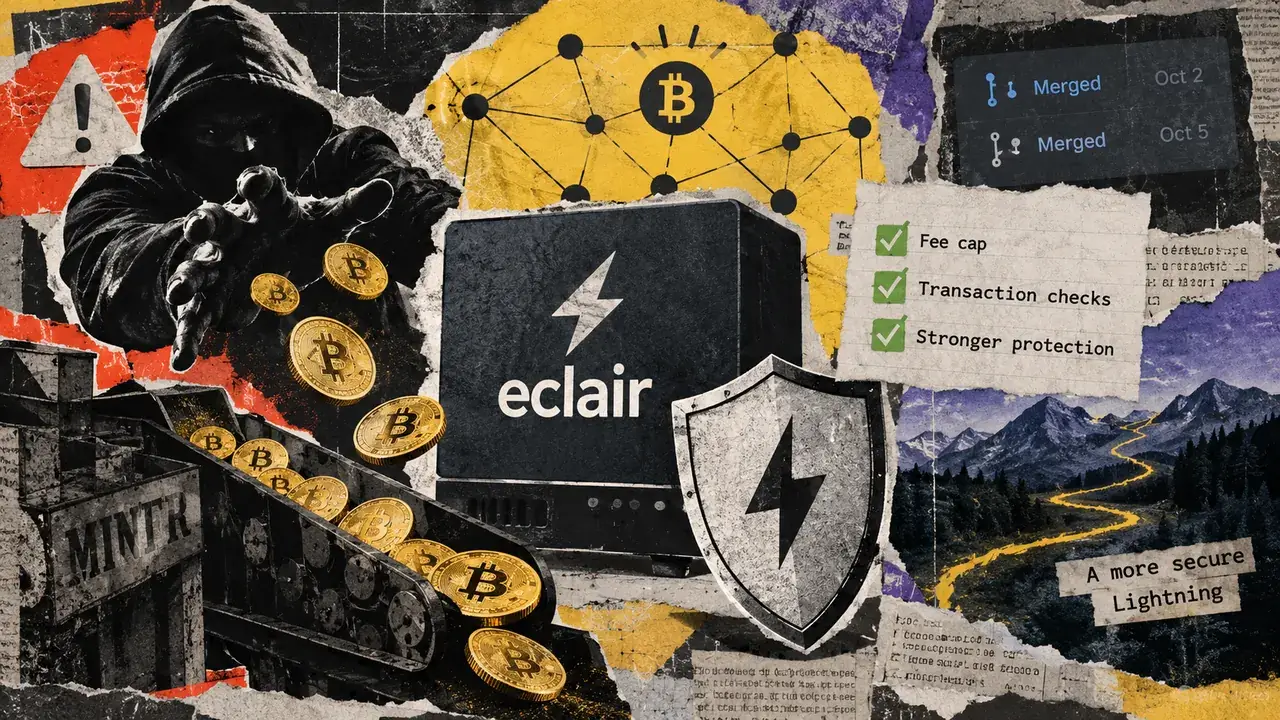
The development team behind Eclair, one of the primary implementations of the Bitcoin Lightning Network protocol, has successfully merged two critical security patches designed to prevent vulnerabilities that could lead to the unintended loss of funds through excessive mining fees. These vulnerabilities, which specifically impact node configurations involving dual-funded channels, splicing, and external signing backends, represent a sophisticated class of "fee-burning" risks. Unlike traditional theft, where an attacker transfers a victim’s balance to their own wallet, these flaws could allow a malicious peer or a compromised backend to force a node to pay exorbitant fees to Bitcoin miners, effectively depleting the node’s liquidity without requiring access to its private keys.
Developed by the Paris-based tech firm ACINQ, Eclair is a major pillar of the Lightning Network ecosystem, known for its focus on scalability and its use of the Scala programming language. The recent updates, merged into the project’s master branch in early October 2026, address gaps in how the software validates fee-bump requests and how it communicates with Bitcoin Core (bitcoind) when operating in a "signer-only" mode.
Technical Overview of the October Security Merges
The first of the two major repairs, identified as PR #3388, was merged on October 2, 2026. This patch focuses on a vulnerability within the "dual funding" and "splicing" protocols. In a standard Lightning channel opening, one party usually provides the initial liquidity. However, dual funding allows both peers to contribute funds simultaneously to the initial channel balance. Splicing is a newer, highly anticipated feature that allows users to add or remove funds from an existing Lightning channel without closing it, thereby significantly improving the efficiency of capital on the network.
The vulnerability resided in the Replace-By-Fee (RBF) mechanism during these processes. RBF is a standard Bitcoin feature that allows a sender to replace an unconfirmed transaction with a new version that includes a higher fee, incentivizing miners to prioritize it during periods of network congestion. Under the previous Eclair logic, if a peer initiated an RBF request during a dual-funding or splicing operation, Eclair would comply by contributing its portion of the funds and paying for its inputs at the newly requested higher fee rate.
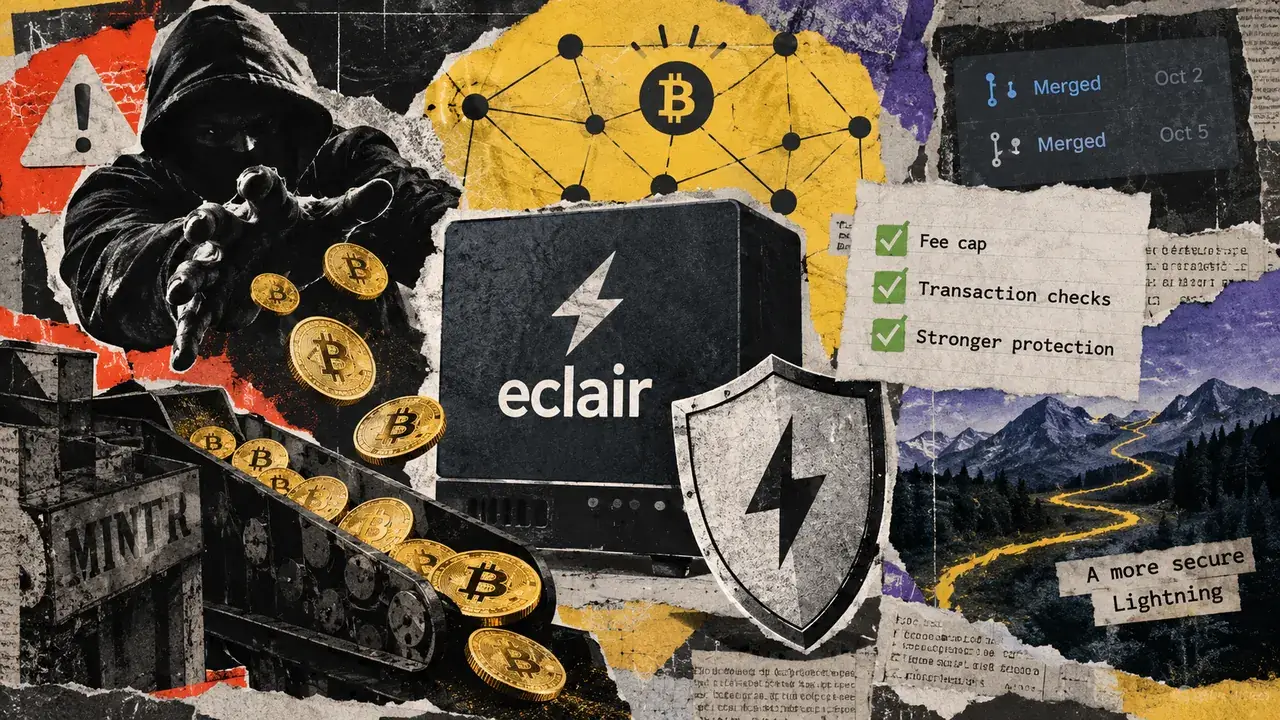
Critically, Eclair lacked an upper bound or a "fee budget" for these peer-initiated requests. This created a scenario where a malicious peer could repeatedly demand higher fee rates. Since Eclair was programmed to maintain its contribution to the transaction, it would continue to pay for its inputs at whatever rate the peer demanded. This could result in a node operator paying a massive percentage of their contribution directly to miners. The new repair mitigates this by rejecting any RBF attempts that exceed a maximum funding fee rate recommended by the Eclair node, ensuring that the node operator retains control over their expenditure.
Protecting the Signer-Backend Relationship
The second repair, PR #3390, merged on October 5, 2026, addresses a different but equally significant threat model: the compromised backend. Many professional or high-security Lightning node operators use a split configuration where Eclair handles the Lightning logic and holds the private keys (the "signer"), while a separate Bitcoin Core (bitcoind) instance acts as the "backend" to track the blockchain, select coins (UTXOs), and construct transactions.
The vulnerability identified here was that Eclair, in its role as the signer, was relying too heavily on the data provided by the Bitcoin Core backend. A compromised bitcoind instance could potentially craft a transaction that appeared to stay within the node’s fee budget but actually allocated a much larger portion of the inputs to miner fees. This is often achieved by "dropping the change output." In Bitcoin’s transaction model, any difference between the total value of the inputs and the total value of the outputs is automatically collected by the miner as a fee.
If a compromised backend reported a fee of 1,000 satoshis but intentionally omitted a change output worth 1,000,000 satoshis, the resulting transaction would effectively pay a fee of 1,001,000 satoshis to the miner. Because Eclair was not independently verifying the total value of the inputs against the outputs and the reported fee, it would sign the transaction, unknowingly burning the user’s funds.
The October 5 fix introduces a robust verification layer. Eclair now independently fetches the transaction data for the coins being spent (using their transaction IDs) to authenticate their actual values. It then recalculates the fee manually and compares it against the backend’s reported fee and the user’s predefined budget. If the numbers do not match, or if the change-output positions are invalid, the transaction is rejected before signing.
Timeline of Development and Release Status
The discovery and resolution of these issues followed a rapid timeline in the first half of October 2026. This chronology highlights the proactive nature of the Eclair development team and the broader Bitcoin technical community:
- Late September 2026: ACINQ releases Eclair v0.14.3, which included several performance improvements but did not yet contain the October fee-protection fixes.
- October 2, 2026: PR #3388 is merged into the Eclair master branch, addressing the peer-initiated RBF fee-bump vulnerability in dual funding and splicing.
- October 5, 2026: PR #3390 is merged into the master branch, closing the "blind signer" loophole that allowed a compromised backend to hide excessive fees.
- October 9, 2026: The Bitcoin Optech newsletter, a premier technical publication for the Bitcoin developer community, highlights both changes, bringing widespread attention to the necessity of these protections.
- October 12, 2026: As of this date, the latest official packaged release remains v0.14.3. While the fixes are live in the "master" branch on GitHub—meaning those who build Eclair from source are protected—node operators relying on pre-packaged binaries await the next official version release.
Contextualizing the Risks: Why Fee Burning Matters
While the loss of funds to miners may seem less "profitable" for an attacker than direct theft, it remains a potent tool for "griefing" attacks or competitive sabotage. In the context of the Lightning Network, liquidity is the lifeblood of a node. By forcing a competitor’s node to waste its liquidity on mining fees, an attacker could effectively knock that node out of the routing market or force it into insolvency.

Furthermore, these vulnerabilities highlight a growing realization in the Bitcoin development space: as the protocol becomes more complex with features like splicing and dual funding, the "attack surface" regarding transaction fees increases. Historically, fee management was a simple matter of choosing a rate. Today, it involves complex negotiations between peers and delicate trust assumptions between a node and its blockchain backend.
These fixes are distinct from other recently addressed issues in Eclair. For instance, in September 2026, a "cooperative-closing fee flaw" was reported, which dealt with how nodes negotiated fees when voluntarily closing a channel. Additionally, in early October, the community addressed "restart denial-of-service" (DoS) issues that could cause unpatched Eclair nodes to crash repeatedly upon rebooting. The October 2 and October 5 merges represent a focused effort to harden the software against economic attacks specifically targeting the funding and splicing lifecycle.
Broader Implications for the Lightning Network
The resolution of these flaws is a testament to the robustness of the Bitcoin peer-review process. The involvement of Bitcoin Optech in documenting these changes ensures that other Lightning implementations—such as Lightning Labs’ LND and Blockstream’s Core Lightning—can audit their own codebases for similar logic gaps.
For the wider industry, these developments underscore the "move slow and break things" philosophy often associated with Bitcoin’s layer-two scaling. While features like splicing are highly desired for their ability to make Lightning more user-friendly and capital-efficient, their implementation requires meticulous attention to detail to avoid creating new economic vulnerabilities.
Node operators, particularly those running high-volume routing nodes or using remote signer configurations, are advised to monitor the Eclair GitHub repository closely. While the master branch contains the fixes, the transition to a stable, tagged release (likely v0.14.4 or v0.15.0) will be the signal for the majority of the network to upgrade. In the interim, operators are encouraged to verify that their current builds account for these October changes, especially if they are actively using dual funding or splicing features with untrusted peers.
As Bitcoin continues to evolve as a global settlement layer, the security of its secondary layers remains paramount. The Eclair team’s recent work reinforces the principle that in a decentralized financial system, keeping your keys is only the first step; maintaining rigorous, automated oversight of every satoshi spent on fees is equally essential for long-term security.