Dwi Wanna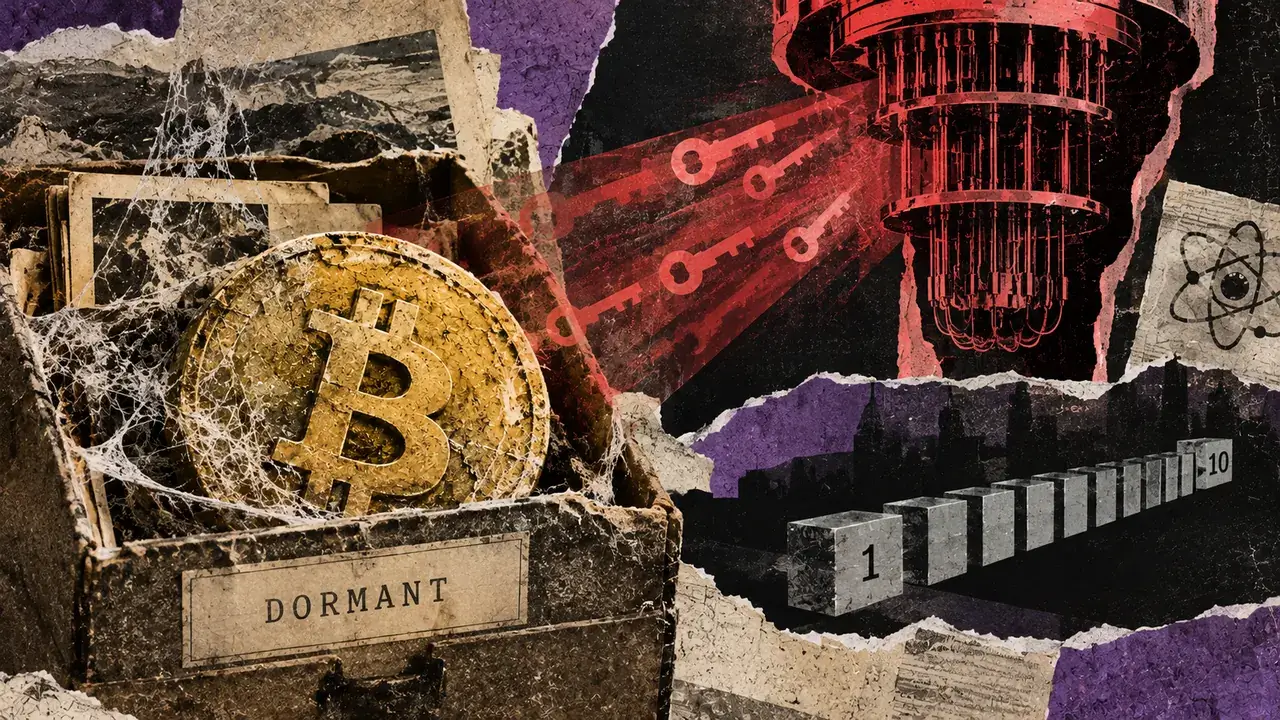
The stability of the Bitcoin network relies on the mathematical impossibility of reversing its cryptographic functions, yet the potential advent of functional quantum computing has introduced a theoretical "worst-case scenario" that could undermine the foundation of the world’s largest digital asset. In an October 13 interview with Luke Martin, prominent crypto investor and Castle Island Ventures partner Nic Carter detailed a specific, catastrophic event: a hostile actor utilizing quantum capabilities to recover the private keys of dormant, early-era Bitcoin and broadcasting a massive wave of spends across a mere ten blocks. Such an event, Carter suggests, would move millions of coins that have remained untouched for over a decade, potentially shattering the market’s confidence in Bitcoin’s security and its "digital gold" narrative.
This scenario is not merely a thought experiment; it is a technical assessment of Bitcoin’s legacy architecture. The stakes involve approximately 30.2% of the total issued supply—roughly 6.04 million BTC—which Glassnode identified in a May 20 analysis as having "exposed" public keys. As the global race for quantum supremacy accelerates, the Bitcoin community is increasingly forced to confront the reality of a "quantum sunset" and the complex governance challenges involved in migrating the network to post-quantum cryptography (PQC).
The Technical Vulnerability: Shor’s Algorithm and ECDSA
At the heart of the quantum threat is Shor’s algorithm, a quantum algorithm formulated in 1994 that can efficiently solve the discrete logarithm problem. Bitcoin currently utilizes the Elliptic Curve Digital Signature Algorithm (ECDSA) to generate public and private keys. Under classical computing constraints, deriving a private key from a public key is computationally infeasible, requiring trillions of years of processing power. However, a sufficiently powerful quantum computer—specifically one with millions of physical qubits—could theoretically use Shor’s algorithm to derive a private key from an exposed public key in a matter of hours or even minutes.
The vulnerability is not uniform across all Bitcoin holdings. In the network’s early years, transactions typically used Pay-to-Public-Key (P2PK) scripts, which explicitly reveal the public key on the blockchain. This includes the roughly 1.1 million BTC attributed to Satoshi Nakamoto. Later, the network transitioned to Pay-to-Public-Key-Hash (P2PKH), which hides the public key behind a double-hash (SHA-256 and RIPEMD-160). For P2PKH addresses, the public key is only revealed when the holder attempts to spend the funds. A quantum attacker could only target these addresses in the brief window between a transaction being broadcast to the mempool and its confirmation in a block. However, any P2PKH address that has been "reused"—meaning funds were sent from it, but a balance remains—already has its public key exposed and is as vulnerable as a P2PK address.
The 10-Block Sweep: A Mathematical Feasibility Study
Nic Carter’s specific fear involves the concentration of a quantum attack into a narrow timeframe. If an attacker recovers the keys to millions of BTC, they would likely seek to move them as quickly as possible to prevent the network from implementing emergency soft forks or "freezing" the compromised addresses via community consensus.
The question arises: could millions of BTC actually fit into 10 Bitcoin blocks? Bitcoin blocks are limited by "weight units" rather than a simple byte count, with a ceiling of 4 million weight units per block. An analysis of transaction data suggests that a massive sweep is mathematically possible. Consider a hypothetical set of 50,000 early P2PK outputs, each containing 50 BTC, totaling 2.5 million BTC. Based on the Bitcoin developer reference for P2PK inputs, these inputs would require approximately 5.7 million bytes, or 22.8 million weight units.
Over 10 blocks, the aggregate capacity is 40 million weight units. Therefore, a 2.5 million BTC sweep would consume only about 57% of the total block space available in that 100-minute window (assuming the standard 10-minute block interval). Even accounting for transaction overhead and the creation of new, quantum-secure receiving outputs, the data fits comfortably within the protocol’s current limits. An attacker could work in private, assembling the transactions and then broadcasting them simultaneously to ensure they are picked up by miners, who would be incentivized by the massive transaction fees such a sweep would likely include.
A Chronology of Quantum Development and Bitcoin Proposals
The timeline for a potential quantum attack is a subject of intense debate among physicists and computer scientists. While no quantum computer currently exists that can break 256-bit ECDSA, the trajectory of research suggests a shrinking window for preparation.
- 1994: Peter Shor publishes the algorithm that can break RSA and ECDSA.
- 2009: Bitcoin launches using ECDSA.
- 2019: Google claims "quantum supremacy" with its Sycamore processor, though it is not yet capable of cryptographic attacks.
- 2021-2023: Research from various institutions suggests that a "Cryptographically Relevant Quantum Computer" (CRQC) might require between 13 million and 317 million physical qubits to break Bitcoin’s encryption, depending on error correction rates.
- May 2024: Glassnode releases its "Quantum-Exposed Supply" report, highlighting that over 6 million BTC are at risk.
- 2029: Google’s internal target for building a useful, error-corrected quantum computer.
In response, several Bitcoin Improvement Proposals (BIPs) and research concepts have emerged. Draft BIP-360 proposes "Pay-to-Merkle-Root," a new output type that avoids exposing public keys even during the spending process. BIP-361 suggests a phased approach: first restricting the creation of new vulnerable outputs (like P2PK), and later implementing "rescue conditions" for legacy signatures.
The Recovery Dilemma: Who Still Owns the Bitcoin?
The most contentious aspect of the quantum threat is the "Satoshi coins" and other dormant outputs where the owner may have lost their keys or passed away. Security researcher Jameson Lopp estimated in May 2024 that approximately 2.6 million of the exposed BTC might be permanently un-migratable due to inactivity or lost access.
If the Bitcoin community decides to implement a soft fork to invalidate legacy ECDSA signatures—effectively "burning" the vulnerable coins to prevent a quantum thief from taking them—they also risk locking out legitimate holders who have simply been holding long-term. This creates a "Quantum Sunset" problem.
Proposals like Dan Robinson’s PACT (Private Address Control Timestamps) concept attempt to solve this by allowing holders to prove ownership using advanced, private timestamps or zero-knowledge proofs created before the quantum era. However, this requires holders to be proactive. For "bare" P2PK outputs, such as the earliest mined coins, proving ownership without using the compromised signature remains an unsolved cryptographic challenge.
Another approach, the Hourglass V2 draft (February 2024), suggests "throttling" the outflow of funds. By limiting the network to one P2PK spend per block, the community would have years to react to a quantum attack, but this would also constrain legitimate users and potentially create a secondary market for "exit priority."
Market and Social Implications of a Quantum Sweep
The economic impact of a sudden movement of 2.5 million BTC cannot be overstated. Bitcoin’s value is derived largely from its perceived scarcity and the immutability of its ledger. If a hostile actor—perhaps a nation-state or a rogue hacking collective—suddenly controls 10% or more of the total supply, the market would face an unprecedented liquidity crisis.
A visible transfer of this magnitude would likely trigger a massive sell-off as holders anticipate a market dump. Furthermore, the "fairness" of the network would be called into question. If the original "visionary" coins belonging to Satoshi Nakamoto are seized by a modern attacker, the foundational mythos of Bitcoin is compromised. Exchanges would likely be forced to freeze deposits from known "at-risk" addresses, leading to a fragmentation of the BTC supply into "clean" (post-quantum) and "tainted" (legacy) coins.
Conclusion: The Governance Challenge Ahead
The threat of quantum computing is not an immediate crisis, but it is a looming architectural debt that the Bitcoin network must eventually pay. The primary challenge is not just the math of post-quantum cryptography, but the governance of the transition. Bitcoin is decentralized by design, meaning any change to its signature scheme requires broad consensus among developers, miners, and node operators.
As Nic Carter’s scenario illustrates, the danger lies in the speed and scale of a potential attack. While researchers work on PQC standards, the Bitcoin community must decide which claims to recognize and how to protect the network’s integrity without sacrificing its commitment to censorship resistance. Whether through "rescue conditions," "throttling," or a forced migration, the path to a quantum-secure Bitcoin will likely be the most significant technical and social hurdle the network has ever faced. The countdown to 2029, or whenever the first CRQC arrives, has effectively begun.