admin
admin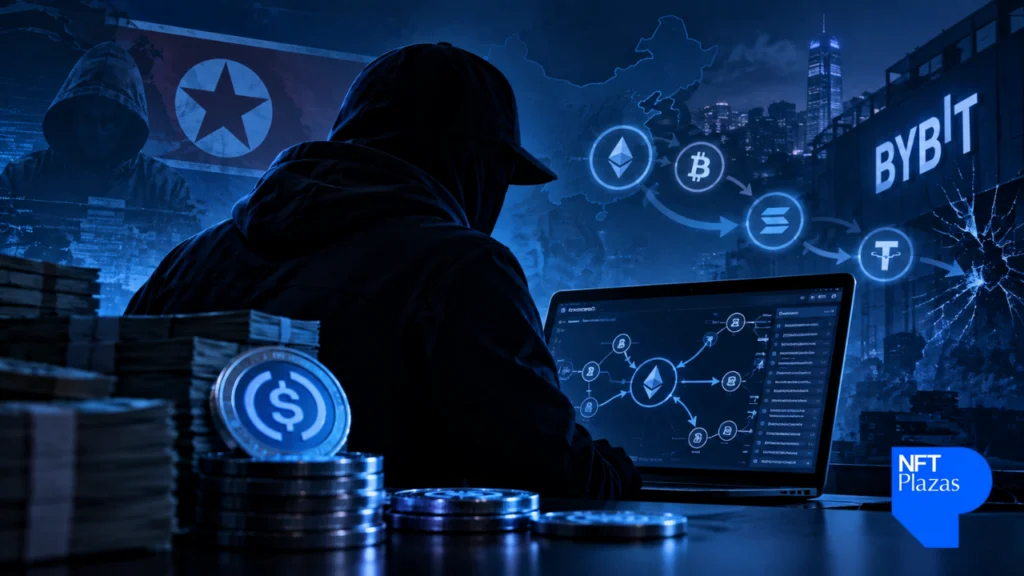
In an extraordinary demonstration of independent cyber sleuthing, pseudonymous blockchain investigator ZachXBT has revealed he personally expended nearly $350,000 to penetrate an alleged Chinese money-laundering syndicate. This high-stakes undercover operation, detailed in an October 5 post on X, successfully uncovered over $12 million in illicit funds tied to the notorious Lazarus Group, North Korea’s state-sponsored hacking collective, specifically identifying assets linked to the $1.5 billion Bybit cryptocurrency exchange exploit. The bold move highlights the evolving landscape of digital asset investigations, where individual expertise can significantly complement traditional law enforcement efforts in combating sophisticated cybercrime.
Unveiling the Undercover Operation: The Investigator’s Bold Move
The genesis of ZachXBT’s audacious investigation traces back to early 2025, following the massive Bybit hack that shocked the cryptocurrency world. As the digital dust settled, ZachXBT, renowned for his forensic analysis of blockchain transactions, began observing a pattern: more than 15 distinct accounts across public Telegram and Discord channels were actively seeking assistance with transactions involving funds clearly tainted by the Bybit exploit. These public solicitations, often disguised as legitimate liquidity provisions or currency exchange services, served as a digital breadcrumb trail leading to a much larger, more organized criminal enterprise.
Rather than merely tracking the illicit funds from an external vantage point – a common but often limited approach in blockchain forensics – ZachXBT chose a far riskier strategy. He opted to immerse himself within the network, posing as a prospective client eager to move substantial sums of cryptocurrency. Among the various contacts he identified, one individual operating under the alias "Jimmy Green" emerged as a key entry point. This alias, like many used in the opaque world of cybercrime, provided a thin veil of anonymity for the alleged money launderer.
On March 6, 2025, ZachXBT initiated his deep cover operation. He funded a new Ethereum address with a significant sum: 349,700 USDC (USD Coin), a stablecoin pegged to the U.S. dollar. This substantial personal investment underscored the investigator’s commitment and the inherent financial risk he was undertaking. His objective was clear: to establish credibility with Green and the wider network by engaging in a series of transactions, even at a financial loss, to gather actionable intelligence on their operational methodologies and ultimate beneficiaries.
The High Stakes of Deception: Navigating a Criminal Network
The arrangement ZachXBT entered into with "Jimmy Green" involved a seemingly straightforward exchange: sending USDC on the Ethereum network in return for USDT (Tether), another prominent stablecoin, on the Tron network. However, the seemingly innocuous nature of these transactions belied the underlying criminal intent. ZachXBT meticulously observed that the wallet provided by Green for receiving funds had already received "gas" (transaction fees) from an address directly implicated in the Bybit exploit. Crucially, this address was also publicly listed on Bybit’s own blacklist, serving as an immediate red flag and confirming the network’s illicit ties.
To solidify his persona as a high-volume client and gain the trust of the laundering operation, ZachXBT deliberately accepted financial losses on each transaction. He estimated these losses to be approximately 5% per order, a cost he consciously bore as an investment in intelligence. This strategy was fraught with peril; beyond the monetary losses, there was the constant threat that his counterparty could simply abscond with his funds, leaving him with no recourse. "At this point, I realized I needed to continue losing 5% per order and gamble on capturing as much actionable intel as quickly as possible," he later recounted, highlighting the calculated risk.

Through these repeated interactions and calculated losses, ZachXBT successfully cultivated a rapport with Green. As trust grew, Green began to divulge increasingly sensitive information. The conversations shifted from mere transaction details to discussions about the network’s broader plans, including strategies to move funds connected to North Korea. Green also provided specific details about the network’s operational hubs, indicating significant activities in both Hong Kong and mainland China – regions known for their financial infrastructure and potential for facilitating illicit transfers. These geographical details were vital, offering a tangible link to physical locations for law enforcement.
Tracing the Digital Fingerprints: On-Chain Verification and Breakthroughs
The true breakthrough in ZachXBT’s investigation occurred when "Jimmy Green" started providing information that could be independently corroborated on the blockchain. The inherent transparency of public ledgers, paradoxically, became a tool for the investigator to verify the claims of the very criminals attempting to exploit it.
In one crucial instance, Green sent ZachXBT a screenshot depicting a transaction involving funds being bridged between different blockchain networks. Within minutes of receiving this screenshot, ZachXBT was able to match it with a corresponding transaction on THORChain, a decentralized cross-chain liquidity protocol. This real-time, on-chain verification provided undeniable proof of Green’s active involvement in the illicit movement of funds and cemented the investigator’s conviction in the credibility of the intelligence he was receiving.
Later, Green shared three specific Solana addresses. These addresses proved to be a goldmine. ZachXBT’s subsequent analysis allowed him to identify a vast cluster of wallets containing over $12 million in funds directly traceable to the Bybit exploit. This substantial sum was being actively shuffled across various blockchains, including Bitcoin, Ethereum, Solana, and Tron, in a sophisticated attempt to obfuscate its origin and hinder tracking efforts. The ability to identify this multi-chain cluster was a critical step in disrupting the laundering operation.
The actionable intelligence gleaned from these interactions quickly led to concrete results. Following ZachXBT’s findings, Tether, the issuer of USDT, subsequently froze 442,000 USDT connected to the identified wallet cluster. This freeze underscored the power of stablecoin issuers to act decisively against illicit financial activity, provided they receive verifiable intelligence.
The alleged laundering network’s reach extended beyond the Bybit hack. Green reportedly alluded to other major crypto thefts, mentioning a previous freeze of approximately $300,000. ZachXBT meticulously traced this figure to 332,000 USDC linked to the 2023 Poloniex exploit, another high-profile incident that security researchers have firmly associated with North Korean hacking groups. Furthermore, Green boasted of having laundered around $3 million in fraud proceeds for another client. ZachXBT’s investigation connected these funds to a wallet associated with Huione Guarantee, a marketplace previously flagged for its alleged involvement in cryptocurrency laundering and the provision of illicit services. These connections painted a picture of a versatile and deeply entrenched criminal enterprise.
The Shadowy Hand of Lazarus Group and North Korea’s Crypto Heists
The Bybit hack, occurring in February 2025, remains one of the largest cryptocurrency thefts on record, with an estimated $1.5 billion in digital assets stolen. The Federal Bureau of Investigation (FBI) quickly attributed the theft to North Korean hackers, specifically identifying them under their internal tracking designation, "TraderTraitor." The FBI noted that the stolen funds were rapidly dispersed across thousands of blockchain addresses, a hallmark tactic designed to obscure their origin and make recovery exceedingly difficult.

This modus operandi is characteristic of the Lazarus Group, North Korea’s notorious state-sponsored hacking collective. Active since at least 2007, Lazarus Group has evolved into one of the most prolific and sophisticated cybercrime organizations globally, primarily tasked with generating revenue for the cash-strapped North Korean regime, often to fund its weapons programs. Their history is replete with high-profile cyberattacks targeting financial institutions, defense companies, and, increasingly, cryptocurrency exchanges and decentralized finance (DeFi) platforms.
Notable past attacks attributed to Lazarus Group include the 2014 Sony Pictures Entertainment hack, the 2017 WannaCry ransomware attack, and numerous large-scale cryptocurrency heists. These include the 2022 Ronin Bridge hack ($625 million), the 2022 Harmony Bridge hack ($100 million), and the 2023 Atomic Wallet exploit ($100 million). Their strategy typically involves phishing attacks, exploiting software vulnerabilities, and meticulously laundering the stolen digital assets through a complex web of mixers, decentralized exchanges, and over-the-counter (OTC) brokers, often relying on complicit intermediaries in various jurisdictions. The Bybit hack aligns perfectly with this pattern, underscoring the persistent threat posed by state-sponsored cybercriminals in the crypto space.
A Vast Criminal Enterprise: The Chinese Laundering Network’s Scope
ZachXBT’s deep dive into the "Jimmy Green" connection revealed that the operation was far from a solitary broker facilitating individual illicit transfers. Instead, the investigation suggests a highly organized Chinese network alleged to have laundered more than $1 billion across multiple exploits directly linked to the Lazarus Group. This staggering figure, derived from a combination of private conversations, meticulous wallet movement analysis, and precise transaction timing, points to a sophisticated and enduring criminal infrastructure. A substantial portion of these laundered funds, ZachXBT alleged, originated from the Bybit exploit itself.
The network reportedly operated with a distinct organizational structure, featuring different divisions and specialized roles. Individuals within the syndicate were responsible for specific tasks, such as receiving stablecoins from the initial hackers and then distributing these funds to other participants for further obfuscation and conversion into fiat currency or other assets. This compartmentalization is a common tactic in large-scale criminal enterprises, designed to limit exposure and complicate investigations.
This hierarchical structure, however, also exposed a critical vulnerability inherent in virtually all crypto laundering operations. While stolen funds can traverse dozens of wallets and multiple blockchains, ultimately, they still require intermediaries – individuals or entities – willing to convert, exchange, or transfer them. These intermediaries, despite their efforts to remain anonymous, leave digital breadcrumbs. For skilled investigators like ZachXBT, these points of interaction become invaluable sources of intelligence, providing opportunities to disrupt the flow of illicit funds and identify the individuals behind the shadowy transactions. The Hong Kong and mainland China links further complicate enforcement, highlighting the cross-jurisdictional challenges in tackling such networks. The mentioned Huione Guarantee, if involved, underscores how legitimate-looking services can be co-opted or created for illicit purposes.
The Broader Implications for Cryptocurrency Security and Investigations
ZachXBT’s undercover operation carries significant implications for the broader cryptocurrency ecosystem and the global fight against cybercrime. Firstly, it underscores the persistent and evolving threat posed by state-sponsored actors like North Korea’s Lazarus Group, whose sophisticated tactics and vast resources enable them to repeatedly target and compromise digital asset platforms. Exchanges and DeFi protocols must continually enhance their security measures, improve their internal monitoring systems, and strengthen their collaboration with blockchain intelligence firms and law enforcement.
Secondly, the successful freezing of substantial funds by Tether demonstrates the critical role that stablecoin issuers and other centralized entities play in combating illicit finance. Their ability to freeze assets linked to criminal activity provides a powerful deterrent and a vital recovery mechanism, reinforcing the importance of compliance and rapid response in the crypto space. This also highlights the ongoing debate about decentralization versus centralized control within the crypto ethos, where the latter can be a double-edged sword: a point of vulnerability for hackers, but also a point of intervention for law enforcement.

Thirdly, the case highlights the growing importance of independent blockchain investigators like ZachXBT. Operating outside traditional government structures, these individuals often possess specialized technical skills and a level of agility that allows them to quickly respond to emerging threats and pursue leads that might otherwise be overlooked. Their work often complements official investigations, providing critical intelligence that can accelerate asset recovery and facilitate arrests. This collaboration, though sometimes informal, is becoming increasingly vital in the fast-paced world of cybercrime.
Finally, the operation offers a stark reminder that despite the perceived anonymity of cryptocurrency, the underlying blockchain technology offers an immutable and transparent ledger. While criminals employ elaborate methods to obscure their tracks, the very nature of public ledgers means that with enough skill, patience, and sometimes, a bold undercover strategy, the trail can be reconstructed. This continuous cat-and-mouse game between criminals and investigators pushes both sides to innovate, with each new exploit leading to new investigative techniques.
The Rise of the Independent Crypto Sleuth: ZachXBT’s Enduring Legacy
ZachXBT’s latest exploit further solidifies his reputation as one of the most prominent and effective independent figures in crypto incident response. His work on the Bybit attack is not an isolated incident but builds upon a remarkable track record of tracking cryptocurrency stolen by North Korean-linked hackers. Since 2022, he has reportedly helped facilitate the freezing of over $75 million in funds connected to DPRK-related incidents, a testament to his consistent impact. Notably, his investigation into the Bybit attack even preceded the FBI’s public attribution of the theft to North Korea, demonstrating his proactive and leading role in uncovering such illicit activities.
Operating under a pseudonym, ZachXBT leverages publicly available blockchain data to meticulously trace stolen assets, identify complex connections between seemingly unrelated hacks, and expose the individuals and networks behind them. His unique blend of technical prowess, relentless dedication, and willingness to take personal risks has made him an invaluable asset to the wider crypto community and a significant thorn in the side of cybercriminals.
However, his high-profile work has not been without controversy or personal danger. ZachXBT was previously targeted in a lawsuit and doxxed (had his real-world identity publicly revealed) by a former target, underscoring the very real risks associated with challenging powerful criminal organizations. Despite these threats, he has steadfastly continued his investigations into major cryptocurrency thefts, driven by a commitment to justice and security in the digital realm.
Recognizing the financial burden and personal risks involved in such complex investigations, ZachXBT has, in some instances, relied on grants from foundations and donations from individuals to fund his work. However, for this particular undercover operation, he personally fronted the substantial sum of $349,700, underscoring the extraordinary lengths he was willing to go. He acknowledged the immense personal security risk involved in direct contact with an organized laundering network and the financial gamble that "Jimmy Green" might simply disappear with his money. The decision to keep the investigation private while passing critical information to law enforcement and other trusted investigators was a crucial step in managing these risks and ensuring the operation’s success.
Conclusion: A New Frontier in Cybercrime Combat
ZachXBT’s undercover operation represents a significant milestone in the ongoing battle against cryptocurrency-related crime. It illustrates how the landscape of financial investigations is evolving, with independent experts deploying innovative, high-risk strategies to combat sophisticated, state-sponsored cybercriminals. By stepping inside the very network moving illicit funds, ZachXBT transcended traditional blockchain surveillance, demonstrating a new frontier in intelligence gathering. As criminals continue to exploit the complexities of cross-chain transactions, stablecoins, bridges, and decentralized exchanges, the ingenuity and courage of investigators like ZachXBT will remain paramount in protecting the integrity of the digital economy and bringing perpetrators to justice. This daring infiltration serves as a powerful reminder that even in the most opaque corners of the digital world, dedicated sleuths can shine a light on illicit activities and contribute meaningfully to global security.