admin
admin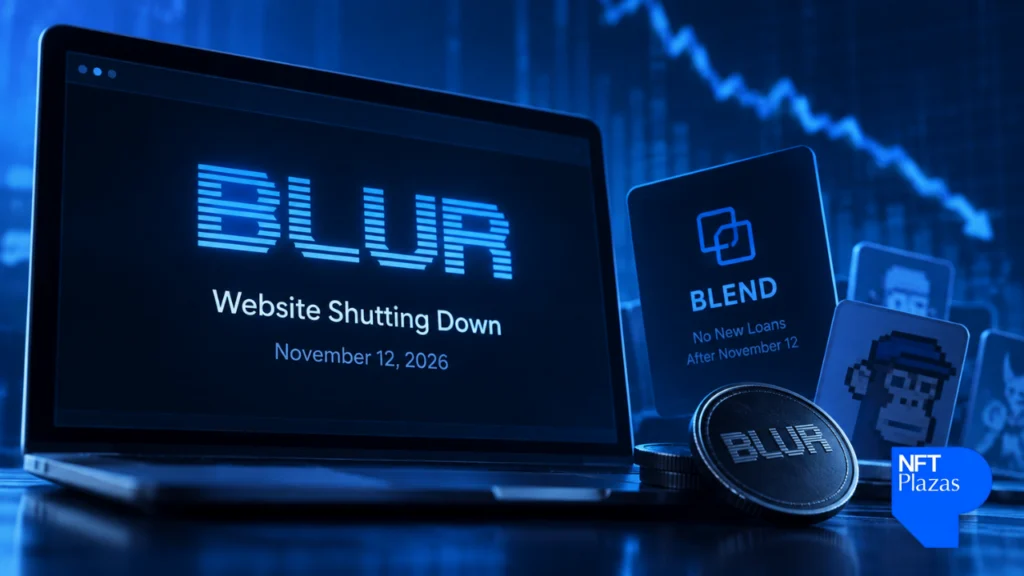
Blur, once a dominant force in the Ethereum NFT trading landscape, has announced its decision to shut down its primary website, blur.io, and discontinue new lending services through its Blend protocol on November 12, 2026. This significant development marks a pivotal moment for a platform that rapidly ascended to rival OpenSea but has since faced a prolonged and dramatic decline in activity. The announcement, made via the platform’s official X account on October 12, arrives amidst a broader downturn in the non-fungible token (NFT) market and follows closely on the heels of the closure of Blast, an Ethereum layer-2 network developed by the same founding team. The sequential shutdowns underscore the intensifying pressures confronting Web3 projects that have relied heavily on aggressive incentive programs to attract and retain users.
The cessation of operations for Blur’s frontend, the user-facing website blur.io, will effectively remove the primary interface through which NFT collectors and professional traders have accessed its marketplace. While the underlying smart contracts and on-chain marketplace infrastructure are designed to remain functional on Ethereum, the absence of an official, user-friendly portal is expected to significantly impede accessibility for most users. BLUR token holders, however, will retain their governance rights over the protocol’s fee switch, allowing them to determine if marketplace trading fees can be introduced in the future. This distinction between the frontend and the immutable backend protocol is crucial, highlighting the decentralized ethos of Web3 even as centralized operational aspects falter.
Parallel to the website shutdown, Blur’s peer-to-peer NFT lending platform, Blend, will cease matching new loans on the same November 12 deadline. Existing borrowers utilizing Blend are mandated to repay their outstanding loans by this date or face the risk of default under the protocol’s established terms, potentially leading to the forfeiture of their staked NFTs. To mitigate potential complications for users, Blur has committed to providing a dedicated tool post-deadline to facilitate the withdrawal of eligible assets from Blend. This move signifies a complete retreat from one of Blur’s key innovations, which aimed to unlock liquidity for NFT holders by enabling them to borrow against their digital collectibles. The double closure sends a clear signal about the sustainability challenges faced by platforms whose growth was largely fueled by speculative demand and aggressive incentive mechanisms.
A Meteoric Rise Followed by a Precipitous Fall
Blur’s journey began in October 2022, when it emerged as a formidable challenger to OpenSea, the then-dominant NFT marketplace. It quickly carved out a niche by specifically targeting professional NFT traders, offering a suite of advanced features designed to enhance efficiency: faster transaction speeds, robust bulk purchasing tools, and a zero-fee marketplace model. This strategic positioning, coupled with a highly anticipated airdrop, allowed Blur to rapidly gain traction.
The platform’s growth trajectory accelerated significantly following the highly anticipated launch of its native BLUR token in February 2023. The accompanying airdrop and an elaborate rewards program, which incentivized trading activity with BLUR tokens, proved immensely successful in attracting liquidity and users. By March 2023, just months after its launch, Blur had achieved a commanding position in the market, controlling an astonishing more than 70% of Ethereum NFT trading volume. During its peak, the platform recorded approximately $1.43 billion in monthly transactions, a testament to its aggressive market penetration strategy and the effectiveness of its incentive model.
Further expanding its ecosystem, Blur introduced Blend in May 2023, a peer-to-peer lending platform that allowed users to borrow Ethereum (ETH) by collateralizing their non-fungible tokens. This innovation aimed to provide greater utility and liquidity within the NFT space, offering a financial primitive previously less accessible to digital asset holders. However, the reliance on an incentive-driven strategy proved increasingly difficult to sustain as the broader NFT market began to cool, and speculative demand weakened considerably.
The decline was as dramatic as its ascent. By March 2026, Blur’s monthly trading volume had plummeted to below $7 million, representing a staggering decline exceeding 99.5% from its peak performance. This precipitous fall highlights the inherent fragility of models heavily dependent on continuous incentives in a volatile, sentiment-driven market. The platform’s zero-fee model, while effective in attracting traders, simultaneously limited its direct marketplace revenue. Data from Token Terminal, for instance, indicated no protocol revenue generated from trading fees over the past three years, although this figure might not encompass potential earnings from Blend’s lending activities or other less transparent revenue streams. Critics had previously raised concerns about whether Blur’s reward mechanisms inadvertently fostered speculative "wash trading" rather than genuine demand, potentially contributing to the broader decline in NFT prices and market health. While trading data alone cannot definitively distinguish between genuine demand and incentive-driven activity, the current trajectory strongly suggests that the latter played a significant, and ultimately unsustainable, role.

The Broader NFT Market’s Lingering Struggles
Blur’s struggles are not isolated; they mirror a broader and prolonged contraction across the entire NFT industry. The market, which experienced an unprecedented boom in 2021 and early 2022, has since retreated significantly, with trading activity remaining far below its previous euphoric levels. This downturn has challenged the sustainability of many projects and platforms that flourished during the speculative frenzy.
According to data compiled by CryptoSlam, monthly NFT sales had fallen to $167.2 million in September 2026. This figure represents a sharp decline compared to $554.8 million recorded just a year prior and an even more dramatic drop from the $1.78 billion reported in December 2023, illustrating the severity of the market correction. Further underscoring this trend, Statista projects global NFT market revenue to hover around $318.3 million in 2026, a figure broadly stagnant compared to the previous year, suggesting a plateauing or even contraction in overall market value.
Insights from DappRadar, however, offer a nuanced perspective. Their reports indicate that while overall sales volume has declined, the number of NFT transactions has been somewhat supported by lower average NFT prices. This suggests a shift in market dynamics: NFTs continue to attract buyers, but activity increasingly revolves around more affordable assets rather than the high-value, blue-chip collections that once dominated headlines and trading volumes. For platforms like Blur, which were built to cater to high-volume, often speculative, trading and relied heavily on token incentives, this fundamental shift presents an existential challenge to their long-term viability and business model. The market’s pivot towards lower-priced assets inherently reduces potential revenue from trading fees (even if zero-fee models were abandoned) and diminishes the overall pool of value against which incentives can be effectively distributed.
Blast’s Precedent: A Troubling Sign for Blur’s Ecosystem
The announcement of Blur’s website closure gains additional context and weight from the recent shutdown of Blast, an Ethereum layer-2 network. Blast, also founded by Tieshun Roquerre, widely known as Pacman, announced its closure just ten days prior, on October 2. Blast had garnered significant attention and capital, attracting over $2.3 billion in deposits ahead of its mainnet launch in February 2024, largely on the promise of native yield opportunities and user rewards. However, the network’s assets reportedly dwindled to approximately $32 million by the time its developers announced the cessation of operations.
The Blast team explicitly attributed their decision to the unsustainability of their operational model, stating that operating costs had consistently exceeded revenue. Blast users were given until October 26 to withdraw their funds via its regular interface, a separate but related deadline preceding Blur’s November 12 cutoff. While Blur has refrained from providing the same explicit financial explanation for its decision, the consecutive closures of projects stemming from the same core team, both of which relied heavily on incentive mechanisms to bootstrap liquidity and user engagement, paint a clear picture. They highlight a significant systemic challenge within the crypto ecosystem: the difficulty in transitioning from an incentive-driven growth phase to a self-sustaining, revenue-generating model, especially in a bearish or stagnant market environment.
BLUR Token Volatility and Emerging Security Considerations
Unsurprisingly, the announcement of Blur’s operational changes triggered an immediate and sharp negative reaction in the market value of its native BLUR token. Reports indicate a significant selloff, with the token plummeting by more than 33% within a 24-hour period, falling to approximately $0.012 on October 13. This rapid devaluation reduced its market capitalization to an estimated $38 million, reflecting investors’ loss of confidence in the token’s future utility and value proposition in the absence of a thriving frontend and lending platform.

Beyond the immediate financial impact, the announcement also brought renewed attention to potential security concerns surrounding NFT permissions previously granted to Blur’s smart contracts. Blockchain researcher 0xQuit publicly highlighted these concerns, emphasizing that while no existing vulnerabilities had been specifically identified, the nature of upgradeable smart contracts could pose risks if administrative controls were compromised or misused. Such contracts, by design, allow developers to modify their logic post-deployment, a feature that offers flexibility but also introduces a centralized point of potential failure or exploit if not managed with utmost security.
In response, users were strongly encouraged to review and revoke any unnecessary token or NFT approvals granted to Blur’s smart contracts through tools such as Revoke.cash. Prominent figures within the NFT community, including Figge, CEO of Yuga Labs (creators of Bored Ape Yacht Club), and Luca Netz, CEO of Pudgy Penguins, publicly echoed these precautionary measures, urging their respective communities to take proactive steps to safeguard their digital assets. This highlights a persistent vulnerability in the Web3 space, where users often grant broad permissions to decentralized applications, sometimes without fully understanding the implications, leaving them exposed if the underlying project faces operational issues or security breaches.
Amidst these developments, there has been a speculative glimmer of potential future activity for the Blur protocol. A representative from SushiSwap, a prominent decentralized exchange, publicly expressed interest in acquiring Blur, although no formal negotiations or concrete agreements have been confirmed. Such an acquisition, if it were to materialize, could potentially offer a lifeline to the underlying protocol and its token holders, integrating its functionalities into a broader DeFi ecosystem. However, without a clear path forward, the future relevance of Blur’s protocol, even if technically operational, remains highly uncertain given the severely diminished trading activity and the winding down of its key lending component.
Implications for the NFT Ecosystem and the Future of Incentives
The retreat of both Blur and Blast poses a profound question for the entire NFT industry and, more broadly, for the Web3 space: can platforms built primarily around aggressive trading incentives and token rewards truly achieve long-term viability and sustainability once those initial rewards diminish or disappear? Blur’s trajectory serves as a stark case study in the challenges of cultivating genuine, organic demand versus incentivized activity. While incentives can effectively bootstrap network effects and liquidity in nascent markets, the expectation for perpetual rewards often creates an unsustainable economic model that struggles to transition to a value-driven, profitable enterprise.
The distinction between a protocol’s enduring smart contracts and its vanishing frontend also raises important questions about accessibility and decentralization. While the technical infrastructure might remain on Ethereum, the loss of an intuitive, official interface effectively centralizes access for most users, potentially pushing them towards third-party aggregators or less user-friendly command-line interactions. This highlights the inherent tension between the decentralized ideals of blockchain technology and the practical need for user-friendly, centralized interfaces for mass adoption.
Ultimately, Blur’s decision to close its website and wind down Blend is more than just the end of a single platform; it is a powerful bellwether for an evolving and maturing NFT market. It underscores the critical need for sustainable business models, genuine utility, and robust community engagement beyond fleeting speculative bubbles. As the market continues to consolidate and redefine itself, projects that can demonstrate intrinsic value, secure funding, and adapt to changing user behaviors will be better positioned to navigate the ongoing challenges and build lasting legacies in the decentralized future. The lessons learned from Blur’s rise and fall will undoubtedly inform the strategies of future NFT marketplaces and Web3 initiatives striving for enduring success in this dynamic and often unforgiving landscape.