Dwi Wanna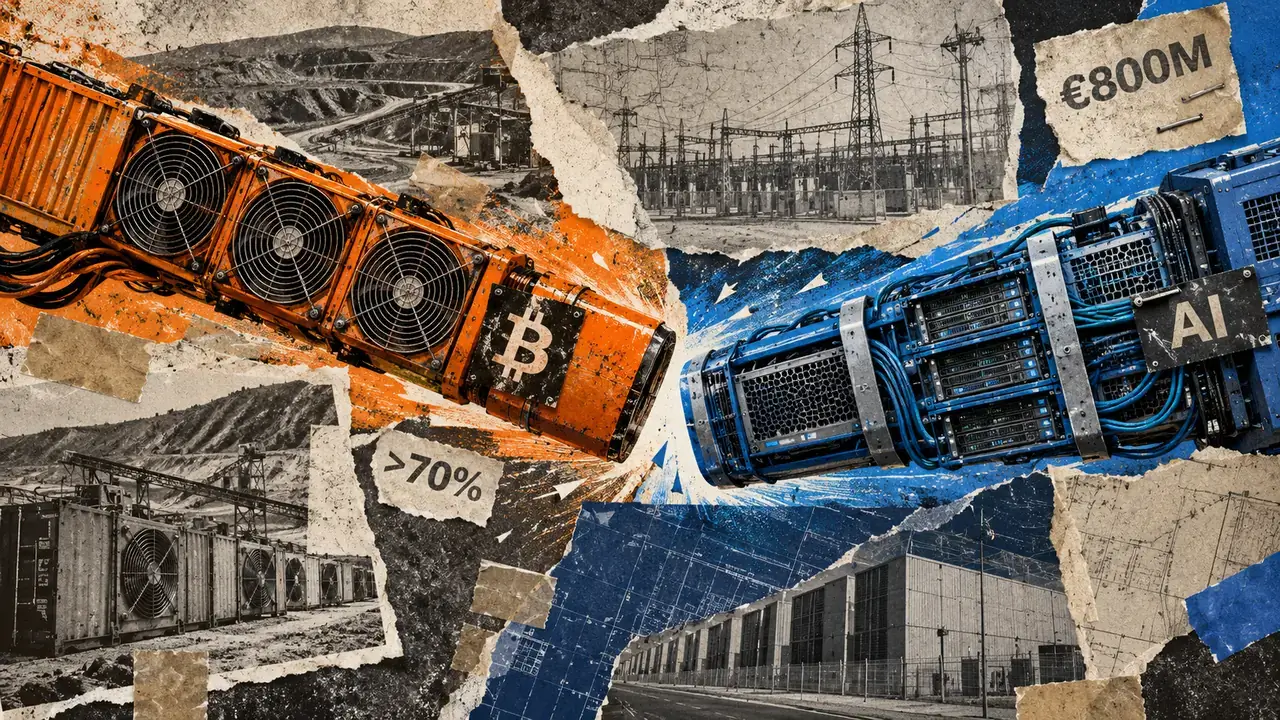
SWI Group, the Amsterdam-listed digital infrastructure specialist, has successfully raised €800 million in a fresh capital round aimed at accelerating its transition from cryptocurrency mining to high-performance computing (HPC) and artificial intelligence (AI) infrastructure. This significant capital injection, backed by a consortium of institutional investors, brings the group’s total equity raised since March to over €1 billion and elevates the company’s valuation to approximately €6.1 billion. The move underscores a broader industrial trend where traditional Bitcoin mining entities are leveraging their access to power and physical data center sites to capture the burgeoning demand for AI-driven processing power.
The primary objective of this fundraising is the redevelopment of SWI’s existing digital infrastructure portfolio, most notably the assets of Genesis Digital Assets (GDA). Formerly a major venture for the now-defunct cryptocurrency exchange FTX and its trading arm Alameda Research, Genesis is being integrated into SWI’s broader strategic roadmap. The company plans to convert these energy-intensive sites into sophisticated environments capable of hosting the high-density GPU clusters required for modern AI workloads.
The Genesis Transformation: From FTX Liability to AI Asset
The history of Genesis Digital Assets is inextricably linked to the rise and fall of the FTX empire. Between 2021 and 2022, Alameda Research invested approximately $1.15 billion into Genesis, a period when the miner reached a valuation of roughly $5.5 billion. At the time, it was one of the largest venture investments in Alameda’s portfolio. However, following the collapse of FTX in November 2022, these assets became the center of a complex legal battle.
FTX’s recovery trust initially filed litigation against Genesis Digital Assets, seeking to reclaim the $1.15 billion investment on the grounds that the funds were improperly transferred from the exchange’s customers. The legal cloud over the assets persisted until mid-2024, when the trust dismissed the lawsuit, clearing the path for a corporate restructuring. SWI Group moved swiftly to consolidate its position, completing the acquisition of a stake exceeding 70% in August 2024.
Under the new strategic direction, the mining entity will be rebranded as "SWI Digital." This rebranding is more than cosmetic; it represents a fundamental shift in the company’s business model. While the sites originally served the singular purpose of securing the Bitcoin network, they will now serve as the foundation for an enterprise-grade AI cloud platform. By repurposing the existing power-connected sites in the United States and Europe, SWI avoids the multi-year delays associated with securing new utility connections—a major bottleneck in the current data center market.
The Economic Logic of the AI Pivot
The decision to move away from pure-play Bitcoin mining is driven by a stark divergence in profitability and market valuation. According to industry data, the financial outlook for AI infrastructure significantly outpaces that of cryptocurrency mining, particularly following the most recent Bitcoin halving event, which slashed block rewards for miners.
Data from CoinShares’ recent mining reports highlights the disparity in revenue potential. AI computing infrastructure is estimated to generate approximately $1.5 million in annualized profit per megawatt (MW). In contrast, Bitcoin mining yields roughly $500,000 per megawatt under current market conditions. This threefold increase in potential profitability has fundamentally changed how investors value these companies.
Market performance reflects this shift. Publicly traded mining companies that have successfully signaled a pivot toward AI—such as Hut 8, TeraWulf, and Core Scientific—have seen their stock prices surge. These firms are currently trading at an average of 19.4 times forward sales. Meanwhile, companies that remain focused exclusively on Bitcoin mining are trading at a much lower multiple of 6.6 times forward sales. By securing €800 million to fund this transition, SWI Group is positioning itself to capture the higher valuation premiums typically reserved for the technology and cloud services sectors.
Infrastructure and Power Capacity: The New Global Currency
At the heart of SWI’s strategy is its massive energy footprint. The company has disclosed a combined European and American digital infrastructure portfolio exceeding 4 gigawatts (GW) of power capacity. In the world of high-performance computing, access to "stranded" or "ready-to-use" power is often more valuable than the hardware itself.
The global demand for AI training and inference has led to a critical shortage of data center space. Traditional data center providers are struggling to meet the cooling and power requirements of NVIDIA’s latest Blackwell chips and other high-density hardware. Bitcoin mining sites, which are already built to handle immense electrical loads, provide a unique "brownfield" opportunity for redevelopment.
However, the transition is not without significant capital requirements. Industry analysts estimate that converting a site from Bitcoin mining to AI-grade specifications can cost between $8 million and $15 million per megawatt. This is a massive leap from the $700,000 to $1 million per megawatt typically required for basic mining infrastructure. The high cost is attributed to the need for advanced cooling systems (such as liquid or immersion cooling), redundant power supplies (Tier 3 or 4 standards), and high-speed fiber connectivity—all of which are unnecessary for Bitcoin mining but essential for AI.
Strategic Roadmap and Executive Vision
Max-Hervé George, Chief Executive of SWI Group, emphasized that the capital increase is a response to the "exponential" growth in demand for computing capacity. "The landscape of digital infrastructure is shifting beneath our feet," George stated in a recent communication. "By integrating our vast power resources with the latest in high-performance computing technology, we are not just building data centers; we are building the backbone of the next industrial revolution."
The company’s plan involves more than just leasing space to third parties. SWI Group intends to develop its own proprietary AI cloud platform. This vertical integration would allow the company to move up the value chain, offering computing services directly to enterprises and developers rather than acting as a mere landlord for hardware.
While the specific allocation of the €800 million toward individual Genesis sites has not been disclosed, the company has indicated that more than 80% of its total capital is now allocated to the digital infrastructure and AI sector. The new shares will be issued in several series to the participating institutional investors, though the identities of these investors remain confidential.
Broader Implications for the Tech and Crypto Sectors
The SWI Group’s massive capital raise is a landmark event that signals a permanent change in the relationship between the crypto and AI industries. As Bitcoin mining becomes increasingly competitive and energy-intensive, the "great pivot" to AI offers a lifeline for companies with large-scale infrastructure.
Several key implications emerge from this development:
- Energy Scarcity: As more gigawatts of power are redirected from securing the Bitcoin network to training Large Language Models (LLMs), the hash rate of the Bitcoin network may see a deceleration in growth. This could lead to a more consolidated mining industry where only the most efficient operators survive.
- M&A Activity: The acquisition and restructuring of Genesis Digital Assets by SWI Group may serve as a blueprint for other distressed or undervalued crypto assets. Infrastructure-heavy companies are becoming prime targets for private equity and institutional investors looking for a shortcut into the AI market.
- Revenue Recognition Gap: Despite the high valuations, a gap remains between "contracted capacity" and "realized revenue." Industry reports suggest that while over $100 billion in AI computing contracts have been disclosed across the sector, only a fraction of that is currently generating billings. The pressure is now on SWI and its peers to execute their conversion plans and turn power capacity into operational GPU clusters.
As SWI Group moves forward with the rebranding of Genesis to SWI Digital, the tech industry will be watching closely. The successful conversion of 4GW of power capacity would make SWI one of the largest independent AI infrastructure providers in the world. For now, the €800 million capital raise provides the necessary fuel for a transformation that could redefine the boundaries between digital currency and artificial intelligence.