admin
admin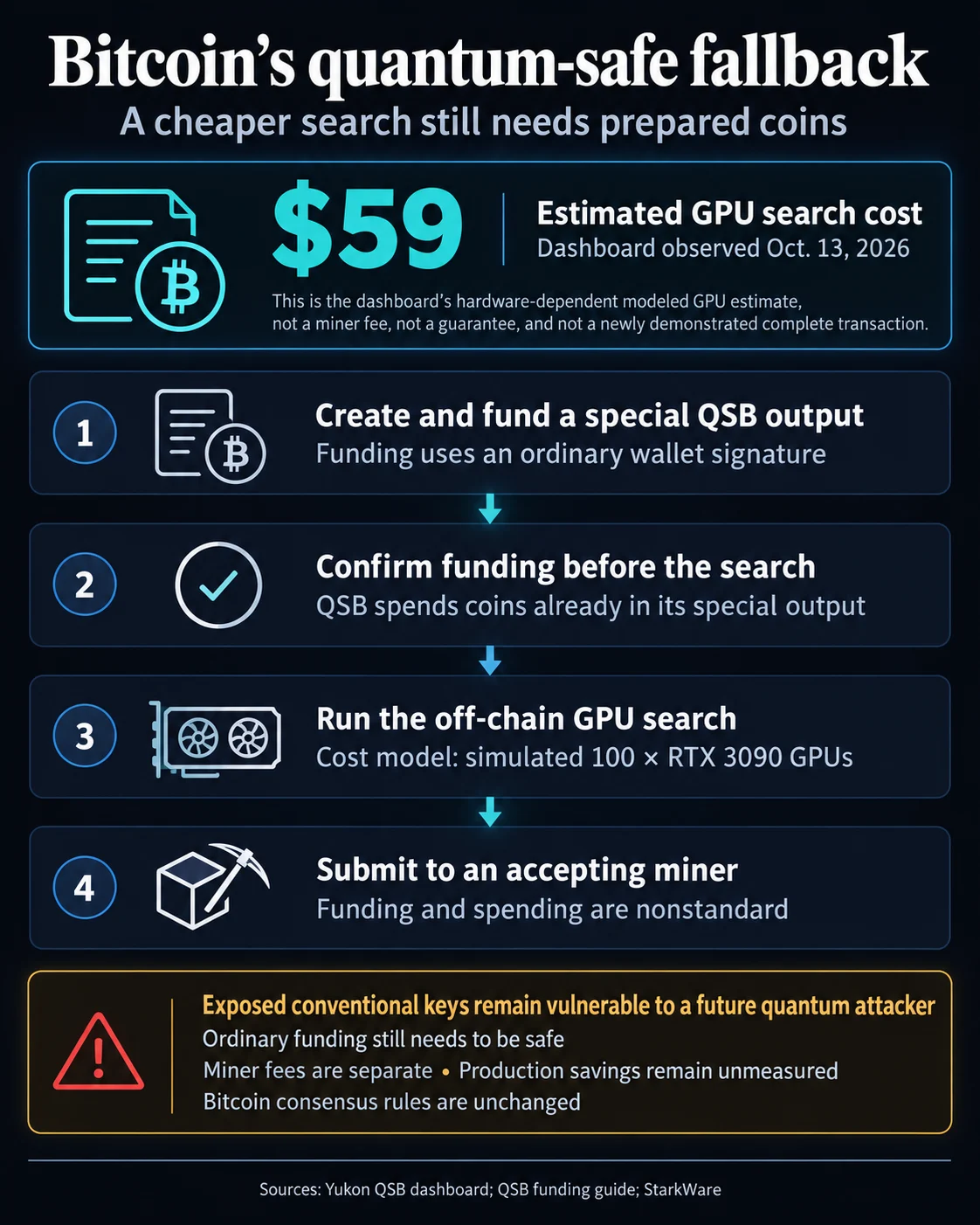
Researchers have dramatically reduced the estimated computing cost for a specialized quantum-safe Bitcoin transaction by an impressive 82%, bringing the projected expense down to just $59. This significant cost reduction, achieved through advancements in graphics processing software and AI-assisted coding tools, represents a crucial step forward in making a robust quantum-resistant method for safeguarding Bitcoin holdings more accessible. The breakthrough comes at a time when the specter of quantum computing looms larger over the security of existing cryptographic systems, including those underpinning Bitcoin.
The data emerging from the Quantum-Safe Bitcoin Optimization (QSB) Challenge paints a clear picture of rapid progress. During StarkWare’s initial mainnet demonstration in August, the projected cost for such a transaction was approximately $320. By September, this figure had fallen to $67, and as of October 13, it had been further slashed to $59. This rapid decline underscores the effectiveness of the optimization efforts and suggests a more feasible pathway for implementing quantum protection without necessitating immediate, complex overhauls of Bitcoin’s core protocol.
This innovative approach, known as Quantum-Safe Bitcoin (QSB), is designed to shield specially prepared Bitcoin holdings from potential future attacks by quantum computers. It leverages hash-based cryptography and a computational puzzle, operating under Bitcoin’s existing consensus rules. A key advantage of QSB is its ability to allow holders to perform the necessary calculations off-chain, thereby offering a layer of security while the broader cryptocurrency community and developers continue to work on fundamental upgrades to Bitcoin’s cryptographic infrastructure.
The Quantum-Safe Bitcoin Optimization Challenge, a public competition orchestrated by a consortium including StarkWare, Yukon Research, and Eigen Labs, played a pivotal role in accelerating these advancements. The challenge specifically utilized cutting-edge AI-assisted coding tools to expedite the complex computational searches inherent in securing these specialized transactions. The latest benchmark results highlight this efficiency, recording over 1 billion verified candidates per second on an Nvidia RTX 4090 GPU. This is a substantial leap from the initial rate of approximately 146 million candidates per second observed at the outset of the challenge, demonstrating the power of these new tools.
The Race Against Quantum Computing
The urgency for such quantum-resistant solutions has intensified significantly in recent months. Advances in quantum computing technology are outpacing previous predictions regarding the timeline and computational power required to break existing cryptographic algorithms. In March of this year, Google Quantum AI published findings that sent ripples through the cybersecurity community. Their research indicated that future quantum computers could potentially compromise the elliptic-curve cryptography, the very foundation of Bitcoin’s digital signatures, with substantially fewer resources than previously estimated.
Google’s researchers posited that certain quantum attacks, under specific hardware assumptions, could theoretically be executed in mere minutes using fewer than 500,000 physical qubits. This represents a roughly 20-fold reduction in the estimated resource requirements compared to earlier projections. While such quantum machines are not yet publicly demonstrated or readily available, these findings have heightened the pressure on blockchain developers and the wider cryptocurrency ecosystem to proactively prepare for the advent of practical quantum attacks.
Quantifying the Quantum Exposure Risk
The potential implications of a successful quantum attack on Bitcoin are substantial. A study conducted by Glassnode, a prominent on-chain analytics firm, revealed that a significant portion of Bitcoin’s circulating supply has public keys visible on the blockchain. At the time of the study, approximately 6.04 million BTC, representing 30.2% of Bitcoin’s issued supply, had public keys exposed. This exposure arises from various factors, including the underlying structure of Bitcoin addresses, the practice of address reuse, and historical spending activity.

A sufficiently powerful quantum computer, capable of executing the algorithms outlined by Google, could theoretically derive private keys from these exposed public keys. This would grant the attacker complete control over the associated Bitcoin holdings, leading to potentially catastrophic losses for affected users. This alarming revelation has ignited a fervent debate within the Bitcoin community regarding the optimal pace for adopting quantum-resistant cryptography, a process complicated by the decentralized nature of the network and the inherent challenges of implementing large-scale protocol upgrades.
QSB: A Promising Interim Solution
Quantum-Safe Bitcoin (QSB) emerges as a potential interim solution, offering a pathway to protect specific Bitcoin holdings against quantum threats without immediate reliance on network-wide protocol changes. The QSB method is designed to safeguard eligible coins whose conventional public keys are kept hidden until they are moved into specially constructed outputs. This mechanism provides a crucial security buffer for assets that can be migrated to these protected states.
However, it is critical to acknowledge the limitations of QSB. For holdings that already have their public keys exposed on-chain, QSB does not offer retroactive protection. If a capable quantum attacker emerges before these vulnerable assets can be migrated to QSB-protected outputs, they remain susceptible to theft. Therefore, QSB is most effective as a proactive measure for users looking to secure their future Bitcoin transactions and holdings.
Furthermore, the practical deployment of QSB transactions faces certain hurdles. While these transactions adhere to Bitcoin’s consensus rules, standard network relay policies often reject them. This necessitates their direct submission to miners who are specifically willing and equipped to process them. During the August demonstration, MARA’s Slipstream service provided this specialized routing mechanism, highlighting the need for infrastructure that can accommodate these non-standard transaction types.
The Path Forward: Optimization and Broader Adoption
Despite these challenges, the significant cost reductions achieved during the QSB Challenge represent a pivotal moment. The $59 figure, while currently a hardware-dependent estimate based on simulated GPU workloads rather than a completed production transaction, signifies a dramatic improvement in efficiency. It’s important to note that this estimate excludes standard Bitcoin network fees, and certain computational stages still involve provisional assumptions.
StarkWare has indicated that these optimizations substantially lower the cost of preparing their proposed emergency protection method. The company’s researchers are now ambitiously targeting a computing cost below $10 per transaction. This aggressive cost-reduction goal suggests a future where quantum-resistant transactions become not only technically feasible but also economically viable for a wider range of users.
While QSB offers a valuable interim solution, StarkWare and many in the research community continue to advocate for a comprehensive Bitcoin protocol upgrade as the ultimate long-term defense against quantum threats. The success of QSB hinges on further developments: researchers must now demonstrate these computing savings in fully completed transactions and establish reliable access to miners willing to process them. Only then can QSB solidify its position as a practical fallback for Bitcoin holders concerned about the evolving quantum landscape.
The implications of this ongoing research extend beyond Bitcoin, influencing the broader cryptocurrency and blockchain industries. As quantum computing capabilities advance, the need for quantum-resistant cryptography will become paramount across all digital assets and decentralized applications. The progress made in the QSB Challenge serves as a vital case study, demonstrating the power of collaborative innovation and the potential for rapid advancements in securing our digital future against emerging technological threats. The race to quantum-resistance is on, and the recent cost reductions in Bitcoin’s quantum-safe transactions represent a significant stride forward in that critical endeavor.