admin
admin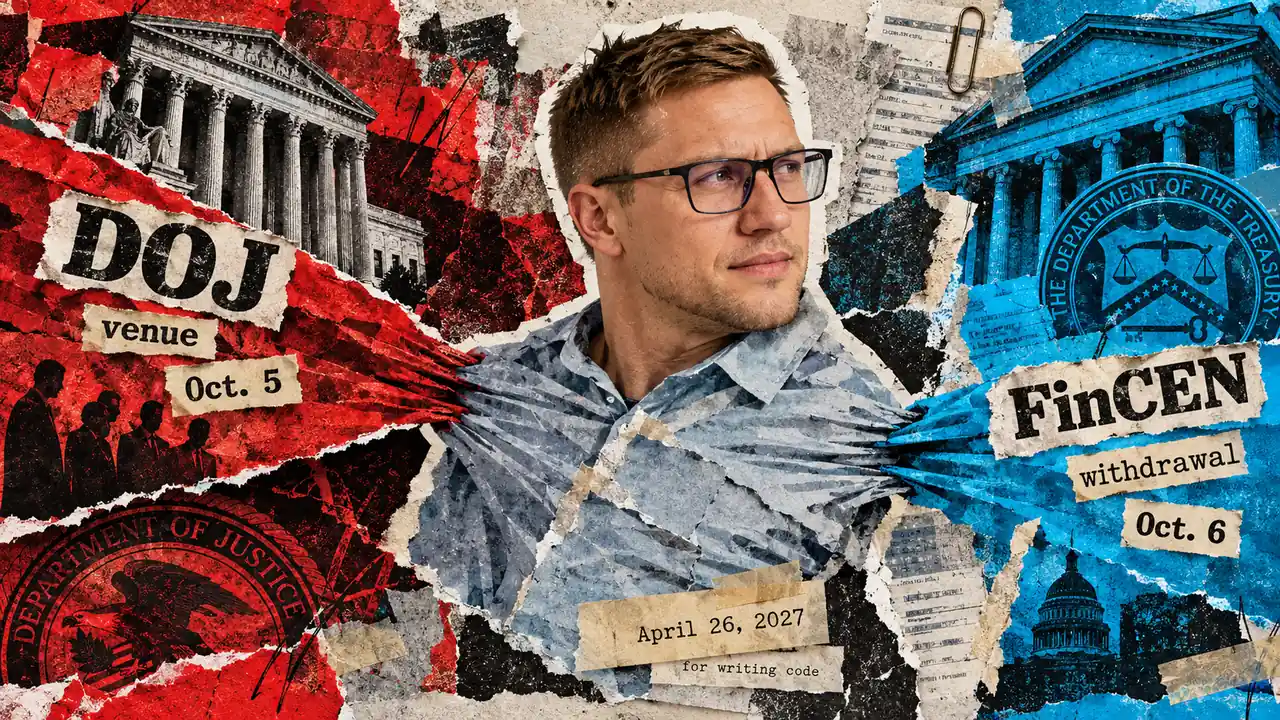
Federal prosecutors have invoked a recent appellate decision concerning the cryptocurrency mixer Bitcoin Fog in their effort to defend the inclusion of two specific charges against Roman Storm in New York. In a letter filed on October 5th, the prosecution team urged Judge Katherine Polk Failla to dismiss Storm’s challenge to the venue for the money-laundering and money-transmission conspiracy counts. Storm, a co-founder of Tornado Cash, a prominent cryptocurrency mixer designed to obfuscate transaction trails, stands accused of knowingly participating in illicit financial activities. This legal maneuver occurs against a backdrop of evolving regulatory stances on cryptocurrency mixers, with the Treasury Department recently moving to withdraw a broad proposal for mixer reporting. The core of the ongoing legal battle hinges on the prosecution’s assertion that Storm intentionally engaged in criminal conduct, while contemporaneous policy shifts acknowledge the legitimacy of privacy-enhancing technologies and suggest a more nuanced approach to charging decisions. The central dispute remains whether Storm’s contributions to the development of such software crossed the threshold into criminal culpability.
Storm, who communicates on the social media platform X under the handle @rstormsf, has publicly characterized the prospect of imprisonment as a penalty “for writing code.” He has drawn a stark contrast between his legal predicament and the Treasury’s apparent recalibration of its policy approach. His vocal criticisms highlight the broader implications for developers of privacy-enhancing technologies. However, the immediate focus of the latest legal filing is procedural: the determination of where his case can be legitimately tried. This venue challenge is critical to the prosecution’s strategy, as a successful challenge could lead to the dismissal of significant charges.
The legal proceedings against Roman Storm are already marked by a conviction secured in August 2025. On one count of money-transmission conspiracy, he faces a statutory maximum sentence of five years. A subsequent court order, dated August 25, 2026, scheduled his retrial for April 26, 2027. This date was set following Storm’s filing of a motion for acquittal and a request for a continuance, indicating the ongoing complexity and procedural intricacies of the case.
Southern District of New York prosecutors are grounding their argument for retaining the venue in New York on the September 25 decision by the U.S. Court of Appeals for the D.C. Circuit in the case of United States v. Sterlingov. This precedent-setting case involved Bitcoin Fog, another cryptocurrency mixer distinct from Tornado Cash. The prosecution contends that the venue holdings established in Sterlingov serve as persuasive authority, bolstering their position against Storm’s current venue challenge. The core of their argument, as presented to Judge Failla, centers on the involvement of a Manhattan-based customer, Shakeeb Ahmed. Prosecutors allege that Ahmed’s deposits, even if transient, contributed to enlarging the anonymity pool offered by the mixer, thereby making the illicit movement of funds more difficult to trace. Furthermore, they assert that serving a customer within the Southern District of New York provides a sufficient nexus to establish venue for the money-transmission count.
The Shifting Sands of Crypto Policy: Why the Case Continues
The recent move by the Treasury Department’s Financial Crimes Enforcement Network (FinCEN) to withdraw its 2023 finding and accompanying proposed enhanced reporting and recordkeeping measures for international cryptocurrency mixing underscores a significant shift in regulatory thinking. The withdrawal notice, filed on October 5th for publication on October 6th, explicitly cites concerns about a “chilling effect on legitimate activity” and the imposition of undue burdens on financial institutions. This development signals a growing recognition within the Treasury of the need to balance robust anti-money laundering efforts with the protection of legitimate financial privacy. FinCEN’s stated objective is to acknowledge and safeguard lawful financial privacy while maintaining essential monitoring mechanisms to combat money laundering, terrorist financing, and other illicit activities. It is crucial to note that this withdrawal pertains to an administrative reporting proposal and does not, in itself, repeal existing criminal offenses or render a definitive judgment on the merits of Storm’s case.
The Department of Justice (DOJ) has also signaled a recalibration of its approach. A memo issued on April 7, 2025, by Deputy Attorney General Todd Blanche directed prosecutors to move away from targeting mixers based solely on the conduct of their users or for unwitting regulatory violations. The memo also called for a review of ongoing cases. However, this directive contains a significant caveat: it expressly excludes Section 1960(b)(1)(C) of the U.S. Code, which pertains to funds known to originate from criminal activity or intended for unlawful purposes, from its regulatory charging restrictions. This exclusion means that prosecutions based on the knowing transmission of illicit funds can still proceed, even as the DOJ seeks to refine its enforcement strategy.
Further elaborating on this nuanced approach, Acting Assistant Attorney General Matthew R. Galeotti, in remarks made in August 2025, outlined conditions under which new charges related to cryptocurrency mixers might be restricted. His statement suggested that qualifying software, characterized by true decentralization, automation of peer-to-peer transactions, and the absence of third-party custody or control over user assets, would not be subject to new charges under certain provisions. However, other charges could still be deemed appropriate if evidence of criminal intent exists. This conditional promise regarding new charges does not retroactively invalidate Storm’s existing conviction.
The DOJ has characterized Roman Storm’s alleged conduct as the building, maintenance, and profiting from a service despite possessing knowledge that it facilitated the transmission of criminal proceeds. Storm, conversely, maintains that his actions were solely related to his development work and should not be subject to criminal prosecution.
The breadth of the government’s theory in prosecuting Storm was further illuminated during an April 9, 2026, hearing. Prosecutor Ben Arad argued that even legitimate deposits, when mixed with illicit funds, could serve to conceal criminal activity, thereby bolstering the case against the developers. He specifically distinguished the knowledge and perspective of innocent depositors from that of Storm and his alleged co-conspirators. The central point of contention, therefore, revolves around the extent of responsibility developers bear for operating and enhancing a service that is ultimately utilized by individuals engaged in criminal enterprises.
During the aforementioned hearing, Judge Failla posed pointed questions regarding whether the government’s expansive theory could adequately establish the element of willful conduct, a key component of many criminal charges. In response, Arad emphasized the active steps taken by Storm and his alleged associates to maintain and improve the service, distinguishing their actions from merely allowing the mixing pools to remain operational. The judge’s scrutiny of the government’s legal framework indicates a careful consideration of the evidence and the applicable legal standards.
The Distinction with Ulbricht’s Pardon
The case of Roman Storm is often contrasted with the situation of Ross Ulbricht, founder of the Silk Road marketplace. Ulbricht received a presidential pardon from former President Donald Trump on January 21, 2025. This pardon granted individual clemency for specific convictions related to his activities. However, it is crucial to understand that this pardon did not extend to Storm or establish a broad exemption for cryptocurrency developers from all legal scrutiny. The legal implications of Ulbricht’s pardon are largely confined to his personal case and do not set a precedent that would automatically absolve others in similar situations.
The next significant developments in Storm’s case will likely hinge on judicial decisions regarding his venue challenge and any subsequent adjustments to the trial schedule. While Washington’s acknowledgment of the importance of lawful cryptocurrency privacy represents a policy evolution, it has not, in itself, resolved the contested criminal case against Roman Storm. The legal battle continues, with the prosecution seeking to solidify its venue and the defense aiming to narrow the scope of charges or achieve a dismissal. The outcome will have considerable implications for the broader ecosystem of cryptocurrency developers and the ongoing debate surrounding innovation, privacy, and regulatory compliance in the digital asset space.
The prosecution’s reliance on the Sterlingov decision is a strategic move designed to establish a legal precedent that supports their venue argument. The Sterlingov case, involving Bitcoin Fog, dealt with similar questions of jurisdiction and the extraterritorial reach of U.S. law in the context of cryptocurrency mixers. In Sterlingov, the D.C. Circuit affirmed that the venue could be established in the District of Columbia due to the actions of a customer within that jurisdiction, even if the mixer itself was operated elsewhere. Prosecutors are arguing that the presence of Shakeeb Ahmed, a customer residing in the Southern District of New York, and his use of Tornado Cash, provides a similar jurisdictional hook for their case. They contend that Ahmed’s deposits, however brief, contributed to the operational integrity and anonymity-enhancing capabilities of Tornado Cash, thus connecting his activities directly to the alleged conspiracy prosecuted in New York.
The legal team representing Roman Storm is expected to counter this argument by emphasizing the decentralized nature of Tornado Cash and the limited control Storm allegedly had over individual user transactions once the software was deployed. Their defense may focus on demonstrating that Storm’s role was primarily that of a software developer and that he did not directly manage or control the funds passing through the mixer in a manner that would establish clear jurisdiction in New York for all alleged offenses. They might also argue that the Sterlingov precedent is distinguishable due to factual differences or that the application of such broad venue rules to decentralized technologies is problematic.
The financial implications of the ongoing legal battle are also significant. While specific financial data related to Tornado Cash’s illicit use is often difficult to quantify precisely due to its design, reports from blockchain analytics firms have consistently highlighted the substantial volumes of cryptocurrency laundered through mixers. For instance, Chainalysis, a leading blockchain analysis firm, has reported in its annual Crypto Crime reports that mixers have been instrumental in laundering billions of dollars worth of cryptocurrency annually, often linked to ransomware attacks and other cybercrimes. The prosecution’s case against Storm is built on the premise that Tornado Cash, by facilitating these transactions, played a critical role in enabling criminal enterprises to profit from their illicit activities.
The distinction between administrative policy changes and criminal prosecution is a critical element that continues to fuel the debate. While FinCEN’s withdrawal of the reporting proposal signifies a more permissive stance on the use of mixers for privacy, it does not negate the fact that these tools can be, and have been, used for illegal purposes. The DOJ’s internal guidance, as reflected in Deputy Attorney General Blanche’s memo, aims to strike a balance by differentiating between legitimate privacy-enhancing technologies and services intentionally designed to facilitate criminal conduct. However, the interpretation and application of this guidance in specific cases, like Storm’s, remain subject to legal scrutiny and judicial determination.
The broader implications for the cryptocurrency industry are substantial. If prosecutors are successful in their venue arguments and secure further convictions, it could have a chilling effect on the development of privacy-preserving technologies. Developers might become more hesitant to create or contribute to open-source projects that could potentially be misused, fearing legal repercussions. Conversely, a ruling that limits the scope of such prosecutions could provide greater clarity and protection for developers operating in this space, fostering innovation while still allowing for the prosecution of individuals who demonstrably engage in criminal activity. The legal and regulatory landscape surrounding decentralized finance (DeFi) and privacy tools is still in its nascent stages, and cases like Roman Storm’s are pivotal in shaping its future trajectory. The ultimate resolution of Storm’s case will not only determine his personal fate but will also send significant signals to the global community of cryptocurrency developers and regulators alike.