admin
admin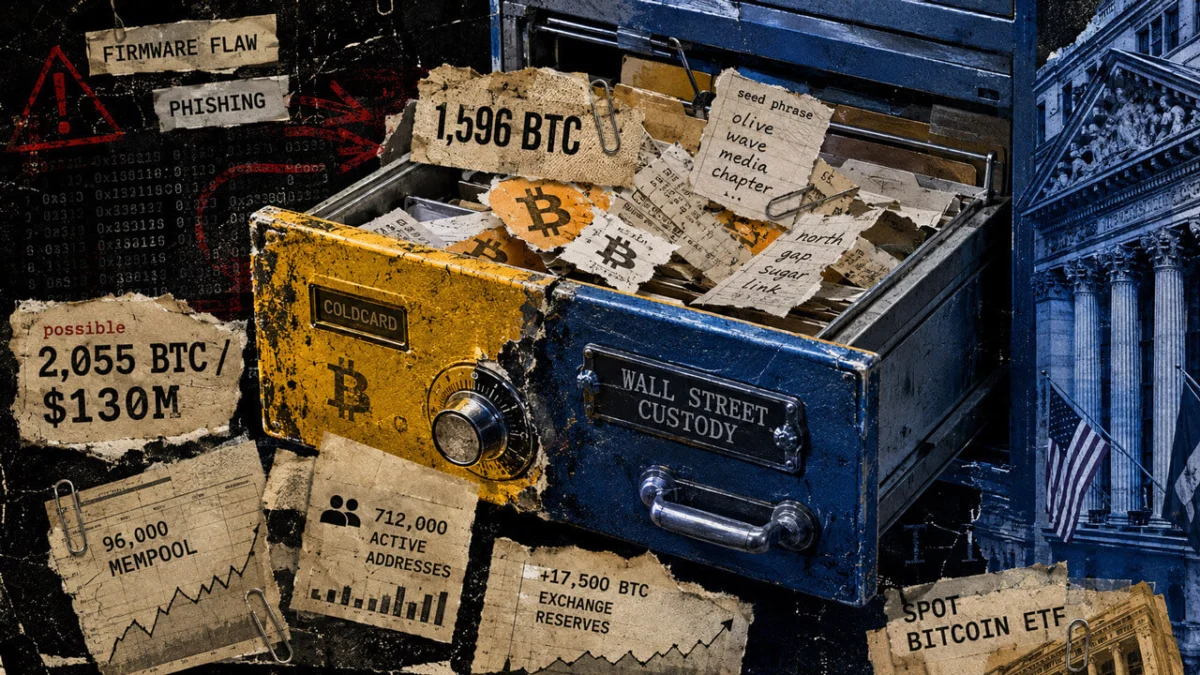
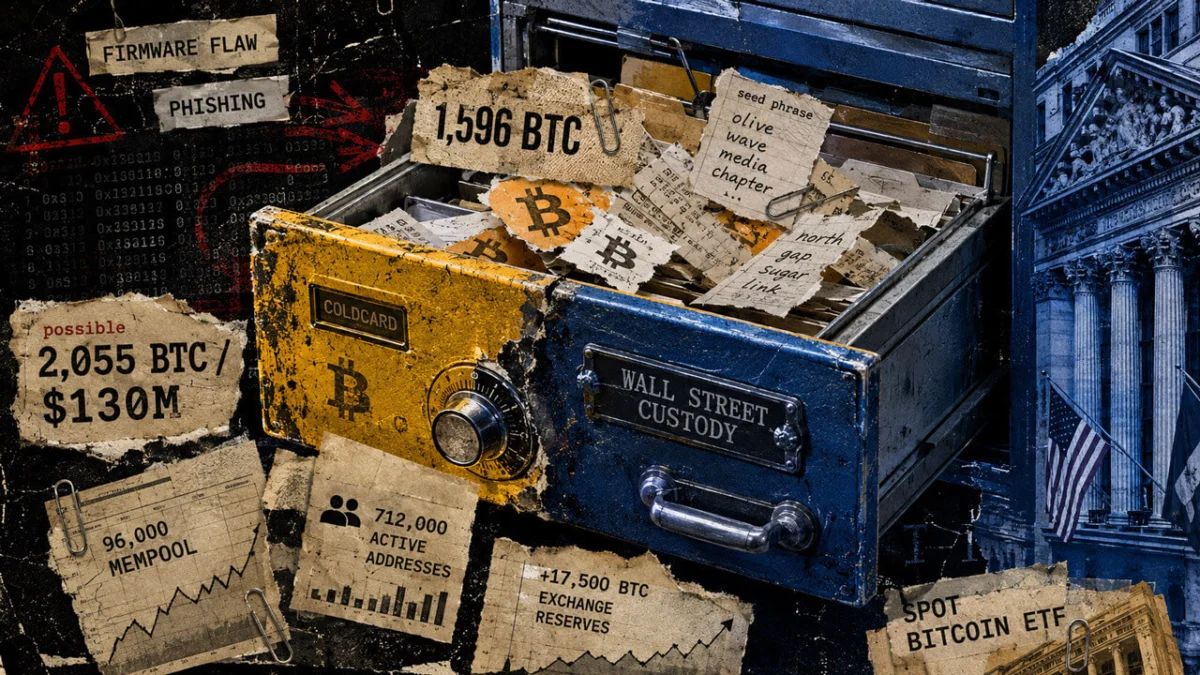
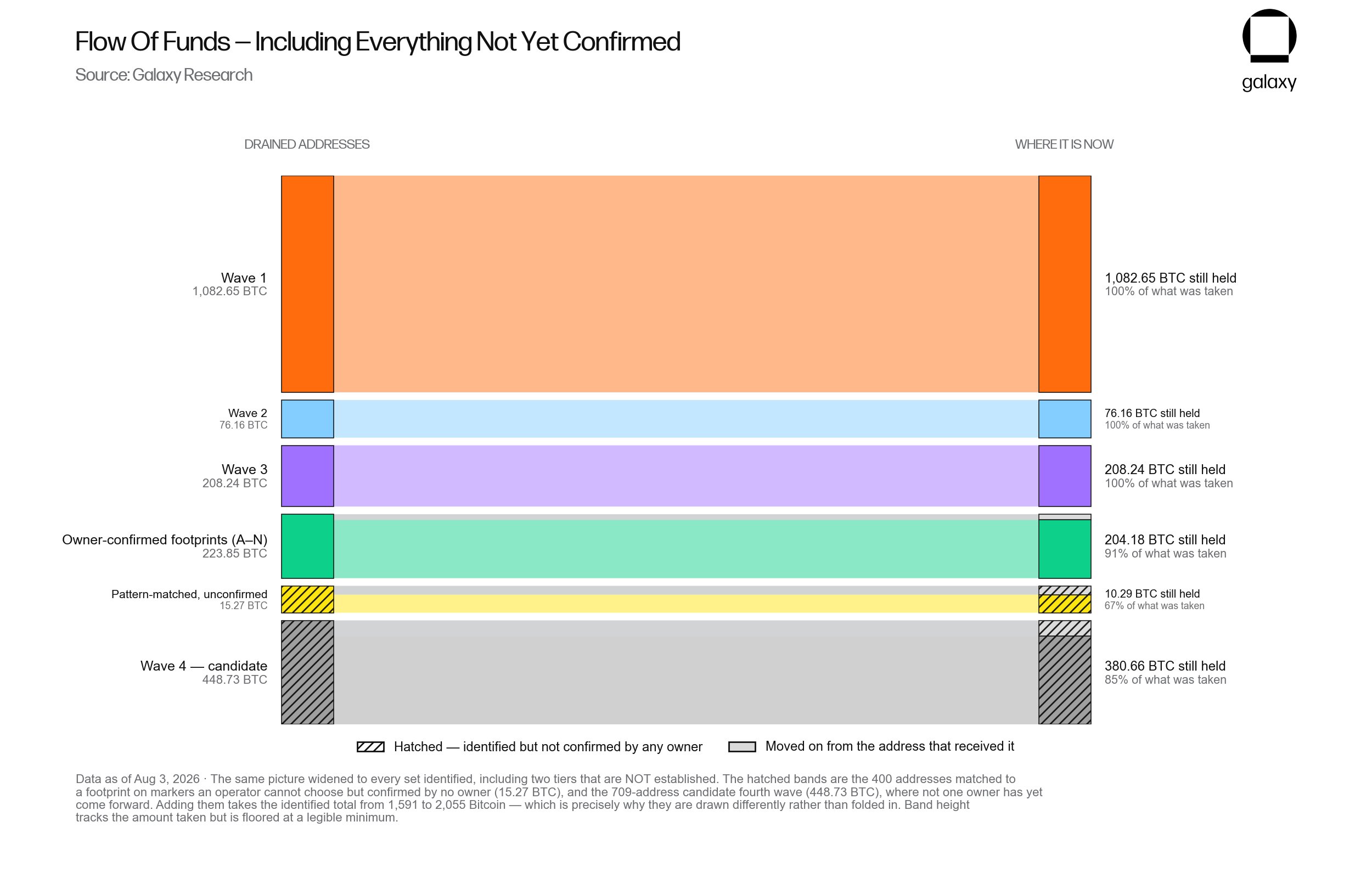
The digital asset landscape is grappling with a significant security breach, as a sophisticated exploit targeting Coldcard hardware wallets has led to the theft of approximately 1,596 Bitcoin (BTC), valued at around $130 million. This unfolding crisis, affecting an estimated 7,300 addresses, has triggered a mass exodus of funds as users scramble to secure their holdings, simultaneously sending ripples of activity across the entire Bitcoin network and reigniting the debate around cryptocurrency custody.
The severity of the Coldcard exploit was brought to light by Galaxy Research, which has meticulously tracked the fallout. According to their analysis, the confirmed losses are the result of at least three major attack waves and 14 smaller, coordinated incidents. Furthermore, researchers have identified a potential fourth wave of attacks that could elevate the total stolen Bitcoin to 2,055 BTC, pushing the financial impact closer to $130 million. However, these addresses remain unconfirmed pending additional victim reports, underscoring the dynamic and evolving nature of this security incident.
The Genesis of the Exploit: A Flaw in Randomness
At the heart of this widespread theft lies a critical vulnerability within the Coldcard firmware, with its origins traced back to March 2021. A subtle yet significant coding error led to a subset of Coldcard devices generating recovery seeds using a less secure software process. Instead of relying sufficiently on the device’s hardware random-number generator for true randomness, the flawed process created seeds with a significantly reduced number of possible combinations. This weakness, once discovered, provided attackers with a window to remotely reconstruct private keys without needing physical access to the device or the owner’s recovery words.

While Coinkite, the manufacturer of Coldcard, has released a firmware update to prevent the creation of new vulnerable seeds, this solution is not retroactive. Wallets whose recovery phrases were generated during the period of the flaw remain exposed. The company has issued urgent advisement to users to not only install the security update but also to create entirely new seeds and transfer their Bitcoin to these newly secured wallets. The threat remains active for any affected wallet until its assets are moved to an address derived from a cryptographically sound seed.
Unprecedented Network Activity: A Digital Stampede
The race to migrate funds from potentially compromised Coldcard wallets has had a dramatic and visible impact on the broader Bitcoin network. Data analytics firms have observed a surge in on-chain activity, reaching levels not seen in months, drawing parallels to previous periods of significant market stress.
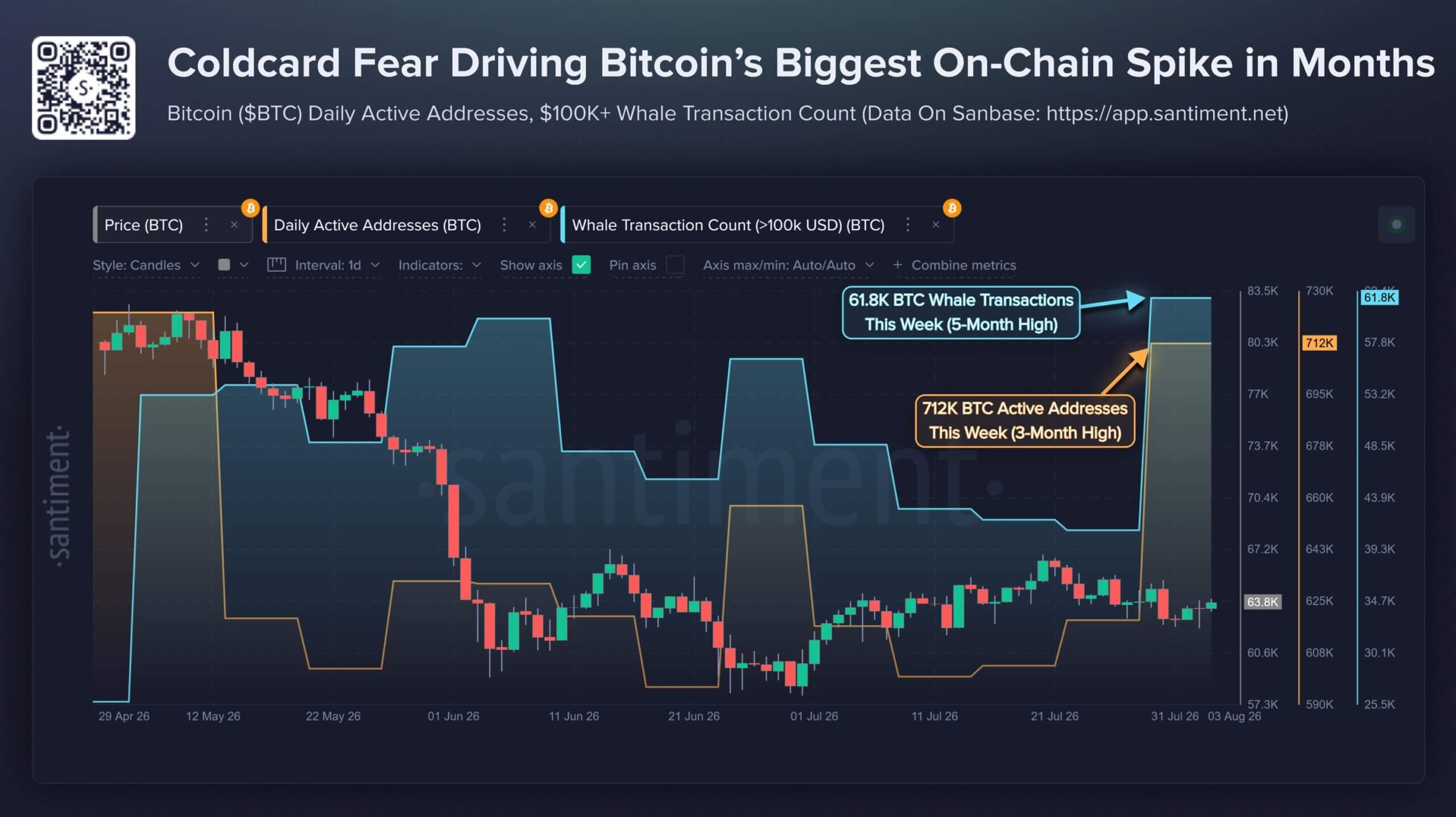
Santiment, a leading cryptocurrency analytics platform, reported over 712,000 active Bitcoin addresses in the past seven days, marking a three-month high. Concurrently, transactions exceeding $100,000 in value surged to 61,800 within the same timeframe, a five-month peak. This heightened network utilization is a direct consequence of users executing urgent fund transfers, consolidating assets, or moving them to new, secure wallets.
CryptoQuant, another prominent blockchain analytics firm, corroborated these findings, identifying the Coldcard crisis as the primary catalyst for this network activity spike. Their analysis reveals that transactions valued below $100,000 alone accounted for approximately $3.2 billion, the highest volume since November 2024.
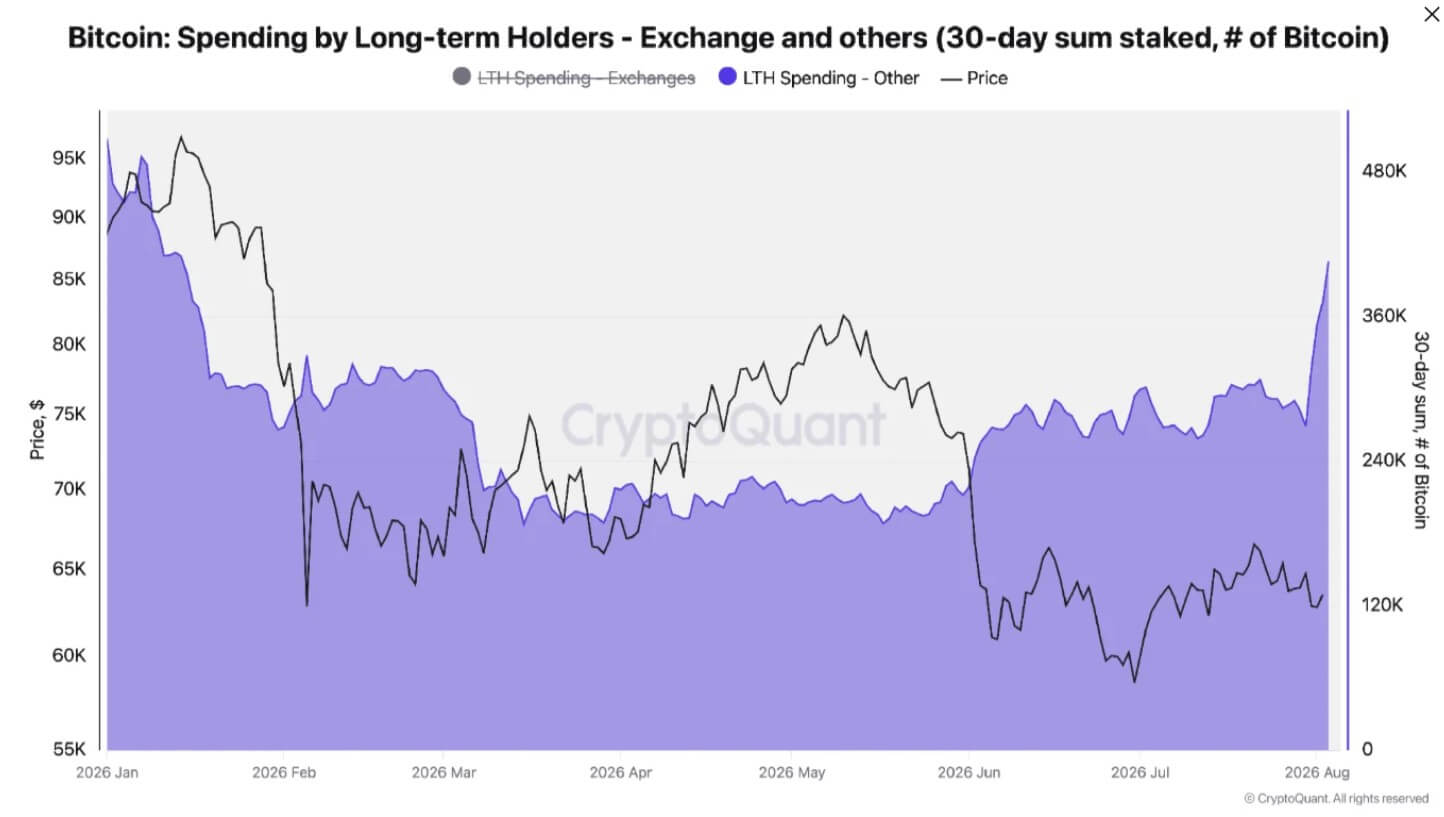
Furthermore, the activity of long-term Bitcoin holders has also seen a notable increase. CryptoQuant data indicates that spending by these holders outside of exchanges rose to 406,000 BTC on a 30-day basis as of August 3rd, a significant jump from 269,000 BTC prior to the exploit and the highest figure recorded since January. It is crucial to note that this heightened spending does not necessarily equate to a sell-off. Many of these transactions represent the movement of Bitcoin from a vulnerable Coldcard address to a newly secured wallet, effectively an internal transfer for security purposes, rather than a disposition of assets.
The sheer volume of these simultaneous transfers led to a temporary congestion of the Bitcoin network. Transaction fees saw an uptick, and the number of pending transactions in the mempool more than doubled, rising from approximately 33,000 to around 96,000, the highest level since June 20th. This illustrates the scale of the coordinated migration efforts undertaken by affected Coldcard users.
Inflows to Exchanges and the Shadow of Phishing
As a consequence of the urgent need to secure their Bitcoin, a portion of the migrating funds has found its way into centralized cryptocurrency exchanges. CryptoQuant data indicates that deposits from smaller holders surged to their highest point since February 6th. This suggests that some users, seeking an immediate and accessible destination for their assets while deliberating their next steps, have opted to deposit their Bitcoin into existing custodial accounts.
Between July 28th and August 3rd, total exchange reserves saw a net increase of approximately 17,500 BTC, growing from roughly 2.702 million BTC to 2.719 million BTC. Binance, the world’s largest cryptocurrency exchange by trading volume, absorbed a significant portion of this influx, receiving about 51% of the net increase, with its reserves climbing by approximately 9,000 BTC to 659,000 BTC.
However, these inflows to exchanges do not definitively signal an intention to sell. Many of these deposits may represent temporary holding patterns as users establish new, secure self-custody solutions or decide on alternative hardware providers.
Adding a layer of concern to this already tense situation is the emergence of phishing scams targeting users engaged in wallet migrations. Criminals are actively exploiting the confusion and urgency surrounding the Coldcard issue, impersonating wallet support teams and distributing fraudulent migration instructions. Trezor, a rival hardware wallet manufacturer, has issued a stern warning, reporting a significant increase in phishing attempts following the disclosure of the Coldcard flaw. They have urged users to never share their recovery seeds or input them into unsolicited websites or applications, emphasizing that recovery words should only be entered directly on a Trezor device during a legitimate wallet restoration process.
The scammers’ modus operandi often involves directing users to fake applications, requesting recovery words under the guise of a "security check," or providing fraudulent addresses purported to be safe for fund transfers. The complexity of securely migrating funds from a compromised seed – which requires generating a completely new recovery phrase and transferring assets, rather than simply updating firmware or restoring a wallet – creates fertile ground for these malicious actors.
Broader Implications: The ETF Debate and the Future of Custody
The Coldcard crisis, with its widespread impact and the accompanying security risks, has inevitably reignited the debate surrounding cryptocurrency custody and potentially bolstered the case for regulated investment products.
Eric Balchunas, Senior ETF Analyst at Bloomberg Intelligence, commented on the situation, suggesting that the Coldcard breach could prompt some investors, including long-term holders, to consider migrating their assets towards spot Bitcoin Exchange-Traded Funds (ETFs). Traditionally, Bitcoin proponents have viewed ETFs with skepticism, as they involve investors entrusting their assets to institutional custodians rather than holding their private keys directly.
However, in the context of a hardware wallet vulnerability affecting a reputable manufacturer, the model of institutional custody, where large, established financial institutions safeguard assets, may appear more appealing. These institutions typically possess decades of experience in asset management and security, a stark contrast to the smaller operational footprint of a hardware wallet company.
While institutional custody does not eliminate the risk of theft or operational failure, Balchunas posited that a successful attack on an ETF custodian would likely trigger immediate regulatory scrutiny and a coordinated response involving the fund manager, custodian, and law enforcement. This structured and regulated approach to security, he suggested, might offer a greater sense of security for some investors compared to relying on a single hardware device.
It is important to note that there is currently no direct evidence linking the increase in exchange deposits to users purchasing ETF shares as a direct result of the exploit. The observed rise in exchange inflows could also prove to be a temporary phenomenon as users establish new, secure self-custody solutions and subsequently move their assets off exchanges.
Nonetheless, the Coldcard breach has undeniably altered the risk-reward calculation for investors considering where to store their Bitcoin. While self-custody offers independence from intermediaries, it places the full burden of securing hardware and software, and crucially, the generation of private keys, onto the individual. For those currently navigating the complex and perilous process of escaping compromised seeds while simultaneously evading sophisticated phishing attacks, the established institutional framework, once criticized for concentrating power within traditional finance, may present a more straightforward, albeit indirect, path to asset security. The ongoing fallout from this exploit will likely continue to shape the discourse around the most secure and practical methods for holding digital assets in the years to come.