admin
admin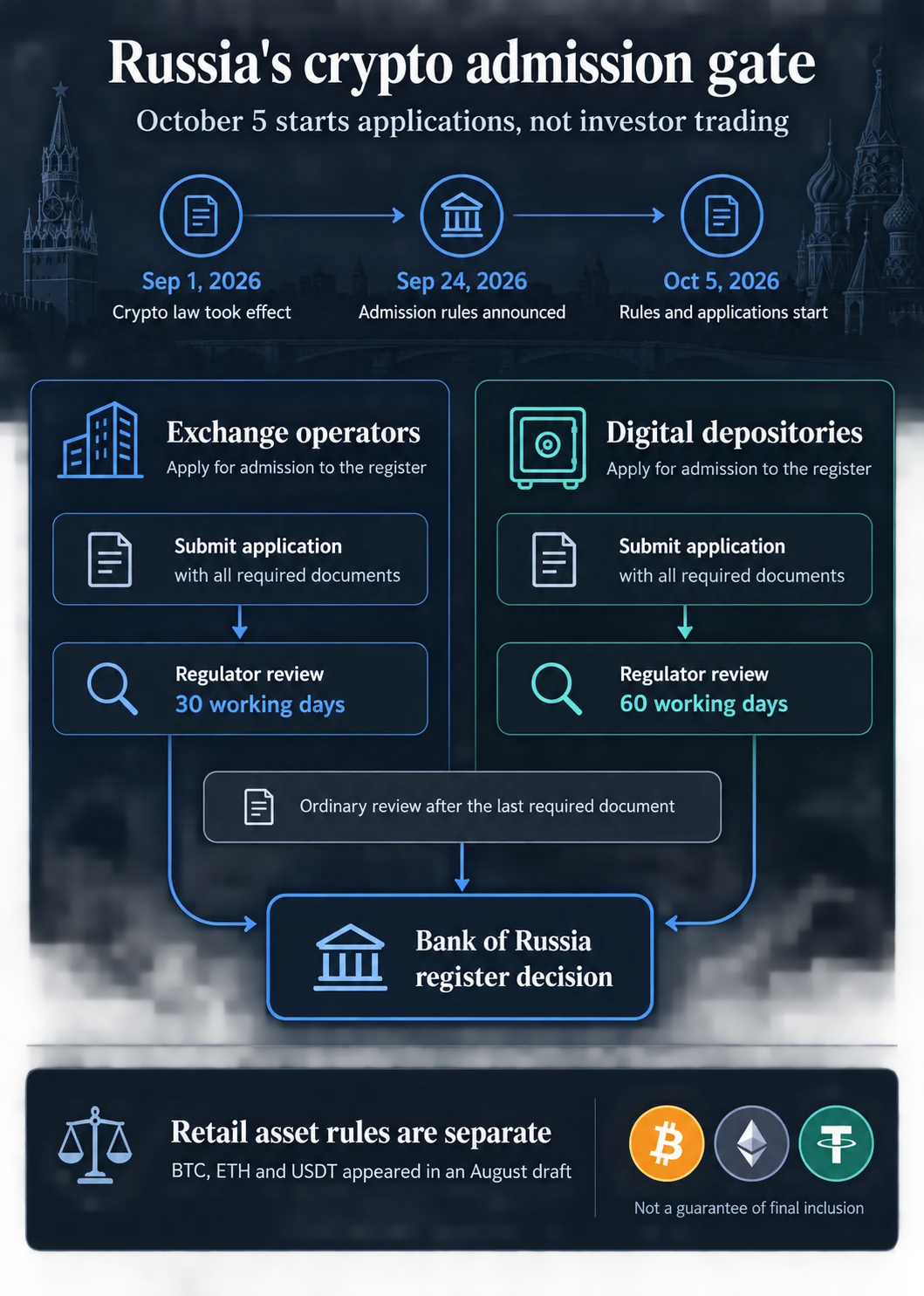
Crypto exchange operators and digital depositories in Russia will be able to formally apply for inclusion in official registers starting October 5, marking a significant step in the nation’s journey toward a regulated digital asset market. This new regulatory framework, established by the Bank of Russia, is set to usher in a new era for cryptocurrency operations within the country, aligning with a broader law that came into effect in September. However, it is crucial to note that while the application window opens, each firm must still secure an individual decision from the Bank of Russia, and the ultimate access for retail investors to specific digital assets remains a separate, ongoing consideration.
Laying the Groundwork for Regulation
The Bank of Russia, in a formal announcement on September 24, detailed the comprehensive rules governing these applications. These regulations extend beyond traditional crypto exchanges to encompass operators of information systems responsible for the issuance of digital financial rights. The core of the Russian regulation outlines stringent qualification criteria for management personnel and specific officers, mandates the submission of a detailed list of required documentation, and clearly defines the decision-making process for register entries. For any entity aspiring to operate within this newly defined landscape, the prerequisite is to unequivocally demonstrate adherence to these stipulated requirements before the central bank will even consider its application. The published rules serve as a procedural guide, dictating the necessary submissions and the bank’s evaluation methodology, rather than conferring immediate operational status.
A Phased Approach to Market Entry
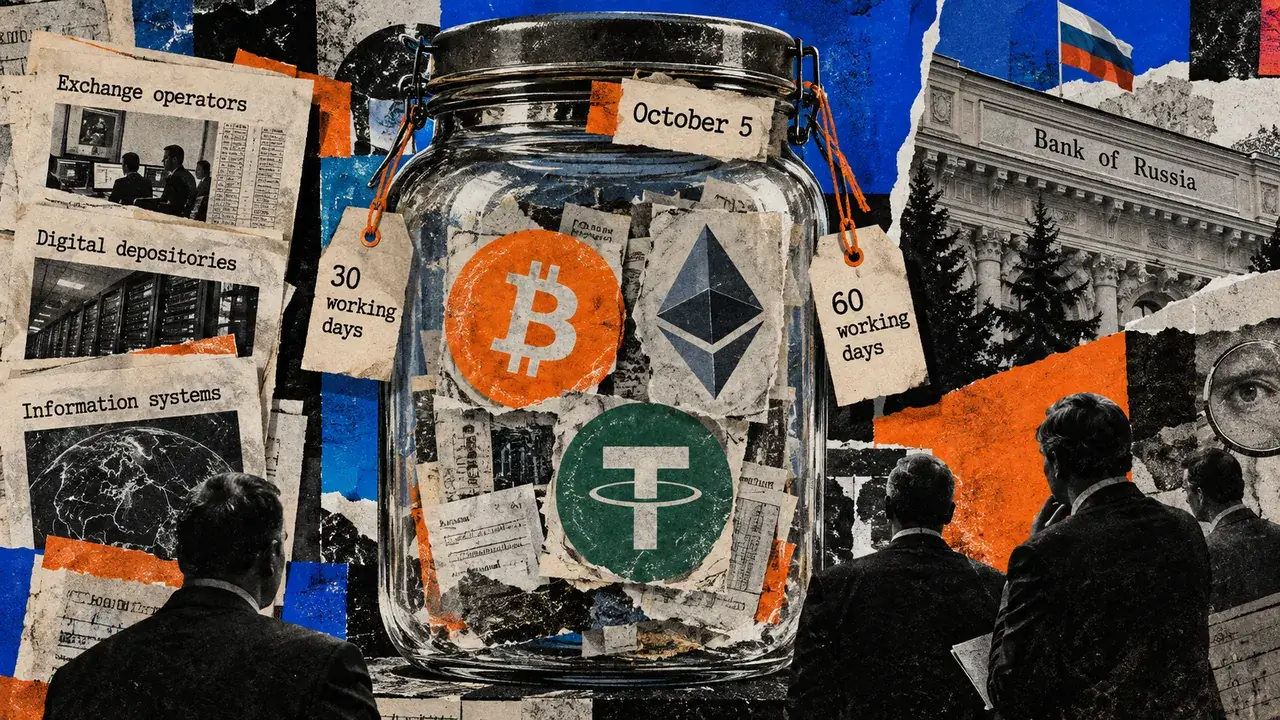
The Bank of Russia’s guidance for exchange operators, accessible via its electronic application portal, confirms that the formal submission process commences on October 5. Under the standard procedure, regulatory bodies are allotted a period of 30 working days from the receipt of the complete documentation to render a decision. For digital depositories, this decision-making window is extended to 60 working days. It is vital to understand that these timeframes represent the maximum period for review and do not guarantee approval or pre-determine specific dates for customer trading activities. The clock for these reviews begins only once a full complement of all requisite documents has been submitted, irrespective of the October 5 effective date of the rules themselves. Furthermore, the distinct review periods for exchange operators and depositories indicate that the single commencement date for the rules should not be interpreted as a unified timeline for the admission of all participating firms.
Streamlined Pathways for Existing Players
Recognizing the existing landscape of financial intermediaries, certain established banks, brokers, and entities that participated in previous experimental regimes may be eligible for a more expedited notification process. The specific eligibility for this faster route is contingent upon the particular role each firm intends to fulfill within the regulated market. These qualifying firms are required to submit their documentation by September 1, 2027, and this pathway also necessitates a formal decision on their register entry. This provision suggests a pragmatic approach by the Russian authorities, acknowledging the operational experience of established financial institutions while still ensuring they meet the new regulatory standards.
The Evolving Legal Framework for Digital Assets
Russia’s foundational crypto law, which took effect on September 1, 2024, establishes the principle of transacting digital assets through officially regulated intermediaries. A key aspect of this law involves rigorous testing protocols for both qualified and non-qualified investors. For the latter group, a significant provision is the annual purchase limit of 300,000 rubles per intermediary, designed to mitigate risk. These terms delineate the intended structure of the future regulated market, while the October rules specifically address the mechanisms by which entities can gain access to this market.
The Crucial Question of Retail Investor Access
A significant and separate consideration revolves around the specific digital assets that non-qualified investors will be permitted to acquire. In August, the central bank initiated a public comment period on a draft directive that identified Bitcoin, Ethereum, and Tether’s USDT as potential candidates for public exchange trading. This proposed list is still under review and has not been finalized. The October admission procedure for exchanges and depositories is distinct from this asset eligibility process. Therefore, the commencement of the application period for market participants does not automatically translate into the availability of regulated trading for retail investors.
Implications for the Russian Crypto Ecosystem
The introduction of these admission rules signifies a pivotal moment for Russia’s cryptocurrency sector. By establishing a clear regulatory pathway, the Bank of Russia is moving towards greater oversight and control, aiming to balance the potential benefits of digital assets with the need for financial stability and investor protection. The extended review periods and stringent documentation requirements suggest a deliberate and cautious approach to onboarding new participants.

From an economic perspective, regulated exchanges could attract greater institutional investment and foster a more predictable environment for businesses operating in the digital asset space. The tiered approach, offering a faster track for existing financial institutions, demonstrates an understanding of market dynamics and a desire to leverage established infrastructure.
However, the continued separation of exchange admission from retail asset eligibility creates a degree of uncertainty for the end-user. Investors, both qualified and non-qualified, will be eagerly awaiting the final determination on which cryptocurrencies will be available for trading. The proposed inclusion of Bitcoin, Ethereum, and USDT reflects a pragmatic recognition of the most established and widely used digital assets in the global market. The inclusion of these major cryptocurrencies would signal a significant step towards integrating Russia into the broader international digital asset economy, albeit under a controlled domestic framework.
The Bank of Russia’s strategy appears to be one of measured progression. First, establish the operational framework for intermediaries, ensuring they meet robust standards. Second, carefully consider and define the specific digital assets that will be accessible to the public, particularly non-qualified investors, with a focus on managing risk. This phased approach aims to build a sustainable and secure digital asset ecosystem.
For the foreseeable future, the primary indicators for investors will be the individual decisions made by the Bank of Russia regarding the admission of specific firms and the eventual finalization of the digital asset eligibility rules. The successful implementation of an admission procedure for exchanges and depositories is a necessary but not sufficient condition for the establishment of a fully functioning and accessible regulated retail trading market. The coming months will be crucial as the Bank of Russia navigates these final steps, shaping the future of cryptocurrency in Russia.