admin
admin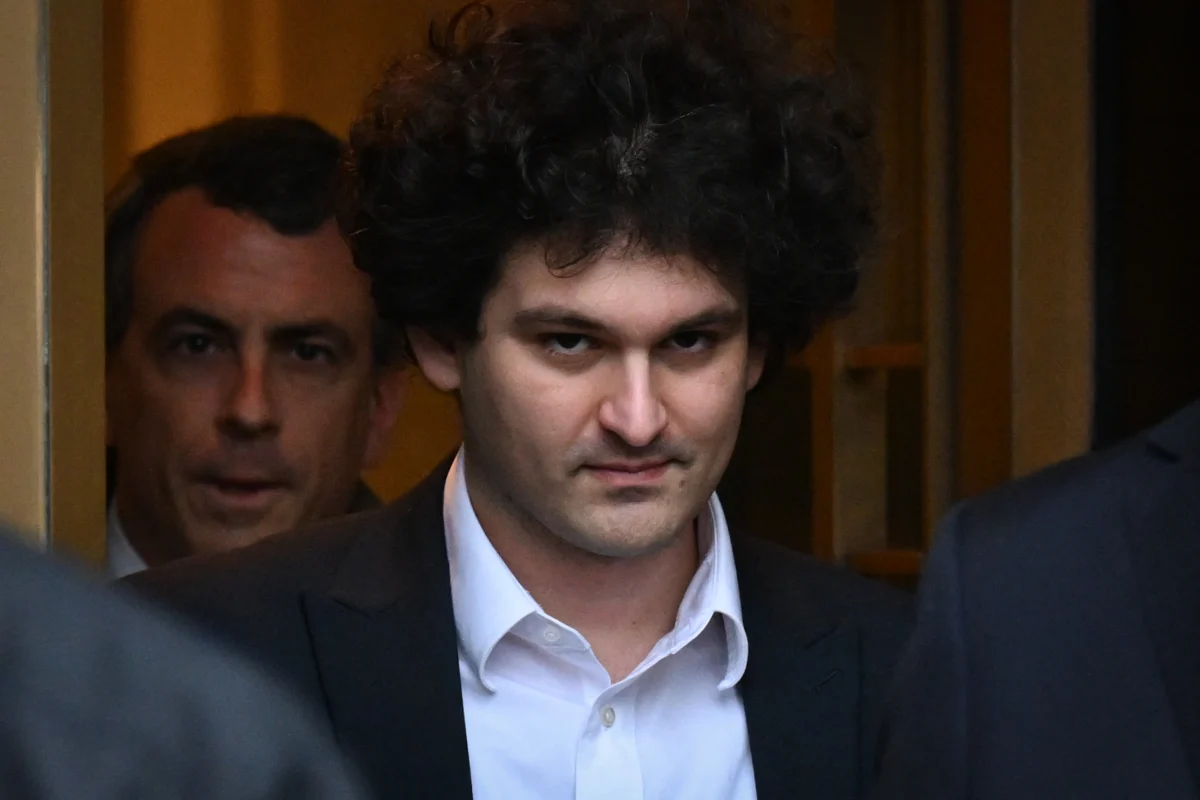
Sam Bankman-Fried, the disgraced co-founder and former CEO of the cryptocurrency exchange FTX, has officially submitted a formal application for a presidential pardon to the United States Department of Justice. The request, which appeared on the public database of the Justice Department’s Office of the Pardon Attorney, marks a significant legal and political pivot for the former billionaire who was once a fixture of the global financial elite. Bankman-Fried is currently serving a 25-year federal prison sentence following his 2024 conviction on multiple counts of fraud, conspiracy, and money laundering.
The application for executive clemency comes at a time when President Donald Trump has significantly expanded the use of his pardon power during his second term. While much of the public attention regarding presidential pardons has focused on individuals involved in the January 6 Capitol unrest, a substantial portion of the President’s recent clemency actions has targeted individuals convicted of high-level financial crimes. The formal filing by Bankman-Fried, first identified by Bloomberg News, signals an attempt to bypass the standard appellate process in favor of a direct appeal to the executive branch’s discretionary authority.
The Context of the Conviction and Sentencing
The legal downfall of Sam Bankman-Fried began in November 2022 with the catastrophic collapse of FTX, which was at the time one of the world’s largest and most trusted cryptocurrency exchanges. Following a liquidity crisis and revelations that FTX had been clandestinely funnelling customer funds to its sister hedge fund, Alameda Research, the company filed for Chapter 11 bankruptcy. Bankman-Fried was subsequently arrested in the Bahamas and extradited to the United States.
In March 2024, Judge Lewis Kaplan of the Southern District of New York sentenced Bankman-Fried to 300 months in prison. The sentencing followed a month-long trial in late 2023 where a jury found him guilty on seven counts, including wire fraud, securities fraud, and money laundering. Prosecutors characterized the scheme as one of the largest financial frauds in American history, involving the misappropriation of over $8 billion in customer assets.
During the sentencing phase, Judge Kaplan remarked on the "brazenness" of the defendant’s actions and his "apparent lack of remorse." In addition to the prison term, Bankman-Fried was ordered to forfeit more than $11 billion in assets, intended to facilitate restitution for the thousands of victims who lost their life savings in the FTX collapse.
Analysis of the Formal Pardon Application Process
Unlike many high-profile figures who seek to influence the presidency through informal channels or media campaigns, Bankman-Fried’s move to file through the Office of the Pardon Attorney (OPA) follows the traditional administrative route. The OPA serves as a clearinghouse for clemency requests, reviewing applications before providing a non-binding recommendation to the President via the Attorney General.
However, historical data suggests that the formal OPA process is rarely the primary driver for successful pardons in high-stakes political environments. According to data analyzed by Bloomberg, very few of the individuals who received pardons during the current administration had active or completed applications with the Justice Department at the time of their grant. Instead, many successful petitioners leveraged personal connections, political contributions, or advocacy from influential allies.
Bankman-Fried’s decision to file formally may be a strategic attempt to establish a record of rehabilitation or to present a curated narrative of his case to the executive branch. His legal team has previously argued that the "harm" caused by FTX was overstated, claiming that the bankruptcy estate’s efforts to liquidate assets would eventually make many creditors whole—a point that prosecutors and the presiding judge vehemently contested during the trial.
Trump’s Record on White-Collar Clemency
President Trump’s second term has been characterized by a robust and frequent use of executive clemency. An analysis conducted by NBC News in January found that while pardons for January 6 defendants have garnered significant headlines, more than 50% of the individual pardons granted have been for white-collar crimes. These include convictions for money laundering, bank fraud, wire fraud, and various forms of racketeering.
The analysis further revealed that these pardons collectively forgave hundreds of millions of dollars in court-ordered punishments and fines. Critics of the administration’s pardon policy argue that such actions undermine the deterrent effect of the justice system, particularly in complex financial cases where the victims are numerous and the recovery of funds is difficult. Conversely, proponents of the President’s approach argue that the executive branch serves as a necessary check on "overzealous" federal prosecutors and what they describe as "judicial overreach."
Bankman-Fried’s profile as a major political donor adds another layer of complexity to the request. During the 2022 election cycle, he was one of the largest contributors to Democratic causes, though he later claimed in interviews to have made "dark money" donations to Republican entities as well. The intersection of political finance and the pardon power has remained a point of intense public debate, especially regarding individuals who have donated significant sums to political campaigns or affiliated PACs.
Chronology of the FTX Crisis and Legal Proceedings
The following timeline outlines the rapid ascent and subsequent legal entanglement of Sam Bankman-Fried:
- 2019: Sam Bankman-Fried founds FTX, positioning it as a regulated and "altruistic" cryptocurrency exchange.
- 2021 – Early 2022: FTX reaches a valuation of $32 billion, attracting investments from major venture capital firms and high-profile celebrity endorsements.
- November 2, 2022: A leaked balance sheet from Alameda Research reveals that the hedge fund is heavily dependent on FTX’s native token, FTT, sparking concerns about insolvency.
- November 11, 2022: FTX and its affiliates file for bankruptcy. Bankman-Fried resigns as CEO.
- December 12, 2022: Bankman-Fried is arrested by Bahamian authorities at the request of the U.S. government.
- January 2023: Bankman-Fried pleads not guilty to all charges and is released on a $250 million bond.
- August 2023: Judge Kaplan revokes Bankman-Fried’s bail after finding probable cause that he attempted to witness-tamper, leading to his incarceration prior to trial.
- November 2, 2023: A jury finds Bankman-Fried guilty on all seven counts after less than five hours of deliberation.
- March 28, 2024: Bankman-Fried is sentenced to 25 years in federal prison.
- June 2026: Official records confirm Bankman-Fried has filed a formal petition for a presidential pardon with the Department of Justice.
Supporting Data and Financial Impact
The scale of the fraud led by Bankman-Fried is often cited by the Department of Justice as a primary reason for the severity of his sentence. At the time of the collapse, the "gap" in the FTX balance sheet was estimated at approximately $8 billion. This deficit impacted over one million creditors worldwide, ranging from institutional investors to individual retail traders.
Supporting data from the bankruptcy proceedings, led by CEO John J. Ray III, indicated that the management of FTX was a "complete failure of corporate controls." The investigation found:
- Direct access by Alameda Research to FTX customer deposits.
- The use of customer funds for luxury real estate in the Bahamas totaling over $200 million.
- Extensive political donations and venture capital investments funded by commingled assets.
- A lack of basic accounting records and an absence of an independent board of directors.
The bankruptcy estate has since recovered billions of dollars through the sale of assets, including shares in AI startup Anthropic and various crypto holdings. However, legal experts note that the eventual recovery of funds does not legally absolve the defendant of the original act of misappropriation, a distinction that was central to the government’s prosecution.
Official Responses and Inferred Reactions
While the White House has not issued an official statement regarding the specific application filed by Bankman-Fried, the Justice Department’s standard policy is to decline comment on pending clemency petitions. However, the move has already sparked reactions from legal experts and victim advocacy groups.
Representatives for the FTX creditors have expressed concern that a pardon would signal a "dangerous precedent" for the cryptocurrency industry. "A pardon for Sam Bankman-Fried would be a slap in the face to the thousands of people who lost their savings due to his calculated deception," stated a spokesperson for a prominent creditor committee.
Legal analysts suggest that Bankman-Fried’s defense team is likely banking on the President’s stated skepticism of the "Deep State" and the federal justice system. By framing the prosecution as a politically motivated attack on a high-profile figure, the defense may seek to align Bankman-Fried’s plight with the President’s broader rhetoric regarding the Department of Justice.
Broader Impact and Implications for the Crypto Industry
The potential for a pardon in this case carries significant implications for the regulatory landscape of the digital asset market. Since the FTX collapse, the SEC and CFTC have ramped up enforcement actions against major exchanges, citing the need to prevent "another FTX." A presidential pardon for the central figure of that collapse could be interpreted as a shift in the federal government’s stance on crypto-related financial crimes.
Furthermore, the pardon request highlights the ongoing tension between the executive branch’s clemency powers and the independence of the judiciary. If granted, it would be one of the most controversial uses of the power in modern history, given the scale of the financial loss and the relative recentness of the conviction.
For the cryptocurrency industry, which has spent the last two years attempting to distance itself from the "SBF era" and rebuild institutional trust, the return of Bankman-Fried to the headlines via a pardon application is a reminder of the volatility and legal risks that continue to shadow the sector.
As the petition moves through the administrative process, the final decision rests solely with President Trump. Whether the President will prioritize the formal recommendation of the Pardon Attorney or exercise his broad constitutional authority to grant clemency based on other factors remains the central question for the legal community and the victims of the FTX collapse.