admin
admin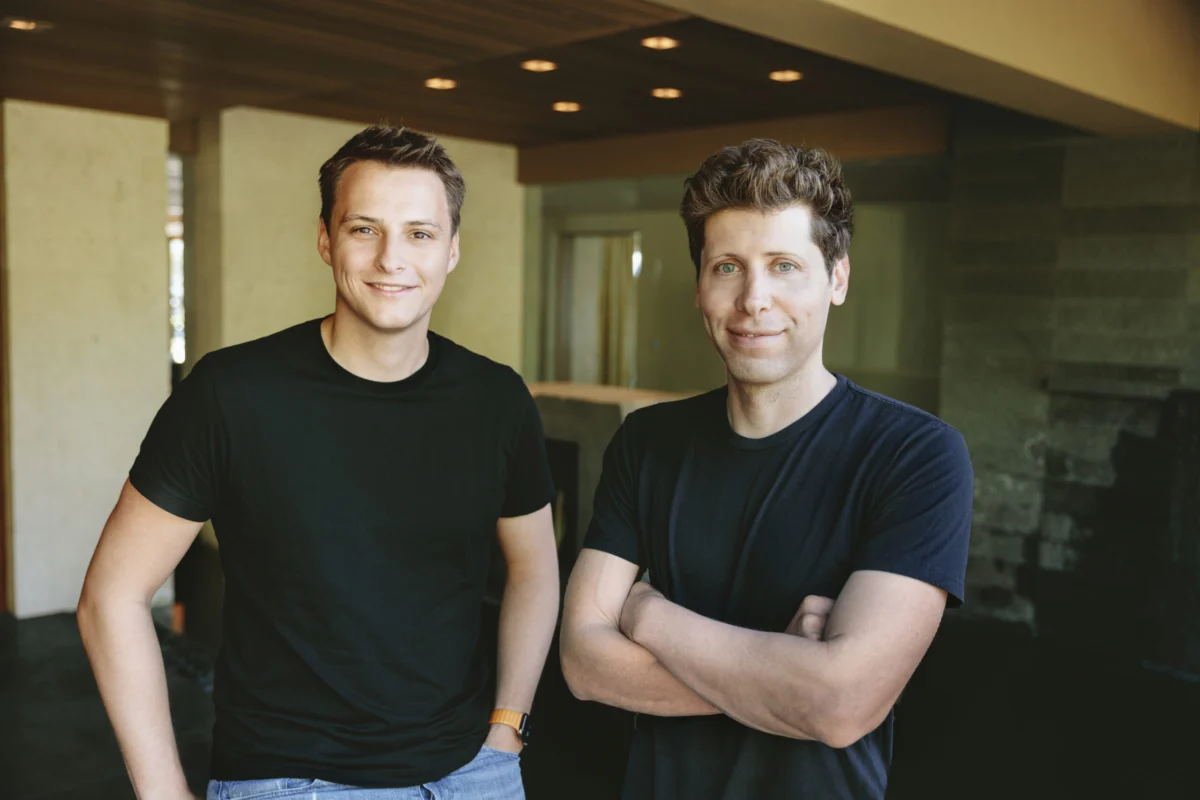
World, the digital identity and verification initiative co-founded by OpenAI Chief Executive Sam Altman and Alex Blania, has successfully closed a $52.5 million funding round conducted through a strategic sale of its native WLD tokens. The investment, which was announced on Friday, marks a significant infusion of capital into the World Foundation, an exempted limited guarantee foundation based in the Cayman Islands. This entity is tasked with overseeing the governance, growth, and utility of the World network as it transitions into a more mature phase of its global deployment.
The capital raise was led by Pantera Capital, a prominent venture capital firm specializing in digital assets and blockchain technology. The round also saw participation from a diverse group of strategic investors, including Eightco Holdings, Bain Capital Crypto, Susquehanna Crypto, and Selini Capital, among others. According to a press release issued by the company, the participating investors agreed to a 12-month lockup period for the WLD tokens purchased during this round. This structural requirement ensures that the assets cannot be sold or traded for at least one year, a move intended to demonstrate the investors’ long-term commitment to the protocol’s stability and continued growth.
Strategic Objectives and the Role of Tools for Humanity
While the World Foundation manages the network’s expansion, the project’s operational arm remains Tools for Humanity (TFH). Headquartered in San Francisco, TFH is led by CEO and co-founder Alex Blania, with Sam Altman serving as a co-founder and chairman. The relationship between TFH and the World Foundation is symbiotic; TFH develops the hardware and software infrastructure—most notably the "Orb" and the "World App"—while the Foundation stewards the ecosystem’s decentralized goals.
The primary objective of the new funding is to bolster the "Proof of Personhood" (PoP) infrastructure. In an era where generative artificial intelligence can simulate human speech, writing, and even video with startling accuracy, World posits that the ability to distinguish between human users and AI-driven bots is becoming a fundamental requirement for the integrity of the internet. The World ID serves as an anonymous digital passport, allowing users to verify their humanity to third-party applications without disclosing sensitive personal information like names or email addresses.
The Technology: Iris Biometrics and the Orb
At the heart of the World ecosystem is the Orb, a custom-designed biometric imaging device. To achieve the highest level of verification—the World ID—users must undergo an iris scan performed by an Orb. The device captures high-resolution images of the user’s iris patterns, which are then converted into a unique cryptographic identifier known as an "iris code."
The company maintains that the original images are deleted by default once the code is generated, unless a user explicitly opts into "Data Custody" to help train the system’s algorithms. This biometric approach has been the subject of intense scrutiny from privacy advocates and regulators, yet World argues it is the only sybil-resistant method capable of scaling to billions of people while maintaining high security. Currently, Orbs are deployed at various World offices and through a network of partner locations globally, including shopping malls and technology hubs.
Chronology of Development and Rebranding
The project’s trajectory has been marked by rapid technological advancement alongside significant public relations and regulatory challenges.
- 2019–2021: Inception and Stealth Phase: Founded by Altman, Blania, and Max Novendstern, the project operated largely in secret, developing the initial prototypes of the Orb and the underlying blockchain protocol.
- October 2021: The project officially emerged from stealth under the name "Worldcoin," announcing its vision for a global identity and financial network.
- May 2023: Tools for Humanity raised $115 million in a Series C round led by Blockchain Capital, valuing the project significantly and providing the runway needed for a global launch.
- July 2023: Worldcoin officially launched its mainnet and the WLD token. The launch saw long queues at Orb locations in cities ranging from Nairobi to Tokyo, though it also triggered immediate investigations by data protection authorities in several jurisdictions.
- April 2024: The project introduced a major update to its ecosystem, including the launch of "World Chain," a dedicated Layer 2 blockchain designed to prioritize human users over bots. At this time, partnerships with platforms like Tinder, Zoom, and DocuSign were announced to integrate World ID for user verification.
- June 2024: Amidst a broader cooling of the crypto market and internal restructuring, Tools for Humanity conducted a round of layoffs, affecting a portion of its workforce as the company sought to streamline operations.
- July 2024: The company officially rebranded from "Worldcoin" to simply "World." This rebranding was seen as an effort to distance the project from the "crypto" label, which had faced significant reputational damage following the collapse of major exchanges like FTX, and to emphasize its broader mission of human verification.
Market Data and User Adoption
Despite its challenges, World has reported steady growth in its user base. According to the company’s latest metrics, the World App has seen millions of downloads, and the number of verified World ID holders continues to climb. The WLD token itself remains a central component of the ecosystem, functioning as both a governance token and a medium for incentivizing users to join the network.
However, the scaling of the business has not been without friction. The project has faced regulatory pushback in countries such as Kenya, where operations were temporarily suspended over data privacy concerns, and in Europe, where the Bavarian State Office for Data Protection Supervision (BfDI) has led a multi-year inquiry into the project’s compliance with the General Data Protection Regulation (GDPR). The $52.5 million raised in this latest round is expected to provide the legal and operational resources necessary to navigate these complex regulatory landscapes.
Implications for the AI Ecosystem
The investment by Pantera Capital and others underscores a growing belief among venture capitalists that "Proof of Human" technology is a necessary corollary to the rise of AI. As AI agents become more autonomous, the risk of automated fraud, misinformation, and the manipulation of digital democratic processes (such as online voting or social media discourse) increases.
World’s strategy involves integrating its ID system into everyday digital tools. By partnering with Zoom and DocuSign, World aims to ensure that participants in high-stakes digital meetings or signers of legal documents are indeed who they claim to be. The $52.5 million infusion will likely accelerate these integrations, allowing World to move beyond a niche crypto project into a foundational layer of the broader internet infrastructure.
Analysis of Future Challenges
While the successful token sale provides a financial cushion, World faces several critical hurdles. First is the "cold start" problem: the utility of a World ID increases with the number of platforms that accept it, but platforms are hesitant to integrate until a significant portion of the population is verified. The physical requirement of an iris scan remains a bottleneck to rapid, global adoption.
Second is the ongoing debate over biometric sovereignty. Even with cryptographic safeguards, the collection of iris data remains a sensitive issue. World will need to achieve a high degree of transparency and undergo third-party audits to convince skeptics that its "Privacy-Preserving Proof of Personhood" is truly as secure as claimed.
Finally, the 12-month lockup period for the new investors suggests a "wait and see" approach. The next year will be pivotal for World as it seeks to prove that its rebranded identity and new partnerships can translate into meaningful revenue and utility, moving the project from an ambitious experiment to a sustainable global standard.
The involvement of Sam Altman remains a double-edged sword for the project. While his association brings unparalleled visibility and access to capital, his role as the head of OpenAI—one of the primary drivers of the AI revolution that necessitates World’s existence—has led some critics to suggest that he is "selling the shield to protect against the sword he helped forge." Regardless of the optics, the $52.5 million raise confirms that institutional appetite for Altman’s vision of a verified digital future remains robust.