admin
admin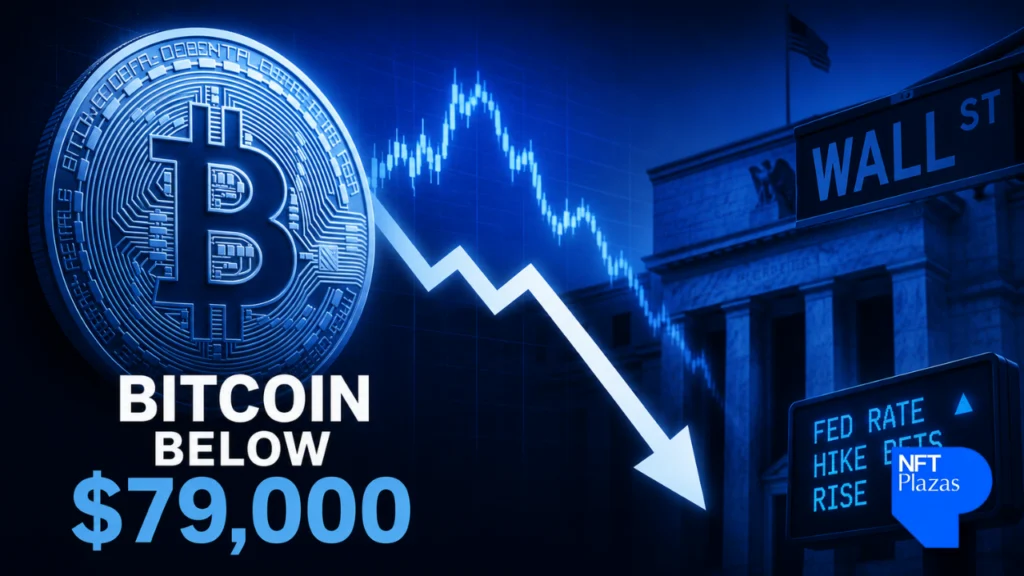
Bitcoin experienced a notable retreat in Asian morning trading Thursday, slipping back below the critical $79,000 mark after briefly surging past $80,000 for the first time since May. This cooling-off period signals a significant reassessment by traders, who are now increasingly pricing in a less accommodative interest-rate environment, challenging the cryptocurrency’s recent sharp recovery. The world’s largest digital asset fell nearly 1% to settle just under $79,000, decelerating from a powerful rally that had propelled it from below $68,000 just last week. Despite the immediate pullback, Bitcoin maintains a robust 14% gain over the past seven days, though this figure has considerably narrowed from the 23% recorded a day earlier, as the rolling weekly window now extends beyond the most intense phase of last week’s surge.
The Recent Rally: A Chronicle of Bitcoin’s Swift Ascent
The journey to the $80,000 threshold was swift and indicative of a renewed bullish sentiment that had gripped the crypto markets. Beginning from a low point below $68,000, Bitcoin embarked on an aggressive recovery, fueled by a confluence of factors. Macroeconomic tailwinds, including a perceived easing of inflation concerns and a tentative belief that central banks might be nearing the end of their tightening cycles, initially provided a supportive backdrop. This sentiment was further amplified by a resurgence in demand for spot Bitcoin Exchange-Traded Funds (ETFs). Following a period of fluctuating inflows, these investment vehicles saw several consecutive days of net positive capital, with cumulative inflows for the week preceding the rally estimated to have topped $750 million. Major institutional players and retail investors alike appeared to be re-engaging with the asset class, signaling a broader market appetite.
Moreover, a significant portion of the rally was attributed to a wave of short covering. As Bitcoin’s price began to climb, traders who had placed bets against its rise were forced to close their positions, buying back Bitcoin to limit their losses. This forced buying added considerable momentum, creating a feedback loop that accelerated the ascent. The combination of genuine ETF-driven demand and tactical short-covering propelled Bitcoin through key resistance levels, culminating in its temporary breach of $80,000 – a psychological milestone that briefly reignited hopes for a rapid march towards new all-time highs. However, this aggressive upward trajectory also pushed various technical indicators into "overbought" territory, hinting at the possibility of a near-term correction as market participants began to lock in profits.
Monetary Policy Reassessment: The Fed’s Shadow Over Crypto
The primary catalyst for the current market caution is a distinct shift in monetary policy expectations. Traders in traditional financial markets have begun to increase their bets that the Federal Reserve could not only maintain higher interest rates for longer but potentially even implement another rate hike in the near future. This sentiment has been driven by a series of recent economic data points, including a stronger-than-expected jobs report for August which showed non-farm payrolls adding 250,000 jobs, alongside persistent core inflation figures that, while moderating, remain above the Fed’s target of 2%.
The implications for riskier assets like Bitcoin are significant. A higher interest-rate environment fundamentally alters the investment landscape. When interest rates rise, the appeal of traditional fixed-income investments, such as U.S. Treasuries, increases. These instruments offer guaranteed returns with comparatively lower risk, making them more attractive alternatives to volatile assets like cryptocurrencies. This reallocation of capital typically sees funds flow out of speculative markets and into safer havens. The weakening of shorter-dated U.S. Treasuries overnight serves as a tangible indicator of this shift, as bond prices fall when yields rise, reflecting traders’ increased conviction in a more hawkish Fed stance. The lower-yield environment that had largely supported Bitcoin’s advance earlier in the year is now giving way to a more challenging backdrop, forcing investors to re-evaluate their exposure to high-growth, high-risk assets.
Jackson Hole and the Road Ahead for the Federal Reserve

All eyes are now fixed on Federal Reserve Chair Kevin Warsh, who is slated to deliver his inaugural Jackson Hole keynote as chair on Friday. The Jackson Hole Economic Symposium, an annual gathering of central bankers, finance ministers, academics, and financial market participants from around the world, is renowned for its capacity to signal pivotal shifts in monetary policy. Chair Warsh’s speech comes roughly three weeks before the Fed’s crucial September 15-16 policy meeting, rendering it a potentially seminal event for markets already recalibrating their expectations.
Market participants will scrutinize every word from Chair Warsh for clues regarding the Fed’s perspective on inflation, the trajectory of economic growth, and, most importantly, the future path of interest rates. Should Warsh adopt a hawkish tone, emphasizing the need to further combat inflation through tighter monetary policy, it could solidify current market expectations for additional rate hikes, further pressuring risk assets. Conversely, a more balanced or dovish stance, acknowledging recent disinflationary trends or expressing concerns about economic slowdown, could provide some respite. However, given the recent economic data, a hawkish leaning is widely anticipated, making the speech a potential flashpoint for market volatility. The clarity, or lack thereof, on the Fed’s forward guidance will be instrumental in shaping investor sentiment and determining the immediate direction of both traditional and crypto markets.
Altcoin Market Dynamics: XRP Leads the Retreat
While Bitcoin navigated its own turbulence, the broader altcoin market also experienced a cooling trend, with XRP suffering the sharpest decline among major cryptocurrencies. XRP fell almost 3% to trade just above $1.41, a notable retreat despite having achieved a roughly 28% weekly gain, which still represents the strongest performance among the major tokens over that period. This drop in XRP follows an aggressive recovery that had seen the token push towards $1.70, before its momentum began to wane. The move below recent highs suggests that traders are actively taking profits after the rapid advance, with the $1.50-$1.55 area now emerging as an important near-term support/resistance level in its price structure.
Other major cryptocurrencies presented a mixed picture, reflecting the nuanced nature of market sentiment. Hyperliquid’s HYPE, a newer entrant gaining traction, fell more than 1% to just under $81, while Tron experienced a more modest decline of less than 1% to just above $0.33.
Bucking the broader trend of cooling, Solana moved against the current, gaining almost 4% to trade above $101. Solana’s resilience can be attributed to several factors, including ongoing robust development within its ecosystem, sustained institutional interest in its high-throughput blockchain, and its growing utility in various decentralized applications and NFT markets. Ether, the second-largest cryptocurrency, added about 1% to just under $2,494, while BNB, the native token of the Binance ecosystem, rose almost 1% to just below $703. Dogecoin, the popular meme coin, remained relatively unchanged, holding steady at just under $0.09. The broader cooling trend is also evident in the compression of weekly performance figures across the altcoin spectrum. For instance, Ether’s seven-day gain has dropped to approximately 11%, a significant reduction from the 29% recorded just a day earlier. This sharp contraction in weekly returns underscores how quickly the market has moved beyond the strongest, most speculative phase of last week’s rally, entering a period of consolidation and reassessment.
Bitcoin’s Technical Landscape: A Test of Resilience
From a technical analysis perspective, the recent pullback, while significant, does not necessarily signal the end of Bitcoin’s recovery. Joel Kruger, a prominent markets strategist at LMAX Group, noted that daily technical indicators have indeed moved into overbought territory, but he cautioned against automatically assuming that severely overbought conditions will inevitably result in a major reversal. Such conditions can persist for extended periods during strong uptrends. Kruger identified the May high near $82,820 as the next crucial confirmation level for Bitcoin. A decisive and sustained break above this resistance point would significantly strengthen the bullish case, potentially putting the ambitious $100,000 psychological milestone back into sharper focus for many investors and analysts.
However, for the immediate future, Bitcoin must contend with a less favorable macroeconomic backdrop. As previously discussed, higher expectations for interest rates tend to diminish the appeal of riskier assets by making traditional fixed-income investments comparatively more attractive. This dynamic necessitates a careful evaluation of the underlying drivers of the recent rally. Singapore-based QCP Capital, a prominent digital asset trading firm, highlighted this concern in a recent Telegram broadcast, observing that falling open interest alongside the price increase indicates that the rally may have been driven largely by short covering rather than a fresh wave of genuinely leveraged buying. Short covering, while powerful, is often a temporary phenomenon, whereas sustained leveraged buying typically signifies deeper conviction and fresh capital entering the market.

In contrast, QCP Capital noted that spot Bitcoin ETF inflows have represented more "genuine demand," suggesting a more fundamental and enduring interest from institutional and retail investors seeking direct exposure to Bitcoin. This distinction between short-term positioning-driven rallies and long-term demand-driven growth could become increasingly critical, especially if the broader liquidity environment becomes less supportive due to tighter monetary policy. QCP Capital’s analysis explicitly questioned whether the current move represents the beginning of a more structural and sustainable rally or one that remains highly dependent on temporary positioning dynamics and prevailing liquidity conditions. This fundamental question will largely dictate Bitcoin’s trajectory in the coming weeks and months.
Broader Market Context: Traditional Assets vs. Crypto
Interestingly, traditional financial markets remained relatively constructive despite the cooling in the cryptocurrency sector. This divergence highlights the differing sensitivities and underlying narratives at play. Technology giant Nvidia, a bellwether for the semiconductor and artificial intelligence sectors, gained almost 5% in extended trading after signaling exceptionally strong sales growth through 2028, reinforcing the bullish sentiment around AI. Other semiconductor firms like Marvell Technology and Sandisk also advanced, suggesting a broader strength in the tech sector driven by specific industry catalysts rather than overarching macroeconomic fears.
In Asian markets, MSCI’s Asia Pacific index rose about 0.5%, with significant contributions from tech heavyweights like SK Hynix and Samsung Electronics. South Korea’s Kospi index also saw a strong gain of nearly 2%. This performance suggests that while crypto markets are acutely sensitive to shifts in monetary policy expectations, traditional equities, particularly those benefiting from strong secular growth trends like AI and technology, may possess greater resilience or be driven by different, more specific catalysts. The ability of certain traditional sectors to absorb macro headwinds better than volatile crypto assets underscores the distinct risk profiles and investor bases of these markets.
Outlook and Implications: Navigating Uncertainty
The crypto market’s next major catalyst may therefore originate from Washington rather than the blockchain sector itself. Federal Reserve Chair Kevin Warsh’s Jackson Hole address has the potential to offer crucial insights into the Fed’s strategic outlook on inflation, economic growth, and the future trajectory of interest rates ahead of the September policy meeting. Any hawkish signals could intensify the pressure on risk assets, including cryptocurrencies, while a more dovish stance, though less likely given recent data, could provide a much-needed boost.
Bitcoin’s immediate challenge will be its ability to hold above recent breakout levels. A decisive return above $80,000 would put the recent highs back in focus, while the May high near $82,820 represents a more significant technical and psychological test that, if overcome, could pave the way for further upside. For now, the move below $79,000 appears less like a catastrophic collapse and more akin to a strategic pause in a powerful recovery. However, with interest rate expectations turning less favorable and signs suggesting that the rally has been significantly aided by positioning adjustments rather than an overwhelming wave of fresh, conviction-driven buying, Bitcoin faces a tougher test. The coming weeks will determine whether its latest advance can sustain itself against a more challenging macro backdrop and demonstrate the robustness required for a truly structural, long-term ascent. The market remains in a delicate balance, poised between the potential for renewed upward momentum and the caution necessitated by evolving central bank policy.