admin
admin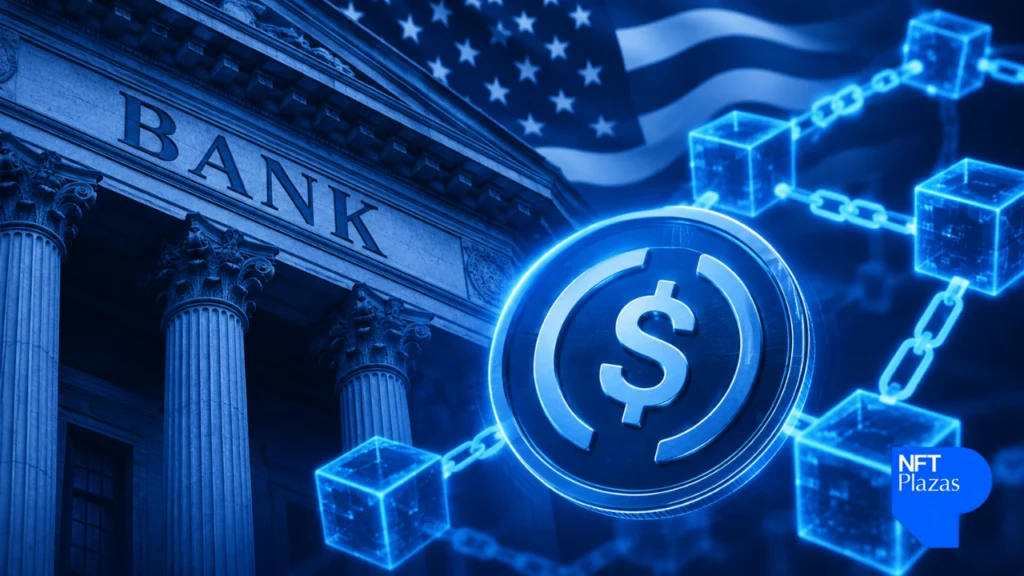
A monumental coalition of thirty-nine U.S. state banking associations has formally announced the formation of the BankChain Alliance, an ambitious initiative poised to develop a blockchain network specifically for banks. This groundbreaking move represents a significant strategic pivot by traditional financial institutions, marking their decisive entry into the evolving landscape of stablecoins, tokenized deposits, and blockchain-based payment systems. The Alliance, unveiled on Tuesday, articulated plans to construct an industry-owned, industry-designed, and industry-governed blockchain network, with a targeted operational launch slated for 2027.
This formidable consortium collectively represents 3,283 individual banks, commanding an impressive $21.8 trillion in assets. The sheer scale of this collaboration underscores the gravity with which the traditional banking sector views the imperative to innovate and adapt to the digital age. While the project is still in its nascent stages, including the critical selection of a technology partner, its very announcement signals a definitive shift within the banking industry: moving beyond exploratory pilots and proofs-of-concept to the foundational construction of robust, production-grade blockchain infrastructure.
The Strategic Imperative: Why Banks Are Building Their Own Blockchain Network
The creation of the BankChain Alliance is not merely an incremental technological upgrade; it is a strategic response to the rapidly digitizing global economy and the increasing pressure from fintech innovators and crypto-native companies. For years, the banking sector approached blockchain technology with a mix of caution and skepticism, often viewing it as a disruptive force primarily associated with unregulated cryptocurrencies. However, a maturation of understanding, coupled with evolving regulatory frameworks and competitive pressures, has led to a re-evaluation.
The Alliance asserts that its network will empower financial institutions to deliver advanced digital banking services while steadfastly upholding the bedrock principles of security, regulatory compliance, and robust customer protections inherently linked with traditional banking. This dual objective — embracing innovation without compromising established trust and oversight — is central to BankChain’s mission.
The proposed network is envisioned to support a comprehensive suite of modern financial functionalities, including smart payments, tokenized deposits, stablecoins, and automated settlement. A key design principle is its anticipated interoperability with existing financial infrastructure and other blockchain networks, rather than operating as an isolated, closed ecosystem. This commitment to open integration reflects a pragmatic understanding that fragmentation would hinder widespread adoption and utility.
Significantly, the Alliance intends to offer ownership participation in the network to banks across the entire country, fostering a truly collaborative and inclusive model. This approach aims to democratize access to cutting-edge financial technology, preventing a scenario where only the largest Wall Street institutions can afford to develop and deploy such complex infrastructure independently.
Leadership and Vision for Inclusivity
Guiding the BankChain Alliance through its formative period is Kathy Kraninger, serving as its interim chair. Kraninger brings a wealth of experience, currently holding the position of President and CEO of the Florida Bankers Association, and notably having previously served as the Director of the Consumer Financial Protection Bureau (CFPB). Her background at the CFPB is particularly salient, indicating a strong emphasis on consumer safeguards and regulatory adherence from the project’s inception.
Kraninger articulated that the initiative is purposefully designed to furnish banks of all sizes with access to modern financial technology. This inclusive approach is critical for enabling community and regional banks, which often face resource constraints compared to their larger counterparts, to continue effectively serving customers across diverse rural, urban, and regional communities. Such an initiative could be a game-changer for smaller institutions, allowing them to remain competitive and relevant in an increasingly tech-driven financial landscape.

As the Alliance embarks on its journey, the search for a suitable technology partner remains a priority. This selection will dictate the underlying architecture, technical specifications, and the very backbone of the network. Potential technology considerations might range from established enterprise blockchain platforms like Hyperledger Fabric or Corda to customized versions of public blockchain technologies, all requiring rigorous vetting for scalability, security, and regulatory compliance.
The Digital Dollar Race: Stablecoins and Tokenized Deposits at the Forefront
At the heart of the BankChain Alliance’s strategic thrust lies the escalating competition between traditional banks and crypto companies for dominance in the future of digital dollars. Stablecoins, digital assets pegged to the value of fiat currencies like the U.S. dollar, have already carved out a significant niche within the broader digital asset economy. Their utility in facilitating rapid, low-cost transfers and their role in decentralized finance (DeFi) have made them a formidable presence.
In parallel, traditional banks have been diligently exploring tokenized deposits as their preferred method to integrate existing bank money onto blockchain networks. Tokenized deposits fundamentally represent traditional bank deposits in a digital, programmable form. Crucially, they operate within the existing regulated banking framework, meaning they remain liabilities of regulated financial institutions and are subject to the same protections (e.g., FDIC insurance) as conventional deposits. This offers a compelling alternative to allowing crypto-native stablecoins, often issued by less regulated entities, to become the primary conduit for blockchain-based dollar payments.
BankChain’s explicit focus on both stablecoins and tokenized deposits signals a clear intent: banks are not merely seeking to observe or react to the digital-dollar market; they aim to actively participate in and shape it. This dual strategy positions them to capture value from both the innovation of stablecoins and the regulatory certainty of tokenized deposits.
The timing of this announcement is particularly pertinent, as the financial industry is simultaneously engaged in intense lobbying efforts in Washington D.C. over the regulatory framework governing stablecoins. This legislative battle underscores the banking sector’s deep-seated concerns regarding potential threats to their traditional business model.
Navigating the Regulatory Labyrinth: Banks Challenge Stablecoin Yield Rules
The banking industry has been vocal in its concerns regarding the regulatory landscape for stablecoins. In July, a powerful coalition comprising the American Bankers Association, the Independent Community Bankers of America, and dozens of state banking associations collectively urged senators to strengthen and clarify stablecoin provisions within the proposed CLARITY Act.
Their primary objection centered on language within Section 404, which pertains to rewards on payment stablecoins. While the bill aimed to prohibit returns simply for holding stablecoins, it preserved certain activity-based rewards. Banking groups have warned that these ambiguities could inadvertently allow some stablecoin products to mimic interest-bearing deposits, thereby creating an uneven playing field.
The concern is straightforward and deeply rooted in banking fundamentals: traditional deposits serve as a vital source of funding for banks, which they then deploy for lending to households, small businesses, and local communities. If consumers and businesses were to shift substantial amounts of money from regulated bank accounts into stablecoins offering similar economic incentives, banks could face a significant erosion of their deposit base. This potential for "deposit disintermediation" poses a direct threat to banks’ ability to fund their core lending operations and, by extension, could impact broader economic activity.
This debate has gained heightened urgency following the enactment of the GENIUS Act in 2025, which established a comprehensive federal framework for payment stablecoins in the U.S. Federal regulators are currently in the process of developing detailed rules to implement this legislation, including crucial requirements for stablecoin issuers and robust customer identification protocols (KYC/AML).

The banking industry’s dual strategy presents an intriguing dynamic: while actively advocating for tighter restrictions on stablecoins that could compete with traditional deposits, they are simultaneously investing heavily in developing their own blockchain infrastructure to participate directly in the digital-dollar market. This illustrates a proactive approach to shaping the future, rather than merely reacting to it.
Traditional Finance Accelerates On-Chain Migration
The BankChain Alliance’s emergence is not an isolated event but rather part of a broader, accelerating trend of traditional financial institutions integrating blockchain technology into their core operations. The past year has witnessed several significant developments underscoring this paradigm shift.
In July, Swift, the global financial messaging network, announced a critical milestone: its blockchain-based shared ledger was ready for initial deployment. A formidable group of 17 major banks across six continents — including financial behemoths such as Citi, BNY Mellon, Wells Fargo, HSBC, UBS, BNP Paribas, Standard Chartered, DBS, and MUFG — are actively preparing to test live transactions involving tokenized deposits on this platform. This system is meticulously engineered to facilitate the seamless, around-the-clock movement of tokenized deposits, leveraging existing Swift infrastructure for final settlement. This initiative by Swift, a linchpin of global finance, validates the utility and potential of blockchain for interbank transactions.
Beyond interbank messaging, major financial institutions are also vigorously exploring blockchain applications for a diverse range of functions, including digital asset custody, the issuance and trading of tokenized investment products (such as bonds and funds), and the optimization of post-trade settlement processes. Notable examples include J.P. Morgan’s Onyx platform, which utilizes its permissioned blockchain for wholesale payments and tokenized assets, and various consortia exploring digital securities issuance.
This pervasive trend unequivocally signals a profound evolution in the financial industry’s perception of blockchain technology. The narrative has shifted dramatically from viewing blockchain primarily as a disruptive challenge originating from the crypto sector to recognizing it as a fundamental infrastructure layer that can be adapted and integrated into their existing, regulated systems. This transition reflects a mature understanding of blockchain’s potential for efficiency, transparency, and innovation within a compliant framework.
A Race for Control: Defining the Future of Digital Finance
The BankChain Alliance, while still an early-stage project, carries immense strategic significance. Its journey ahead involves several critical milestones: the judicious selection of a technology partner, the intricate process of building a robust and scalable network, and the crucial task of persuading individual banks to commit to participation and adoption. Furthermore, ensuring seamless interoperability with existing payment systems and other emerging blockchain networks will be paramount to its success and widespread utility.
However, its very inception marks a pivotal turning point in the trajectory of digital finance. For many years, blockchain technology and the concept of stablecoins were predominantly associated with nascent crypto companies striving to forge alternative financial ecosystems outside the purview of traditional finance. Now, the landscape is dramatically altered. Banks are not only developing their proprietary blockchain infrastructure but are simultaneously engaging in sophisticated lobbying efforts to influence the regulatory parameters under which competing stablecoins will operate. This dual-pronged strategy highlights their determination to be architects, not just users, of the future financial system.
Should the BankChain Alliance succeed in its ambitious endeavor, thousands of U.S. banks stand to gain unparalleled access to shared, cutting-edge infrastructure for digital payments, tokenized deposits, and automated settlement. Crucially, this access would be afforded without compelling them to abandon the well-established and trusted regulatory framework of traditional banking. The implications for efficiency, security, and innovation across the vast U.S. banking sector are profound.
The broader competition, therefore, transcends the simple question of whether banks will ultimately adopt blockchain technology. It has evolved into a far more fundamental and strategic contest: who will ultimately control the foundational infrastructure of the next generation of banking? The BankChain Alliance’s emergence is a powerful declaration by traditional finance that it intends to be a central, controlling force in shaping that future. This initiative has the potential to redefine competitive dynamics, accelerate the digitization of financial services, and establish new standards for how money moves and is managed in the 21st century.