admin
admin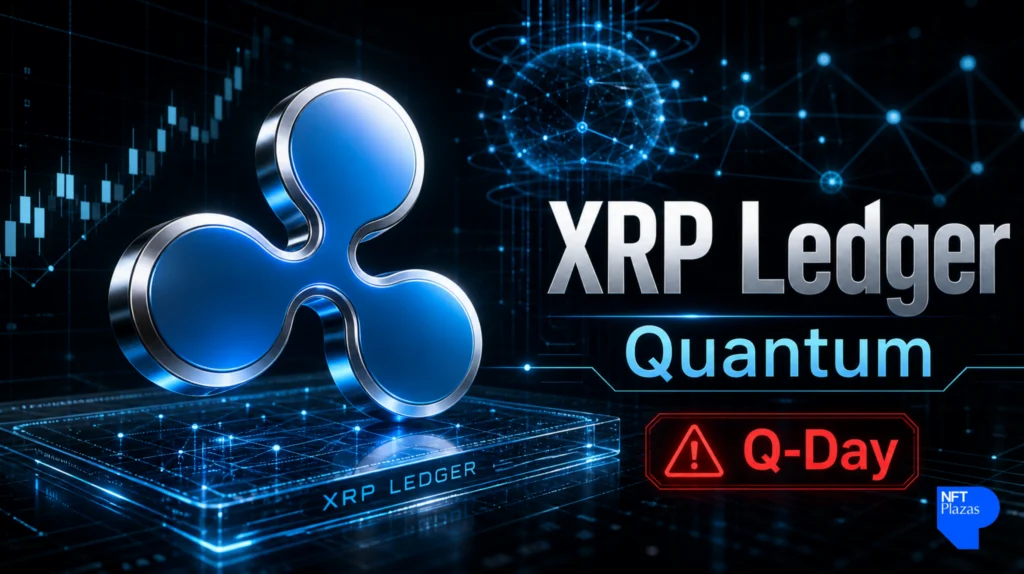
Ripple is actively fortifying the XRP Ledger (XRPL) against the imminent threat posed by quantum computing, announcing an ambitious roadmap in 2026 to achieve full post-quantum readiness before 2028. This strategic move anticipates "Q-Day," the theoretical point at which quantum computers will possess sufficient power to compromise the digital signatures that underpin blockchain transactions and secure digital wallets. The initiative aligns with a broader industry-wide acceleration of preparations for new cryptographic risks, driven by the release of new standards from the U.S. National Institute of Standards and Technology (NIST) and alarming research findings from Google Quantum AI.
The Quantum Computing Imperative: Understanding "Q-Day" and its Threat
The term "Q-Day" signifies a critical inflection point in cybersecurity, marking the advent of quantum computers powerful enough to break currently ubiquitous cryptographic algorithms. While the concept of a quantum computer "breaking" an entire blockchain is often misunderstood, the primary vulnerability lies specifically in the digital signatures and public keys that authenticate transactions and secure assets. Most major blockchain networks, including the XRP Ledger, currently rely on elliptic-curve cryptography (ECC) for verifying transactions. XRPL, for instance, supports keys based on secp256k1 and Ed25519 – both of which are theoretically susceptible to quantum attacks.
Quantum computers leverage principles of quantum mechanics, such as superposition and entanglement, to perform computations far beyond the capabilities of classical computers. Algorithms like Shor’s algorithm, developed in 1994, are specifically designed to efficiently solve mathematical problems that form the bedrock of modern public-key cryptography, including integer factorization (used in RSA) and the elliptic-curve discrete logarithm problem (used in ECC). It is the latter that poses a direct threat to blockchain security.
When a user initiates a transaction on a blockchain, their account signs it, typically exposing the account’s public key on-chain. In a post-quantum scenario, a sufficiently advanced quantum computer could, in theory, use this exposed public key to derive the corresponding private key. Gaining access to the private key would grant an attacker complete control over the associated digital assets, enabling them to drain wallets or manipulate transactions. Consequently, accounts that have previously sent transactions are generally more vulnerable than those that have only received assets, as their public keys would have been broadcast. Accounts holding substantial long-term value represent the most critical targets requiring early migration to quantum-resistant cryptography. The shift is not merely a technical upgrade but a preemptive defense of trillions of dollars in digital assets and the integrity of global financial infrastructure.
Ripple’s Proactive Stance: A Comprehensive Post-Quantum Roadmap for XRPL
Ripple officially unveiled its post-quantum readiness roadmap for the XRP Ledger on April 20, 2026. This announcement positioned XRPL to achieve "full readiness" no later than 2028, underscoring a commitment to proactive adaptation rather than reactive crisis management. Ayo Akinyele, senior director of engineering at Ripple, emphasized that this transition is far from a simple algorithm swap. Instead, it is conceptualized as an intricate, multi-faceted upgrade process encompassing significant changes across performance, storage, usability, core cryptography, and fundamental protocol design.
The comprehensive roadmap is structured into several interconnected phases, each critical to ensuring a seamless and secure transition:
- Research and Evaluation: This initial phase involves deep dives into existing and emerging post-quantum cryptographic (PQC) algorithms, assessing their suitability for XRPL’s specific requirements, such as low latency and high transaction throughput. It includes theoretical analysis of their security properties and efficiency.
- Standards Adoption and Algorithm Selection: Leveraging NIST’s finalized PQC standards, Ripple will select specific algorithms (e.g., from the ML-DSA and SLH-DSA families) best suited for XRPL’s operational environment. This involves rigorous evaluation of factors like signature size, verification speed, and computational overhead.
- Development and Prototyping: Engineers will begin implementing chosen PQC algorithms within the XRPL’s core architecture. This includes developing "hybrid signatures" – a transitional approach where transactions are signed using both classical (ECC) and post-quantum algorithms simultaneously, providing a robust interim layer of security.
- Testing and Benchmarking on Devnet: Crucially, all new implementations will undergo extensive testing on a dedicated development network (Devnet). This phase focuses on benchmarking performance metrics, including signature generation and verification times, transaction processing speeds, and the impact on ledger closing times. Compatibility with existing systems and potential bottlenecks will be meticulously identified and addressed.
- Ecosystem Integration and Tooling Development: This critical phase extends beyond the core ledger to encompass the entire XRPL ecosystem. It involves building and integrating PQC support into wallets, exchanges, custody providers, and other applications. This includes developing new APIs, SDKs, and tools to facilitate the transition for developers and end-users. Custody wallet prototypes supporting post-quantum security will be a key deliverable.
- Mainnet Deployment and User Migration: Following successful Devnet testing and ecosystem readiness, the post-quantum amendments will be proposed and, subject to validator approval, deployed to the XRPL mainnet. A phased user migration strategy will be implemented to encourage and assist users in updating their keys and wallets to quantum-resistant standards.
Ripple’s collaboration with Project Eleven is central to this effort, focusing on evaluating and fortifying critical XRPL components, including validator nodes, custody solutions, networking protocols, and user wallet layers. This partnership is instrumental in deploying hybrid signatures and building the necessary infrastructure for a post-quantum secure future. The underlying philosophy, as articulated by Akinyele, is to ensure that financial infrastructure reliant on XRPL can adapt well in advance of quantum computing becoming a direct, disruptive threat, thereby safeguarding systems, assets, and users.
Escalating Urgency: Google Quantum AI’s Latest Projections and the Imminent Threat
The urgency surrounding post-quantum readiness has been significantly amplified by recent breakthroughs in quantum computing research. A particularly impactful study published by Google Quantum AI in March 2026 provided updated, and considerably more alarming, estimates for the resources required to mount a quantum attack on widely used cryptographic standards.
Google’s research indicated that an attack on the "elliptic-curve discrete logarithm" problem on secp256k1 – the foundational cryptographic problem protecting a vast number of blockchain signatures today, including Bitcoin and Ethereum – could potentially require as few as 1,200 logical qubits and 90 million Toffoli gates. An alternative estimate suggested no more than 1,450 logical qubits and 70 million Toffoli gates. Critically, when translated into a specific hardware model, these figures could correspond to fewer than 500,000 physical qubits. This is a stark departure from many previous estimates, which often projected millions or even tens of millions of physical qubits needed to break ECC, pushing the "Q-Day" timeline much closer than previously anticipated.
While Google’s estimates do not signify an immediate operational risk for major blockchains today, they serve as a powerful catalyst, making it untenable for migration plans to be postponed indefinitely. For networks with millions of users, a diverse array of wallets, exchanges, validators, and custody providers, a cryptographic transition is inherently a multi-year endeavor. It demands meticulous planning, extensive testing, and widespread ecosystem coordination, making a reactive, short-term response virtually impossible without significant disruption and potential loss of assets. The new projections underscore the critical need for proactive, long-term strategies, validating Ripple’s early and aggressive post-quantum roadmap.
A Unified Front: The Broader Cryptocurrency Industry’s Response to Quantum Threats
Ripple’s efforts are part of a larger, global movement within the cybersecurity and cryptocurrency industries to prepare for the post-quantum era. This collective response highlights the universal recognition of the quantum threat and the necessity for standardized, collaborative solutions.
NIST’s Pivotal Role in Standardizing Post-Quantum Cryptography:
A landmark development occurred on August 13, 2024, when the U.S. National Institute of Standards and Technology (NIST) officially approved its first three finalized post-quantum cryptography standards. These include:
- FIPS 203 for ML-KEM (Kyber): A key-encapsulation mechanism (KEM) designed for establishing secure session keys, crucial for encrypting data.
- FIPS 204 for ML-DSA (Dilithium): A digital signature algorithm (DSA) suitable for authenticating digital information, directly relevant to securing transactions, wallets, and digital identities.
- FIPS 205 for SLH-DSA (SPHINCS+): Another digital signature algorithm, offering a different security profile, particularly noted for its stateless nature and high security assurances.
ML-DSA and SLH-DSA are of particular significance to the blockchain industry as they provide quantum-resistant alternatives to current elliptic-curve digital signature algorithms (ECDSA), which are used to verify transactions and prove ownership of digital assets. These standards provide a critical foundation upon which blockchain networks can build their quantum-resistant security layers, ensuring interoperability and broad adoption.
Ethereum’s Strategic Shift:
Ethereum, another leading blockchain, has also formally integrated post-quantum cryptography into its official security roadmap. The Ethereum Foundation has established a dedicated post-quantum research team, actively exploring and developing solutions. The ambitious "Lean Ethereum" roadmap, targeting around 2029, aims to implement core infrastructure protection against quantum threats, demonstrating a parallel commitment to long-term security.
Bitcoin’s Ongoing Deliberations:
While Bitcoin, the largest cryptocurrency, lacks an official transition schedule, proposals such as BIP-360 and BIP-361 have emerged within its developer community. These Bitcoin Improvement Proposals (BIPs) address the creation of quantum-resistant addresses and signatures, indicating that the Bitcoin community is actively engaged in discussions and research, even if consensus on a concrete implementation timeline remains elusive. The decentralized nature of Bitcoin’s development often leads to longer deliberation periods for such fundamental changes.
The Rise of AI-Assisted Cryptanalysis:
Adding another layer of complexity to post-quantum security discussions is the emerging field of AI-assisted cryptanalysis. In July 2026, a notable report from Anthropic detailed how its AI model, Claude Mythos Preview, successfully identified a significantly improved attack vector against HAWK, a post-quantum signature candidate that was still under additional evaluation by NIST. Claude Mythos Preview reportedly spent approximately 60 hours and an estimated $100,000 in API costs to achieve this breakthrough. The finding dramatically reduced the practical difficulty of breaking HAWK-256 from roughly 2^64 to 2^38, representing a reduction in complexity of approximately 67 million times. It is crucial to note that this discovery did not affect NIST’s already finalized standards (ML-DSA, SLH-DSA), as HAWK was a candidate still under review. Nevertheless, this incident underscores the dynamic nature of cryptographic security and the potential for advanced AI to accelerate cryptanalytic efforts, necessitating even more robust and adaptable post-quantum solutions.
XRPL’s Unique Advantages and Formidable Challenges in Post-Quantum Migration
The XRP Ledger possesses certain architectural advantages that could potentially streamline its post-quantum migration compared to other blockchain networks. However, these advantages do not negate the substantial technical and ecosystem challenges that lie ahead.
Inherent Advantage: Account Design and Key Rotation:
One significant structural benefit of XRPL is its flexible account design. Unlike many blockchains where the account address is inextricably linked to the cryptographic key pair, XRPL allows users to change the key controlling an account without altering the account itself. This is facilitated by mechanisms like the "regular key" and "key rotation." This separation of an account address from the specific key pair used to sign transactions offers a compelling advantage: it could make the transition to new, quantum-resistant signatures less complex, as users might not be forced to migrate all their assets to an entirely new account address. Instead, they could simply rotate to a new, quantum-resistant key associated with their existing account. This capability could significantly reduce friction and user burden during the transition.
Operational Hurdles and Technical Complexities:
Despite this inherent advantage, Ripple faces formidable operational and technical hurdles. The core challenge is to prove that new post-quantum algorithms can operate stably, efficiently, and securely on the XRPL network, which is renowned for its speed and low transaction costs. Key performance indicators that must be meticulously evaluated include:
- Signature Size: Post-quantum signatures tend to be larger than their classical counterparts, which could impact data storage requirements and network bandwidth.
- Verification Costs: The computational cost of verifying these larger and more complex signatures must remain within acceptable limits to maintain XRPL’s efficiency.
- Data Storage: Increased signature sizes will affect the ledger’s overall data footprint, which needs to be managed to prevent bloat and maintain performance.
- Impact on Ecosystem: The changes must be seamlessly integrated across the entire XRPL ecosystem, including all wallets, exchanges, and custody providers that interact with the ledger. This requires extensive collaboration and testing to ensure compatibility and prevent service disruptions.
For a blockchain designed for fast payments and settlement, where a ledger closes in just a few seconds, every change at the signature layer carries profound implications. Any modification must undergo exhaustive testing and validation to ensure it does not compromise the network’s speed, reliability, or security before being deployed to the mainnet. This demands a level of precision and rigor that few other blockchain networks require.
Governance and Ecosystem Alignment:
Another unique aspect of XRPL’s challenge lies in its protocol change implementation mechanism. Amendments to the XRPL protocol require approval from a supermajority of validators, representing a significant portion of the network’s processing power, as well as the broader infrastructure ecosystem. This decentralized governance model means that Ripple’s post-quantum roadmap is not solely dependent on the technical merits of the chosen algorithms but also on the speed and willingness with which various stakeholders – including independent validators, wallet providers, exchanges, custody services, and node operators – prepare for and adopt the transition. Achieving widespread consensus and timely integration across such a diverse ecosystem is a monumental coordination effort, requiring clear communication, robust tooling, and incentives for early adoption.
Implications for Financial Institutions and the Future of Digital Assets
The successful post-quantum migration of the XRP Ledger holds profound implications, particularly for financial institutions and the broader landscape of digital assets. Many traditional financial entities already leverage XRPL for cross-border payments and settlement, valuing its speed, cost-effectiveness, and reliability. For these institutions, the assurance of quantum-resistant security is not merely a technical nicety but a fundamental requirement for maintaining trust, regulatory compliance, and the long-term viability of their digital asset strategies.
The broader impact extends to the very foundation of trust in blockchain technology. If a major blockchain were to fall victim to a quantum attack, the repercussions could be catastrophic, eroding confidence across the entire digital asset space and potentially destabilizing financial markets. Ripple’s proactive approach, therefore, serves as a critical defense against such a scenario, reinforcing the integrity and security of a vital piece of global financial infrastructure.
Furthermore, the "race against time" to achieve post-quantum readiness highlights the importance of interoperability in a future where various blockchains and digital payment systems will need to communicate securely. Standardized PQC solutions, such as those from NIST, will be crucial for ensuring that different networks can implement quantum-resistant cryptography in a compatible manner, facilitating seamless and secure transactions across diverse ecosystems.
In conclusion, Ripple’s aggressive post-quantum roadmap for the XRP Ledger is a testament to the growing awareness and urgency surrounding the quantum threat. It represents a significant commitment to future-proofing digital assets and blockchain infrastructure. This complex endeavor demands not only groundbreaking cryptographic engineering but also unprecedented collaboration across the entire ecosystem. The proactive steps being taken by Ripple, alongside the broader industry’s embrace of NIST standards and ongoing research, are essential for safeguarding the integrity of digital finance and ensuring that the promise of blockchain technology can endure well into the quantum age.