Dwi Wanna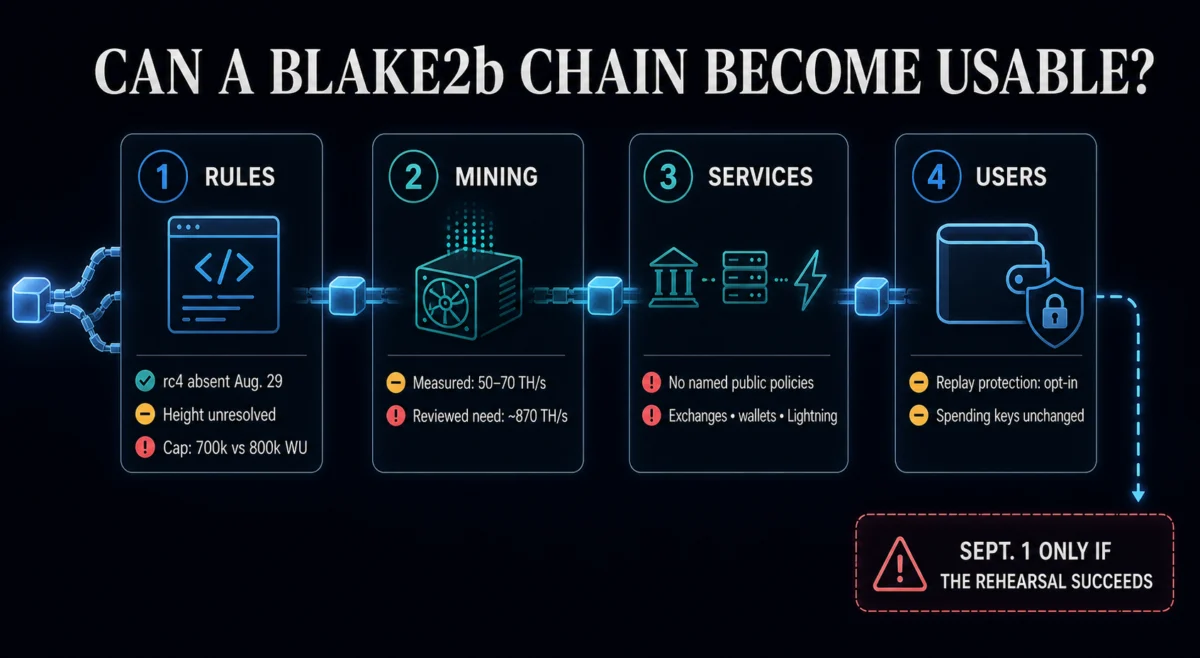
The Bitcoin Knots development team, led by veteran developer Luke Dashjr, has initiated a critical technical rehearsal for a proposed hard fork that would fundamentally alter the proof-of-work (PoW) mechanism of its breakaway network. Following the stagnation of the previous BIP-110 enforcement attempt, which failed to gain sufficient traction among the existing mining community, the new proposal seeks to migrate the network from the industry-standard SHA-256d hashing algorithm to BLAKE2b. This transition is designed to bypass the current dominance of Bitcoin’s established mining infrastructure and establish a distinct, hardware-independent ledger.
The move comes at a time of heightened tension within the Bitcoin ecosystem regarding block space utilization and the role of non-monetary data on the blockchain. By shifting to a different hashing algorithm, Bitcoin Knots aims to create a sanctuary for users who prioritize a specific vision of the network, one that typically involves more stringent filtering of what proponents label "spam" data, such as Ordinals and Inscriptions. However, the technical and economic hurdles facing such a migration are substantial, requiring not only a successful software deployment but also the cultivation of an entirely new hardware and exchange ecosystem.
The Shift to BLAKE2b: Technical Rationale and Implementation
On August 29, Luke Dashjr issued a public directive to miners currently utilizing SHA-2 hardware, advising them to cease operations on the proposed breakaway chain ahead of an August 30 rehearsal. This rehearsal serves as a stress test for Bitcoin Knots version 29.4.1rc4, which is programmed to establish the final SHA-2 block before the network permanently switches its consensus mechanism to BLAKE2b.
BLAKE2b is a cryptographic hash function that offers significant differences from the SHA-256d algorithm that has secured the Bitcoin network since its inception in 2009. While SHA-256d is deeply entrenched in the Bitcoin mining industry, supported by billions of dollars in Application-Specific Integrated Circuit (ASIC) infrastructure, BLAKE2b is utilized by a different subset of the cryptocurrency market, most notably the Sia network.
The primary objective of this change is to solve the "miner problem" that crippled the earlier BIP-110 branch. BIP-110 attempted to enforce new rules while remaining on the SHA-256d algorithm. This required the cooperation of existing Bitcoin miners, who largely ignored the fork, leading to a chain that stalled after producing only two blocks. By moving to BLAKE2b, the Bitcoin Knots fork effectively "fires" the existing Bitcoin mining pool and opens the door for a different class of hardware.
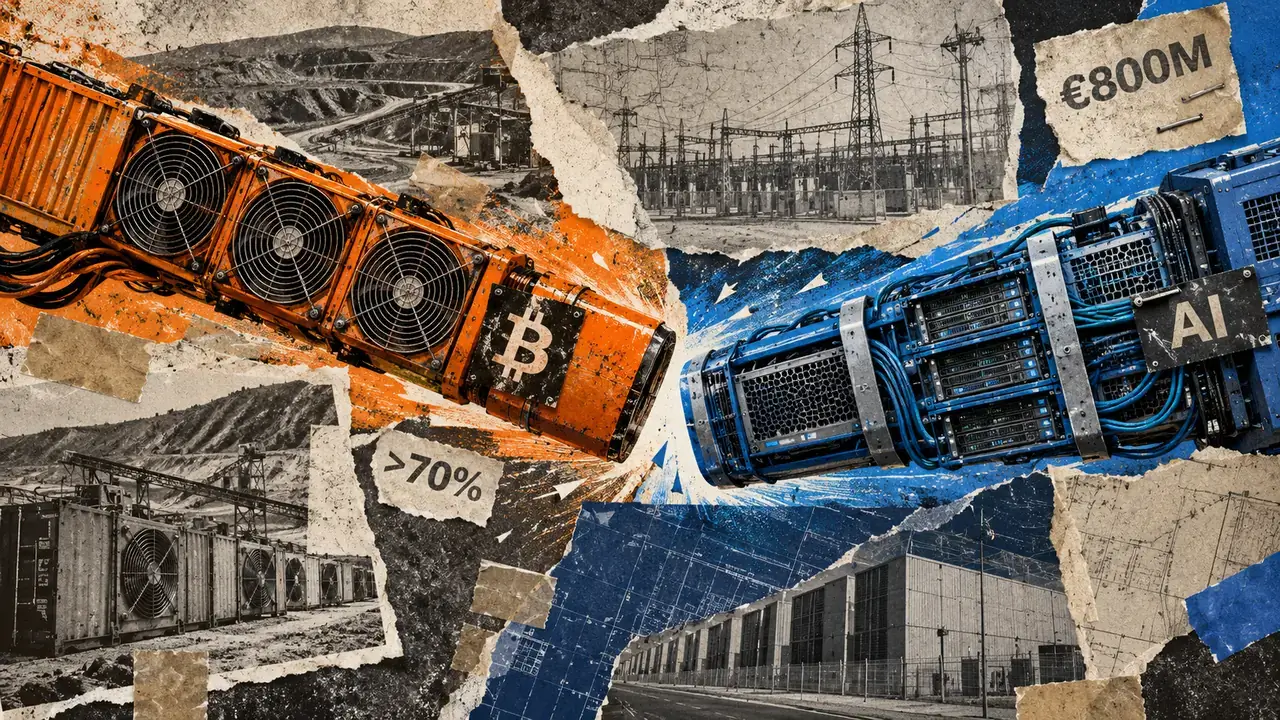
Proponents of the shift argue that machines originally manufactured for mining Sia, such as Bitmain’s Antminer A3 and various Goldshell SC5 models, can be repurposed to secure the new Bitcoin Knots chain. This strategy is intended to prevent a "silent boycott" from dominant SHA-256d mining pools by utilizing a hardware base that is not currently invested in the main Bitcoin chain’s status quo.
Chronology of the Breakaway Attempt
The current push for a BLAKE2b transition is the latest chapter in a series of efforts to bifurcate the Bitcoin network based on differing philosophies of data management.
- Early August 2024: The BIP-110 proposal is activated, attempting to enforce a chain split from the dominant Bitcoin network. The split is characterized by a "soft fork" approach that fails to gain hash power.
- Mid-August 2024: The BIP-110 chain effectively stalls. With only a negligible amount of the global SHA-256d hash rate supporting the new rules, block production becomes impossible, rendering the chain non-functional for commerce or transfers.
- August 29, 2024: Luke Dashjr announces the transition to BLAKE2b. He identifies Bitcoin Knots 29.4.1rc4 as the candidate for the final SHA-2 block.
- August 30, 2024: The scheduled rehearsal for the PoW switch begins. This test is designed to verify if nodes can successfully transition to the new hashing requirements at a predetermined block height.
- September 1, 2024: The target date for the final 29.4.1 release, provided the rehearsal does not encounter critical bugs. If successful, this would mark the official birth of the BLAKE2b-based Bitcoin Knots chain.
Supporting Data and Technical Discrepancies
Despite the clear timeline, several technical data points suggest that the transition remains fraught with uncertainty. A primary concern involves the "hash rate gap"—the difference between the mining power required to maintain the network and the power currently available.
Technical reviewers analyzing the open-source implementation of the BLAKE2b fork have noted significant discrepancies in the initial difficulty parameters. Based on the proposed code, maintaining the standard 10-minute block interval would require approximately 870 terahashes per second (TH/s) of BLAKE2b hash power. In contrast, measurements from the "testnet4" environment—a testing ground for the new code—showed an estimated capacity of only 50 to 70 TH/s.
If the mainnet launches with these parameters and fails to attract a massive influx of Sia-compatible mining hardware immediately, the network will suffer from extremely slow block times. This would result in a "frozen" ledger where transactions could take days or weeks to confirm, mirroring the failure of BIP-110.
Furthermore, discrepancies in the consensus rules have been identified within the project’s documentation. The FAQ for the proposal and certain pull requests on GitHub described a block-weight limit of 700,000 weight units (a significant reduction from Bitcoin’s standard 4,000,000 units). However, a pinned source commit in the repository set this limit at 800,000 units. In the world of blockchain consensus, even a small disagreement over such constants can lead to a "netsplit," where different nodes follow different versions of the truth, effectively destroying the network’s integrity.
Infrastructure and Economic Viability
A blockchain is more than just a ledger; it is an ecosystem of service providers. For the Bitcoin Knots BLAKE2b fork to become economically viable, it requires the support of exchanges, wallet providers, custodians, and block explorers. As of the end of August, no major industry players had publicly committed to supporting the new chain.
The lack of infrastructure support is exacerbated by a significant change in the block header format. The new proposal changes the Bitcoin block header from the traditional 80-byte SHA-256d format to a 164-byte BLAKE2b format. This change is not "backwards compatible" with existing light wallets (such as Electrum) or Simplified Payment Verification (SPV) clients.
For these services to function on the new chain, developers would need to rewrite significant portions of their codebase to accommodate the larger headers and the new hashing algorithm. Dashjr has stated that light-client compatibility is currently outside the scope of the Bitcoin Knots project, placing the burden of adoption entirely on third-party developers.
The Lightning Network, Bitcoin’s primary scaling solution, also faces a "split" dilemma. Channels created on the main Bitcoin chain before the fork would technically exist on both chains. However, for a channel to remain functional on the BLAKE2b chain, both peers in the channel would need to migrate their software simultaneously. If one peer stays on the main chain and the other moves to Knots, the channel becomes unusable on the new ledger.
Replay Protection and Security Analysis
One of the most significant risks in any chain split is a "replay attack." Because both the main Bitcoin chain and the new BLAKE2b chain share the same transaction history up until the point of the fork, a transaction valid on one chain could potentially be valid on the other. An attacker could "replay" a user’s transaction from the main chain onto the Knots chain (or vice versa) to move coins without the user’s intent.
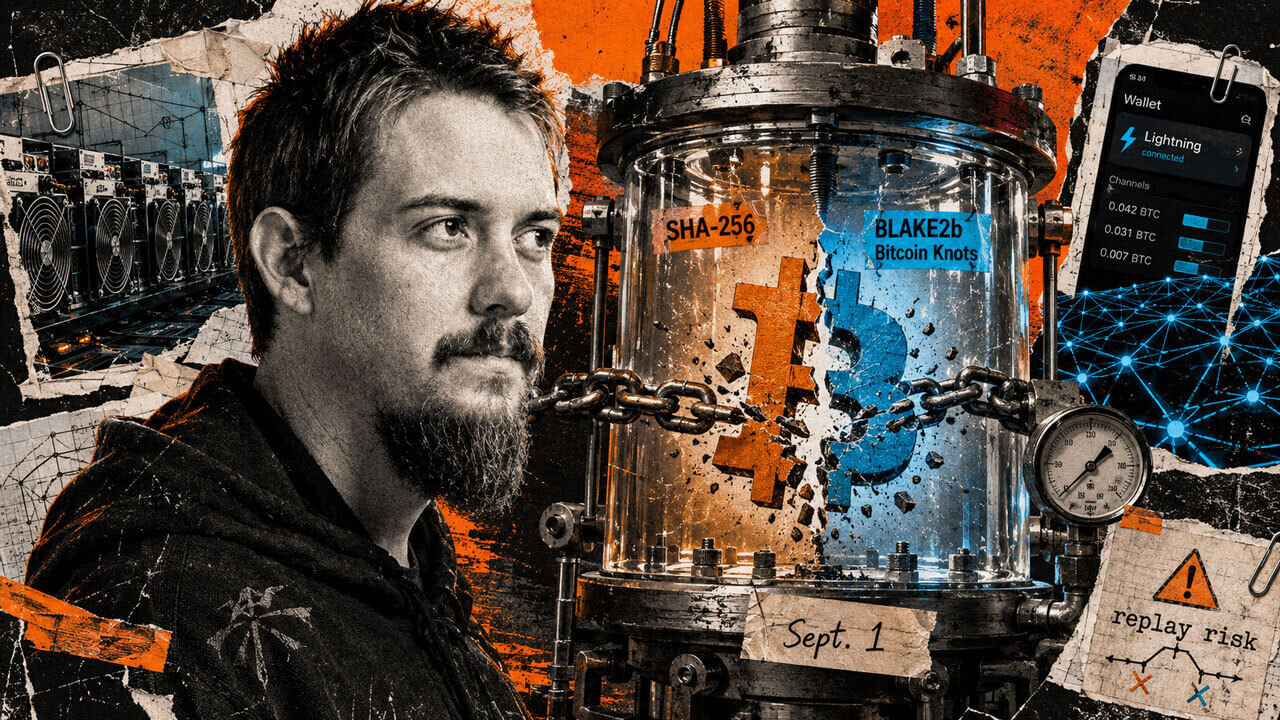
To mitigate this, Bitcoin Knots has proposed a new signing mode called SIGHASH_UNIFIED. This is an "opt-in" form of replay protection. While it allows savvy users to create transactions that are only valid on the new chain, it does not provide automatic protection for the general population. Users who do not explicitly use this new signing mode remain vulnerable to having their balances on the minority chain moved unintentionally.
It is also important to note that the switch to BLAKE2b is strictly a change to the Proof of Work. It does not address other long-term concerns often discussed in the Bitcoin community, such as quantum resistance. The fork retains Bitcoin’s existing Elliptic Curve Digital Signature Algorithm (ECDSA) and address formats, meaning that the security of private keys remains unchanged.
Broader Impact and Implications for the Bitcoin Ecosystem
The Bitcoin Knots BLAKE2b rehearsal represents a pivotal moment in the ongoing "culture war" over Bitcoin’s development direction. It is a bold experiment in whether a minority group can successfully "exit" the main network by changing the underlying hardware requirements.
If the Sunday rehearsal and subsequent launch succeed in producing a stable, moving chain, it will prove that a PoW change is a viable tool for developers to escape the influence of a dominant mining class. It would create a "purist" version of Bitcoin that operates under the specific data-filtering rules favored by Dashjr and his supporters.
However, the path to success is narrow. Without exchange listings, the "Knots coins" on the new chain will have no market price, making it difficult for miners to justify the electricity costs of running their machines. Without wallet support, users will find it nearly impossible to spend or receive the currency.
The failure of BIP-110 demonstrated that code alone cannot force a network split if the economic and physical infrastructure (miners) does not follow. The move to BLAKE2b is an attempt to find a new physical infrastructure, but the economic hurdle remains as high as ever. The coming days will determine if Bitcoin Knots becomes a functional alternative ledger or if it serves as a cautionary tale about the immense difficulty of challenging the network effects of the world’s largest decentralized network.