admin
admin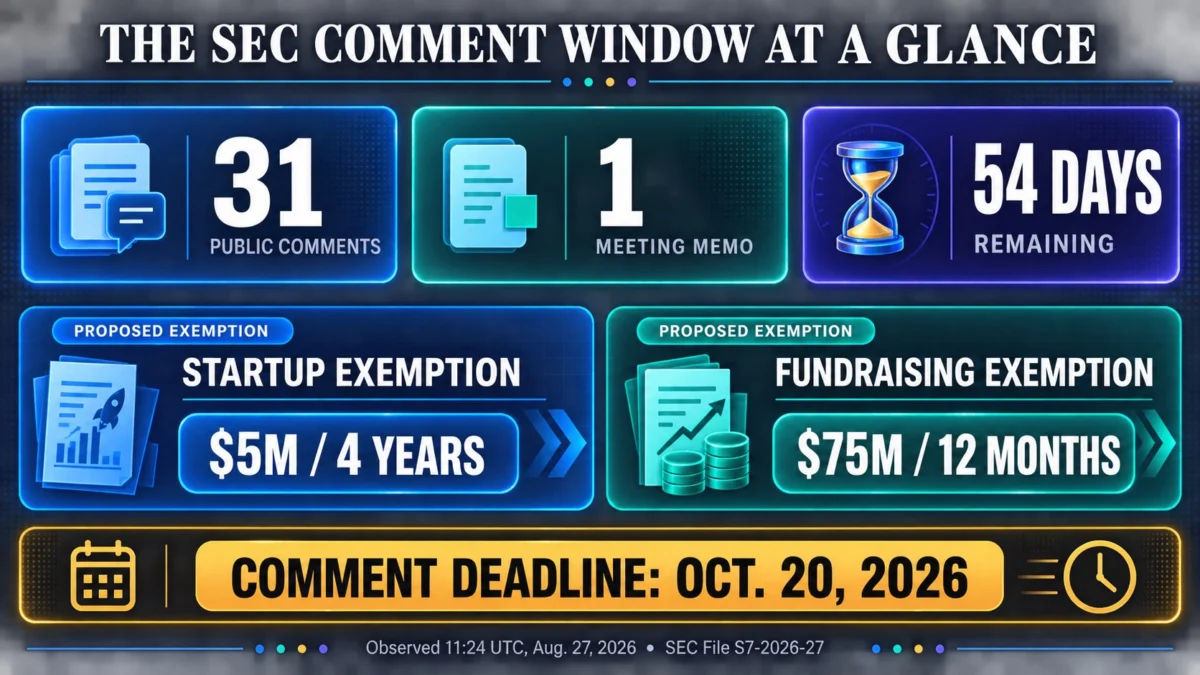
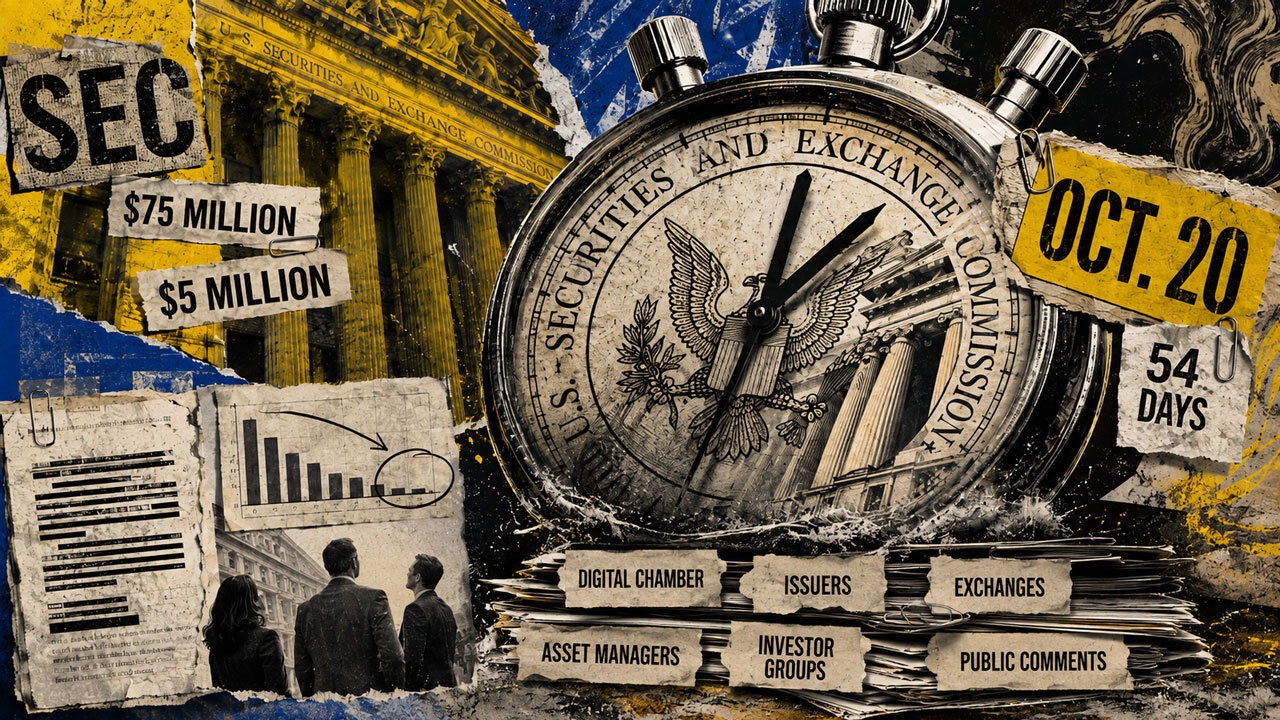
A pivotal proposal by the U.S. Securities and Exchange Commission (SEC) aimed at creating new fundraising exemptions for cryptocurrency ventures has garnered a modest initial response, with only 31 public comments and one accompanying meeting memorandum submitted by August 27th. This limited engagement underscores the tight window of opportunity for stakeholders to influence a regulatory framework that could significantly reshape how digital asset startups access capital. The comment period, set to conclude on October 20th, leaves just 54 days for a broader spectrum of the crypto industry and interested parties to voice their perspectives and advocate for potential amendments.
The proposed exemptions, detailed in a filing on the Federal Register, outline two distinct pathways for eligible crypto ventures. The first pathway allows companies to raise up to $5 million within any four-year period. The second, more substantial exemption, permits ventures to solicit up to $75 million in capital each fiscal year. These proposals represent a significant step by the SEC to provide clearer regulatory pathways for capital formation within the nascent and often complex digital asset ecosystem. However, the early lack of participation from major players – including prominent crypto exchanges, large asset managers, significant token issuers, and established investor advocacy groups – suggests a potentially under-addressed aspect of the regulatory landscape or a strategic wait-and-see approach from industry giants.
The Genesis of the SEC’s Crypto Exemption Proposal
The SEC’s current initiative stems from a broader, ongoing effort to adapt existing securities regulations to the unique characteristics of digital assets. Historically, the issuance of securities in the United States has been governed by strict registration requirements under the Securities Act of 1933. However, the Securities Act also provides for various exemptions from these registration requirements, allowing for capital formation under specific conditions without the extensive disclosure and regulatory burdens of a full registration. These exemptions, such as Regulation D, have been foundational for startups and private companies seeking investment.
The emergence of blockchain technology and cryptocurrencies presented a novel challenge for regulators. The decentralized nature of many crypto projects, the global reach of digital assets, and the innovative fundraising mechanisms, such as initial coin offerings (ICOs), often blurred the lines between traditional securities and new forms of digital property. This ambiguity led to a period of uncertainty, with the SEC asserting that many crypto tokens constituted securities and were therefore subject to its oversight. Enforcement actions against unregistered offerings became commonplace, creating a chilling effect on innovation and fundraising within the crypto space.
Recognizing the need for more tailored guidance, the SEC has been engaging with the industry through various means, including public workshops, roundtables, and comment periods on proposed rules. This particular proposal to create specific exemptions for crypto fundraising can be viewed as an attempt to provide a more predictable and accessible framework, encouraging compliant capital formation while maintaining investor protection. The tiered approach, with a $5 million and a $75 million ceiling, likely aims to cater to ventures at different stages of development and with varying capital needs.
Examining the Initial Public Comments: Key Areas of Focus
Despite the low volume of initial submissions, the comments that have been filed offer a glimpse into the specific concerns and suggestions being raised by participants. These early submissions highlight critical junctures where the SEC’s proposed framework could be refined, focusing on the mechanics of disclosure, investor protection, the treatment of non-cash compensation, and the implications of the $75 million fundraising cap.
Ohanae Securities, a registered broker-dealer with both SEC and FINRA oversight, has put forth a detailed submission that seeks to clarify several aspects of the proposed exemptions. Their comments emphasize the need for greater precision regarding the eligibility criteria and the scope of the $75 million exemption. Furthermore, they propose clarifying the preemption offered by Rule 500, a key component for understanding how these new exemptions interact with existing regulations. Beyond these core issues, Ohanae Securities suggests enhancements to the SEC’s Electronic Data Gathering, Analysis, and Retrieval (EDGAR) system, proposing the creation of a dedicated status hub for crypto-related filings. They also advocate for more robust disclosures through Form TR and propose a "good-faith" protection for unaffiliated regulated intermediaries who rely on representations made by issuers, a measure designed to shield service providers from liability when acting in good faith.
The issue of aggregated fundraising limits is a central concern for ARKONIX. This commenter questions whether independent offerings that utilize the same underlying infrastructure should be subject to a shared $75 million fundraising ceiling. Their argument posits that distinct partner vaults, each independently managed and operating, should not have their capital-raising activities aggregated under a single entity’s limit. To illustrate their point, ARKONIX uses an example where ten partners, each raising $20 million independently, would not necessarily mean their infrastructure provider should be considered a $200 million issuer. This perspective highlights the potential for unintended consequences if the aggregation rules are not carefully calibrated, potentially hindering the growth of collaborative or platform-based fundraising models.
The $5 million exemption pathway has also drawn specific critiques. Beeezo has submitted a comment letter urging the SEC to differentiate between genuine commercial activities compensated with stable-value instruments and services provided to an issuer in exchange for its own native token. This distinction is crucial for accurately calculating non-cash consideration, a metric that can impact whether a fundraising effort qualifies for an exemption. By drawing a clear line, Beeezo aims to prevent ambiguity and ensure that the calculation of non-cash compensation accurately reflects the economic substance of the transaction.
In contrast, Tilden Moschetti has expressed outright opposition to the startup exemption as it is currently proposed. This commenter advocates for a more robust and tailored approach, seeking the introduction of entity eligibility requirements, individual investment limits for investors, scaled financial assurance mechanisms, permanent EDGAR disclosure requirements, and a significantly shorter timeframe for material updates (four business days). Additionally, Moschetti calls for stricter safeguards related to resale restrictions and insider trading, aiming to bolster investor protection and market integrity.
The Digital Chamber has also made its presence felt, though its submission is noted as a memorandum recording an August 19th meeting rather than a formal public comment. The Chamber asserts that this memorandum does not convey substantive positions on the proposed rules. Separately, the Chamber indicates that its Token Alliance has submitted a comprehensive set of 13 responses to an earlier SEC request for written input. These earlier submissions, which covered all 48 questions posed by the SEC and involved input from over 75 members, are housed in a pre-proposal written-input archive, distinct from the current S7-2026-27 comment tally. This indicates a more extensive engagement from the Digital Chamber beyond the immediate comment period.

Broader Implications and the Road Ahead
The limited number of early public comments raises questions about the broader engagement strategy and the potential for significant revisions to the SEC’s proposal. It is possible that larger, more influential entities are consolidating their feedback or are strategizing to submit their comments closer to the deadline. Alternatively, the current low engagement could reflect a perception among some industry players that the proposed exemptions, even with potential modifications, may not fully address their needs or that the regulatory environment remains too uncertain.
The SEC’s proposal, even in its current form, represents a significant regulatory development. By offering these exemptions, the Commission is acknowledging the unique capital-raising challenges faced by crypto startups and attempting to provide a clearer path forward. The $5 million and $75 million tiers are designed to offer flexibility, allowing early-stage ventures to raise seed capital and more established companies to scale their operations. The success of these exemptions will hinge on their clarity, accessibility, and their ability to strike a balance between fostering innovation and safeguarding investors.
The implications of the SEC’s final rule could be far-reaching. For compliant crypto startups, these exemptions could significantly reduce the cost and complexity of fundraising, enabling them to dedicate more resources to product development and growth. This could lead to a more robust and innovative crypto ecosystem in the United States. Conversely, if the exemptions are too narrowly tailored or if the compliance burden remains high, they may not achieve their intended effect, and companies may continue to seek capital through less regulated or offshore channels.
The current public comment period is a critical juncture. The feedback provided by Ohanae Securities, ARKONIX, Beeezo, Tilden Moschetti, and the Digital Chamber, among others, highlights key areas of contention and potential refinement. As the October 20th deadline approaches, the crypto industry faces a shrinking window to make its voice heard. The SEC will then have the task of reviewing all submitted comments, considering the various perspectives, and determining whether to amend the proposed rules before finalizing them. The outcome of this process will be closely watched by startups, investors, and regulators alike, as it will shape the future of crypto fundraising in the United States. The limited number of current comments may ultimately serve to amplify the impact of the submissions that are made, as each perspective will carry significant weight in the SEC’s decision-making process.