admin
admin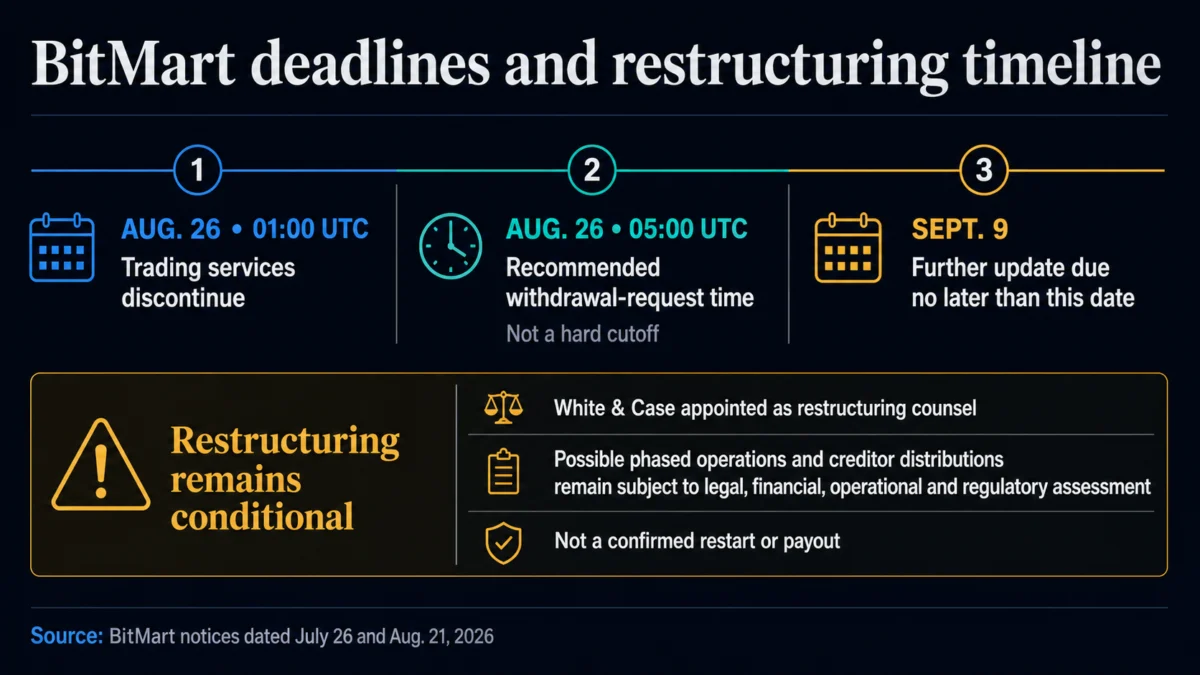
BitMart is exploring a restructuring initiative that could potentially permit certain segments of the cryptocurrency exchange to resume operations. This development offers an alternative path to the complete wind-down that was announced last month, even as a significant number of customers continue to report persistent difficulties in accessing their deposited assets. The exchange has engaged the services of White & Case, a prominent international law firm, to advise on this restructuring process, while users remain vocal in their demands for the release of their funds.
Evolving Restructuring Plans Amidst Customer Concerns
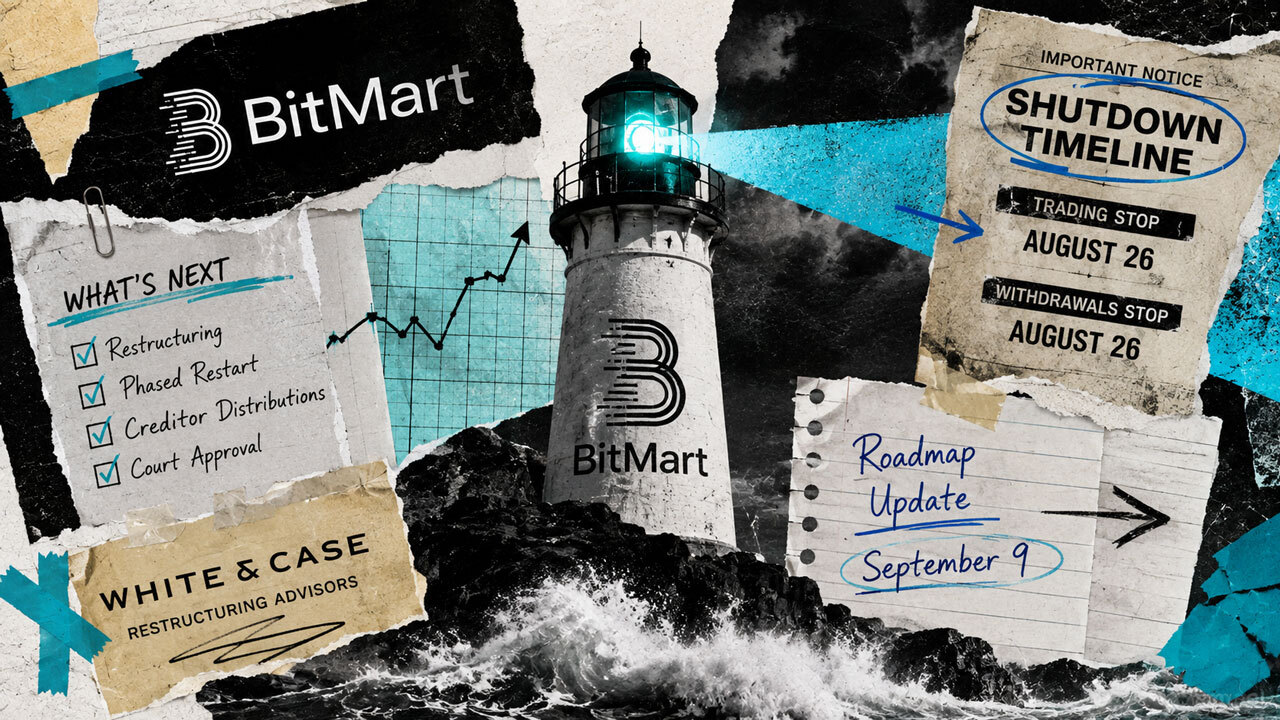
On August 21, BitMart publicly stated that a potential restructuring plan might encompass a phased recommencement of select services. This proposal is envisioned to run concurrently with the distribution of assets to creditors. However, the implementation of such a plan is contingent upon a comprehensive review encompassing legal, financial, operational, and regulatory considerations. This announcement comes at a critical juncture, as many users have expressed frustration and anxiety over their inability to withdraw their cryptocurrency holdings. The exchange indicated that it anticipates providing a further update on its progress by September 9.
The appointment of White & Case signifies a serious engagement with complex financial and legal challenges. The firm is known for its expertise in handling corporate restructurings and insolvency proceedings across various industries, including the financial sector. Their involvement suggests that BitMart is preparing for a potentially protracted and intricate process to stabilize its operations and address its liabilities.
Imminent Service Discontinuation and User Withdrawal Deadlines
Despite the ongoing discussions around restructuring, BitMart’s immediate operational timeline remains largely unchanged. The exchange is scheduled to cease spot trading, futures trading, and other trading services at 01:00 UTC on August 26. Users have been strongly advised to submit all withdrawal requests before 05:00 UTC on the same day. While the exchange has characterized this latter time as a "recommended" deadline rather than an absolute cutoff, the urgency conveyed underscores the critical nature of the impending service suspension.
This approaching deadline has amplified the existing tension and scrutiny from BitMart’s user base. Numerous customers have come forward with accounts of their withdrawal requests being frozen, significantly delayed, or left entirely unresolved. These reports paint a picture of widespread distress among users who are anxious about the security and accessibility of their digital assets held on the platform.
Escalating Scrutiny and Unanswered Questions
The situation at BitMart has drawn the attention of blockchain investigators and the broader crypto community, who are demanding greater transparency. Some users have explicitly called for verifiable proof of the exchange’s reserves and a clearly defined repayment plan that outlines how and when their funds will be returned. Adding to the complexity, allegations have surfaced from former employees regarding unpaid salaries, further complicating the narrative of the exchange’s financial health.
In response to these mounting accusations, BitMart Chief Executive Officer Sheldon Lee has publicly refuted claims of mismanagement, labeling them as "fabricated rumors." However, these denials have done little to quell the concerns of users and observers. Blockchain investigator ZachXBT, a prominent figure in tracking on-chain activity and uncovering fraudulent schemes, has also voiced skepticism. ZachXBT has questioned why BitMart has not proceeded with returning customer funds if it possesses sufficient liquidity to honor withdrawal requests, thereby intensifying the pressure on the exchange to provide a more transparent account of its financial standing.
BitMart has, to date, not provided a comprehensive repayment framework, an estimated recovery percentage for users, or a concrete timetable for resolving the outstanding withdrawal requests. This lack of clarity has fueled speculation and deepened user distrust.
Compliance Checks and Potential Future Distributions
The exchange has stated that withdrawal requests may be subject to a rigorous series of checks. These include identity verification, security assessments, source-of-funds investigations, and compliance with international sanctions regulations, among other checks. Requests submitted after the recommended August 26 deadline will reportedly be processed through a separate procedure, with further instructions to be communicated at a later date. The specifics of this separate processing remain vague, adding another layer of uncertainty for users.
The proposed restructuring plan, if successfully implemented, could theoretically establish an alternative avenue for creditors to recover a portion of their assets. However, these potential distributions are distinct from standard withdrawal requests made by active users. The terms, scope, and feasibility of these creditor distributions remain undefined.
Uncertainties Surrounding a Phased Restart
Furthermore, BitMart has not disclosed which specific services might be reinstated under a phased operational restart. Details regarding the potential timeline for such a resumption and the regulatory approvals that would be necessary are also absent. This leaves the exchange in a precarious position: attempting to preserve a pathway back to operational status while simultaneously facing an imminent shutdown of core services and an unresolved situation regarding the immediate access to customer funds.
The exchange’s strategic move to explore restructuring while core services are set to be suspended raises critical questions about its priorities and its ability to navigate the current crisis. The success of any restructuring effort will likely depend on its capacity to regain user trust and demonstrate a credible commitment to resolving outstanding financial obligations. The coming weeks, particularly the update expected by September 9, will be crucial in determining the future trajectory of BitMart and the prospects for its affected users.
Historical Context and Industry Precedents
The challenges faced by BitMart are not unique within the cryptocurrency exchange landscape. The industry has witnessed several instances of exchanges facing liquidity crises, security breaches, and subsequent operational disruptions. The collapse of FTX in late 2022, for example, sent shockwaves through the market and highlighted the inherent risks associated with centralized cryptocurrency platforms. In that instance, users were left with little recourse for their frozen assets for an extended period. Such events have increased regulatory scrutiny and investor caution, making transparency and robust risk management paramount for all participants in the digital asset space.
The current situation at BitMart echoes some of these past difficulties, particularly the extended period of user inaccessibility to funds. The exchange’s announcement of a restructuring plan, while offering a glimmer of hope for some form of resolution, also underscores the severity of the underlying financial and operational issues. The engagement of a firm like White & Case suggests that BitMart is preparing for a complex legal and financial overhaul, which typically involves negotiations with creditors, potential asset sales, and a reevaluation of its business model.

The Role of Blockchain Analysis in Scrutiny
The involvement of blockchain investigators like ZachXBT is indicative of a growing trend where on-chain analytics are used to provide an independent layer of verification and scrutiny for cryptocurrency platforms. By tracing the movement of funds and analyzing wallet balances, investigators can offer insights that may contradict or corroborate official statements from exchanges. In BitMart’s case, ZachXBT’s questioning of the exchange’s liquidity implies that publicly available on-chain data might not fully support the narrative of an inability to process withdrawals due to insufficient funds. This type of analysis empowers users and the broader community to make more informed judgments about the solvency and operational integrity of exchanges.
The pressure from both users and independent investigators creates a challenging environment for BitMart. The exchange must not only navigate its internal financial difficulties but also contend with external demands for transparency and accountability. The upcoming deadline and the subsequent update will be critical in assessing whether BitMart can effectively address these demands and chart a path towards a more stable future, or if the current trajectory points towards a more definitive cessation of operations with significant implications for its user base.
Implications for the Broader Crypto Market
The ongoing situation at BitMart, and similar past incidents, serves as a stark reminder of the evolving regulatory landscape and the inherent risks associated with cryptocurrency trading. Exchanges play a pivotal role in the ecosystem, and their stability directly impacts user confidence and market sentiment. When a significant exchange faces operational challenges or insolvency, it can lead to a ripple effect, potentially triggering sell-offs and increasing volatility across the market.
For users, the experience underscores the importance of due diligence, diversification of assets across multiple platforms, and understanding the custodial risks associated with holding funds on centralized exchanges. The principle of "not your keys, not your coins" remains a fundamental consideration for many in the crypto community, advocating for self-custody of digital assets whenever possible.
As BitMart navigates its restructuring, the outcome will be closely watched as a case study in how cryptocurrency exchanges handle financial distress and the effectiveness of various resolution mechanisms, from phased restarts to more comprehensive wind-downs. The commitment to transparency, clear communication, and timely resolution of user withdrawals will be critical metrics for evaluating the exchange’s efforts and for shaping user trust in the broader cryptocurrency market.