admin
admin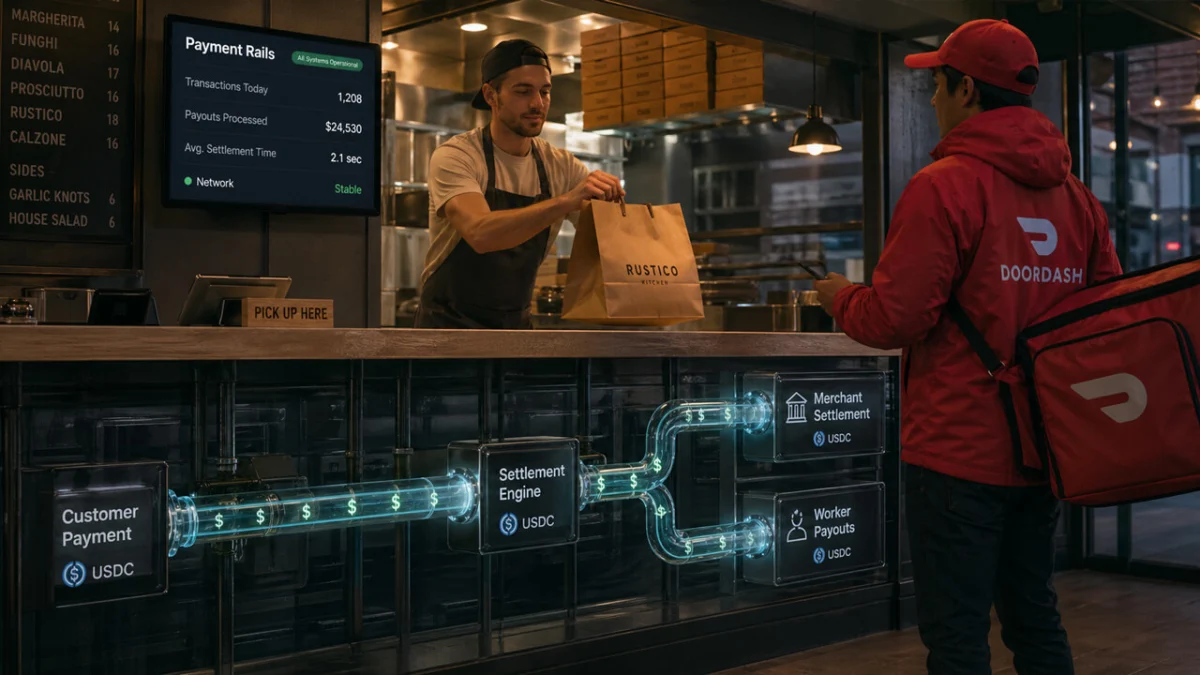
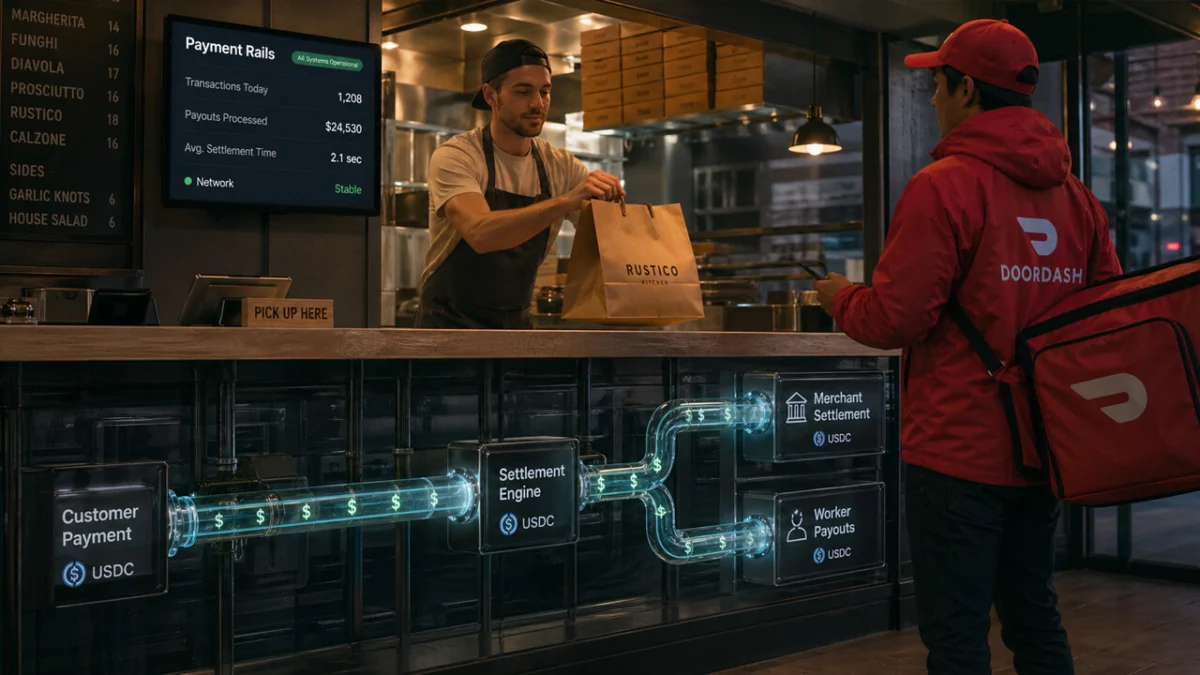
DoorDash, the global leader in local commerce and food delivery, has officially announced a strategic partnership with Tempo, a specialized Layer-1 blockchain infrastructure backed by Stripe and Paradigm, to integrate stablecoin-powered payouts into its international marketplace. The move represents one of the most significant real-world applications of blockchain technology to date, signaling a shift where stablecoins move beyond speculative trading and into the foundational operating infrastructure of multi-billion dollar enterprises. Operating in more than 40 countries, DoorDash manages a complex financial ecosystem where capital flows simultaneously in multiple directions: customers pay at checkout, merchants await settlement for orders fulfilled, and delivery drivers—known as Dashers—rely on frequent payouts to manage their daily liquidity. By leveraging stablecoin rails, DoorDash aims to address the inherent frictions of traditional banking systems, which often involve multi-day settlement delays, high cross-border fees, and rigid banking cutoffs.
The integration follows a broader industry trend where large-scale platforms are increasingly viewing stablecoins as a practical solution for moving money through parts of their business where speed and reliability are paramount. Alongside DoorDash, other financial and technology entities including Stripe, Coastal Bank, and ARQ have signaled their intent to introduce stablecoin payment features through the Tempo network. DoorDash co-founder Andy Fang highlighted that the primary appeal of this transition lies in its ability to make payouts both faster and more affordable, directly addressing the operational bottlenecks that characterize the delivery marketplace. While the consumer experience of ordering food is compressed into a few taps on a smartphone, the backend financial movement remains tethered to a fragmented global system built around legacy regional rails and jurisdictional delays that can stretch from several hours to multiple days.
The Logistics of Liquidity: Solving the Payout Problem
The decision to implement stablecoin-based settlement is a response to a specific "payout problem" that plagues global marketplaces. In the traditional model, even when a customer’s payment appears instantaneous, the funds are often locked in a series of intermediary reconciliations. For a company like DoorDash, which handles millions of transactions daily across diverse currencies, these delays create a gap between the completion of a service and the availability of cash. This gap is most acutely felt by the two pillars of the DoorDash ecosystem: merchants and Dashers.
For merchants, particularly small-to-medium-sized restaurants, settlement speed is a critical component of working capital management. Delays in receiving funds can impact a business’s ability to manage payroll, purchase inventory, or handle short-term liquidity needs. In an industry with thin margins, the ability to access earnings in near real-time provides a significant competitive advantage. Dashers face similar pressures; many rely on immediate cash availability to cover daily operational costs such as fuel and vehicle maintenance. DoorDash has previously acknowledged these financial pressures, having recently implemented gas relief measures and emergency support programs for drivers in the United States and Canada. By moving toward stablecoin-powered payouts, the company is attempting to build a more resilient financial bridge that bypasses the limitations of traditional banking hours and holidays.
The Technical Foundation: Tempo and the Rise of Payment-Focused Blockchains
The infrastructure enabling this shift is Tempo, a blockchain network introduced last year through a collaboration between the payments giant Stripe and the crypto-focused venture firm Paradigm. Unlike general-purpose blockchains that may prioritize smart contract complexity or decentralized finance (DeFi) applications, Tempo was engineered specifically for payment flows. Its design choices—including high throughput, sub-second finality, and stablecoin-native fee structures—are tailored to meet the demands of enterprise-scale commerce.
Tempo’s partner list reflects its positioning as a bridge between traditional finance and digital assets. In addition to DoorDash, the network includes heavyweights such as Deutsche Bank, Shopify, OpenAI, Revolut, and Visa. This consortium suggests that the industry is gravitating toward a "settlement layer" for the internet, where the primary goal is the efficient movement of value rather than the creation of new speculative tokens. For DoorDash, utilizing a network like Tempo allows for a more streamlined reconciliation process. Instead of managing dozens of different regional banking relationships and the associated "float" and "drag" of those systems, the company can theoretically move toward a unified, programmable settlement layer that operates 24/7.
Chronology of Stripe’s Crypto Evolution and DoorDash’s Involvement
The partnership marks a significant milestone in a timeline of increasing institutional adoption of stablecoins. Stripe’s journey into the space has been a bellwether for the broader fintech sector. After being one of the first major processors to support Bitcoin in 2014, Stripe famously ended support in 2018, citing the asset’s volatility and inefficiency as a medium of exchange. However, the emergence of stablecoins—digital assets pegged to the value of a fiat currency like the U.S. dollar—changed the calculus.
In early 2024, Stripe announced it would allow merchants to accept stablecoin payments, specifically USDC, citing the maturation of the technology. The launch of Tempo followed shortly after, providing the dedicated rails necessary for high-volume players like DoorDash to participate. DoorDash’s involvement is a critical proof of concept. Unlike a crypto-native startup, DoorDash is a "real-world" company with intense operational complexity, strict compliance requirements, and a user base that largely does not care about the underlying technology. If DoorDash can successfully transition a portion of its payout volume to stablecoin rails without disrupting its service, it sets a precedent for other global platforms like Uber, Airbnb, or Amazon to follow suit.
Supporting Data: The Economic Scale of Stablecoin Adoption
The shift toward stablecoin infrastructure is supported by staggering growth in transaction volume. Recent industry reports indicate that in the first quarter of 2024 alone, approximately $28 trillion flowed through the stablecoin economy. While a significant portion of this volume—estimated at up to 76%—is driven by automated systems and bots shuffling capital between exchanges, the remaining "organic" volume is increasingly tied to commercial activity.
For DoorDash, the scale of the opportunity is immense. The company reported a total of over 2.1 billion orders in 2023, with a Gross Order Value (GOV) exceeding $66 billion. When processing these volumes, even a fractional reduction in transaction fees or a slight improvement in settlement speed translates into millions of dollars in saved operational costs and improved liquidity. Furthermore, as DoorDash expands into more jurisdictions with volatile local currencies or underdeveloped banking infrastructure, stablecoins offer a standardized way to manage treasury and payouts without being at the mercy of inefficient local rails.
Broader Implications: Crypto as Invisible Infrastructure
The most profound implication of the DoorDash-Tempo partnership is the "invisibilization" of crypto technology. For the past decade, the narrative around digital assets has focused on consumer-facing applications: wallets, seed phrases, and direct interaction with blockchains. The DoorDash model suggests a different path to mainstream adoption: one where crypto serves as the backend plumbing that users never actually see.
In this scenario, a Dasher may receive their earnings into a traditional bank account or a debit card, unaware that the funds traveled across a blockchain to get there. The benefits—speed and lower cost—are passed down to the user, while the complexity is handled at the institutional level. This "backend-first" approach avoids many of the hurdles of consumer adoption, such as the steep learning curve of self-custody and the security risks associated with personal wallet management.
However, several questions remain regarding the technical implementation and regulatory compliance. DoorDash has yet to release a full breakdown of how much of its payout flow will be handled on-chain versus through hybrid systems. Many enterprise systems currently utilize a "blended" structure, where blockchain handles the transfer of value while traditional banks and compliance providers manage the fiat "on-ramps" and "off-ramps." There is also the matter of regulatory oversight; as stablecoins become integral to the payouts of millions of workers, they will undoubtedly face increased scrutiny from financial regulators regarding reserve transparency and anti-money laundering (AML) protocols.
Conclusion: A Redesign of Financial Plumbing
The integration of stablecoin payouts by DoorDash is a clear signal that the next era of financial technology is focused on the mechanics of money movement rather than the assets themselves. While Bitcoin remains the primary vehicle for store-of-value and institutional investment, stablecoins are carving out a role as the transactional layer of the digital economy.
By addressing the real-world frictions of settlement speed and cross-border costs, DoorDash is demonstrating that blockchain technology has moved past its experimental phase. The success of this initiative will likely be measured not by how many users "join the blockchain," but by how effectively the blockchain solves the silent problems of platform economics. As more large-scale enterprises adopt these rails, the global financial system is undergoing a subtle but radical redesign—one where the efficiency of a payout is no longer limited by the hours of a bank, but by the speed of the network. For the millions of merchants and Dashers who rely on the platform, the arrival of stablecoin-powered payouts could mark the end of the "settlement delay" era, ushering in a period of truly real-time commerce.