admin
admin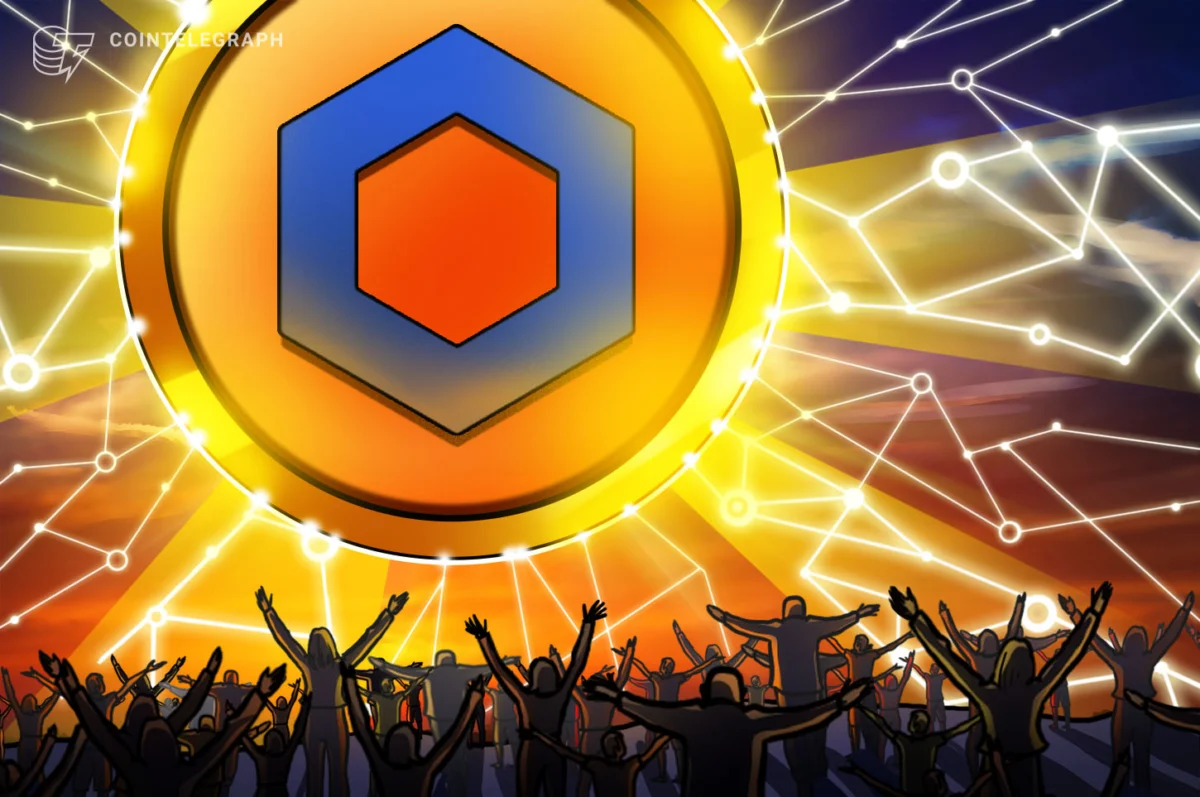
The LINK token, the native cryptocurrency of the Chainlink network, is projected to experience an extraordinary surge, potentially increasing more than 25-fold to reach $200 by the close of 2030. This ambitious forecast, issued by global financial institution Standard Chartered, is predicated on the anticipated exponential growth of the tokenized real world asset (RWA) market, which is expected to drive unprecedented demand for Chainlink’s industry-leading decentralized oracle services. The current valuation of LINK stands at approximately $8, making the $200 target a significant upward revision for investors and market observers alike.
This bold prediction originates from Geoff Kendrick, the global head of digital asset research at Standard Chartered, and was detailed in a comprehensive report shared with Cointelegraph on Monday, August 10, 2026. Kendrick’s analysis highlights the critical role Chainlink is set to play as the burgeoning RWA market necessitates robust, secure, and reliable external data feeds to be integrated onto blockchain networks. The report posits that this fundamental demand will substantially boost Chainlink’s fee generation capabilities, consequently propelling the value of its native LINK token.
The Exponential Rise of Tokenized Real World Assets
The core of Standard Chartered’s bullish outlook rests on the projected expansion of tokenized real world assets. Kendrick’s forecast anticipates that the total value of tokenized RWAs will reach a staggering $4 trillion by the end of 2028. This projection underscores a growing consensus within the financial industry regarding the transformative potential of bringing tangible and intangible assets onto blockchain ledgers. Tokenization involves converting the rights to an asset into a digital token on a blockchain, offering benefits such as increased liquidity, fractional ownership, enhanced transparency, and greater efficiency in trading and settlement.
Real world assets encompass a vast array of holdings, from physical assets like real estate, gold, and art, to financial instruments such as bonds, equities, private credit, and even intellectual property. The tokenization of these assets aims to unlock capital, streamline complex legal processes, and make illiquid assets more accessible to a broader investor base, both institutional and retail. Financial giants, including BlackRock, Fidelity, and JPMorgan, have already begun exploring and implementing strategies for tokenizing various assets, signaling a profound shift in traditional finance. BlackRock CEO Larry Fink, for instance, has repeatedly emphasized his belief that the next generation of markets will be tokenized.
Chainlink’s Indispensable Role: Bridging On-Chain and Off-Chain Worlds
Central to Standard Chartered’s prediction is Chainlink’s established market dominance and technological superiority as a decentralized oracle network. Oracles are essential middleware that connect blockchain networks with external data and systems, enabling smart contracts to interact with real-world events, data feeds, and traditional payment systems. Without reliable oracles, smart contracts are inherently limited to the data present on their respective blockchains, severely restricting their utility for real-world applications.
Kendrick’s report specifically emphasizes that the growth in tokenized assets will inherently require "more external data to come securely onchain." This requirement extends beyond simple price feeds to include verifiable data points related to asset ownership, compliance status, environmental metrics for carbon credits, and performance data for financial derivatives. Chainlink, with its robust infrastructure, decentralized network of node operators, and cryptographic security guarantees, is uniquely positioned to fulfill these complex data needs.
The report also projected a monumental 37-fold increase in tokenized and crypto-native assets deployed within decentralized finance (DeFi), pushing these assets to $2.7 trillion by the end of 2030. For these assets to function effectively and securely within DeFi protocols, Kendrick highlighted several critical requirements: trusted data, seamless interoperability between disparate blockchain networks, privacy-preserving compliance mechanisms, and robust integrations with existing financial systems. The report confidently asserts that "only Chainlink is currently equipped to provide" these comprehensive solutions, underscoring its perceived competitive advantage.
Chronology of RWA Growth and Chainlink’s Development
The trajectory towards significant RWA tokenization has been building over several years, with key milestones marking its evolution:
- Early 2020s: Initial experiments with stablecoins (like USDC, USDT) as early forms of tokenized fiat, demonstrating the potential for bridging traditional assets to blockchain. Early real estate tokenization projects emerge.
- 2022-2023: Growing institutional interest becomes evident, with major financial players like JPMorgan (Onyx) and Société Générale (Forge) launching private blockchain initiatives for bond and asset tokenization. Regulatory bodies begin to engage in discussions around the legal frameworks for digital securities.
- Late 2023: The concept of "RWA" gains significant traction within the broader crypto discourse, moving beyond niche discussions to a recognized sector within DeFi. Protocols focused on lending against tokenized credit or T-bills emerge.
- 2024-2025: Increased adoption of Chainlink’s Cross-Chain Interoperability Protocol (CCIP) by financial institutions and blockchain networks. CCIP enables secure and reliable cross-chain transfers of assets and data, a crucial component for a multi-chain RWA ecosystem. Chainlink expands its services beyond price feeds to include Verifiable Random Functions (VRF), Automation, Proof of Reserve, and Data Streams, directly supporting more complex RWA use cases.
- July 2026: Tokenized RWA trading on decentralized exchanges (DEXs) reaches a new all-time high of $141 billion, marking a substantial 19.5% monthly rise. This surge, largely driven by public equities, as reported by data provider CryptoRank, demonstrates increasing liquidity and market activity in this nascent sector. This recent data point serves as a powerful validation of the underlying trends driving Standard Chartered’s forecast.
Chainlink’s own development timeline has consistently aligned with the needs of an increasingly complex blockchain ecosystem. Launched in 2017, the network has systematically built out its infrastructure to address the "oracle problem," gradually expanding its capabilities from basic price feeds to a comprehensive suite of decentralized services. Its commitment to security, decentralization, and robust engineering has cemented its position as the industry’s leading oracle provider.
Chainlink’s Market Dominance and Competitive Landscape
According to data aggregator DefiLlama, Chainlink stands as the blockchain industry’s leading decentralized oracle provider for cross-chain communication, securing an impressive $34.4 billion in total value. This metric, known as Total Value Secured (TVS), represents the aggregate value of assets and smart contracts reliant on Chainlink’s oracle services. Its closest competitor, Chronicle, ranks significantly lower with $7.36 billion in TVS, highlighting Chainlink’s substantial lead in the market.
This dominance is not merely a matter of scale but also reflects Chainlink’s extensive network effects and integrations. Thousands of projects across various blockchain networks, including Ethereum, Polygon, Avalanche, Arbitrum, and many others, rely on Chainlink for critical data. Its suite of services extends far beyond simple price feeds, encompassing:
- Data Feeds: Providing highly reliable and tamper-proof market data for DeFi applications.
- Verifiable Random Function (VRF): A provably fair and secure random number generator essential for NFTs, gaming, and various probabilistic applications.
- Cross-Chain Interoperability Protocol (CCIP): A secure, universal standard for building cross-chain applications and transferring tokens and arbitrary data across different blockchain networks. This is particularly crucial for the seamless movement and settlement of tokenized RWAs across various ledgers.
- Chainlink Automation: Decentralized, highly reliable, and cost-efficient smart contract automation, enabling contracts to perform routine tasks autonomously.
- Proof of Reserve: Providing cryptographic proof of off-chain asset reserves held by custodians, critical for stablecoins and tokenized assets backed by real-world holdings.
While specialist oracle providers exist and new ones may emerge, Chainlink’s first-mover advantage, battle-tested security, vast network of node operators, and continuous innovation in areas like CCIP create a formidable moat. The complexity and criticality of securely bringing off-chain data on-chain mean that projects and institutions prioritize proven reliability and security, areas where Chainlink has consistently excelled.
Implications for Decentralized Finance and Traditional Finance
The predicted surge in LINK’s value and the underlying growth of tokenized RWAs carry profound implications for both decentralized finance (DeFi) and traditional finance (TradFi).
For DeFi, the influx of tokenized RWAs promises to significantly expand the asset base, bringing a new class of collateral and investment opportunities to decentralized protocols. This could lead to a diversification of risk, increased capital efficiency, and a closer integration with the broader global economy. The ability to borrow against tokenized real estate or trade fractional shares of private equity on a DEX could unlock vast amounts of dormant capital and create entirely new financial products. Chainlink’s role in securely verifying the existence and value of these off-chain assets is paramount for maintaining the integrity and trust within these DeFi ecosystems.
For TradFi, the tokenization trend represents a powerful convergence with blockchain technology. Financial institutions are increasingly recognizing the operational efficiencies, cost reductions, and enhanced liquidity that tokenization can offer. Chainlink’s robust oracle infrastructure provides a trusted bridge for these institutions to securely interact with public blockchains, access decentralized data, and ensure compliance. The NYSE’s ongoing exploration of on-chain systems, as highlighted in a recent Cointelegraph feature, further underscores the mainstream financial sector’s serious consideration of blockchain’s potential for fundamental market infrastructure. This convergence is not merely about adopting new technology but about fundamentally reshaping how assets are owned, transferred, and managed globally.
Potential Risks and Challenges
Despite the overwhelmingly positive outlook, Standard Chartered’s Kendrick acknowledges several potential risks that could temper the forecast for Chainlink. These include:
- Slower-than-expected institutional tokenization initiatives: While momentum is building, the pace of institutional adoption could be hampered by regulatory uncertainties, technological integration challenges, or a lack of consensus on industry standards. Institutional inertia is a powerful force, and large-scale shifts can take longer than anticipated.
- Competition from specialist oracle providers: Although Chainlink currently dominates, new oracles or alternative data solutions could emerge, potentially eroding some of its market share. Innovations in zero-knowledge proofs or other cryptographic techniques could also offer new ways to bridge off-chain data, though Chainlink is actively researching and integrating such advancements.
- Potential technical setbacks: Any major security breach, network outage, or significant bug within Chainlink’s core infrastructure or the broader blockchain ecosystem could severely impact trust and adoption. Given the high stakes involved with securing billions of dollars in value, continuous vigilance and robust security audits are paramount.
- Regulatory uncertainty: The evolving regulatory landscape for digital assets and tokenized securities remains a significant wildcard. Unfavorable regulations or a patchwork of differing rules across jurisdictions could stifle innovation and slow down institutional participation. Clearer regulatory frameworks are often cited as a prerequisite for mainstream adoption.
- Macroeconomic headwinds: Broader economic downturns, liquidity crises, or geopolitical instability could impact investment in nascent technologies and slow the growth of new markets, including tokenized RWAs.
Future Outlook and Strategic Importance
The Standard Chartered report paints a compelling picture of Chainlink’s future, positioning it as a foundational layer for the next era of global finance. The forecast of LINK reaching $200 by 2030 is not merely a price prediction but a reflection of the anticipated architectural shift in how financial markets operate. As tokenized real world assets become a cornerstone of both traditional and decentralized finance, the demand for secure, reliable, and interoperable data infrastructure will only intensify.
Chainlink’s continued investment in its core technologies, particularly CCIP, will be crucial in solidifying its role as the universal interoperability standard for a multi-chain, tokenized future. The strategic importance of Chainlink extends beyond its native token’s price; it represents a critical component in the evolution towards a more efficient, transparent, and globally accessible financial system. While risks remain, the fundamental trends supporting the growth of tokenized RWAs and the increasing reliance on decentralized oracle networks suggest that Chainlink is poised for sustained relevance and potentially significant growth in the years to come.
Cointelegraph is committed to independent, transparent journalism. This news article is produced in accordance with Cointelegraph’s Editorial Policy and aims to provide accurate and timely information. Readers are encouraged to verify information independently.