admin
admin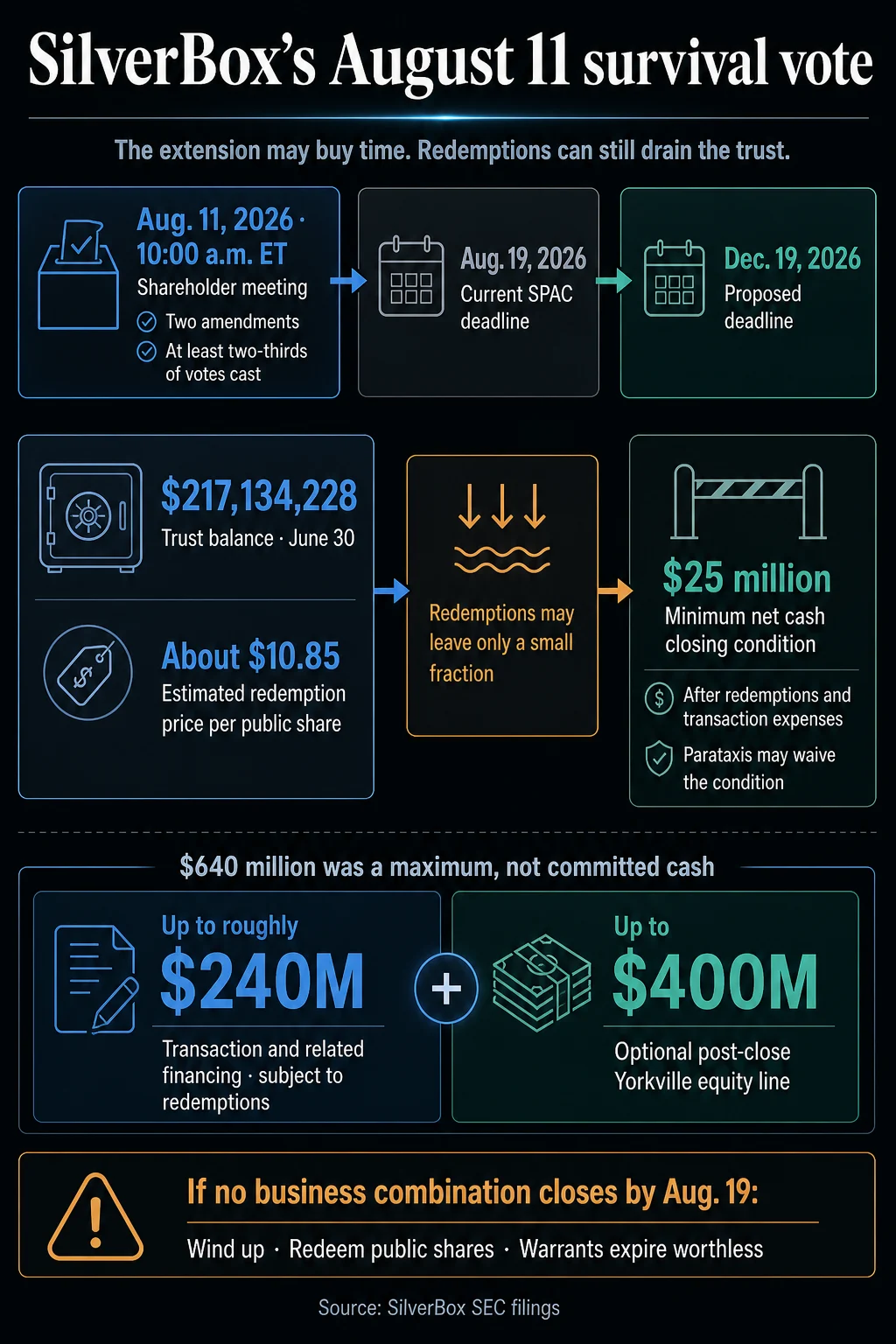
SilverBox Corp IV shareholders are poised to cast a decisive vote on Tuesday regarding a crucial four-month extension that could stave off the Special Purpose Acquisition Company’s (SPAC) liquidation. However, even if this proposed extension is approved, it is unlikely to preserve the substantial $217 million trust fund earmarked for its proposed Bitcoin SPAC deal with the investment firm Parataxis Holdings. The outcome of this vote carries significant implications for the future of this nascent cryptocurrency-focused venture and the investors who have placed their capital within it.
The pivotal shareholder meeting is scheduled for August 11 at 10:00 a.m. Eastern Time. The primary objective of this meeting is to secure shareholder approval for two key amendments to the SPAC’s governing documents. Firstly, SilverBox aims to push its business-combination deadline from the current August 19 to December 19. This extension would grant the company additional time to finalize its merger with Parataxis Holdings. Secondly, and perhaps more critically for the financial viability of the deal, SilverBox seeks to eliminate a $5,000,001 net-tangible-assets redemption limit. This existing limit has the potential to significantly curtail the amount of capital available for the combined entity post-merger. For both amendments to take effect, they require the affirmative vote of at least two-thirds of the votes cast by shareholders who are present at the meeting and are entitled to vote.
It is crucial to note that the shareholders are not being asked to vote on the Parataxis merger itself at this juncture. That decision will necessitate a separate meeting and vote at a later date, should the current extension be granted. The approval of the extension amendments would simply provide SilverBox with more runway to pursue the merger. Investors who have timely and properly elected to redeem their shares retain this right irrespective of how they cast their votes or whether they participate in the vote at all. This means that even with an extended timeline, a significant portion of the trust fund could still be withdrawn by shareholders exercising their redemption rights.
As of June 30, SilverBox reported a trust balance of $217,134,228. The company’s projections indicate that redemptions at the upcoming extension meeting could amount to approximately $10.85 per public share. This suggests a substantial outflow of capital from the trust. The company has cautioned that the remaining balance after all valid redemption elections are processed could be a mere fraction of the reported June figure. This potential depletion of the trust fund presents a significant hurdle for the proposed Bitcoin SPAC deal.
The financial requirements for the merger’s closure are clearly stipulated in the latest merger registration statement. The combined company must secure at least $25 million in net cash and equivalents following the deduction of redemptions and transaction expenses. This crucial figure can be bolstered by the remaining trust funds and any additional financing secured at the closing of the merger. While Parataxis Holdings, the intended merger partner, does possess the discretion to waive this condition under certain circumstances, the prospect of insufficient remaining capital looms large.
The initial announcement of the potential merger outlined an ambitious capital package of up to $640 million. However, this figure represented a maximum potential capital raise rather than a committed amount. It was composed of an anticipated $240 million from the transaction itself and related financing, which was inherently subject to the level of shareholder redemptions. Additionally, the plan included an option to sell as much as $400 million of stock after closing through a pre-arranged equity line with Yorkville. It is important to understand that this maximum capital projection was based on the optimistic scenario of zero trust redemptions and the full utilization of the post-closing equity facility. The current scenario, with substantial potential redemptions, significantly alters this outlook.

A Deeper Dive into the Deal’s Structure and Challenges
Parataxis Holdings, the investment firm at the heart of this proposed Bitcoin SPAC, has its own financial dealings that are relevant to this situation. According to the merger filing, Parataxis successfully raised $31 million in preferred equity. A significant portion of this capital, approximately $30.8 million, was strategically deployed in August 2025 to acquire roughly 263.78 Bitcoin. This acquisition of physical Bitcoin by Parataxis is distinct and separate from the capital held within SilverBox’s trust fund. The preferred equity agreement grants these investors an elective right. Following the expiration of the merger agreement’s outside date, and upon providing written notice (unless otherwise agreed), these preferred equity holders can seek their proportionate share of the acquired Bitcoin or the proceeds from its sale. This provision adds another layer of complexity to the financial landscape of the potential merger.
Beyond the immediate financial concerns surrounding the trust fund, the merger contract itself introduces a secondary layer of uncertainty. A filing in May indicated that the "outside date" for the merger agreement had been moved to August 6. The underlying agreement grants either party a conditional right to terminate the deal via written notice after this date. As of August 9, SilverBox’s public filings with the Securities and Exchange Commission (SEC) did not disclose any subsequent amendments, waivers, or termination notices related to this outside date. Therefore, based on publicly available information, it remains unclear whether the merger agreement is still in full effect. The mere passage of the date does not automatically signify termination, but it does create a window of opportunity for either party to withdraw if certain conditions are not met or if they deem the deal no longer viable.
The Stakes: Liquidation or a Second Chance?
The consequences of failing to secure the necessary approvals for the two amendments are stark. If the extension fails and SilverBox does not successfully close a business combination by the August 19 deadline, the SPAC will be compelled to cease its operational activities, with the exception of those directly related to winding up its affairs. In such a scenario, SilverBox would be obligated to redeem all outstanding public shares within ten business days. This would be followed by a process of dissolution and liquidation, which would be subject to the approval of its board of directors and the remaining shareholders, as well as adherence to any applicable creditor obligations in the Cayman Islands. Critically, any outstanding warrants issued by SilverBox would expire worthless upon the commencement of this winding-up process, representing a total loss for warrant holders.
The initial announcement of the SPAC’s formation and its intention to merge with Parataxis Holdings was met with a degree of anticipation, given the growing interest in institutional adoption of Bitcoin and other cryptocurrencies. SilverBox Corp IV, as a newly formed entity, was designed to capitalize on this trend by identifying and merging with a target company operating within the digital asset ecosystem. The partnership with Parataxis Holdings, a firm with a stated interest in the Bitcoin market, suggested a strategic alignment aimed at facilitating greater access to the cryptocurrency market for public investors.
The proposed merger aimed to create a publicly traded entity with a direct or indirect exposure to Bitcoin, potentially offering investors a regulated pathway to participate in the digital asset’s price movements without the complexities of direct custody. The structure, common among SPACs, involves a shell company raising capital through an Initial Public Offering (IPO) and then merging with a private operating company to take it public. In this instance, the "operating company" was intended to be Parataxis Holdings, with its associated Bitcoin assets and strategies.

Navigating the Regulatory and Market Landscape
The SPAC market itself has experienced significant volatility in recent years. While SPACs offered a faster route to public markets compared to traditional IPOs, they have also faced increased scrutiny from regulators and investors alike. Concerns have been raised regarding the alignment of incentives between SPAC sponsors, target companies, and public shareholders, particularly in relation to redemptions and the potential dilution of equity.
For Bitcoin-focused ventures, the regulatory landscape remains dynamic. While institutional interest has grown, clarity and consistency in regulatory frameworks are still evolving across different jurisdictions. This adds an element of risk for companies operating in this space, as changes in regulations can impact business operations and market access.
The current situation with SilverBox Corp IV highlights the inherent risks associated with SPACs, especially those targeting emerging and volatile asset classes like cryptocurrencies. The reliance on shareholder votes for critical extensions, the potential for significant capital outflows through redemptions, and the stringent financial requirements for deal closure all contribute to the precarious nature of these transactions.
The upcoming vote represents a critical inflection point. The shareholders’ decision will not only determine the immediate fate of SilverBox Corp IV but also send a signal about investor confidence in the viability of Bitcoin-centric SPACs in the current market environment. The outcome will be closely watched by participants in both the SPAC and cryptocurrency markets, offering insights into the prevailing appetite for such innovative, yet inherently risky, investment vehicles. The ability of SilverBox to navigate these challenges and secure the necessary capital for the Parataxis merger will be a key determinant of its long-term success, or its ultimate dissolution.