admin
admin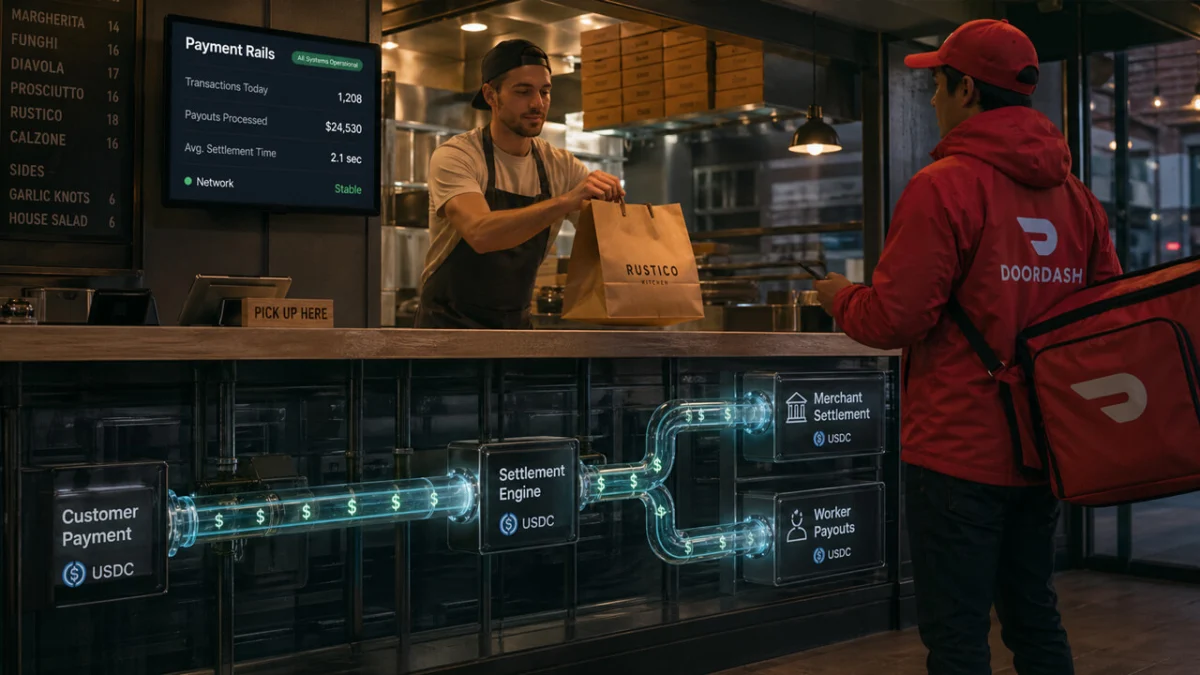
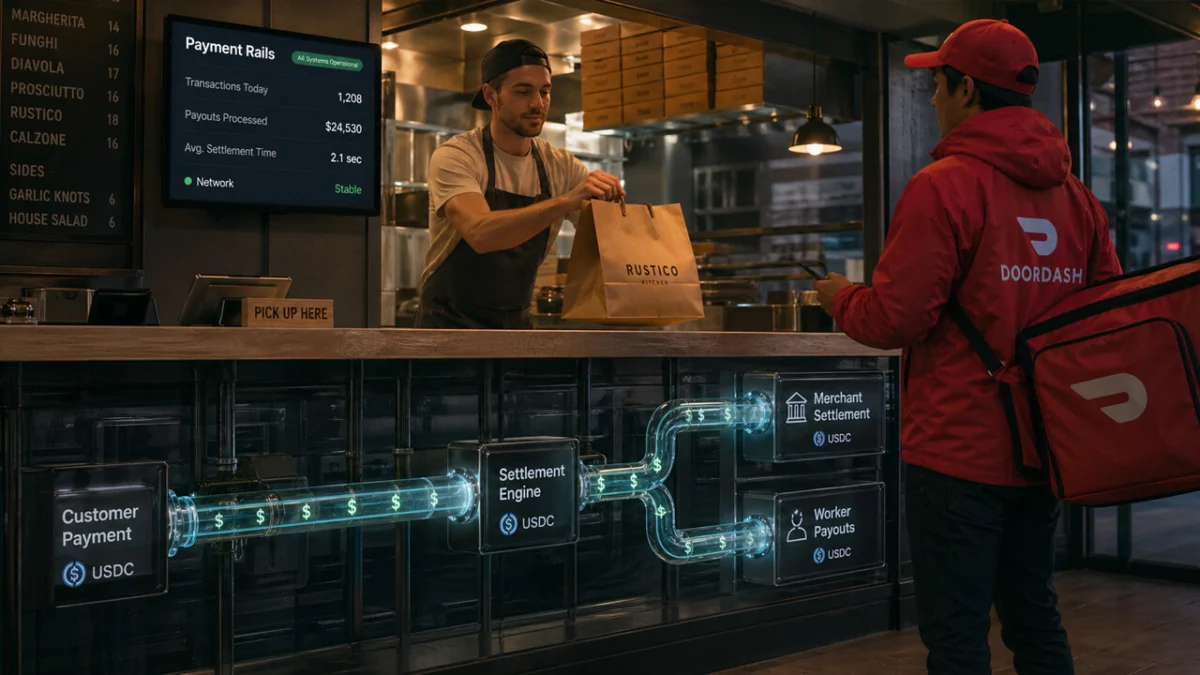
DoorDash, the global leader in local commerce and food delivery, has officially announced a strategic partnership with Tempo, a high-performance Layer 1 blockchain backed by payment giant Stripe and venture capital firm Paradigm, to integrate stablecoin-powered payouts into its vast operational ecosystem. This move marks one of the most significant real-world applications of blockchain technology to date, signaling a shift from speculative digital asset trading toward the use of stablecoins as foundational financial plumbing for multinational platforms. By leveraging Tempo’s infrastructure, DoorDash aims to address the inherent inefficiencies of traditional banking systems, specifically targeting the friction associated with cross-border settlements, regional banking cutoffs, and the liquidity needs of its diverse network of Dashers and merchant partners.
The integration is set to transform how capital moves within a marketplace that spans more than 40 countries and services millions of users. In the current model, the flow of funds is often a multi-day journey: customers pay instantly at checkout, but the merchants providing the goods and the Dashers performing the delivery frequently face delays before those earnings are converted into usable cash. By adopting stablecoin rails, DoorDash intends to compress these settlement windows from days to seconds, ensuring that those who power the platform have immediate access to their capital.
The Operational Genesis: Solving the Payout Friction Problem
The decision to adopt stablecoin technology is rooted in a specific set of operational challenges that have long plagued gig economy platforms. DoorDash co-founder Andy Fang highlighted that the primary appeal of this integration lies in making payouts both faster and more affordable. While the consumer-facing side of a delivery marketplace is designed for extreme convenience—allowing a user to order a meal in just a few taps—the backend financial architecture remains tethered to a fragmented global banking system.
Traditional financial rails are built around regional clearinghouses, manual reconciliation processes, and rigid banking hours. For a company like DoorDash, which operates across dozens of jurisdictions, this means navigating a labyrinth of "banking cutoffs" and settlement delays. A transaction completed on a Friday evening in a specific territory might not result in a merchant receiving funds until the following Tuesday, depending on local holidays and processing speeds.
This gap creates a significant burden for the marketplace’s primary stakeholders. For merchants, particularly small businesses and independent restaurants, slower settlement directly impacts working capital. Delays in receiving funds can hinder their ability to manage payroll, restock inventory, or handle short-term liquidity needs. For Dashers, the impact is even more immediate. Many gig workers rely on their daily earnings to cover essential costs such as fuel, vehicle maintenance, and daily living expenses. During periods of economic volatility—such as the recent surge in fuel prices—the ability to access cash instantly becomes a critical factor in worker retention and satisfaction.
Technical Foundations: The Role of Tempo and Stripe
Tempo represents a new breed of blockchain infrastructure specifically designed for enterprise-scale payments. Launched as a collaborative effort between Stripe and Paradigm, Tempo was engineered to solve the throughput and finality issues that have historically prevented public blockchains from being used for high-volume commercial transactions.
Unlike general-purpose blockchains that may suffer from congestion or unpredictable gas fees, Tempo utilizes a design focused on high throughput and sub-second finality. This means that a payout initiated via the DoorDash platform can be confirmed and settled almost instantaneously. Furthermore, the network features stablecoin-native fees, ensuring that the cost of moving money remains predictable and low, regardless of network activity.
The partner list for Tempo underscores its institutional-grade ambitions. Alongside DoorDash, companies such as Deutsche Bank, Shopify, OpenAI, Revolut, and Visa have been identified as early participants or partners in the ecosystem. This coalition suggests that the industry’s major players are coalescing around a shared standard for digital dollar movement. Coastal Bank and ARQ are also slated to play pivotal roles in the ecosystem, providing the necessary banking licenses and regulatory interfaces to ensure that stablecoin payouts remain compliant with local and international financial laws.
Data and Market Context: The $28 Trillion Stablecoin Opportunity
The pivot toward stablecoins by major platforms is supported by staggering data regarding the growth of digital dollars. Recent industry reports indicate that stablecoin transaction volume reached approximately $28 trillion in the first quarter of 2024 alone. While a significant portion of this volume—estimated at 76%—is driven by automated systems and bots shuffling liquidity between exchanges, the remaining trillions represent a burgeoning "agent economy" where digital assets are used for actual value transfer.
The total market capitalization of stablecoins, led by assets like USDC and USDT, now exceeds $160 billion. This liquidity pool provides a stable, dollar-pegged medium of exchange that bypasses the volatility typically associated with assets like Bitcoin or Ethereum. For DoorDash, the use of stablecoins is not a bet on crypto-asset prices, but rather a strategic utilization of a more efficient settlement layer.
The shift toward "invisible" crypto infrastructure is a recurring theme in Stripe’s recent strategic communications. The payment processor has been vocal about the advantages of stablecoin payout strategies, emphasizing their ability to reduce costs, expand reach into underbanked regions, and improve the predictability of cross-border treasury movements. By integrating these capabilities, DoorDash is effectively future-proofing its treasury operations against the limitations of the legacy SWIFT and ACH systems.
Impact on Stakeholders: Dashers, Merchants, and Global Operations
To understand the practical implications of this move, one must look at the specific relief measures DoorDash has implemented in the past. Just last month, the company announced gas price relief programs for Dashers in the United States and a parallel emergency support program for Canadian Dashers. These programs were designed to offset the rising costs of operation for delivery drivers.
The integration of stablecoin payouts serves as a structural extension of these relief efforts. By providing near-instant access to earnings, DoorDash reduces the need for Dashers to rely on high-interest predatory lending or credit products to bridge the gap between working and getting paid. In a stablecoin-native payout model, a Dasher could theoretically finish a delivery at 2:00 AM and have the funds available in a digital wallet to pay for fuel at 2:05 AM, regardless of whether it is a bank holiday or a weekend.
For merchants, the benefits are equally transformative. The ability to receive "streaming" settlements—where funds are disbursed as orders are completed rather than in daily or weekly batches—allows for much tighter inventory management. In the razor-thin margin world of the restaurant industry, the difference between 48-hour settlement and 48-second settlement can be the difference between a business thriving or facing a liquidity crunch.
Chronology of Adoption and Future Implementation
The roadmap for stablecoin integration at DoorDash is expected to follow a phased approach. While the company has not yet released a full technical breakdown of which specific payment flows will migrate to the Tempo blockchain first, industry analysts expect a hybrid model to prevail in the short term.
- Phase 1: Internal Treasury and Cross-Border Transfers. DoorDash may first utilize stablecoin rails to move capital between its various international subsidiaries, bypassing the high fees and slow speeds of traditional correspondent banking.
- Phase 2: Opt-in Payouts for Dashers. High-frequency workers in select markets may be given the option to receive earnings in USDC or other supported stablecoins via a digital wallet, providing them with an alternative to traditional bank deposits.
- Phase 3: Merchant Settlement Integration. Larger merchant partners with the technical capability to handle digital assets may begin receiving settlements on-chain, followed by a broader rollout to smaller businesses through user-friendly interfaces provided by Stripe and Tempo.
This timeline reflects a cautious but deliberate move toward deep integration. The challenge remains in navigating the "last mile" of finance—converting stablecoins back into local fiat currencies for use in the physical economy. However, with partners like Visa and Revolut involved in the Tempo ecosystem, the bridge between digital wallets and traditional debit cards is becoming increasingly seamless.
Broader Implications for the Global Economy
The DoorDash move represents a maturation of the cryptocurrency industry. For years, the "mainstream adoption" narrative focused on whether consumers would use Bitcoin to buy coffee. The reality, as evidenced by this partnership, is that the most impactful adoption is happening at the infrastructure level.
If stablecoins become the primary rail for global marketplaces, the financial system will undergo a "silent" redesign. Users will benefit from the speed and efficiency of blockchain technology without ever needing to understand the underlying mechanics of "sub-second finality" or "on-chain liquidity." The value proposition is purely functional: money moves faster, costs less, and is available when needed.
Furthermore, this development sets a precedent for other "big tech" and "gig economy" platforms. As DoorDash demonstrates the operational advantages of blockchain-based settlement, competitors in the ride-sharing, freelancing, and e-commerce sectors will likely feel pressure to modernize their own payout systems to remain competitive in the labor market.
In conclusion, DoorDash’s partnership with Stripe and Tempo is more than a technological experiment; it is a strategic realignment of how value is distributed in the modern economy. By solving the "payout problem," DoorDash is not only improving its own bottom line but is also providing a blueprint for how digital assets can serve as a reliable, transparent, and hyper-efficient foundation for global commerce. The measure of success for this initiative will not be found in crypto market charts, but in the improved liquidity and financial stability of the millions of merchants and Dashers who form the backbone of the DoorDash marketplace.