admin
admin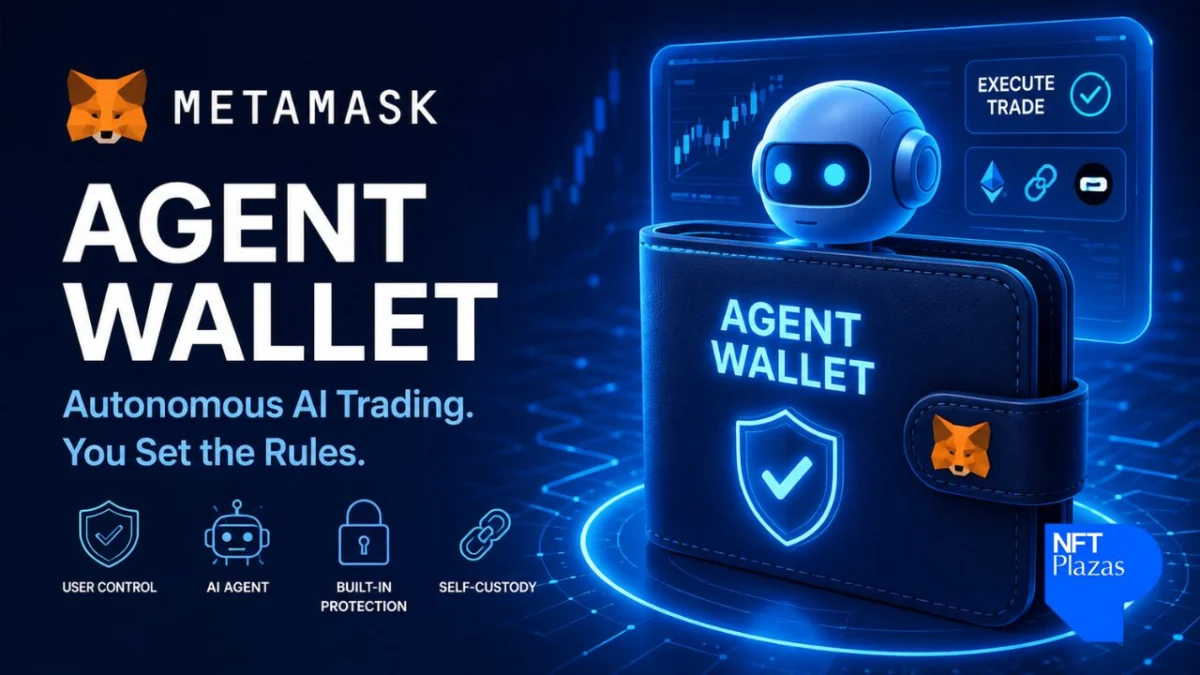
MetaMask, the world’s leading self-custodial cryptocurrency wallet, has officially launched its highly anticipated Agent Wallet, a groundbreaking product designed to empower artificial intelligence (AI) agents to execute on-chain transactions safely and autonomously within rigorously defined user-set security parameters. This significant development aims to address a critical security gap in the burgeoning field of autonomous crypto trading, offering a robust framework that marries the speed and efficiency of AI automation with the paramount need for user control and asset protection. The launch comes amidst a rapidly evolving digital asset landscape where AI agents are becoming increasingly sophisticated, capable of real-time market monitoring, identifying complex trading opportunities, and interacting seamlessly with decentralized finance (DeFi) protocols. While these advancements promise unparalleled efficiency, faster execution, and round-the-clock market engagement, the inherent risk of granting unrestricted access to a crypto wallet has remained a significant barrier to widespread adoption. Agent Wallet directly confronts this challenge by implementing permissions at the wallet level, thereby moving beyond sole reliance on an AI agent’s internal judgment and embedding guardrails directly into the infrastructure itself.
The Genesis of Agentic Finance: A Paradigm Shift in Digital Asset Management
The integration of artificial intelligence into financial markets is not a new phenomenon, with algorithmic trading having been a staple of traditional finance for decades. However, the advent of blockchain technology and decentralized finance has introduced a new frontier: agentic finance. This refers to the deployment of autonomous AI entities that can directly interact with on-chain protocols, make decisions, and execute transactions without constant human oversight. The appeal is clear: AI agents can process vast amounts of data, identify patterns, and react to market shifts with speeds and precision far beyond human capabilities. This promises to unlock new levels of efficiency, liquidity, and accessibility within the crypto ecosystem.
Recent years have witnessed an exponential growth in the capabilities of AI, fueled by advancements in machine learning, natural language processing, and neural networks. These technological leaps have enabled AI agents to not only analyze market data but also to understand complex protocol interactions, manage liquidity positions, and even develop sophisticated trading strategies. Forecasts suggest that the global market for AI in finance could reach tens of billions of dollars within the next few years, with a substantial portion dedicated to trading and asset management. The burgeoning interest in AI-driven solutions is evident across the industry, from sophisticated hedge funds exploring crypto arbitrage strategies to individual traders seeking automated portfolio rebalancing.
However, the journey towards truly autonomous on-chain finance has been fraught with security concerns. The immutable nature of blockchain transactions means that an erroneous or malicious action by an AI agent could lead to irreversible loss of funds. High-profile exploits and hacks, often stemming from compromised private keys or flawed smart contract interactions, have underscored the vulnerability of digital assets. In 2023 alone, crypto-related losses due to hacks and scams surpassed $1.7 billion, a stark reminder of the ever-present security threats. This context highlights the urgent need for a solution that can facilitate AI automation without compromising the security principles central to self-custody. MetaMask, with its vast user base exceeding 30 million monthly active users and its position as a cornerstone of the Web3 experience, is uniquely positioned to address this critical need.
Unpacking Agent Wallet: Core Functionality and Security Paradigms
Agent Wallet represents a sophisticated blend of automation and control, designed to instill confidence in users venturing into AI-powered trading. At its core, the product ensures that human oversight remains paramount, even as execution speed is optimized.
User-Defined Security Rules and Guardrails:
A cornerstone of Agent Wallet’s design is its emphasis on user-configurable parameters. Instead of granting an AI agent unfettered control, users can establish explicit operating boundaries before any transaction is initiated. This includes:
- Spending Limits: Users can set maximum amounts an AI agent can spend per transaction or within a specific timeframe, preventing large, unauthorized outflows.
- Allowlisted Protocols: Agents can be restricted to interacting only with a predefined list of trusted DeFi protocols, mitigating risks associated with unknown or potentially malicious smart contracts.
- Risk Preferences: Users can calibrate the level of risk their agents are permitted to undertake, aligning automated strategies with personal financial tolerance.
- Transaction Types: Specific types of transactions, such as swaps, staking, or liquidity provision, can be enabled or disabled based on user preference.
These "guardrails" ensure that AI agents operate strictly within approved parameters, allowing them to move quickly and capitalize on fleeting market opportunities while keeping users firmly in control of their digital assets. This granular control is particularly beneficial for traders already experimenting with AI-powered strategies, as well as for developers actively building autonomous trading applications that require secure on-chain interaction.
Gas Abstraction for Streamlined Operations:
One of the persistent operational hurdles in automated crypto trading is managing gas fees. Traditionally, users need to maintain a balance of the native blockchain token (e.g., ETH on Ethereum) to cover network transaction costs. Agent Wallet introduces built-in gas abstraction, a practical feature that significantly simplifies this process. It allows eligible gas costs to be paid using the token involved in the transaction itself, rather than requiring a separate native token balance. This eliminates a common point of failure for automated agents, ensuring that transactions can continue uninterrupted, even if the native token balance runs low. This feature is crucial for maintaining the seamless operation of autonomous agents, as it removes a layer of manual intervention and potential transaction failures due to insufficient gas.
Dual Automation Modes: Guard vs. Beast:
Recognizing that users have varying risk appetites and preferences for control, MetaMask offers two distinct operating modes for Agent Wallet:
- Guard Mode: This mode is designed for users who prioritize stronger oversight and stricter controls. In Guard Mode, AI agents are permitted to transact only within the explicitly approved protocols and spending limits defined by the user. If an AI agent attempts to execute a transaction that falls outside these pre-established rules, the execution automatically pauses. The user is then prompted to manually approve the transaction, typically via the MetaMask mobile app or through an email-based two-factor authentication (2FA) process. This ensures an additional layer of human review for any deviation from the set policies.
- Beast Mode: Tailored for more experienced users and sophisticated strategies, Beast Mode allows for a greater degree of automation by relaxing some policy restrictions. While offering enhanced autonomy, MetaMask explicitly states that even in Beast Mode, malicious transactions cannot bypass its robust security pipeline. Any transaction flagged as potentially harmful will still require human approval, acting as a final fail-safe.
These dual options provide users with the flexibility to tailor the level of automation to their individual risk tolerance and trading sophistication, moving away from a rigid, one-size-fits-all approach.
Multi-Layer Security Architecture: The Core of Trust:
Security is not merely a feature but the foundational principle underpinning Agent Wallet. Supported Ethereum Virtual Machine (EVM) transactions undergo a rigorous, multi-layered protection process before execution, irrespective of the chosen automation mode. This robust framework is designed to prevent a wide array of potential threats:

- Transaction Simulation: Before any transaction is committed to the blockchain, Agent Wallet performs a detailed simulation. This previews the expected outcome of the transaction, providing users with crucial information such as anticipated balance changes, necessary token approvals, and gas routing. This proactive step allows users to detect unintended consequences or errors before they become irreversible.
- Threat Scanning (Powered by Blockaid): In a crucial partnership, Agent Wallet integrates with blockchain security firm Blockaid. This layer analyzes transactions for known malicious behaviors, phishing attempts, and other potential threats in real-time. By leveraging Blockaid’s advanced threat intelligence, MetaMask adds an external, specialized layer of defense against sophisticated attacks.
- Smart Transactions (MEV Protection): The final layer of protection comes from Smart Transactions, which are engineered to combat Maximal Extractable Value (MEV) attacks. MEV refers to the profit that miners or validators can extract by reordering, censoring, or inserting transactions within a block. Front-running, sandwich attacks, and other forms of transaction manipulation can significantly erode user profits. Smart Transactions aim to mitigate these losses by intelligently routing and executing transactions, providing a more equitable and secure trading environment.
By implementing these multi-layered protections, MetaMask reinforces its commitment to user safety, ensuring that even highly automated AI agents operate within a secure perimeter, independent of the agent’s internal logic.
Financial Protection for Eligible Transactions:
To further bolster user confidence, MetaMask extends its Transaction Protection program to eligible Agent Wallet transactions. This pioneering initiative offers financial safeguards, allowing users to claim reimbursement for covered losses. Specifically, eligible transactions that successfully pass the simulation, Blockaid threat scanning, and Smart Transactions layers but still result in a covered loss may qualify for reimbursement of up to $10,000 per month. This financial backstop, subject to the program’s detailed terms and conditions, provides an additional layer of assurance, encouraging wider adoption of AI-assisted trading workflows by mitigating some of the inherent financial risks. This demonstrates MetaMask’s proactive approach to user trust in an evolving and sometimes volatile market.
Integration and Ecosystem Compatibility
Agent Wallet is designed for broad compatibility, fostering an open ecosystem for AI developers and traders. It integrates seamlessly with several popular AI development frameworks, simplifying the deployment of autonomous trading agents. Supported platforms include:
- Claude Code
- OpenAI Codex
- Cursor
- OpenClaw
- Hermes
- OpenCode
This wide integration ensures that developers utilizing these leading AI tools can easily connect their agents to Agent Wallet. Once connected, these agents can perform a variety of on-chain actions, including monitoring markets, preparing transactions, executing swaps, and managing assets, all without requiring manual user approval for every step, provided these actions remain within the wallet’s predefined rules.
Furthermore, Agent Wallet supports execution across a growing range of EVM-compatible networks, including prominent platforms like Hyperliquid, Ethereum, and emerging chains such as Robinhood Chain and Monad. This multi-chain support is critical for agents seeking to capitalize on opportunities across the diverse DeFi landscape. Beyond basic token transfers and swaps, the wallet also supports batch transactions through ERC-7821, a standard that enables the bundling of multiple operations into a single transaction. This capability is vital for efficient execution in complex automated trading strategies, reducing gas costs and improving overall performance.
The Broader Landscape: Competition and Industry Trends
The official public launch of Agent Wallet follows a successful limited early access rollout in June, which saw participation from approximately 200 select users. This strategic phased approach allowed MetaMask to gather valuable feedback and refine the product before its wider release.
MetaMask is entering an increasingly competitive and dynamic market. The race to build robust infrastructure for autonomous AI finance has intensified, with several major players recognizing the transformative potential of agentic systems. Earlier this year, Coinbase, another industry giant, introduced its own Agentic Wallet framework, signaling a clear industry trend towards empowering AI with secure on-chain capabilities. Similarly, MoonPay, a leading crypto payment infrastructure provider, has expanded its AI strategy, focusing on open wallet standards and integrating crypto agents within popular messaging platforms like Telegram. Other projects and protocols are also exploring various facets of AI integration, from AI-driven market prediction tools to fully autonomous decentralized organizations (DAOs).
This growing competition underscores a broader industry consensus: AI agents are poised to play an increasingly significant role in various aspects of digital asset management. This includes sophisticated portfolio management, proactive engagement with DeFi protocols, and highly optimized automated trading strategies. The market is moving towards a future where AI isn’t just a tool for analysis but an active participant in the financial ecosystem.
MetaMask’s Strategic Positioning and Future Outlook
With Agent Wallet, MetaMask is making a definitive statement: autonomous finance will only achieve mainstream adoption if users can automate transactions without sacrificing the fundamental principle of self-custody and control over their assets. The company’s strategy is to combine the inherent security of self-custodial wallets with an innovative suite of programmable spending limits, protocol permissions, real-time transaction simulation, advanced threat detection, MEV protection, and the added layer of optional financial coverage. This comprehensive approach aims to establish a new benchmark for safety and confidence in AI-driven trading.
The launch of Agent Wallet positions MetaMask not just as a wallet provider, but as a critical infrastructure builder for the next generation of autonomous on-chain finance. By addressing the core concerns of security and control, MetaMask aims to accelerate the integration of AI agents into crypto markets, potentially unlocking new efficiencies and investment opportunities for a wider audience. As AI agents continue to evolve and become more deeply embedded in the digital economy, solutions like Agent Wallet will be instrumental in bridging the gap between cutting-edge AI capabilities and the secure, user-centric principles of Web3. The success of Agent Wallet could pave the way for a more intelligent, efficient, and ultimately safer future for decentralized finance.