admin
admin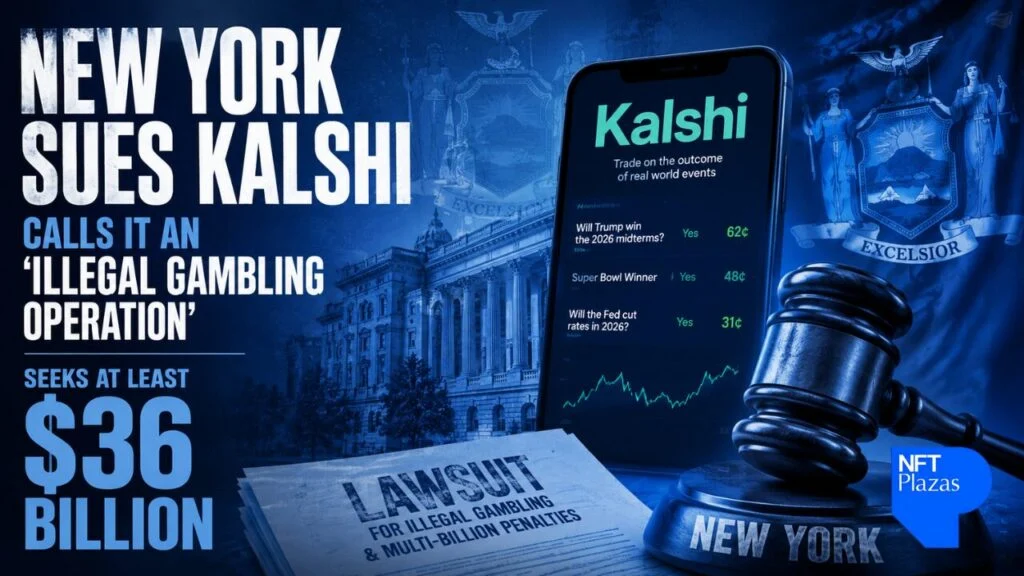
New York has initiated a monumental legal challenge against Kalshi, a prominent prediction market platform, accusing it of operating an illicit gambling enterprise within state lines and seeking staggering penalties that could amount to at least $36 billion. This aggressive move, formalized in a lawsuit filed on July 31 by New York Attorney General Letitia James and robustly supported by Governor Kathy Hochul, casts a long shadow over the burgeoning prediction market industry in the United States. The state’s petition demands a permanent injunction to prohibit Kalshi’s operations in New York, the restitution of funds to its users, the forfeiture of all alleged unlawful profits, and the imposition of billions in civil penalties, marking a significant escalation in the ongoing national debate surrounding the regulatory classification of event contracts.
Allegations of Unlicensed Gambling and Regulatory Evasion
At the core of New York’s complaint is the contention that Kalshi has been offering event contracts that directly contravene the state’s stringent gambling laws. The Attorney General’s office argues that Kalshi allows users to trade on the outcomes of uncertain future events, spanning categories such as sports, political elections, and various cultural occurrences, all without possessing the requisite license from the New York State Gaming Commission. State officials assert that regardless of Kalshi’s self-description or marketing strategies, its products unequivocally meet New York’s legal definition of gambling, as users commit capital on events fundamentally beyond their personal control.
Attorney General Letitia James underscored this point in a forceful statement announcing the lawsuit, declaring, “No matter what they call themselves, prediction markets like Kalshi are gambling platforms, plain and simple.” This assertion highlights the state’s uncompromising stance that the underlying nature of the business, rather than its nomenclature, dictates its regulatory status. Governor Kathy Hochul echoed this sentiment, emphasizing that New York’s comprehensive gambling laws are meticulously crafted to safeguard consumers, combat the pervasive issue of gambling addiction, generate essential tax revenue for public services, and ensure a level playing field where all operators adhere to the same regulatory framework.
The lawsuit extends its allegations beyond mere unlicensed operation, asserting that Kalshi has systematically evaded tax obligations that are legally imposed on licensed casinos and sportsbooks currently operating within the state. This claim implicates Kalshi in a dual offense: not only operating outside the law but also undermining the state’s revenue collection efforts from the regulated gaming sector. A particularly salient allegation concerns age restrictions. New York posits that Kalshi permits individuals aged 18 to 20 to participate on its platform, a practice that directly conflicts with the state’s online sports betting regulations, which mandate participants be 21 years or older. Officials contend that this age disparity exposes younger users to undue financial risk and heightens their susceptibility to gambling addiction, a critical consumer protection concern for the state.
Kalshi’s Defense: Federally Regulated Financial Exchange

Kalshi has swiftly and vehemently rejected New York’s allegations, maintaining that it operates as a federally regulated financial exchange rather than a gambling platform. A company spokesperson dismissed the lawsuit as "political theater from the leadership in our own state," asserting that "States can’t just shut down a federally licensed exchange." This statement directly challenges New York’s authority, reiterating Kalshi’s core defense that it operates under federal regulation by the U.S. Commodity Futures Trading Commission (CFTC), and therefore state gambling laws are preempted.
Kalshi argues that its event contracts are legitimate financial derivatives, analogous to futures or options contracts, and thus fall under the exclusive regulatory purview of the CFTC. The CFTC itself has authorized Kalshi to operate as a designated contract market, typically reserved for regulated futures exchanges. This federal authorization is central to Kalshi’s defense, as it argues that federal oversight preempts state-level gambling regulations. Brian Quintenz, a Kalshi board member and former CFTC Commissioner, characterized the lawsuit as an "unprecedented attempt to eliminate prediction markets altogether," rather than an effort to resolve legitimate regulatory questions. This fundamental disagreement—whether event contracts are sophisticated financial instruments or simple wagers—forms the crux of the legal and regulatory battle engulfing the industry.
A Detailed Timeline of Regulatory Conflict
The lawsuit filed by New York on July 31, 2026, is not an isolated incident but rather the latest, and perhaps most impactful, chapter in an unfolding regulatory saga that has been gaining intensity throughout the year. The jurisdictional conflict between state and federal authorities, particularly the New York Attorney General’s office and the CFTC, has been brewing for months.
- Early 2026: The U.S. Commodity Futures Trading Commission initiates legal action against New York, seeking a permanent injunction to prevent the state from enforcing its gambling laws against CFTC-regulated exchanges, including Kalshi. This pre-emptive strike by the federal regulator signaled its intent to assert its authority over prediction markets.
- Prior to July 31, 2026: Just days before New York formally announced its lawsuit, the CFTC made another move, asking a federal court to block the state from taking any civil or criminal enforcement actions against Kalshi and other prediction market platforms registered with the agency. This demonstrates the CFTC’s consistent position that event contracts fall under federal commodities regulation and should not be subject to disparate state gambling statutes.
- Recent Setbacks for Kalshi in New York: Despite the CFTC’s support, Kalshi has encountered judicial resistance in New York. A federal judge previously denied the company’s request for a preliminary injunction that would have prevented the New York State Gaming Commission from enforcing a cease-and-desist order. This initial ruling allowed the state’s enforcement efforts to proceed. Subsequently, another request for an injunction pending appeal was also rejected, further empowering New York’s regulatory actions. These judicial decisions have been critical in allowing the state to maintain its aggressive posture against Kalshi.
- State-Level Challenges Mount Nationwide: New York is not alone in its concerns. The legal challenges against Kalshi and other prediction market platforms have been expanding:
- Michigan: In the preceding month, a Michigan judge issued a temporary order explicitly blocking Kalshi from offering sports-related event contracts, signaling a similar interpretation of these products as gambling under state law.
- Washington State: Following Michigan’s lead, Washington state initiated comparable action, arguing that Kalshi’s products constitute illegal gambling within its jurisdiction.
- Minnesota: In contrast, Minnesota has adopted a more cautious approach. A judge there issued a temporary order allowing both Kalshi and its competitor, Polymarket, to continue operating while the intricate legal proceedings unfold, indicating a recognition of the complexity of the issue.
- National Consensus Among States: The broader regulatory debate is also intensifying at a national level. Just a week prior to New York’s lawsuit, attorneys general from 44 U.S. states collaboratively submitted comments to the CFTC. Their collective stance strongly argued that the CFTC lacks the authority to regulate sports-related event contracts, insisting instead that such products should remain firmly under state gambling oversight. This widespread agreement among state legal officers underscores the significant pushback against federal preemption in this domain.
This intricate timeline reveals a landscape of escalating legal battles, with states asserting their sovereign right to regulate gambling within their borders, often clashing directly with a federal agency that claims jurisdiction over these novel financial instruments.
The Billions at Stake: Financial Penalties and Market Context
The financial penalties sought by New York against Kalshi are staggering, underscoring the aggressive stance the state intends to take against prediction markets operating outside its established gaming regulatory framework. Beyond demanding a permanent injunction against the company’s operations, the state is pursuing substantial monetary sanctions that could reach unprecedented levels.

New York’s financial claims are multi-faceted:
- User Reimbursement: The state seeks to compel Kalshi to reimburse all users who traded on its platform within New York, arguing that these transactions were conducted illegally. This could involve a significant sum, depending on the volume and value of trades made by New York residents.
- Forfeiture of Unlawful Profits: Kalshi is also being asked to forfeit all profits allegedly earned through its illegal operations in the state. This is a common demand in cases where businesses are found to have profited from activities deemed unlawful.
- Treble Damages Civil Penalties: Crucially, New York is seeking civil penalties equal to three times the amount of those forfeited profits. This "treble damages" provision is a powerful legal tool designed to severely punish and deter illegal activities.
- Per-Contract Fines: In addition to the above, the lawsuit demands an additional $100,000 fine for every single event contract offered by Kalshi in violation of state law. Given the sheer volume and variety of contracts available on prediction markets, this specific penalty could quickly accumulate into billions of dollars.
Based on preliminary estimates, New York believes these combined penalties could exceed $36 billion. While this figure is subject to change following a comprehensive audit of Kalshi’s activities and detailed accounting of its profits and contract offerings, it immediately establishes the magnitude of the state’s legal offensive. To put this figure into perspective, it represents a substantial portion of Kalshi’s targeted valuation. The company had reportedly aimed for a $40 billion valuation during a funding round, making the state’s penalty demand almost equivalent to its entire market worth.
This enormous financial demand also provides context for the scale of Kalshi’s operations. In June 2026, the exchange reported an approximate trading volume of $33 billion, dwarfing its closest rival, Polymarket, which recorded $13.95 billion during the same period. This indicates a highly active platform with significant user engagement and capital flow, which in turn explains the potential for such colossal penalties if New York’s claims are upheld. The state’s pursuit of such a monumental sum sends a clear message to all prediction market operators: New York intends to aggressively enforce its gambling laws and extract severe financial consequences from those found to be in violation.
Broader Implications for the Prediction Market Industry and Beyond
New York’s monumental lawsuit against Kalshi is far more than a localized legal dispute; it is poised to become one of the most consequential legal tests yet for the entire prediction market industry in the United States, with widespread implications for regulatory frameworks, financial innovation, and consumer protection.
The outcome of this case could profoundly shape the operational viability and legal status of prediction markets nationwide. A victory for New York could set a powerful precedent, emboldening other states to pursue similar actions and potentially leading to a patchwork of state-level bans or strict regulations that hinder national operations. Conversely, if Kalshi prevails on its federal preemption argument, it could significantly limit states’ abilities to regulate these platforms, solidifying federal oversight. This lawsuit starkly highlights the urgent need for a unified and clear regulatory approach to prediction markets. The current environment, characterized by clashes between state attorneys general, state gaming commissions, and federal agencies like the CFTC, creates legal uncertainty for businesses and consumers alike. This case may force Congress or higher courts to provide definitive guidance on whether event contracts are primarily financial derivatives or forms of gambling, thereby resolving the long-standing jurisdictional ambiguity.
This case also represents a critical juncture in the ongoing debate between fostering financial innovation and ensuring robust consumer protection. While proponents argue prediction markets offer valuable tools for information aggregation and risk management, opponents emphasize the potential for financial harm, addiction, and the exploitation of vulnerable populations if inadequately regulated. The legal