admin
admin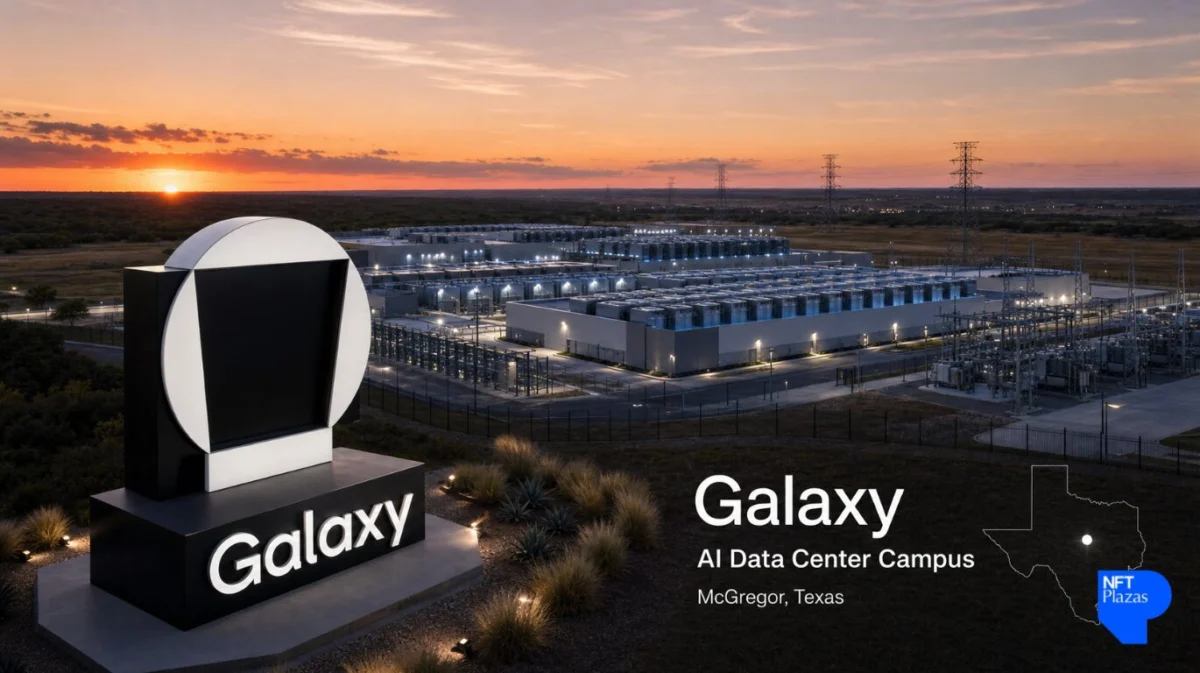
Galaxy, a prominent player initially recognized in the digital assets sector, announced on July 28 its strategic acquisition of approximately 500 acres of land in McGregor, McLennan County, Texas. This significant land purchase, executed under a development agreement with the City of McGregor, is earmarked for the construction and operation of a cutting-edge data center campus specifically designed to serve the burgeoning demands of artificial intelligence (AI) and high-performance computing (HPC) workloads. The new facility will be strategically located within the McGregor Industrial Park, marking Galaxy’s second substantial data center investment in the Lone Star State, following its existing Helios campus situated in West Texas. This move underscores Galaxy’s aggressive expansion into critical AI infrastructure, a pivot driven by the exponentially growing compute demand and the intensifying global competition among data center developers for essential resources such as land, reliable power, and accelerated deployment capabilities.
The announcement was further amplified by Galaxy’s official communication channels, with the company stating via a social media post dated July 28, 2026 (a date which, given the context of the announcement, appears to be a forward-looking or typographical anomaly, with the announcement itself occurring in the present day), "Galaxy is expanding its data center footprint. We’ve executed a development agreement and acquired 500 acres in McGregor, Texas, for the construction and operation of an AI and HPC data center campus. Galaxy is advancing the electrical infrastructure required to support the…" This public declaration highlights the company’s commitment to bolstering its physical infrastructure to meet future technological demands.
Strategic Expansion in the Heart of Texas
The decision to establish a second major data center campus in Texas reflects a calculated strategy by Galaxy to diversify its geographic footprint and enhance its resilience in a market where concentration risks can be substantial. Texas has emerged as a powerhouse for data center development, largely due to its deregulated ERCOT power grid, vast land availability, and favorable business environment. The state’s energy landscape, characterized by significant renewable energy generation, also offers attractive propositions for companies aiming for sustainable operations. For Galaxy, McGregor offers a distinct advantage by complementing its existing Helios campus in Dickens County, West Texas, creating a multi-site infrastructure model that can offer redundancy and distributed capacity to its clients.
The Helios campus, acquired by Galaxy in 2022, initially served as a facility for Bitcoin mining but has since undergone a transformative conversion into a large-scale AI/HPC campus. This earlier pivot demonstrated Galaxy’s foresight in recognizing the shifting demands of compute-intensive industries. The success and ongoing development of Helios, which boasts over 1.6 GW of ERCOT-approved power capacity and hosts CoreWeave—a prominent AI cloud company—as a long-term tenant, laid the groundwork for the McGregor expansion. On July 6, Galaxy announced the completion of Phase I at Helios, successfully handing over 133 MW of critical IT load to CoreWeave, a testament to its execution capabilities in large-scale data center development. The McGregor project is poised to replicate and even expand upon this success, further cementing Galaxy’s position as a significant provider of AI and HPC infrastructure.
The McGregor Campus: A Multi-Phase Vision for AI/HPC
The McGregor campus is not merely a single facility but is designed as a sophisticated multi-phase development, signaling Galaxy’s long-term commitment to the region and the AI sector. The initial phase of development is planned to deliver 74 MW of power capacity, a substantial starting point for a modern data center. However, the true ambition lies in its potential for significant expansion. Galaxy anticipates that once additional transmission infrastructure is completed, the 500-acre site could evolve into a multi-hundred-megawatt scale operation by 2030. This projected growth would elevate McGregor from an initial foundational phase into a larger-scale data center asset class within Galaxy’s burgeoning portfolio, positioning it as a cornerstone of the company’s AI infrastructure network.
The project is being developed through collaborative efforts with key local stakeholders, including the McGregor Economic Development Corporation and the Heart of Texas Electric Cooperative. Galaxy has already secured crucial service agreements with the latter to support the required interconnection items, a critical step in ensuring timely power delivery. The company expects the first phase of the McGregor campus to begin receiving power in 2028. This timeline is ambitious yet reflective of the urgent demand for AI compute capacity. Should infrastructure timelines progress as planned, the rapid scaling to multi-hundred megawatts by 2030 underscores the industry’s need for swift, substantial deployments to keep pace with technological advancements.
Infrastructure Investment and Local Partnerships: Mitigating Impact
A distinguishing feature of Galaxy’s approach to the McGregor campus is its commitment to private funding for significant infrastructure components. The company has stated its intention to build its own substation at the site, a move that often accelerates deployment timelines and offers greater control over power delivery. Furthermore, Galaxy has committed to providing financial assurances as required by the electric utility for related upgrades to the broader grid infrastructure. This proactive financial commitment is designed to mitigate potential cost impacts on local electricity users, a common concern when large industrial loads connect to existing grids. According to Galaxy, its private infrastructure investment and financial assurances are specifically structured to prevent the cost of serving the campus from being passed on to regional ratepayers, ensuring that the economic benefits of the project are not offset by increased utility costs for the community.
This strategy of private infrastructure investment is increasingly vital in the data center industry, particularly for AI projects, where power, interconnection, and commissioning items frequently dictate operational speed as much as, if not more than, the physical construction of facilities. By taking direct responsibility for a substantial portion of the electrical infrastructure, Galaxy aims to streamline the development process and reduce dependencies on potentially strained public utility timelines. This collaborative yet self-sufficient model positions the McGregor project for a more controlled and potentially faster ramp-up, addressing one of the industry’s most significant bottlenecks: power availability and grid integration.
Economic and Environmental Impact on McGregor
The arrival of Galaxy’s data center campus is projected to bring significant economic benefits to the City of McGregor and McLennan County. The 500-acre land acquisition alone has generated approximately $7.5 million in land sale revenue for the city, providing an immediate financial boost. Beyond the initial sale, Galaxy estimates that the fully developed project will add at least $130 million to the local real estate tax base. This substantial increase in taxable property will generate ongoing revenue streams for local government services, schools, and community improvements for decades to come.
During the extensive construction phase, the project is expected to create hundreds of jobs for skilled construction workers, engineers, and various tradespeople, injecting considerable capital into the local economy. Once operational, the campus will require a permanent, specialized team to manage daily data center operations, maintain critical power infrastructure, oversee advanced cooling systems, ensure robust security, and manage physical facilities. These long-term, high-tech jobs are invaluable for local workforce development and offer stable career opportunities within the burgeoning digital economy.
Environmental considerations have also been addressed in the campus design. Galaxy has stated that the McGregor campus will utilize a closed-loop cooling system, mirroring the technology employed at its Helios facility. This advanced system is designed to recirculate water internally, significantly reducing overall water usage compared to more water-intensive evaporative cooling models commonly found in traditional data centers. Furthermore, under the development agreement, Galaxy has committed to funding additional water infrastructure items, demonstrating a proactive approach to resource management and a commitment to minimizing its environmental footprint in the local community. For McGregor, key indicators in the coming years will include the realization of projected tax revenues, the creation of sustainable long-term jobs, the actual water usage metrics, and the tangible progress of accompanying infrastructure upgrades.
Galaxy’s Pivotal Shift Towards AI/HPC Infrastructure
Galaxy’s journey into the AI/HPC infrastructure domain represents a significant strategic evolution for a company traditionally better known for its involvement in the digital assets sector. In recent years, Galaxy has aggressively pushed into AI/HPC infrastructure, a pivot exemplified by its flagship Helios campus in Dickens County, West Texas. The company acquired Helios in 2022 and undertook a complex and capital-intensive conversion of the campus from a facility primarily dedicated to Bitcoin mining into a large-scale AI/HPC hub. This transformation highlighted Galaxy’s adaptability and its keen eye for emerging market opportunities, recognizing that the computational demands of AI would soon eclipse those of cryptocurrency mining.
The Helios campus has quickly become a critical asset, now boasting over 1.6 GW of ERCOT-approved power capacity. Its strategic importance was further underscored by a long-term lease agreement with CoreWeave, one of the prominent AI cloud companies in the market, signifying strong industry validation. The successful completion of Phase I at Helios on July 6, which saw the handover of 133 MW of critical IT load to CoreWeave, demonstrated Galaxy’s capability to execute and deliver complex, large-scale data center projects on schedule.
To fuel its ambitious expansion plans, particularly for Helios II, which envisions two new buildings with eight data halls in Dickens County, Galaxy announced the pricing of a substantial $3.507 billion offering of senior secured notes. This significant capital raise underscores the immense scale of investment required for Galaxy to expand its data center segment alongside its foundational digital assets business. The addition of the McGregor campus further diversifies Galaxy’s footprint in Texas beyond Helios, which previously served as the anchor asset of the company’s data center business. If executed according to plan, the new campus will propel Galaxy closer to achieving a multi-site AI/HPC infrastructure model, reducing reliance on a single campus and enhancing its overall service offering and market resilience.
Navigating Industry Challenges: Power, Permitting, and Demand
While the prospects for the McGregor campus are promising, Galaxy has candidly acknowledged that many project milestones remain subject to a complex array of development conditions. These include securing necessary permitting, obtaining regulatory approvals, managing construction progress, ensuring timely power interconnection, completing commissioning processes, adapting to potential regulatory changes, and navigating the dynamic conditions of the AI/HPC market. These factors collectively represent inherent execution risks that are common across large-scale infrastructure projects.
For the McGregor campus, the timeline to energize the first phase by 2028 stands as the most critical initial milestone. Any delays in securing power interconnection or in the development of essential transmission infrastructure could significantly impact the campus’s ramp-up timeline. This vulnerability is not unique to Galaxy but is an industry-wide risk for data centers, as the insatiable demand for power driven by AI growth is currently outpacing grid expansion capabilities and the supply chains for specialized electrical equipment. Utilities are grappling with unprecedented requests for power, leading to longer queues and increased costs for grid upgrades.
Furthermore, the demand for compute capacity, while currently robust, can fluctuate based on the investment cycles and strategic priorities of hyperscalers, AI cloud providers, and technology enterprises. While Galaxy frames this demand as a structural and enduring shift in the technological landscape, multi-hundred-megawatt projects still require long-term contracts, stable tenants, and judicious capital costs to achieve optimal financial efficiency and sustained profitability. The ability to secure such commitments and manage costs effectively will be crucial for the long-term success of the McGregor venture.
Broader Market Context: The Global AI Data Center Race
Galaxy’s investment in McGregor is emblematic of a broader global phenomenon: the race to build out the infrastructure necessary to power the artificial intelligence revolution. The sheer computational demands of training and running large language models and other advanced AI applications require unprecedented amounts of processing power, memory, and, crucially, electricity. This has sparked a gold rush for land, power, and specialized talent among data center developers, cloud providers, and even technology companies themselves.
Regions like Texas, with its vast land, relatively lower energy costs (despite recent volatility), and a robust, if occasionally strained, grid system (ERCOT), have become prime targets. The global data center market is projected to grow at a compound annual growth rate (CAGR) exceeding 10% for the foreseeable future, with AI-specific data centers growing even faster. Analysts estimate that by 2030, AI data centers could consume upwards of 10% of global electricity, a stark increase from current figures. This context highlights both the immense opportunity and the formidable challenges associated with such large-scale developments, particularly concerning sustainable power sourcing and grid stability. Galaxy’s proactive approach to private infrastructure investment and closed-loop cooling systems positions it as a company attempting to address these macro-environmental pressures head-on.
Future Outlook and Key Milestones
In the immediate future, Galaxy’s focus will be on meticulously completing the critical permitting processes, advancing interconnection agreements, and initiating the construction of its private substation at the McGregor site. These preliminary steps are foundational to the project’s success and are prerequisites before the campus can begin receiving power. The company’s expectation for the first phase to be energized and receiving power in 2028 remains a central target, with subsequent expansions contingent on the progress of additional transmission upgrades.
Should this ambitious progress be maintained, the McGregor campus will undoubtedly mark Galaxy’s next major expansion step following the successful ramp-up of Helios. The project will serve as a crucial test case, demonstrating how effectively the company can translate its multi-site AI/HPC data center strategy into a truly large-scale, diversified business segment. The successful integration and operation of McGregor will not only solidify Galaxy’s position in the rapidly evolving AI infrastructure market but also contribute significantly to the economic and technological landscape of Central Texas.