admin
admin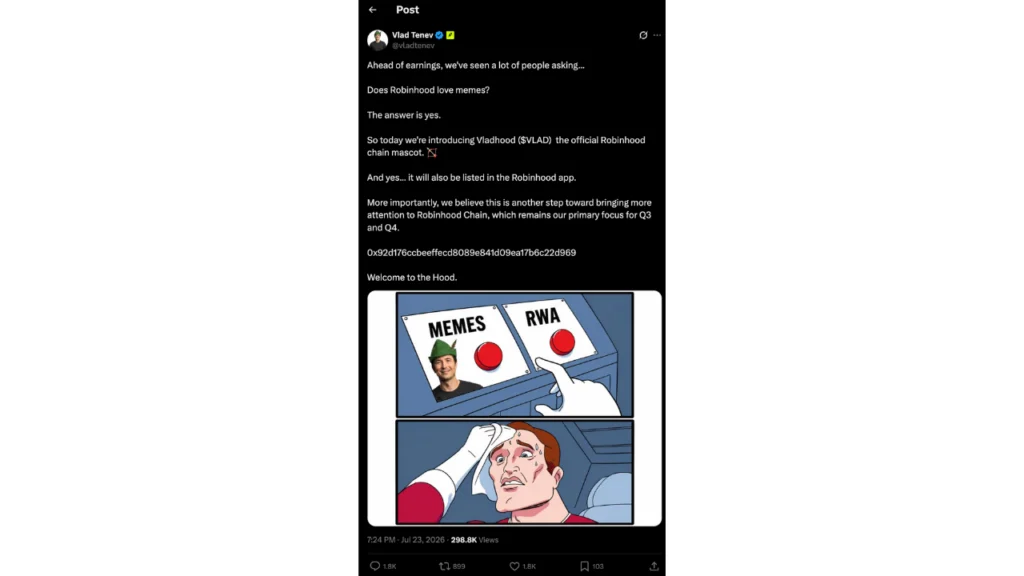
The verified X account of Robinhood CEO Vlad Tenev was momentarily compromised on Thursday, July 24, becoming the latest high-profile target in a series of social media breaches within the cryptocurrency sector. Attackers exploited the account’s credibility to disseminate a promotional message for a fabricated meme coin named "Vladhood (VLAD)," falsely associating it with Robinhood’s nascent blockchain initiatives. The incident rapidly unfolded, leading to a significant, albeit brief, surge in the token’s value before its inevitable collapse, leaving numerous retail investors with substantial losses and underscoring the enduring risks of social engineering in the digital asset landscape.
The fraudulent post, which was swiftly removed once Robinhood regained control of Tenev’s account, deceptively presented Vladhood as the "official mascot of Robinhood Chain." It went further, claiming that the token was slated for an imminent listing on the popular Robinhood trading application, a platform known for its accessibility to millions of users. Crucially, the message included a smart contract address, actively encouraging Tenev’s nearly 800,000 followers to purchase the token. This sophisticated ruse leveraged both the CEO’s personal brand and the burgeoning interest in Robinhood’s recently launched blockchain network, painting a picture of legitimacy that was entirely unfounded.
Chronology of a Digital Deception
The breach was first detected on the afternoon of July 24 when keen-eyed cryptocurrency enthusiasts and market observers noticed an unusual and uncharacteristic post appearing on Vlad Tenev’s X profile. The message, distinct in its tone and content from Tenev’s typical communications, aggressively pushed VLAD as an officially sanctioned meme coin, directly linking it to Robinhood Chain, the company’s new Ethereum Layer-2 network. This network, designed to support tokenized securities and other regulated financial products, was implicitly positioned as the home for this new "mascot" token, creating an illusion of corporate endorsement. The promise of an eventual listing on the Robinhood app served as a powerful incentive, tapping into the desire for early access to potentially lucrative assets.
Almost immediately following the appearance of the deceptive post, Robinhood’s official communications team sprang into action. Through its dedicated X account, @RobinhoodComms, the company issued an urgent public alert, confirming the compromise. "Heads up: Our CEO Vlad Tenev’s X account was compromised and posted a fake promotion for a meme coin. We’re working with X to restore access and the post has been removed," the statement read. This swift response was critical in mitigating further damage, as it directly contradicted the fraudulent claims and initiated the process of re-securing the account. The brokerage unequivocally stressed that Vladhood bore no official connection to Robinhood or its crypto services, urging users to disregard the promotion entirely.
Further reinforcing the company’s disavowal, blockchain explorer tools associated with Robinhood Chain quickly flagged the VLAD token’s contract as a "potential scam." This proactive labeling by network infrastructure providers served as an additional layer of warning for traders, providing vital information before more capital could flow into the illicit project. The combined efforts of Robinhood’s public relations and the technical safeguards within the blockchain ecosystem demonstrated a rapid, multi-pronged response to an evolving threat.
The Anatomy of a Pump-and-Dump: VLAD’s Brief Ascent and Precipitous Fall

Despite the rapid countermeasures and explicit warnings, the fraudulent promotion still managed to trigger a significant, albeit short-lived, market reaction. The inherent "fear of missing out" (FOMO) prevalent in the highly speculative meme coin market, combined with the perceived authority of Tenev’s compromised account, drove a flurry of buying activity. Within a mere few hours of the fake post going live, VLAD’s market capitalization reportedly skyrocketed, reaching an estimated range of $4 million to $10 million. This astonishing surge was fueled almost entirely by eager buyers who genuinely believed the token possessed official backing from Robinhood’s chief executive.
However, on-chain analytics soon began to reveal critical red flags indicative of a classic pump-and-dump scheme. Blockchain researchers and analysts quickly identified several alarming patterns in the token’s distribution and liquidity. A significant concentration of approximately 70% of the total VLAD token supply was found to be held within a handful of the earliest wallets. This high level of centralization is a hallmark of many scam projects, indicating that control over the token’s future supply and price movements rested with a small group of initial holders, likely the attackers themselves.
Furthermore, critical security measures commonly employed in legitimate decentralized finance (DeFi) projects were conspicuously absent. The token’s liquidity had not been permanently locked or "burned," a practice that typically prevents developers from rug-pulling funds from the liquidity pool. Instead, the liquidity pool continued to collect fees for wallets controlled by the deployer – the individual or group who created the token contract. This setup allowed the deployer to accumulate value from trading activity without any long-term commitment to the project’s stability or the security of investor funds.
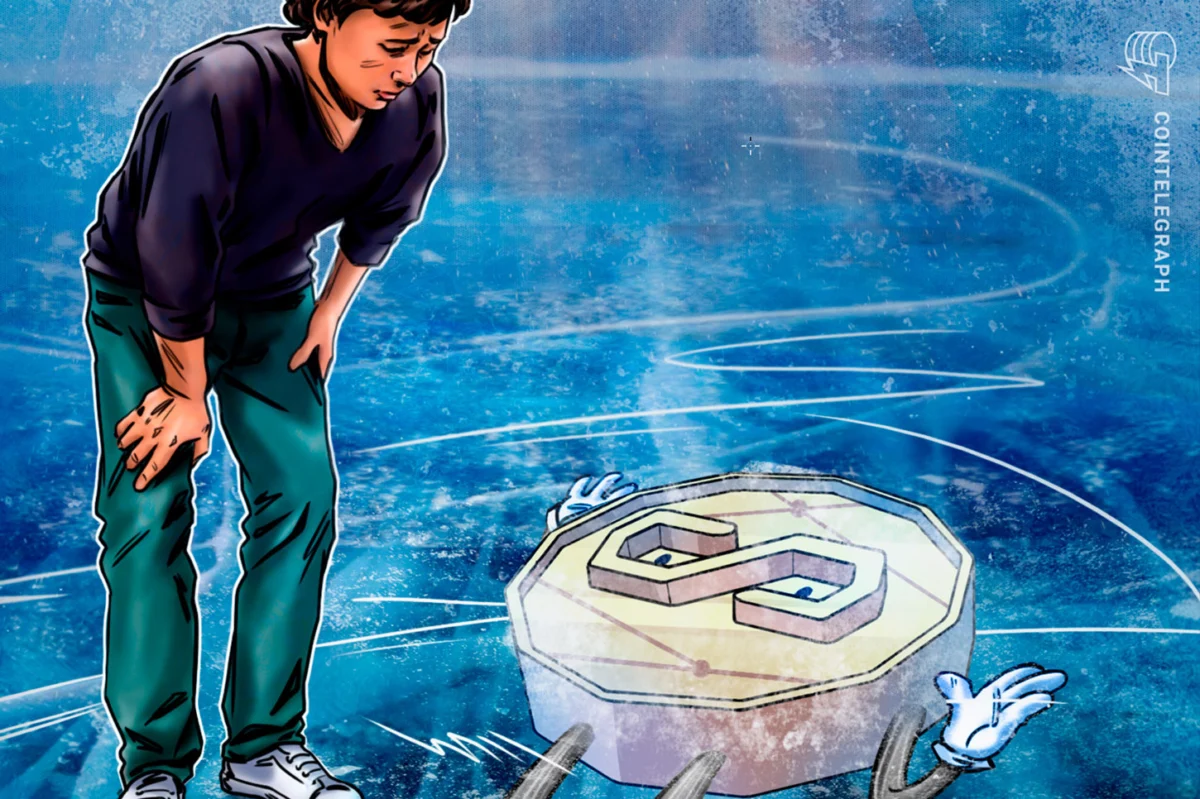
The inevitable conclusion arrived swiftly. According to data from multiple blockchain tracking platforms, the developer wallet eventually executed a massive sell-off of its accumulated holdings. This decisive move saw the perpetrators cash out roughly 690 ETH, an amount valued at approximately $1.3 million at the time of the transaction. Following this substantial liquidation, VLAD’s price experienced a catastrophic collapse, plummeting by more than 80% in a matter of minutes. This rapid and dramatic depreciation left thousands of retail investors, who had bought into the fraudulent promise, holding tokens that had become virtually worthless. While some members of the crypto community later attempted a "community takeover" (CTO) to salvage the project, Robinhood maintained its firm stance: the token was and remains entirely unrelated to the company.
Robinhood Chain’s Unintended Meme Coin Frenzy
The VLAD incident is particularly noteworthy as it occurred less than a month after the official launch of Robinhood Chain on July 1. This new Ethereum Layer-2 network, built leveraging Arbitrum Orbit technology, was introduced with a clear and ambitious vision. Robinhood positioned it as foundational infrastructure for a new era of tokenized stocks, real-world assets (RWAs), and other regulated financial products. The company explicitly articulated its long-term strategy to expand beyond its traditional brokerage services, venturing into the burgeoning field of tokenized finance, aiming to bridge the gap between conventional markets and the blockchain ecosystem.
However, the early days of Robinhood Chain’s activity have presented a stark contrast to its intended purpose. Rather than being dominated by the trading of tokenized securities or complex financial instruments, the network has seen an overwhelming surge in speculative meme coin trading. Data from Dune Analytics dashboards tracking Robinhood Chain reveal a rapid influx of activity: the network has already attracted hundreds of millions of dollars in on-chain assets, processed millions of daily transactions, and recorded hundreds of thousands of active wallet addresses in a remarkably short period since its launch.
This rapid influx of users and capital has, perhaps inevitably, sparked an explosion of unofficial meme coins, many of which are explicitly or implicitly attempting to capitalize on Robinhood’s potent brand recognition. One prominent example is "CashCat," a meme coin that quickly rose to become one of the chain’s most actively traded assets. Earlier in the month, several users reported significant financial losses after interacting with a compromised smart contract linked to the CashCat project, highlighting the elevated and inherent risks associated with newly launched, often unaudited, tokens on emerging networks. The VLAD incident serves as a potent and stark illustration of how quickly and aggressively malicious actors adapt to exploit the attention and liquidity surrounding new blockchain ecosystems, weaponizing trust and brand association for illicit gain.

Social Media Hacks: A Persistent and Evolving Crypto Threat
The compromise of Vlad Tenev’s X account follows a deeply familiar and troubling pattern that has plagued the cryptocurrency industry for several years. This incident is not an isolated event but rather a continuation of a broader trend where attackers increasingly bypass direct attacks on complex blockchain protocols in favor of exploiting the human element and the perceived credibility of verified social media accounts. Scammers systematically target accounts belonging to executives, celebrities, and other public figures with large followings. Once unauthorized access is obtained, these accounts are then used to propagate fraudulent token launches, fake investment opportunities, or phishing scams, all meticulously designed to exploit the trust and enthusiasm of their followers.
The 2024 meme coin boom, characterized by explosive growth and widespread speculative interest, proved to be particularly fertile ground for these types of social engineering attacks. During this period, numerous verified X accounts belonging to prominent celebrities, including actress Sydney Sweeney, musician Doja Cat, and hip-hop icon 50 Cent, were all compromised to promote fake meme coins. These fraudulent posts, much like the one on Tenev’s account, were eventually removed, but not before causing confusion and potential financial harm to their respective fan bases.
The efficacy of this strategy hinges heavily on generating a strong "fear of missing out" (FOMO). Traders, driven by the allure of quick profits and the perceived legitimacy of a celebrity or executive endorsement, often rush to purchase newly promoted tokens without conducting adequate due diligence or verifying the authenticity of the announcement. Unlike highly technical smart contract exploits that require deep understanding of blockchain vulnerabilities, these social media attacks primarily exploit human psychology, the speed of information dissemination, and the powerful influence of high-profile accounts. They represent a lower-barrier entry point for scammers, making them a consistently attractive vector for illicit activities.
A Crucial Security Reminder for All Crypto Investors
The VLAD incident delivers a critical and timely reminder that security risks within the cryptocurrency space extend far beyond the technical vulnerabilities of blockchain protocols themselves. In this particular instance, Robinhood Chain, the underlying blockchain network, remained uncompromised throughout the attack. Instead, the breach was limited solely to Tenev’s personal X account, demonstrating unequivocally how a single compromised social media login can, within minutes, trigger millions of dollars in speculative trading activity and lead to significant financial losses for unsuspecting investors.
For all investors operating within the volatile crypto market, cybersecurity experts consistently advocate for a set of robust best practices. It is paramount to verify all announcements, particularly those concerning new tokens or investment opportunities, through multiple official channels before taking any action. This includes checking official company websites, legitimate press releases, and directly confirmed statements from official communication channels, rather than relying solely on social media posts, even from seemingly authoritative accounts. Furthermore, investors are strongly advised to exercise extreme caution when encountering newly promoted tokens and to never send funds to contract addresses shared exclusively on social media platforms without independent, thorough verification.
As Robinhood continues its ambitious expansion into the blockchain and tokenized finance sectors, the company will undoubtedly face heightened scrutiny regarding both its platform security and the growing proliferation of unofficial projects attempting to capitalize on its widely recognized brand. The Vladhood incident serves as a stark and immediate lesson, underscoring the relentless adaptability of scammers and their sophisticated methods for leveraging trusted identities to lure unsuspecting traders into fraudulent schemes. The responsibility for robust security measures, both institutional and individual, remains paramount in safeguarding the integrity and trust within the rapidly evolving digital asset ecosystem.