admin
admin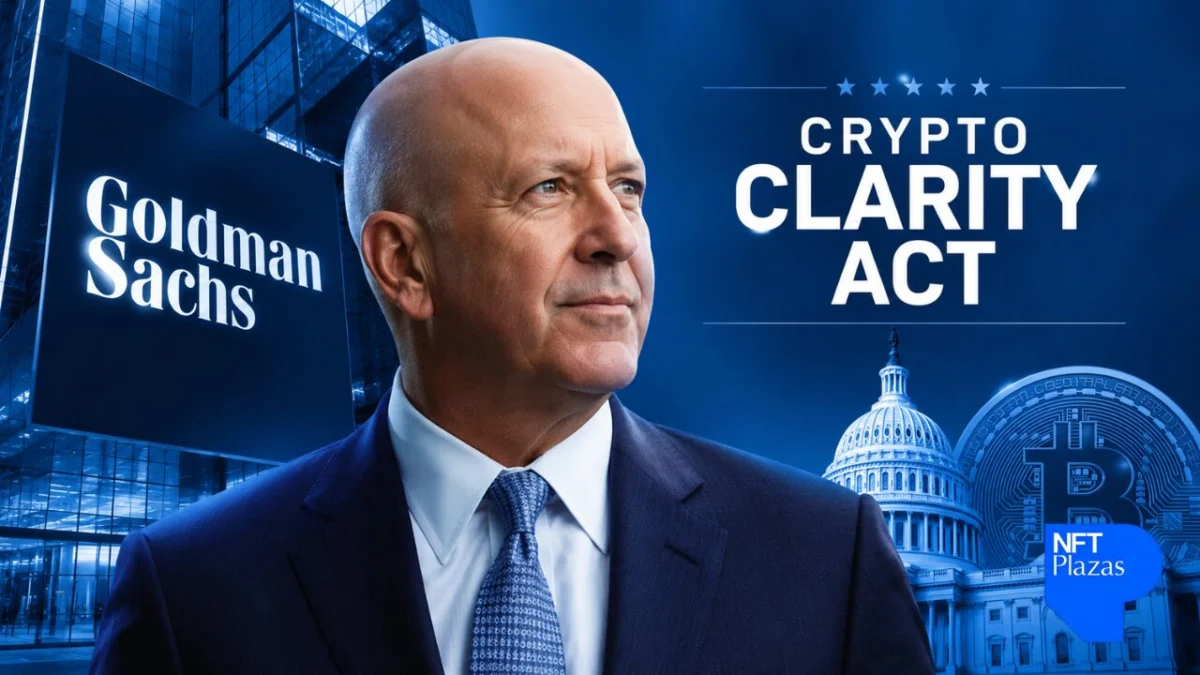
Goldman Sachs Chairman and CEO David Solomon has publicly thrown his weight behind the Digital Asset Market Clarity Act, a significant move that places one of Wall Street’s most influential figures at odds with a substantial portion of the traditional banking industry as U.S. lawmakers edge closer to a potential Senate vote on the pivotal crypto legislation. This endorsement underscores a growing ideological schism within the financial establishment regarding the future of digital asset regulation and the role of established financial institutions within it.
Solomon’s declaration positions Goldman Sachs, a titan of global finance, on the opposite side of a burgeoning debate over how digital assets should be governed. While numerous major banks and their representative trade groups have voiced strong criticisms of key elements within the proposed bill – particularly its framework for stablecoin rewards and the competitive implications for traditional deposit-taking institutions – Solomon articulated a firm belief that clear, comprehensive regulatory clarity is not merely beneficial, but absolutely essential for the digital asset industry’s long-term viability and growth within the broader financial ecosystem.
In an interview with Politico, Solomon expressed his strong support, stating he is "very supportive of moving the CLARITY Act forward, so we can get some market structure in place and start to move the innovation process along." He conceded that the legislation, like most comprehensive policy efforts, is "not perfect." However, he emphasized its paramount strength lies in its potential to foster "a level playing field to enhance market stability and allow these markets to develop appropriately," a sentiment that resonates deeply within an industry historically wary of regulatory ambiguity. This perspective suggests a strategic pivot, viewing regulatory certainty not as a constraint but as a foundational element for institutional participation and market maturation.
The Digital Asset Market Clarity Act: A Framework for Future Growth
The CLARITY Act stands as one of the most significant and ambitious pieces of crypto legislation currently under active consideration in the U.S. Congress. If successfully enacted, it promises to establish a foundational and comprehensive regulatory framework for digital assets, a move long awaited by industry participants seeking certainty. A cornerstone of the bill is its explicit delineation of the respective jurisdictional roles of the Securities and Exchange Commission (SEC) and the Commodity Futures Trading Commission (CFTC) over various digital assets. This division is critical, as the ongoing regulatory turf war between these agencies has been a primary source of uncertainty and legal challenges for crypto firms.
A pivotal provision within the legislation is its proposed classification of most decentralized cryptocurrencies as commodities rather than securities. This distinction carries profound implications; classifying an asset as a commodity would primarily place it under the oversight of the CFTC, generally associated with a more principles-based regulatory approach, and significantly limit the SEC’s expansive jurisdiction over much of the digital asset market. Conversely, classification as a security, as often advocated by the SEC under Chairman Gary Gensler, subjects assets to stringent disclosure requirements and investor protection rules typically applied to traditional financial products like stocks and bonds.
Beyond jurisdictional clarity, the bill also includes crucial protections for decentralized software developers, aiming to safeguard innovation by ensuring that those building underlying protocols are not unduly burdened with compliance obligations meant for active market participants. Furthermore, it directly addresses the contentious rules surrounding stablecoin reward programs – a provision that has ignited fierce debate and represents one of the bill’s most controversial and keenly watched elements. Solomon’s belief, as reported by Politico, is that such clearer regulations could serve as a powerful catalyst, encouraging significantly greater institutional participation in digital assets, an arena where Goldman Sachs itself has incrementally but steadily expanded its involvement in recent years. This strategic outlook aligns with the bank’s observed trajectory towards exploring and integrating blockchain technology and digital assets into its core business offerings.

Stablecoin Rewards: The Core of Wall Street’s Division
The most potent source of disagreement and the primary fault line dividing Wall Street on the CLARITY Act centers squarely on the treatment of stablecoin yield programs. To understand the controversy, it’s essential to grasp the nature and function of stablecoins. These digital tokens are specifically engineered to maintain a fixed value, typically achieved through a one-to-one peg with a stable fiat currency, most commonly the U.S. dollar. They are indispensable tools within the broader crypto ecosystem, widely utilized for efficient crypto trading, facilitating rapid and low-cost cross-border payments, and powering the burgeoning landscape of decentralized finance (DeFi) applications. Their stability makes them a crucial bridge between volatile cryptocurrencies and traditional fiat currencies.
In recent years, a growing number of crypto firms, including industry giants such as Coinbase, have begun to offer reward programs on certain stablecoin holdings. For instance, customers holding popular stablecoins like Circle’s USDC can often earn annual returns ranging between 3% and 5%. These rates frequently surpass the interest rates available on many traditional savings accounts offered by commercial banks, creating an attractive proposition for consumers seeking higher yields on their digital holdings.
Supporters of these programs argue that stablecoin rewards represent innovative and competitive financial products that provide consumers with greater choice and potentially higher returns in a low-interest-rate environment. They emphasize the efficiency and transparency of blockchain-based systems. However, critics, predominantly from the traditional banking sector, contend that these yield-bearing products fundamentally resemble bank deposits. Their primary concern is that crypto firms offering these rewards are operating outside the rigorous regulatory standards and capital requirements that traditional banks are mandated to meet, creating an uneven playing field and potential systemic risks.
The Banking Industry Pushes Back Against Crypto’s Ascent
David Solomon’s progressive stance stands in stark contrast to the outspoken opposition of other prominent banking leaders, most notably JPMorgan Chase CEO Jamie Dimon, who has emerged as one of the legislation’s most ardent critics. Dimon has consistently voiced skepticism, if not outright hostility, towards cryptocurrencies and their associated products.
Speaking to Fox Business earlier this year, Dimon articulated his primary concern: allowing crypto companies to offer yield on stablecoins without being subject to equivalent banking oversight would create an unfair and potentially dangerous competitive advantage. He argued that these products, while superficially appealing due to higher yields, lack the same layers of consumer protection, liquidity requirements, and capital buffers that underpin traditional bank deposits. "The banks will not accept it that way," Dimon declared, issuing a warning that such unregulated products could eventually precipitate significant financial risks if they continue to operate largely outside the established parameters of traditional banking regulations. This perspective highlights a fundamental tension between the established, highly regulated financial system and the emerging, often less-regulated, crypto landscape.
These concerns from individual banking leaders are widely echoed by powerful banking trade groups. Organizations such as the American Bankers Association (ABA) and the Bank Policy Institute (BPI) have consistently urged lawmakers to significantly tighten the legislation, particularly regarding stablecoin provisions. Their core argument is multifaceted: stablecoin rewards could incentivize consumers to move substantial deposits away from traditional banks, thereby weakening a critical source of funding for traditional lending activities like mortgages and business loans. This "deposit flight" could, they argue, undermine the stability and profitability of the banking sector, potentially impacting the broader economy. Furthermore, they contend that in the event of a stablecoin issuer’s insolvency, consumers would lack the same deposit insurance protections (like FDIC coverage) that safeguard traditional bank accounts, exposing them to greater risk.

Unsurprisingly, crypto industry leaders vehemently disagree with these assertions. Coinbase CEO Brian Armstrong, a vocal proponent of crypto innovation, has countered that the banking industry’s aggressive lobbying against stablecoin rewards is primarily driven by self-interest and a desire to protect their entrenched deposit-based business model, rather than genuine concerns about consumer protection or systemic risk. Armstrong and others argue that banks are simply resistant to competition from more efficient and innovative financial products, highlighting the disruption potential of decentralized finance.
The Senate Vote Approaches: A Critical Juncture
Solomon’s timely endorsement arrives as Republican senators have released an updated version of the CLARITY Act, signaling increased momentum and the potential for a Senate floor vote in the near future. This revised draft reportedly preserves the bill’s overarching market structure, which aims to clarify jurisdictional boundaries and asset classifications. However, it also incorporates new ethics provisions specifically designed to govern digital asset activities by certain government officials, a move aimed at enhancing transparency and preventing conflicts of interest.
Despite these updates, the legislative path remains fraught with challenges. Democrats, in particular, have argued that the changes do not go far enough to address their comprehensive concerns. A significant point of contention has been the potential for conflicts of interest, particularly regarding former President Donald Trump’s publicly disclosed crypto-related business interests. Beyond ethics, lawmakers are still actively negotiating several other outstanding and complex issues, including the precise scope of stablecoin oversight, the implementation of robust consumer protections, and the detailed rules governing yield-bearing products. Until these crucial areas reach a bipartisan consensus, the legislation’s progress towards a final vote remains uncertain, reflecting the intricate political and economic dimensions of crypto regulation.
A Growing Divide and the Future of Crypto Regulation
Goldman Sachs has, for several years, been strategically and gradually expanding its footprint in the digital asset space. This expansion has manifested through various initiatives, including offering limited trading services for certain cryptocurrencies to institutional clients, exploring tokenization initiatives for traditional assets, and making targeted investments in blockchain technology companies. Solomon’s recent comments, therefore, represent one of the clearest and most definitive public endorsements of comprehensive crypto legislation from the head of a major global bank. It moves beyond exploratory interest to an active advocacy for a specific regulatory pathway.
His explicit support for the CLARITY Act also reflects a broader, albeit still nascent, shift in perspective among a segment of influential financial institutions. These entities are increasingly viewing regulatory certainty not as an impediment or a barrier to innovation, but rather as the indispensable foundation required for widespread institutional adoption and the safe integration of digital assets into mainstream finance. This contrasts sharply with the earlier "wild west" narrative surrounding crypto and signals a maturation of both the industry and the institutional approach to it.
Whether the CLARITY Act ultimately passes in its current form, or indeed at all, remains uncertain given the complex political landscape and the powerful lobbying efforts from various stakeholders. However, David Solomon’s unequivocal backing highlights a deepening and increasingly public divide within Wall Street itself. While some traditional banks continue to perceive robust crypto legislation, particularly around stablecoins, as a direct competitive threat to their established business models and a source of potential systemic risk, others, exemplified by Solomon’s stance, see a clear, well-defined regulatory framework as absolutely essential. For these institutions, such clarity is not just desirable but a prerequisite for unlocking significant institutional capital, fostering innovation, and ultimately supporting the next, more mature phase of the digital asset industry’s growth and integration into the global financial system. The outcome of this legislative battle will undoubtedly shape the trajectory of digital finance for years to come.