admin
admin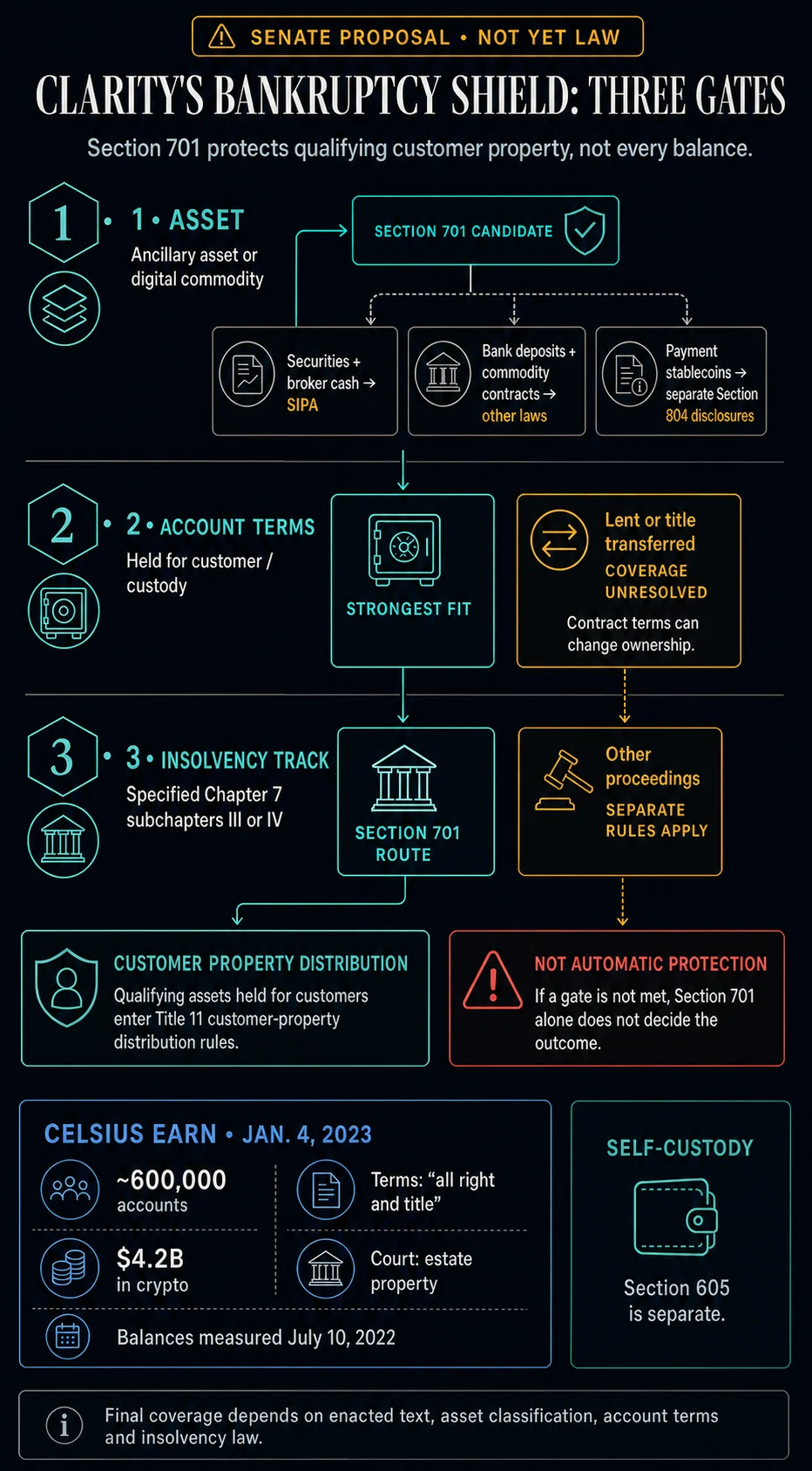
The fallout from the spectacular implosion of cryptocurrency lending platform Celsius continues to cast a long shadow over the digital asset industry, prompting legislative efforts to prevent similar injustices for consumers. Senator Cynthia Lummis, a prominent voice in the crypto policy space, has championed the CLARITY Act, a legislative proposal aimed at ensuring that customers’ digital assets held by crypto firms remain their property, even in the event of bankruptcy. On July 20th, Senator Lummis succinctly encapsulated the bill’s core promise: "Your crypto stays yours." This powerful statement, disseminated through an X post that garnered significant attention, directly addresses the painful lesson learned by Celsius and Voyager customers, who discovered that the cryptocurrency entrusted to these platforms had become part of the bankruptcy estate, diminishing their claims.
The Celsius case serves as a stark legal precedent, as a federal court definitively ruled on the ownership of its "Earn" balances. This ruling highlighted a critical distinction: while customers saw familiar balances in their apps, the underlying legal agreements often transferred ownership of their digital assets to the platform. The CLARITY Act, specifically Section 701 of the proposed legislation, seeks to amend federal bankruptcy rules to prevent such outcomes for specific types of digital assets held by crypto intermediaries.
The Genesis of the CLARITY Act: A Response to Crypto Insolvencies
The widespread financial distress experienced by major cryptocurrency platforms, including Celsius and Voyager, in 2022, triggered a period of intense scrutiny and calls for regulatory clarity. Celsius, once a titan in crypto lending, filed for bankruptcy in July 2022, leaving hundreds of thousands of customers in limbo. The company’s collapse revealed a fundamental misunderstanding among many users regarding the legal status of their deposited assets. Contrary to the intuitive belief that their crypto remained under their control, the bankruptcy court later affirmed that Celsius’s terms of service effectively granted the company "all right and title" to the crypto deposited in its Earn accounts. This meant that these assets were considered part of Celsius’s corporate holdings and thus subject to the claims of all creditors in the bankruptcy proceedings, relegating Earn users to the status of unsecured creditors with potentially limited recourse.
Voyager Digital, another prominent crypto lender, faced a similar fate, filing for bankruptcy protection in July 2022 after a significant exposure to the now-defunct hedge fund Three Arrows Capital. The subsequent legal battles and distributions to customers further underscored the vulnerabilities inherent in the crypto intermediation model, particularly when the legal framework governing these relationships was not clearly defined.
The CLARITY Act, introduced as a legislative response to these high-profile failures, aims to establish clearer rules of the road for digital assets within the existing bankruptcy framework. Senator Lummis, alongside other proponents, has argued that such legislation is crucial for fostering consumer confidence and promoting the responsible growth of the digital asset ecosystem.
Section 701: Rewriting Bankruptcy Rules for Digital Assets
The heart of the CLARITY Act’s proposed solution lies within Section 701, which endeavors to integrate certain digital assets into the existing federal customer-property rules governing liquidations under Chapter 7 of the Bankruptcy Code. This section specifically targets "ancillary assets and digital commodities" when they are "held for customers" by specified intermediaries. The intention is to classify these assets as customer property, ensuring they are segregated and distributed directly to customers in the event of a platform’s insolvency, rather than being absorbed into the general bankruptcy estate.
The May 12th Senate Banking Committee manager’s substitute document outlines the direction of Section 701, proposing to broaden the definitions of "customer," "customer claim," and "customer property" to encompass these digital assets. The proposed rewrite would direct liquidators of failed stockbrokers to treat qualifying ancillary assets and digital commodities held for customers as distinct customer property, to be distributed according to Title 11 of the U.S. Code.
However, the protection offered by Section 701 is not absolute and is contingent upon several critical conditions. The scope of this protection is delineated by the types of assets covered, the specific terms of the account agreements, and the nature of the bankruptcy process itself. The language of the bill suggests that a qualifying token held in a custodial capacity for a customer would more readily fall under its protective umbrella than assets that customers have lent out or transferred title of to the platform. The treatment of these latter scenarios remains a complex area, leaving room for further legislative refinement and judicial interpretation.
Defining the Boundaries: What Qualifies for Protection?
Section 701’s effectiveness hinges on precise definitions and the careful delineation of asset types and account relationships. The bill specifically enumerates "ancillary assets" and "digital commodities" for inclusion. This means that traditional securities and cash held by a broker-dealer would continue to be governed by the Securities Investor Protection Act (SIPA). Similarly, bank deposits and commodity contracts would remain under their respective established legal frameworks.
The distinction between different types of stablecoins is also a key consideration. Section 804 of the proposed legislation addresses payment stablecoins separately, mandating disclosures from broker-dealers regarding the insolvency treatment of payment stablecoins, digital commodities, and securities involving units of digital commodities. This separate treatment indicates that Section 701, in isolation, may not provide a uniform rule for all stablecoin balances.

The crux of the issue often lies in the contractual relationship between the customer and the platform. The phrase "held for customers" strongly implies a custodial arrangement, where ownership remains with the customer. Lending and yield-generating products, however, can operate differently. If the account agreement stipulates that the customer transfers ownership of the asset to the platform, the customer’s recourse in bankruptcy may be reduced to a mere claim for repayment, as was the case for many Celsius Earn users.
The Celsius Case: A Cautionary Tale of Title Transfer
The bankruptcy court’s January 4, 2023, order in the Celsius case vividly illustrates the significance of these contractual distinctions. The court found that Celsius held approximately 600,000 Earn accounts, collectively containing about $4.2 billion in cryptocurrency as of July 10, 2022. Crucially, Celsius’s terms of service stipulated that the company acquired "all right and title" to the crypto deposited in these accounts. Consequently, the court ruled that the crypto remaining in these accounts belonged to the bankruptcy estate. The app interface, displaying familiar balances, masked the underlying legal reality that customers had, in essence, traded ownership of their crypto for an unsecured claim against Celsius. This situation starkly contrasts with the intended outcome of Section 701, which aims to protect assets held in a custodial capacity. The Celsius case, therefore, serves as a potent example of the ownership questions at stake, without definitively establishing how Section 701 would apply to a similar yield-generating product under its proposed framework.
Navigating the Nuances: Different Account Relationships Under the CLARITY Act
The proposed CLARITY Act, through Section 701 and other related provisions, aims to create distinct pathways for consumer protection based on the nature of the asset relationship. These can be broadly categorized:
-
Qualifying Intermediary Custody: This represents the most direct application of Section 701’s protective intent. When a platform acts as a custodian, holding ancillary assets or digital commodities on behalf of a customer, and a covered Chapter 7 liquidation occurs, these assets are intended to be treated as customer property. The primary limitation here is that the asset, the intermediary, and the liquidation process must all fall within the bill’s defined scope and parameters.
-
Lending, Earn, or Yield Accounts: This is where the CLARITY Act’s application becomes more complex and potentially unresolved. If the terms of the agreement involve the customer transferring title of the asset to the platform, or if the platform essentially becomes a borrower of the asset, Section 701’s coverage remains uncertain. As demonstrated by the Celsius case, such contract language can effectively transform a customer’s digital asset balance into an unsecured claim, contingent on the platform’s solvency and the bankruptcy distribution process. The outcome in such scenarios would likely depend on the specific asset classification, the precise contract terms, and the prevailing insolvency regime.
-
Independently Controlled Self-Custody: This relationship falls outside the purview of intermediary custody. Section 605 of the CLARITY Act specifically addresses this by protecting lawful self-custody arrangements for defined covered users. This means that assets held in self-hosted wallets, where the user maintains direct control, are generally safeguarded. However, this protection does not negate existing legal enforcement authorities related to illicit finance, money laundering, terrorism financing, and sanctions. The inclusion of Section 605 underscores the bill’s clear distinction between assets managed by their rightful owners and those entrusted to financial intermediaries.
-
Broker-Dealer Securities or Cash, Bank Deposits, and Commodity Contracts: As mentioned earlier, Section 701 explicitly directs these categories to their established legal regimes. Protection for these assets is governed by the Securities Investor Protection Act (SIPA), banking laws, commodities regulations, or other applicable frameworks, rather than the provisions specifically designed for digital assets within the CLARITY Act.
The Legislative Journey and Future Implications
The CLARITY Act has made progress through the legislative process, with the Senate Banking Committee advancing H.R. 3633 by a 15-9 vote on May 14th. This committee passage marked a significant step, but the bill still requires Senate floor approval and subsequent legislative actions to become law. As of July 14th, a floor vote had not been scheduled, and the broader legislative package, of which the CLARITY Act is a component, remained unfinished.
The customer-property provision is part of a larger legislative effort aimed at structuring the digital asset market. The May 12th draft of this comprehensive package also addresses critical issues such as token classification, stablecoin rewards, decentralized finance (DeFi), and banking powers. The ultimate fate of Section 701 will depend on whether its current wording is retained as the bill navigates further legislative hurdles.
Beyond the legislative chamber, the practical implications will unfold in the contracts drafted by crypto platforms. The language used to describe customer balances – whether as "custody," "lending," or another relationship – and whether these terms explicitly state that the platform holds the asset for the customer or receives ownership of it, will be critical. Senator Lummis’s concise promise, "your crypto stays yours," captures the legislative intent, but achieving that outcome for all digital asset holders in bankruptcy will require a confluence of qualifying asset types, carefully crafted contract terms, and a favorable insolvency regime. The legal landscape for digital assets remains dynamic, and the CLARITY Act represents a significant attempt to bring much-needed certainty and consumer protection to a rapidly evolving industry.