admin
admin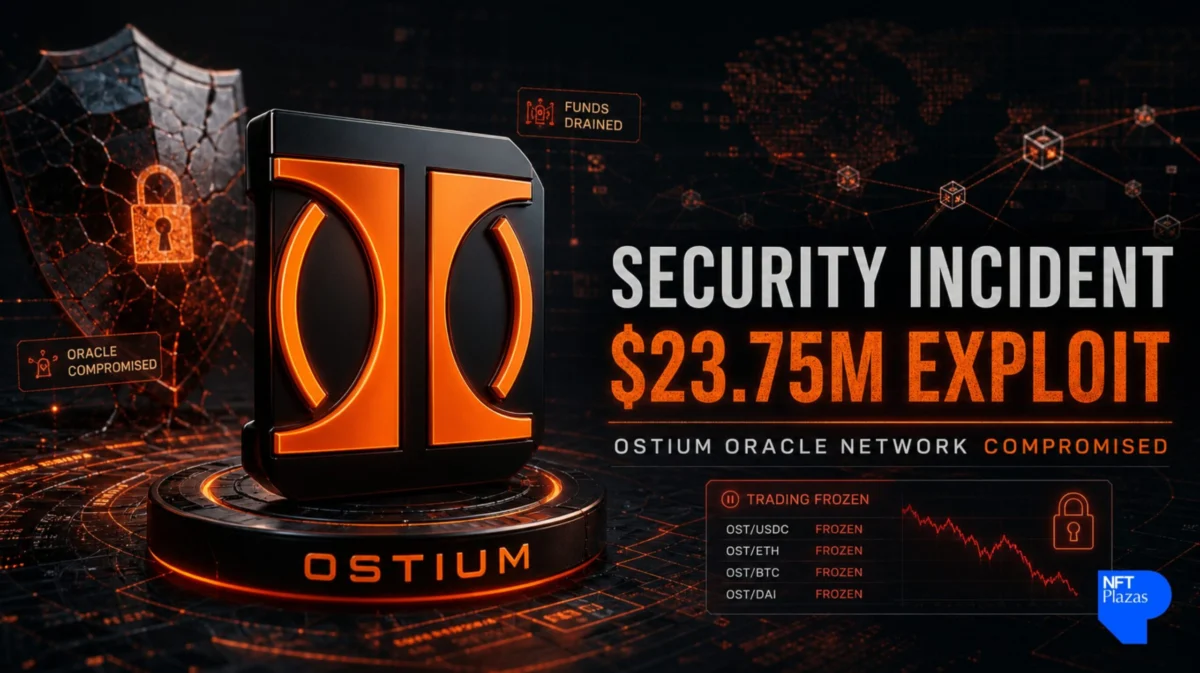
On the morning of July 16, Ostium, a prominent on-chain perpetual trading protocol, announced a halt to all trading activities following a significant security incident, while on-chain trackers simultaneously identified a substantial outflow of funds from wallets linked to the protocol. The incident, which saw approximately 23.75 million USDC drained and subsequently laundered, has immediately placed Ostium at the forefront of the DeFi market’s attention, raising critical questions about the resilience and security of protocols attempting to bridge traditional finance assets with decentralized infrastructure. According to official statements from Ostium, user positions within the protocol remain open but are currently unmodifiable, with traders’ margin reportedly untouched and secured within the frozen smart contracts. The protocol has yet to disclose the definitive technical cause of the breach or provide a firm timeline for recovery, leaving users and the broader crypto community awaiting further details.
The Incident Unfolds: A Chronology of the Exploit
The security breach occurred rapidly, with Ostium reporting the incident to have transpired between 14:18 and 14:23 UTC on July 16. The protocol’s team stated they detected "anomalies" within minutes of their occurrence, prompting swift action to pause trading and lock down the affected smart contracts. This rapid response, while crucial in preventing further losses, underscored the severity and instantaneous nature of the attack.
At 14:23 UTC, the protocol’s official channels began disseminating information, confirming the trading pause and emphasizing that user positions were frozen but secure. "A Security Update: Trading remains paused following the security incident. User positions remain open and unmodifiable, and trader margin remains unmoved in frozen trading smart contracts. The team will continue to provide updates as they become available regarding a timeline…," read a post from Ostium’s official X (formerly Twitter) account. This initial communication aimed to reassure users about the safety of their underlying margin, even as their ability to manage positions was suspended. The immediate halting of trading activities, coupled with the locking of relevant smart contracts and the freezing of user positions, strongly suggests that the incident’s impact was primarily focused on unauthorized fund extraction rather than a complete system collapse. The protocol’s swift isolation of risk was a critical measure, yet it highlights the ever-present vulnerability within complex DeFi architectures.
The On-Chain Trail: How the Funds Moved
Blockchain analytics firms were quick to trace the movement of the stolen assets, providing a clearer picture of the exploiter’s actions. According to data compiled by Lookonchain, approximately 23.75 million USDC was illicitly siphoned from Ostium. This substantial sum was not held in USDC for long; the exploiter promptly swapped the entire amount into 12,084 ETH. At the time of the transaction, this conversion implied an average price of approximately $1,966 USD per ETH, showcasing the scale of the financial maneuver.
The layering of funds continued rapidly. A significant portion of the newly acquired ETH was subsequently transferred to Tornado Cash, a well-known cryptocurrency mixer. This action is a common tactic employed by malicious actors to obscure the trail of stolen funds, making them exceedingly difficult to trace and recover. Further analysis by Arkham Intelligence corroborated these findings, labeling multiple addresses within the cluster associated with the "Ostium Exploiter." Arkham’s data revealed that the funds did not flow directly from the initial exploit wallet to Tornado Cash. Instead, they were routed through several intermediary addresses, a technique often used to further complicate forensic investigations. Some transactions were also observed to be split into multiple smaller ETH batches before entering the mixer, indicating a deliberate and sophisticated strategy to layer the assets in the immediate aftermath of the exploit. This intricate movement underscores the professional and premeditated nature of the attack, designed to maximize the chances of anonymity and successful illicit fund retention. The speed and efficiency with which the funds were swapped and laundered highlight the challenges faced by protocols and law enforcement in responding to such incidents in real-time.
Ostium’s Vision and Vulnerability: Bridging Traditional and DeFi Markets
Ostium positions itself as an innovative on-chain perpetual trading protocol, distinguishing itself by offering decentralized trading for a diverse range of assets, including traditional stocks, commodities, and forex, all under a self-custody model. This ambition to integrate real-world trading infrastructure with the transparency and decentralization of blockchain technology makes the security incident particularly resonant across the DeFi landscape. While many decentralized exchanges focus solely on crypto-to-crypto pairs, Ostium’s foray into traditional markets represents a significant step towards a more comprehensive and accessible global financial system.
The protocol’s self-custody model, where users retain control over their assets, is a core tenet of DeFi. However, this model also places a higher onus on the protocol’s smart contract security, as any vulnerability can lead to direct fund loss without a centralized entity to act as an intermediary or guarantor. For a protocol that aims to provide a decentralized alternative to traditional trading venues, the integrity of its underlying infrastructure is paramount. This incident, therefore, is not merely a technical disruption but a direct challenge to the fundamental premise of bridging highly regulated and established financial markets with the nascent and often volatile DeFi space. The question it poses is not just about the security of code, but about the resilience of a model that seeks to offer an alternative layer to the traditional trading experience, one that promises greater accessibility but must deliver uncompromising security.
The Pervasive Threat: Oracle and Pricing Risks in DeFi
Although Ostium has not yet released the definitive technical cause of the incident, the nature of perpetual trading protocols immediately brings pricing mechanisms, oracle reliability, and liquidation logic into sharp focus. In the realm of decentralized finance, an oracle serves as a crucial bridge, feeding real-world data – such as asset prices – onto the blockchain for smart contracts to utilize. For perpetual protocols, which rely heavily on accurate and real-time price feeds to manage leverage, calculate margin, and execute liquidations, even a brief price deviation or an error in how prices are updated can result in catastrophic losses for both users and the protocol.
The incident at Ostium underscores a recurring vulnerability within DeFi: the "oracle risk." This risk can manifest in several ways, including price manipulation attacks where an attacker artificially inflates or deflates an asset’s price on a specific oracle, often through flash loans, to trigger favorable liquidations or exploit lending protocols. A compromised oracle can lead to incorrect valuations of collateral, erroneous liquidation calls, or, as potentially seen in Ostium’s case, unauthorized withdrawal of funds based on manipulated price data. The fact that the market is interpreting this incident not merely as a fund drain but as another stark reminder of DeFi’s valuation layer vulnerability is highly significant. As protocols like Ostium continue their ambitious expansion into complex, real-world assets like stocks, commodities, and foreign exchange, the reliability and security of their oracle infrastructure become exponentially more critical. The complexity of fetching, updating, and using diverse price feeds in real-time, across multiple assets, introduces numerous potential attack vectors. This type of risk for perpetual protocols extends beyond mere coding errors; it encompasses the entire data pipeline, from source to smart contract execution, and demands robust, multi-layered defense mechanisms.
Broader Implications for the DeFi Ecosystem
The Ostium exploit, while not the largest in DeFi history, contributes to a growing narrative of security breaches that continue to plague the decentralized finance sector. In 2023 alone, billions of dollars were lost to various hacks and exploits across the DeFi landscape, eroding user trust and attracting increased scrutiny from regulators globally. The incident at Ostium is likely to further amplify these concerns, particularly given the protocol’s aspiration to integrate traditional financial instruments.
The implications are multi-faceted. Firstly, for user confidence, such events create a chilling effect, leading potential participants to question the safety of their assets in decentralized environments. The inability to modify positions and the uncertainty surrounding fund recovery can be particularly distressing for traders who rely on rapid market movements. Secondly, the incident will undoubtedly fuel discussions around regulatory oversight. As DeFi ventures into traditional asset classes, regulators who are already wary of the nascent industry’s risks are likely to intensify calls for stricter compliance, auditing standards, and clearer accountability frameworks. The lack of a centralized entity to bear the brunt of losses, as would be the case in traditional finance, complicates recovery efforts and places the burden squarely on the protocol and its users.
Furthermore, the exploit highlights the ongoing maturity curve for DeFi security. While significant strides have been made in smart contract auditing and bug bounty programs, sophisticated attacks continue to circumvent existing safeguards. The incident serves as a stark reminder that innovation must be meticulously balanced with ironclad security, especially when handling substantial user funds and expanding into complex financial products. The challenge for the industry lies in developing truly resilient architectures that can withstand evolving attack vectors while maintaining the core principles of decentralization and transparency.
Industry Response and the Path Forward
In the immediate aftermath, the broader DeFi security community, including white-hat hackers, blockchain forensic experts, and other protocol developers, will likely be dissecting the Ostium incident to understand its technical specifics. Such post-mortems are crucial for the collective learning and strengthening of the ecosystem’s defenses. Meanwhile, Ostium has affirmed its continuous efforts to investigate the incident, track the drained funds, and prepare a clearer post-mortem report. The protocol’s stated focus remains on determining a recovery timeline for smart contract operations and potential asset retrieval, though no specific timeframe has been provided.
For the users impacted, the most pressing concerns revolve around the final extent of the damage, the feasibility of recovering any portion of the stolen funds, and when normal trading operations can possibly resume. The freezing of positions, while a protective measure, also means users cannot react to market changes, potentially incurring further opportunity costs or unrealized losses if market conditions shift unfavorably. Until Ostium delivers further official updates detailing the technical cause, its recovery strategy, and compensation plans (if any), the situation remains highly uncertain on both the technical and user-impact fronts. The expectation from the community will be for maximum transparency and swift action, as the reputation and future viability of the protocol hang in the balance.
Safeguarding the Future: Lessons Learned and Proactive Measures
The Ostium security incident serves as a potent reminder of the inherent risks in the rapidly evolving DeFi landscape, particularly for protocols venturing into complex, cross-asset trading. The lessons learned from this event will be critical for shaping the future of decentralized finance. For protocols, it underscores the imperative for continuous, rigorous security audits by multiple reputable firms, comprehensive bug bounty programs, and the implementation of robust, multi-layered defense mechanisms, including real-time monitoring and rapid response capabilities. Emphasizing decentralized oracle networks with diversified data sources and robust aggregation methodologies will be paramount to mitigate pricing manipulation risks.
From a user perspective, the incident reinforces the importance of due diligence, understanding the risks associated with various protocols, and practicing responsible risk management. While the promise of DeFi – self-custody, transparency, and accessibility – remains compelling, the reality of its nascent security infrastructure demands caution. The Ostium exploit, like many before it, is a painful but necessary catalyst for the industry to mature. It highlights the ongoing arms race between innovators and malicious actors, pushing the boundaries of security innovation and demanding a collective commitment to building a safer, more resilient decentralized financial future. The path forward for Ostium and the broader DeFi ecosystem will involve a relentless pursuit of security excellence, enhanced transparency, and a steadfast dedication to user protection, ensuring that the ambition of bridging traditional and decentralized finance can be realized without compromising trust or capital.