admin
admin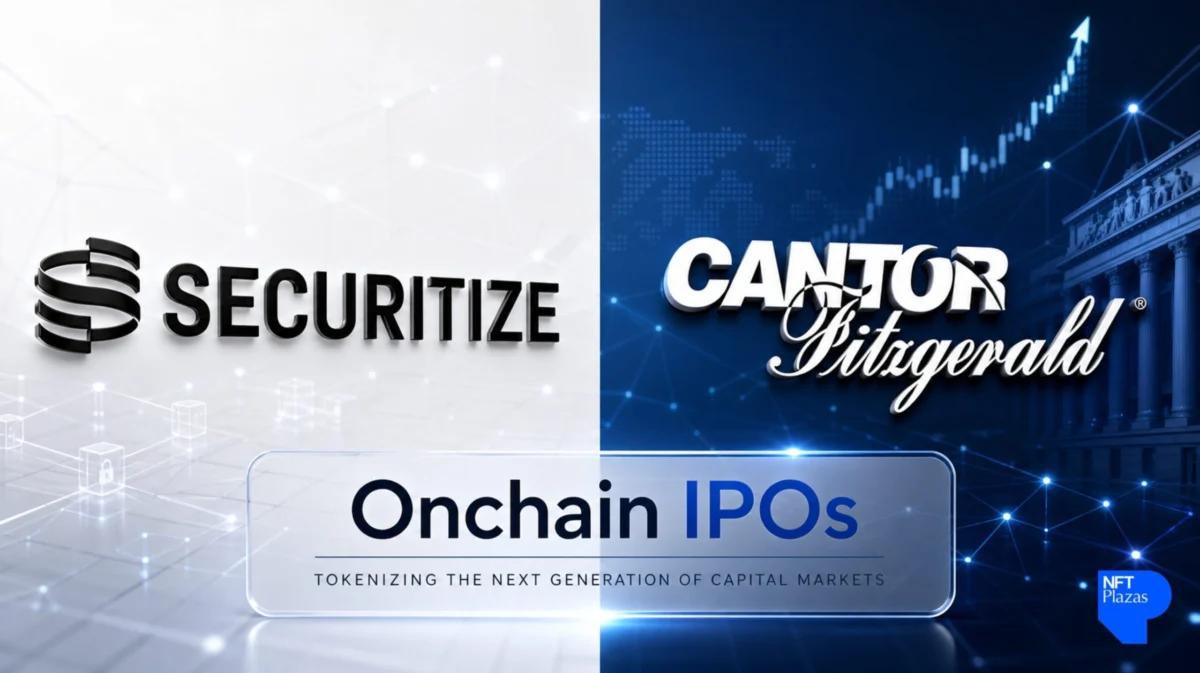
In a landmark announcement on July 15, financial services giant Cantor Fitzgerald and leading digital asset securities firm Securitize unveiled a strategic partnership aimed at revolutionizing the primary capital-raising process for public companies. This collaboration seeks to integrate Initial Public Offerings (IPOs) and follow-on offerings directly onto blockchain infrastructure, marking a significant leap in expanding tokenization beyond secondary market trading into the foundational mechanisms of traditional capital markets. The initiative represents a concerted effort to meld the established regulatory frameworks and market expertise of Wall Street with the efficiency and transparency promised by distributed ledger technology (DLT).
A New Horizon for Equity Capital Markets
The alliance positions Cantor Fitzgerald, a firm with a storied history spanning over 75 years in global financial services, at the forefront of innovation within equity capital markets (ECM). By partnering with Securitize, a pioneer in the tokenized assets sector, Cantor is attempting to forge a new, more digitized path for how public companies access capital. The announced model, while operating firmly within the existing regulatory and structural framework of traditional capital markets, leverages tokenization to streamline the issuance, distribution, and management of securities.
This move is particularly impactful for IPOs, which lie at the very core of ECM. Historically, the primary capital-raising process has been characterized by multiple layers of intermediaries, intricate manual post-trade verification processes, and often protracted settlement times. These inherent inefficiencies contribute to higher costs, reduced transparency, and limited accessibility for certain investor segments. Cantor Fitzgerald’s foray into on-chain IPOs signals a strategic intent to transition its extensive ECM and trading capabilities onto a new, more agile infrastructure layer. For Securitize, the partnership represents an unparalleled opportunity to embed its tokenization technology deeper into public securities issuance, validating its vision for a more efficient and interconnected financial ecosystem.
The Operational Blueprint: How On-Chain Offerings Would Function
Under the terms of the collaboration, a clear division of responsibilities has been established to ensure a robust and compliant operational framework. Cantor Fitzgerald will leverage its deep expertise in market structure and distribution, bringing its extensive network of institutional and retail investors to the table. Securitize, conversely, will provide the crucial technological backbone—the blockchain infrastructure—for issuing, distributing, and servicing the tokenized securities.
It is critical to understand that this model does not aim to dismantle or replace the entire IPO process. Instead, the blockchain serves as an underlying infrastructure layer, primarily for the recording, transfer, and management of ownership rights. Investors will continue to participate in offerings adhering to the established logic and regulatory requirements of traditional capital markets, including due diligence, prospectus review, and allocation processes. The fundamental shift occurs at the asset representation level, where the securities are represented as digital tokens on the blockchain.
Securitize has emphatically underscored that the implementation will remain within an "established capital markets framework." This commitment is paramount, signifying that the new system must adhere to all existing requirements concerning offerings, custody, settlement, and transaction oversight mandated by regulatory bodies like the U.S. Securities and Exchange Commission (SEC). The deliberate inclusion of Securitize Markets, LLC, an SEC-registered broker-dealer, within this operational structure further reinforces the model’s design for full compliance with the existing regulatory system. The innovation lies not in bypassing securities regulations but in digitizing the infrastructure to enhance efficiency and transparency within those very regulations. This hybrid approach aims to harness the benefits of DLT without sacrificing investor protection or market integrity.
Securitize’s Ascendancy in Tokenized Assets
Founded in 2017, Securitize has meticulously carved out a distinct and influential position within the nascent yet rapidly expanding tokenized assets sector. The company’s growth trajectory underscores the increasing institutional confidence in digital securities. As of July 2026, Securitize proudly reports managing over $5 billion in assets, with more than $4 billion in assets having been tokenized through its platform. These figures not only highlight its operational scale but also its proven capability in handling substantial asset volumes.
One of Securitize’s most prominent and market-watched products is BlackRock’s BUIDL, a tokenized treasury fund. Launched earlier in the year, BUIDL quickly garnered significant attention from institutional investors, demonstrating a tangible demand for tokenized versions of traditional financial instruments. Its success has been a bellwether for the broader acceptance of tokenized funds, proving that digital asset frameworks can be successfully applied to highly liquid and regulated assets. The fund’s rapid growth and the high-profile involvement of BlackRock, the world’s largest asset manager, have significantly bolstered Securitize’s reputation as a reliable and compliant technology provider in the digital asset space.
Further solidifying its market standing, Securitize recently became a publicly traded company under the ticker SECZ, following a successful SPAC merger deal that notably involved Cantor Fitzgerald. This transaction reportedly valued Securitize at approximately $1.25 billion, a testament to the market’s belief in its growth potential. The announcement of the partnership with Cantor Fitzgerald saw Securitize shares rise, indicating that investors view this agreement as a significant expansion narrative for the company, rather than merely a promotional event. This positive market reaction underscores the perceived strategic value of the collaboration and the increasing mainstream acceptance of tokenization as a viable financial technology.
Wall Street’s Accelerating Embrace of Tokenization
The Cantor-Securitize agreement arrives at a pivotal juncture, coinciding with a broad-scale acceleration in tokenization testing and adoption across Wall Street. Major financial institutions are no longer merely observing; they are actively investing in and piloting distributed ledger technology. A recent report by The Wall Street Journal highlighted a significant trial initiated by the Depository Trust & Clearing Corporation (DTCC) to tokenize stocks and Treasury bonds. This trial involves nearly 40 participating institutions, a veritable who’s who of global finance, including titans like JPMorgan, Goldman Sachs, BlackRock, Vanguard, and the New York Stock Exchange (NYSE).
The collective participation of such prominent names signals a critical shift: tokenization is transitioning from an experimental, often niche, topic to a recognized and strategic direction for upgrading core financial infrastructure. The motivations behind Wall Street’s growing interest are manifold and pragmatic. Traditional issuance and trading processes are notoriously complex, involving numerous intermediary layers for clearing, settlement, and record-keeping. This multi-layered structure creates significant friction, leading to delays, increased operational costs, and reduced transparency in ownership registration, settlement, and distribution.
Tokenization offers a compelling solution to these deeply ingrained inefficiencies. By representing assets on a blockchain, financial institutions aim to:
- Reduce Frictions: Streamline processes by removing or minimizing redundant intermediaries.
- Increase Tracking Capabilities: Provide immutable and transparent records of ownership and transactions.
- Enhance Efficiency: Accelerate settlement times from days to potentially minutes or seconds.
- Expand Distribution Reach: Facilitate fractional ownership, potentially opening up investment opportunities to a broader base of investors.
- Lower Costs: Reduce operational expenses associated with manual processing and reconciliation.
Crucially, these benefits are sought while remaining strictly within existing regulatory frameworks, ensuring that innovation does not compromise market stability or investor protection. Other notable initiatives further illustrate this trend, such as J.P. Morgan’s Onyx platform, which has facilitated billions in blockchain-based transactions, and Goldman Sachs’ GS DAP, a proprietary platform for digital asset issuance. These endeavors collectively underscore a systemic move towards leveraging DLT for improved operational resilience and competitive advantage.
Anticipating the Next Steps: Challenges and Opportunities
While the partnership between Cantor Fitzgerald and Securitize represents a monumental step, its true impact will only be fully realized once a first issuer actually utilizes this novel mechanism for an on-chain IPO or follow-on offering. The current agreement lays the foundational pathway; the practical implications and widespread adoption hinge on successful execution and market acceptance.
Several critical operational details will determine the ultimate scalability and reach of this model. These include, but are not limited to, the handling of voting rights for tokenized shares, the distribution of dividends, the enforcement of transfer restrictions (if any), and the finality of settlement. Each of these elements must be meticulously designed and proven to function seamlessly within a hybrid traditional and blockchain environment to instill confidence among issuers and investors.
A key point of observation will be the initial rollout strategy. Will on-chain offerings commence with less complex follow-on offerings, serving as a proving ground for the technology and process? Or will the partners directly tackle the more intricate primary IPOs? If follow-on offerings prove effective and gain traction, they could serve as a vital stepping stone, building momentum and demonstrating the model’s viability for larger, more complex deals in the future. This phased approach could mitigate risks and allow for iterative improvements based on real-world application.
Furthermore, the broader market’s readiness and regulatory evolution will play a significant role. While the U.S. regulatory landscape is gradually adapting to DLT, clearer guidelines and harmonized rules across jurisdictions would further accelerate adoption. Investor education will also be paramount to ensure a clear understanding of tokenized securities and the underlying blockchain infrastructure.
The Cantor-Securitize partnership is more than just a collaboration; it’s a bold declaration of intent to redefine the mechanics of capital formation. By combining deep financial market expertise with cutting-edge blockchain technology, these firms are not just participating in the future of finance—they are actively building it. The success of this venture could well usher in a new era of efficiency, transparency, and accessibility for global equity capital markets, setting a precedent for how public companies will raise capital in the decades to come. The financial world watches with keen interest as this innovative chapter unfolds.