admin
admin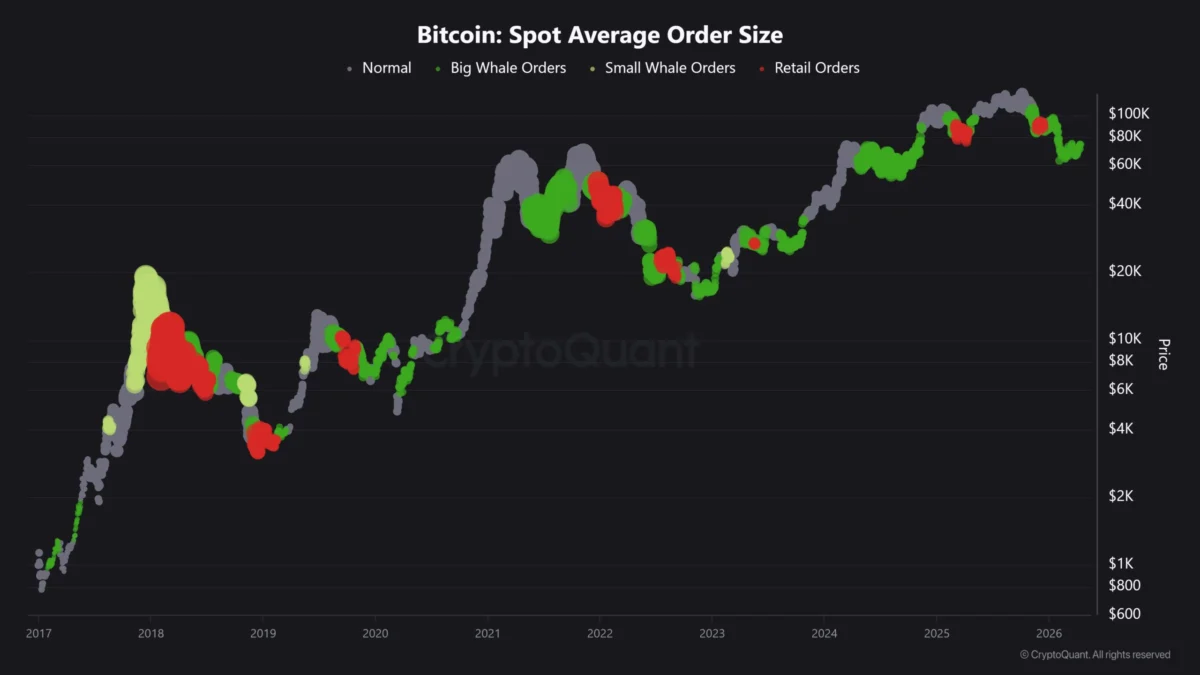
Bitcoin (BTC), the world’s leading cryptocurrency, appears firmly positioned to ascend towards the $90,000 mark in the coming weeks, driven by a confluence of robust on-chain accumulation from large institutional holders and a definitive technical breakout from a key chart pattern. Recent data indicates that "whales," entities possessing substantial Bitcoin holdings, have been amassing approximately 20 times the cryptocurrency’s daily new supply over the past several weeks, a purchasing frenzy not witnessed in over a decade. This aggressive accumulation, coupled with a bullish technical setup, paints a compelling picture for the digital asset’s near-term trajectory amidst a cautiously optimistic broader market sentiment.
Whale Resurgence: A Decade-High Accumulation Spree Fuels Optimism
The primary catalyst underpinning Bitcoin’s anticipated rally is the extraordinary pace of accumulation by large-scale investors, colloquially known as "whales" within the cryptocurrency ecosystem. These entities, defined as wallets holding over 1,000 BTC, have collectively added roughly 270,000 coins to their portfolios over the last 30 days. This staggering acquisition represents their most significant buying spree since 2013, according to comprehensive on-chain analytics provided by CryptoQuant. The sheer volume of this accumulation is particularly noteworthy, dwarfing the daily issuance of new Bitcoin by a factor of 20. With Bitcoin’s block reward currently at 6.25 BTC per block, and blocks mined approximately every 10 minutes, the daily new supply hovers around 900 BTC. The absorption of 270,000 BTC in a month by whales therefore signifies an immense demand pressure relative to the available fresh supply, creating a substantial supply shock that historically precedes significant price appreciation.
The year 2013 holds particular significance as a benchmark, representing an early, pivotal phase in Bitcoin’s history when it experienced its first major parabolic bull run. During that period, Bitcoin surged from relatively obscure valuations to break above $1,000 for the first time, attracting nascent institutional interest and laying the groundwork for its future market presence. The current accumulation mirroring that historic period underscores a deep conviction among sophisticated investors regarding Bitcoin’s long-term value and immediate upside potential. This renewed appetite from whales suggests a strong belief that current price levels represent an attractive entry point, despite Bitcoin having recently set new all-time highs. Their movements are often seen as leading indicators, given their ability to influence market liquidity and sentiment with their substantial capital.
Institutional Titans Enter the Fray: MicroStrategy and Spot ETFs

A significant portion of this whale accumulation can be attributed to the continued strategic acquisitions by publicly traded companies and the growing influence of spot Bitcoin Exchange-Traded Funds (ETFs) in the United States. MicroStrategy, the business intelligence firm spearheaded by Bitcoin maximalist Michael Saylor, remains a prominent corporate player in the Bitcoin space. The company’s recent filings revealed a substantial purchase of approximately 42,166 BTC between March and April, which alone accounts for roughly 16% of the 270,000 BTC accumulated by whale wallets during the same period. MicroStrategy’s unwavering strategy of continuously adding Bitcoin to its corporate treasury has positioned it as one of the largest corporate holders of the digital asset, sending a strong signal of institutional confidence to the broader market. Its actions provide a blueprint for other corporations considering Bitcoin as a treasury reserve asset, further legitimizing its role in traditional finance.
Concurrently, US-based spot Bitcoin ETFs have continued to attract capital, recording over $200 million in net inflows during this recent accumulation stretch. While these inflows are crucial for broadening access to Bitcoin for mainstream investors through regulated financial products, they remain modest when compared to the initial phases of the ETF launch cycle earlier in the year. The initial weeks following the January 2024 launch of these spot ETFs saw unprecedented inflows, with BlackRock’s IBIT and Fidelity’s FBTC quickly accumulating billions of dollars in assets under management. The subsequent moderation in inflows, as highlighted by data from Glassnode, suggests a cautious re-engagement by Wall Street traders. This could be indicative of a period of consolidation, where traditional finance players are observing market dynamics, recalibrating strategies, and waiting for clearer macroeconomic signals before committing larger tranches of capital. Despite this measured approach, the sustained positive inflows underscore a foundational institutional demand for Bitcoin exposure, a stark contrast to previous cycles where retail interest often drove price action in isolation. The Grayscale Bitcoin Trust (GBTC) has also seen its significant outflows, which initially offset some of the new ETF inflows, begin to stabilize, further contributing to a net positive sentiment for the asset class.
Navigating Volatility: Geopolitics and Macroeconomics Influence Risk Appetite
The impressive whale accumulation and institutional interest have transpired against a backdrop of considerable market volatility. Bitcoin experienced a roughly 15% drawdown in recent weeks, characterized by sharp price swings that tested investor resilience. This period of correction was largely influenced by profit-taking after hitting new all-time highs, coupled with geopolitical tensions that heightened risk aversion across global markets. However, the cryptocurrency demonstrated remarkable resilience, fully recovering those losses in a relatively short period. A key factor in this rebound was the easing of US-Iran tensions, which helped to restore broader risk appetite among investors. Geopolitical stability often translates into increased confidence in risk assets, including cryptocurrencies, as capital flows back into higher-yield opportunities.
Beyond immediate geopolitical events, the broader macroeconomic landscape plays a critical role in shaping Bitcoin’s trajectory. Nic Puckrin, a renowned crypto analyst and founder of Coin Bureau, articulated several macro conditions that could propel Bitcoin towards the $90,000 target. He posited that a sustained US-Iran ceasefire, leading to a de-escalation of regional conflicts, would be crucial. Furthermore, a decline in oil prices towards the $80 per barrel mark would alleviate inflationary pressures, a significant concern for central banks globally. Lastly, softer economic data from major economies, particularly the United States, could encourage central banks, notably the Federal Reserve, to adopt a more dovish monetary policy stance, potentially including interest rate cuts. Such a scenario would typically be bullish for risk assets like Bitcoin, as lower interest rates reduce the appeal of traditional safe-haven assets and make borrowing cheaper, stimulating investment. The easing of "stagflation fears"—a portmanteau describing a period of high inflation combined with economic stagnation—is paramount for sustained market rallies. If these macroeconomic conditions align, the path for Bitcoin to reach and potentially surpass the $90,000 level becomes significantly clearer.
Technical Roadmap: The Symmetrical Triangle Breakout Signals Upside

From a technical analysis perspective, Bitcoin has recently entered the decisive breakout stage of its prevailing symmetrical triangle pattern. This chart pattern, formed by converging trendlines that connect a series of lower highs and higher lows, typically indicates a period of price consolidation where supply and demand forces are nearing equilibrium. Symmetrical triangles are considered neutral patterns, meaning they can break out in either direction, regardless of the prior trend. However, once a breakout occurs, the resulting price movement often matches the maximum height of the triangle formation, providing a "measured target" for traders.
In Bitcoin’s current scenario, the price has broken decisively to the upside, piercing above the upper trendline of the symmetrical triangle. This bullish breakout opens the door for a potential rally towards a measured target near $92,220, with technical analysts projecting this move to materialize potentially by April or May. This target is derived by taking the vertical distance from the highest point to the lowest point within the triangle and projecting it from the breakout point.
A critical hurdle for Bitcoin to overcome to solidify this upward trajectory and confidently reach the triangle’s target is a decisive break above its 200-day exponential moving average (200-day EMA). This long-term trend indicator, currently positioned around $83,000, has historically served as a significant resistance level. In January, for instance, the 200-day EMA proved instrumental in limiting Bitcoin’s previous attempts at an upside breakout, acting as a ceiling for price action. A clear and sustained breach above this EMA would confirm robust bullish momentum, signaling that long-term investors are re-entering the market with conviction and that the path of least resistance is to the upside. Furthermore, the volume accompanying this breakout will be crucial; higher trading volume during the breakout would lend more credibility to the move, suggesting strong institutional and retail participation.
The Halving’s Shadow: A Fundamental Catalyst for Long-Term Growth
While not explicitly detailed in the immediate technical and on-chain analysis, the impending Bitcoin Halving event serves as a foundational catalyst that underpins much of the current bullish sentiment and supply dynamics. The Bitcoin Halving, a pre-programmed event occurring approximately every four years, reduces the reward for mining new blocks by 50%. This mechanism is designed to control Bitcoin’s supply, ensuring its scarcity and predictable emission schedule. The next halving, expected in April 2024, will cut the block reward from 6.25 BTC to 3.125 BTC.
Historically, Bitcoin halvings have preceded significant bull markets, as the reduction in new supply creates a supply shock that, when met with sustained or increasing demand, leads to price appreciation. This fundamental supply constraint synergizes powerfully with the current whale accumulation trend. With large entities absorbing a disproportionate amount of the existing supply, and the rate of new supply creation about to be halved, the market faces an unprecedented supply squeeze. This fundamental shift in supply-demand dynamics provides a robust long-term backdrop for Bitcoin’s price, validating the aggressive accumulation seen from whales and institutions. The halving is often seen as the primary driver of Bitcoin’s four-year market cycles, and its proximity further reinforces the expectation of continued upward momentum beyond the immediate $90,000 target.

Broader Market Implications and Future Outlook
The implications of Bitcoin’s potential surge to $90,000 extend beyond mere price action, signaling a maturing market and increasing integration with traditional finance. The sustained institutional interest, evident in both corporate treasury strategies and spot ETF inflows, suggests a growing acceptance of Bitcoin as a legitimate asset class. This institutional embrace is likely to pave the way for broader market participation, eventually drawing in more retail investors who often follow the lead of smart money.
However, the path forward is not without potential challenges. While the current outlook is largely optimistic, macroeconomic headwinds, such as persistent inflation or a deeper-than-expected economic slowdown, could temper risk appetite. Regulatory developments also remain a crucial factor; while the approval of spot ETFs in the US was a significant step, evolving global regulatory frameworks could introduce new complexities. Nevertheless, the underlying narrative of Bitcoin as a digital store of value, a hedge against inflation, and a decentralized alternative to traditional financial systems continues to strengthen. Should Bitcoin successfully breach the $90,000 level, the psychological barrier of $100,000 would likely become the next major target, opening discussions about its potential as a multi-trillion-dollar asset class. The confluence of a powerful supply squeeze from whale accumulation, a bullish technical breakout, and a favorable macroeconomic and halving backdrop suggests that Bitcoin is entering a potentially transformative phase in its market cycle.
This article is produced in accordance with Cointelegraph’s Editorial Policy and is intended for informational purposes only. It does not constitute investment advice or recommendations. All investments and trades carry risk; readers are encouraged to conduct independent research before making any decisions. Cointelegraph makes no guarantees regarding the accuracy or completeness of the information presented, including forward-looking statements, and will not be liable for any loss or damage arising from reliance on this content.