admin
admin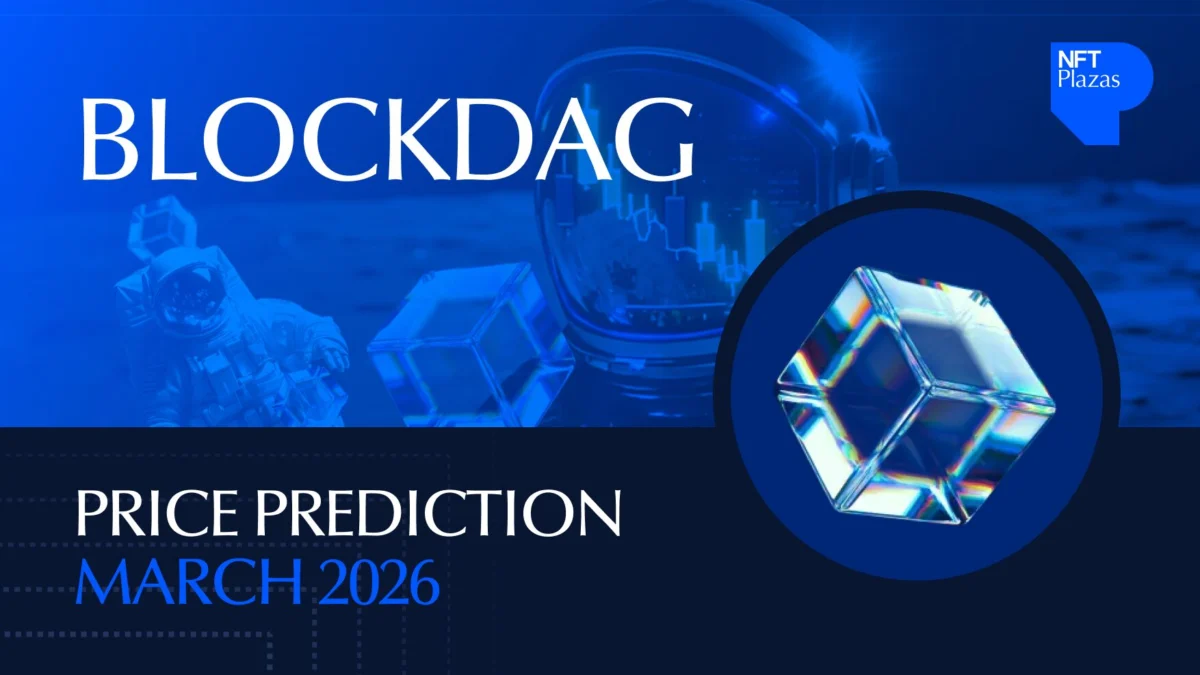
The nascent cryptocurrency BlockDAG (BDAG) is currently trading at $0.054277 per BDAG/USD, reflecting a dynamic yet cautious market sentiment, particularly as analysts begin to cast their gaze towards its potential performance in March 2026. This forward-looking assessment arrives amidst a period characterized by moderate trading activity, with a reported 24-hour volume of $153,389.12 USD, and notably, an absence of a reported market capitalization due to its current circulating supply being zero. This unique characteristic positions BlockDAG as an intriguing, albeit high-risk, proposition within the ever-evolving digital asset landscape, sparking discussions among both retail participants and institutional observers regarding its intrinsic value and future trajectory.
Current Market Snapshot and Immediate Outlook
As of the latest available data, BlockDAG registers a slight dip of -4.36%, a common fluctuation for emerging digital assets. Despite this immediate contraction, the broader sentiment appears to lean towards a gradual upward trend in the very near term. Forecasts for the immediate future suggest a modest appreciation, with the price potentially reaching $0.054500 tomorrow, followed by a climb to $0.054750 over the next few days, and an anticipated $0.055100 by the end of the next week. These incremental gains, while seemingly minor, are indicative of a project that is maintaining interest and attracting consistent, albeit modest, capital flows, even without a significant public token distribution. The absence of a circulating supply implies that the current trading activity might be occurring on secondary or grey markets, or through specific pre-sale tranches, rather than on fully liquid, open exchanges, underscoring the early-stage nature of the project.
Projected Performance for March 2026: A Detailed Forecast
Looking further ahead to March 2026, BlockDAG is projected to establish a relatively stable trading range. Expert analysis points to an average price of approximately $0.054900 for the month. This forecast suggests a period of consolidation, where the asset’s value may fluctuate within defined boundaries rather than experiencing volatile swings. The detailed projections for March 2026 outline a minimum price of $0.053800, an average price of $0.054900, and a potential maximum price of $0.056200. This relatively tight range, when viewed against the backdrop of the typically volatile cryptocurrency market, implies that by March 2026, BlockDAG may have achieved a certain level of market acceptance or reached a developmental milestone that stabilizes its perceived value.
The significance of these predictions extends beyond mere numerical values; they paint a picture of a project potentially transitioning from an early-stage speculative asset to one with a more defined market presence. A stable trading range often indicates that initial hype or fear has subsided, allowing the asset’s fundamental value proposition and development progress to dictate its price more consistently. For investors, this could signify a period of reduced short-term trading opportunities but increased predictability for longer-term holders.
Driving Factors for BlockDAG’s Price Evolution by March 2026
The trajectory of BlockDAG’s price towards March 2026 will undoubtedly be influenced by a confluence of internal project developments and broader external market forces. Given the current status of having zero circulating supply and no reported market cap, the project’s journey to a stable trading range will hinge heavily on several critical factors:
-
Technological Advancements and Mainnet Launch: The most pivotal factor will be the successful development and deployment of BlockDAG’s core technology. As a Directed Acyclic Graph (DAG) based system, BlockDAG aims to address scalability, speed, and transaction cost issues inherent in traditional blockchain architectures. A successful mainnet launch, ideally with robust security audits and demonstrable network performance metrics (e.g., transactions per second, finality), would significantly de-risk the project. Milestones such as the release of a stable testnet, developer tools, and a clear roadmap execution will be crucial in building investor confidence. The transition from a theoretical concept to a functional, live network is paramount for any new cryptocurrency project, especially one aiming for widespread adoption.
-
Ecosystem Development and Partnerships: The long-term viability of BlockDAG will depend on the growth of its ecosystem. This includes attracting developers to build decentralized applications (dApps) on its platform, fostering a vibrant community, and forging strategic partnerships with other blockchain projects, enterprises, or Web2 companies looking to integrate Web3 solutions. Announcements of significant partnerships, particularly those that demonstrate real-world utility or increase network usage, could act as powerful catalysts for price appreciation. Furthermore, the establishment of bridges to other major blockchain networks (e.g., Ethereum, Binance Smart Chain) could enhance interoperability and expand BlockDAG’s reach.
-
Tokenomics and Distribution Model: The current "zero circulating supply" status implies that the token distribution model will be a major determinant of future price. How BDAG tokens are distributed—whether through initial coin offerings (ICOs), presales, staking rewards, mining incentives, or airdrops—will impact market dynamics. A well-structured tokenomics model that encourages long-term holding, provides utility, and avoids excessive inflation or concentration of supply can contribute significantly to price stability and growth. The eventual release of circulating supply, coupled with clear vesting schedules, will be closely watched by the market.

-
Broader Cryptocurrency Market Conditions: BlockDAG, like all altcoins, operates within the larger cryptocurrency ecosystem. A general bull market, often led by Bitcoin (BTC) and Ethereum (ETH), typically creates a rising tide that lifts most altcoins. Conversely, a bear market or a period of significant market contraction could exert downward pressure on BDAG, regardless of its internal developments. Macroeconomic factors such as global interest rates, inflation, geopolitical stability, and the overall appetite for risk assets also play a substantial role in shaping investor sentiment towards cryptocurrencies. By March 2026, the prevailing market cycle will heavily influence BlockDAG’s ability to maintain its projected stability.
-
Regulatory Environment: The evolving regulatory landscape for cryptocurrencies across major jurisdictions could significantly impact BlockDAG’s adoption and valuation. Favorable regulations that provide clarity, reduce uncertainty, and encourage innovation could spur institutional investment and broader public acceptance. Conversely, restrictive or ambiguous regulations could hinder growth and deter potential investors. As a new project, BlockDAG will need to demonstrate compliance and adapt to regulatory changes effectively.
Chronology of Anticipated Developments Leading to March 2026
To understand the projected stability in March 2026, one can infer a hypothetical timeline of events and market dynamics:
- Present (Early 202X – The article implies early 2026 for the prediction, but the current data refers to a time before that): BlockDAG is in an early developmental or pre-launch phase, characterized by presales or private funding rounds. The "zero circulating supply" points to this. Trading activity is limited, likely on OTC desks or specific early-investor platforms. Market participants are primarily early adopters and high-risk speculative investors attracted by the potential for significant returns. The project focuses on core technology development and initial community building.
- Mid-202X to Late 202X: The project likely progresses through key developmental milestones. This might include the release of a technical whitepaper update, a public testnet, auditor reports on code security, and perhaps initial rounds of public token offerings (e.g., an IEO or IDO) that gradually introduce some circulating supply. Marketing efforts intensify, aiming to attract developers and early users. Partnerships might begin to form, laying the groundwork for ecosystem expansion.
- Early 2026: Leading up to March 2026, BlockDAG would ideally have achieved a significant milestone, such as a successful mainnet launch or the deployment of critical infrastructure components. This period would see increased scrutiny from analysts and a broader investor base. The market begins to assess the project’s real-world utility and adoption metrics. The initial volatility associated with a new launch might start to subside as the project demonstrates operational stability and executes on its roadmap. The modest upward price forecast for the immediate future suggests a positive reception to these early 2026 developments.
- March 2026: By this time, the market has had several months to evaluate BlockDAG’s post-launch performance. The projected stable trading range implies that the initial speculative frenzy has given way to a more mature assessment of its fundamentals. The circulating supply, while no longer zero, would likely still be managed to prevent excessive dilution, contributing to price stability. Trading volumes would have likely increased, reflecting broader market participation, but perhaps without the extreme swings seen in highly speculative assets.
Is BlockDAG a Good Investment Right Now? A Risk-Reward Analysis
The question of whether BlockDAG represents a sound investment currently is complex and hinges significantly on an investor’s risk tolerance and investment horizon. At its current price of $0.054277, BlockDAG appears to be an affordable entry point for retail investors. However, the critical caveat of "no reported market cap due to its circulating supply being 0" cannot be overstated. This indicates that BlockDAG is in a very early stage of its lifecycle, likely undergoing presales or private funding rounds before a full public launch or mainnet activation.
Implications of Zero Circulating Supply:
- High Risk, High Reward: Projects with zero circulating supply are inherently high-risk ventures. There is no established market depth, liquidity, or public price discovery based on supply and demand. The entire future value proposition rests on the successful execution of the project’s roadmap, technological innovation, and subsequent market adoption. However, for those willing to embrace this elevated risk, the potential for substantial returns if the project succeeds can be significant, as early entry typically offers the lowest price points.
- Limited Transparency: Without a circulating supply, transparency regarding token distribution, lock-up periods, and the project’s treasury management can be limited. Investors must rely heavily on the project’s whitepaper, team credibility, and stated intentions.
- Liquidity Concerns: When tokens eventually enter circulation, initial liquidity may be low, leading to high price volatility. This can make it challenging for investors to enter or exit positions without significantly impacting the price.
Considerations for Potential Investors:
- Thorough Due Diligence: Prospective investors must conduct exhaustive research beyond price predictions. This includes scrutinizing the BlockDAG whitepaper, understanding its underlying technology (DAGs), evaluating the experience and track record of the development team, assessing the project’s use cases and competitive advantages, and examining any available audit reports for security.
- Market Trends Monitoring: Closely monitoring overall cryptocurrency market trends, especially sentiment towards new Layer 1 or DAG-based protocols, is crucial. Broader market health significantly impacts the performance of emerging altcoins.
- Understanding Tokenomics: A detailed understanding of BlockDAG’s tokenomics—total supply, emission schedule, vesting periods for team/advisors/investors, and utility within the ecosystem—is vital for assessing long-term value.
- Capital Allocation: Given the high-risk profile, investors should only allocate capital they can afford to lose. Diversification across a portfolio of digital assets is a prudent strategy.
Broader Impact and Implications
The emergence of projects like BlockDAG, utilizing DAG technology, signifies a continued push within the blockchain space towards addressing core challenges of scalability, decentralization, and security. If BlockDAG successfully executes its vision and achieves the projected stability by March 2026, it could have several broader implications:
- Validation of DAG Technology: A successful BlockDAG could further validate the utility and efficiency of DAG architectures as viable alternatives or complements to traditional blockchain. This could spur more innovation and investment in DAG-based projects, expanding the technological diversity of the crypto landscape.
- Increased Competition in Layer 1s: The space for high-performance Layer 1 protocols is highly competitive. BlockDAG’s potential stability and growth would intensify this competition, pushing existing platforms to innovate further and potentially driving down transaction costs across the board.
- New Use Cases: If BlockDAG delivers on its promises of speed and low transaction costs, it could enable new categories of decentralized applications that require high throughput, such as real-time gaming, micro-transactions for IoT devices, or highly scalable DeFi protocols.
- Investor Confidence in Early-Stage Projects: A successful trajectory for BlockDAG could bolster investor confidence in early-stage, high-risk ventures within the crypto space, potentially attracting more venture capital and retail investment into innovative, foundational technologies.
In conclusion, BlockDAG presents an intriguing opportunity, poised for potential stability in March 2026 if its developmental milestones align with market expectations. However, its current status as a project with no reported market cap and zero circulating supply necessitates a cautious and highly informed investment approach. The journey to a projected stable trading range will be paved with technological execution, strategic partnerships, effective tokenomics, and favorable market conditions, making BlockDAG a compelling case study for the evolving dynamics of the decentralized finance landscape.