admin
admin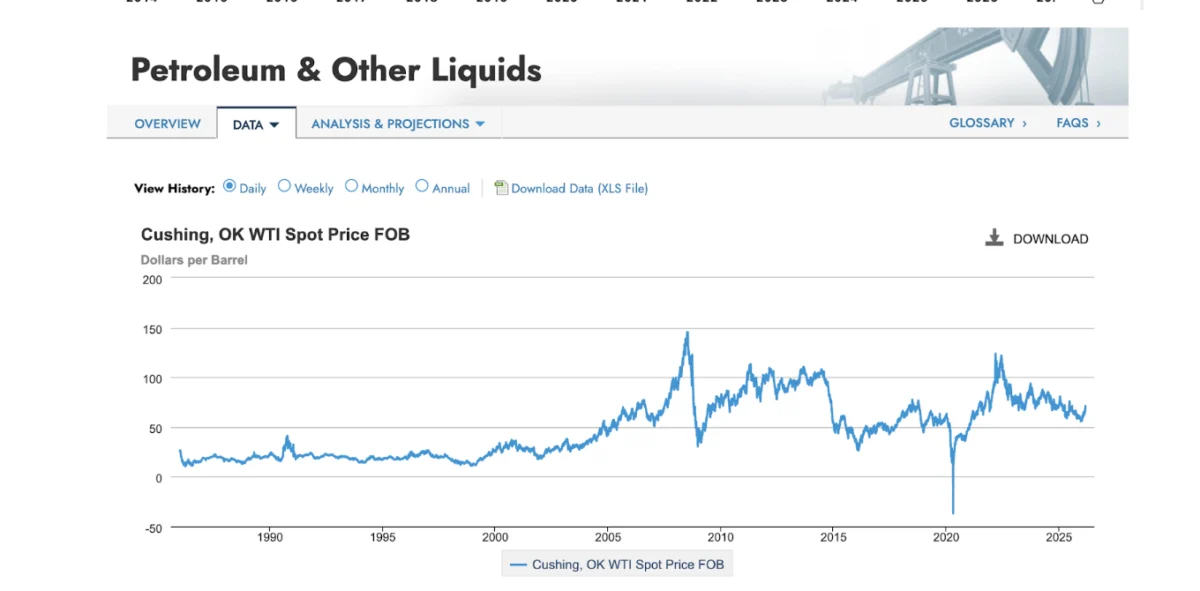
The tug of war in the global energy market might seem worlds apart from Bitcoin’s digital ledger, yet a nuanced examination of macroeconomic forces reveals an undeniable, albeit indirect, connection. In an increasingly interconnected financial landscape, oil price volatility is acting as a significant "gatekeeper" for capital flows into risk-on assets. Recent data analysis and expert consensus suggest a compelling narrative: once the tumultuous oil market finds its much-needed equilibrium, Bitcoin (BTC) could be poised for an explosive wave of growth, cementing its role as a premier beneficiary of returning global liquidity. This comprehensive overview aims to unravel how the dynamics of "black gold" are intricately, though indirectly, shaping the future trajectory of "digital gold."
The intricate relationship between crude oil prices and the broader financial markets, including the burgeoning cryptocurrency sector, is far more profound than surface-level observations might suggest. Oil, as the primary energy source powering global commerce, directly influences inflation, which in turn dictates central bank monetary policy. When oil prices surge or remain highly volatile, the ripple effects are felt across all sectors, from manufacturing and transportation to consumer spending and investor confidence. This creates an environment of economic uncertainty, prompting central banks to adopt hawkish stances, primarily through interest rate hikes, to combat inflationary pressures. Such policies inevitably drain liquidity from the system, making investors shy away from higher-risk assets in favor of safer havens or fixed-income instruments. Bitcoin, despite its growing maturity, still largely operates within the "risk-on" asset category for institutional investors, making it susceptible to these broader macroeconomic currents.
The Intimate Link Between Oil, Inflation, and Monetary Policy
To fully grasp why oil prices exert such a significant influence on Bitcoin’s prospects, one must first comprehend its foundational role in the global economy and its subsequent impact on inflation. Oil is not merely a commodity; it is the lifeblood of modern industrial and commercial activity. It dictates the cost of transportation for goods and people, fuels manufacturing processes, and significantly impacts agricultural production. Consequently, fluctuations in crude oil prices are almost immediately reflected in consumer price indices (CPI) worldwide.
When oil prices climb, production costs for businesses rise, which are then passed on to consumers in the form of higher prices for goods and services. This fuels inflation, eroding purchasing power and creating economic instability. Central banks, tasked with maintaining price stability, typically respond to persistent inflationary pressures by implementing tighter monetary policies. This involves raising benchmark interest rates, which increases borrowing costs for businesses and consumers, thereby slowing economic activity and curbing demand. While essential for controlling inflation, such measures also reduce the overall liquidity in the financial system.
Conversely, when oil prices stabilize, or even decline, inflationary pressures tend to cool down. A predictable and stable CPI allows central banks to consider a shift towards monetary easing. This policy pivot, characterized by lower interest rates and potentially other liquidity-injecting measures like quantitative easing, pumps capital back into the market. In such an environment, investors become more willing to allocate funds to "risk-on" assets that offer higher yield potential, such as equities, emerging market bonds, and increasingly, cryptocurrencies like Bitcoin. The narrative here is clear: stable oil prices pave the way for a more accommodative monetary environment, which in turn acts as a powerful catalyst for capital inflows into digital assets.

Historical Data and Liquidity Expectations: Lessons from 2022-2024
Looking back at recent economic cycles provides compelling evidence of this correlation. The period following the initial shock of 2022 serves as a prime example. The year 2022 witnessed unprecedented volatility in energy markets, largely triggered by geopolitical conflicts, particularly the Russia-Ukraine war, coupled with lingering supply chain disruptions from the pandemic and a sudden surge in post-lockdown demand. Brent crude oil prices soared past $120 per barrel in March 2022, while WTI crude also experienced extreme swings. This energy crisis sent global inflation rates skyrocketing, forcing central banks worldwide, led by the U.S. Federal Reserve, to embark on an aggressive series of interest rate hikes. This period saw a significant outflow of capital from risk assets, and Bitcoin, along with the broader crypto market, experienced a substantial downturn, often referred to as a "crypto winter."
However, as the global energy landscape gradually adjusted through 2023 and into 2024, oil prices began to find a more stable footing. WTI crude, for instance, largely consolidated within the $70-80 per barrel range after the initial volatility subsided. This stabilization was a critical factor in easing inflationary pressures across major economies. As inflation cooled and central banks signaled a potential pause or even reversal in their hawkish policies, the financial markets responded.
During this specific 2023-2024 window of oil market stabilization, the crypto market witnessed a remarkable return of capital inflows. This was particularly evident with the advent and overwhelming success of Spot Bitcoin Exchange-Traded Funds (ETFs) in the United States, which launched in early 2024. These ETFs provided a regulated and accessible avenue for institutional investors to gain exposure to Bitcoin, attracting billions in fresh capital. According to analytics from CoinShares, crypto investment products saw cumulative inflows exceeding $10 billion in the first quarter of 2024 alone, a stark contrast to the outflows experienced in 2022. This surge directly coincided with a period where the global oil market exhibited greater predictability, signaling to institutional players that the worst of the inflationary storm might be behind us, and that monetary policy could soon turn more favorable for growth assets.
Economists like Dr. Anya Sharma, lead market strategist at Zenith Financial Group, noted in her Q4 2024 report, "The narrative shift from ‘inflationary spiral’ to ‘disinflationary trend’ was inextricably linked to the normalization of crude oil benchmarks. This provided the necessary psychological and fundamental groundwork for central banks to contemplate easing, which in turn unlocked a torrent of institutional capital seeking higher returns in burgeoning sectors like digital assets." This historical precedent strongly supports the thesis that sustained oil market stability is a precursor to significant liquidity injection into Bitcoin and the wider crypto ecosystem.
The Current Landscape (March 2026): Drivers of Volatility
As of March 2026, the global oil market once again finds itself in a state of elevated volatility, albeit driven by a new confluence of factors. Geopolitical tensions, particularly those escalating in the Middle East and Eastern Europe, continue to pose significant risks to global supply chains and energy production. Attacks on shipping routes, disruptions in key oil-producing regions, and the potential for wider conflicts create a constant state of uncertainty.

Furthermore, the delicate balance between global supply and demand remains precarious. Decisions by OPEC+ nations regarding production cuts or increases significantly influence market prices. In late 2025 and early 2026, several unexpected production adjustments, coupled with varying global economic growth forecasts from major economies like China and the Eurozone, have contributed to daily price swings that keep investors on edge. The transition towards renewable energy, while a long-term trend, also introduces short-term complexities as traditional energy infrastructure adapts.
This current environment of fluctuating oil prices naturally translates into persistent inflationary concerns. While not at the peak levels of 2022, the underlying pressure prevents central banks from fully committing to aggressive monetary easing. The U.S. Federal Reserve, for instance, has publicly maintained a cautious stance, reiterating that while inflation is moderating, it remains vigilant against renewed upward pressure, particularly from energy costs. This implies that interest rates are likely to remain elevated for longer than some market participants initially hoped, continuing to constrain liquidity for risk assets.
Consequently, institutional investors, often bound by stringent risk management protocols, are currently adopting a defensive posture. Large-scale capital deployment into volatile assets like Bitcoin is often deferred until clearer signals of economic stability emerge. This creates a "coiled spring" effect, where significant capital is waiting on the sidelines, poised to enter the market once the macroeconomic conditions, largely influenced by oil price stability, become more favorable.
Expert Perspectives and Projections
Leading economists and crypto analysts broadly concur on the fundamental link, even as they debate the exact timing and magnitude of Bitcoin’s potential surge. Dr. Liam O’Connell, Chief Global Strategist at Nexus Capital, recently commented, "The current oil volatility is a key indicator of underlying economic uncertainty. Until we see WTI comfortably trading within a predictable band, say $75-$85 for several consecutive quarters, central banks will retain their hawkish lean. This puts a temporary ceiling on the broader market’s risk appetite, including for digital assets." He emphasizes that stability, not necessarily low prices, is the crucial factor.
From the cryptocurrency sector, prominent analyst Maya Singh of CryptoInsights Global projects that "a sustained period of oil market calm could unlock upwards of $50 billion in institutional capital into Bitcoin and other major altcoins within six months of the shift. The demand is there, the infrastructure through ETFs is there; what’s missing is the green light from the macro environment." She points to the significant interest from pension funds and sovereign wealth funds that have expressed intentions to diversify into digital assets but are currently constrained by volatility metrics.
A recent report by Blockstream Intelligence highlighted that "Bitcoin’s correlation with traditional financial markets, particularly in periods of macro uncertainty, has increased significantly. This means that while it retains its unique properties, its short-to-medium term price action is increasingly tied to global liquidity cycles, which are profoundly influenced by energy costs." The report further elaborated that a definitive shift in central bank rhetoric, prompted by stable energy prices, would be the primary trigger for a renewed Bitcoin rally.

An Objective Lens: Beyond the Bullish Hype – Concurrent Risks
While the macroeconomic theory strongly supports the scenario of a Bitcoin rally post-oil stabilization, an objective journalistic and investment perspective necessitates a careful consideration of concurrent risks and potential counterarguments. The global financial system is complex, and no single factor operates in isolation.
One primary risk is the unpredictable nature of geopolitical events. A sudden escalation of existing conflicts, or the emergence of new ones in critical oil-producing regions, could instantly unravel any perceived stability in the energy markets. Such a shock would likely send oil prices soaring again, reigniting inflationary pressures and forcing central banks to revert to tighter monetary policies, thereby deferring any potential Bitcoin rally.
Furthermore, a significant global economic recession could also dampen oil demand, leading to lower prices. While this might appear to align with the "oil stabilization" thesis, a deep recession typically results in reduced overall liquidity, widespread risk aversion, and a general flight to safety. In such a scenario, even with stable oil prices, the broader economic contraction could still negatively impact Bitcoin as investors divest from all growth-oriented assets.
Regulatory uncertainties within the cryptocurrency space also present a considerable risk. New or stricter regulations in major economies regarding stablecoins, DeFi, or even the broader classification of cryptocurrencies could deter institutional capital, regardless of the oil market’s state. Compliance costs, legal ambiguities, and potential bans could create headwinds that overshadow positive macroeconomic tailwinds.
It is also crucial to acknowledge Bitcoin’s own internal dynamics. While external factors are powerful, Bitcoin’s halving events, network upgrades (like the recent Dencun upgrade for Ethereum and potential future Bitcoin improvements), and its evolving security model also play a significant role in its long-term value proposition. A major security breach or a flaw discovered in the network could severely impact investor confidence, irrespective of oil prices.
Finally, while correlation between oil stability and Bitcoin rallies has been observed historically, it is not always a direct causation. Other factors, such as technological advancements in the crypto space, broader adoption rates, or even significant whale movements, can influence Bitcoin’s price independently. The market is constantly evolving, and past performance is not necessarily indicative of future results. Therefore, while the oil-Bitcoin link is compelling, it should be viewed as one significant piece of a larger, intricate puzzle.

Conclusion: The Coiled Spring of Global Liquidity
In essence, the oil market is currently acting as a massive coiled spring for global liquidity. Although the prevailing energy price fluctuations have understandably compelled major institutional investors to adopt a defensive and cautious stance, the tide is inherently cyclical and will eventually turn. Once the global oil market finds true and sustained stability—a period characterized by predictable supply, manageable demand, and muted geopolitical interference—it will signal a definitive safe environment for institutional capital to return to higher-yield opportunities.
With its increasingly solidified position within the traditional financial system, enhanced by regulated investment vehicles like Spot Bitcoin ETFs, Bitcoin possesses a robust foundation to anticipate a spectacular breakout. The pent-up demand for diversification, the allure of superior returns in a disinflationary environment, and the eventual easing of monetary policy by central banks, all hinge significantly on the stabilization of the world’s most critical commodity. While vigilance against unforeseen risks is always warranted, the overarching narrative suggests that as black gold calms, digital gold is poised to shine brighter than ever before. Investors and market watchers alike will be closely monitoring crude oil benchmarks, understanding that their future stability holds a pivotal key to unlocking Bitcoin’s next major growth phase.