admin
admin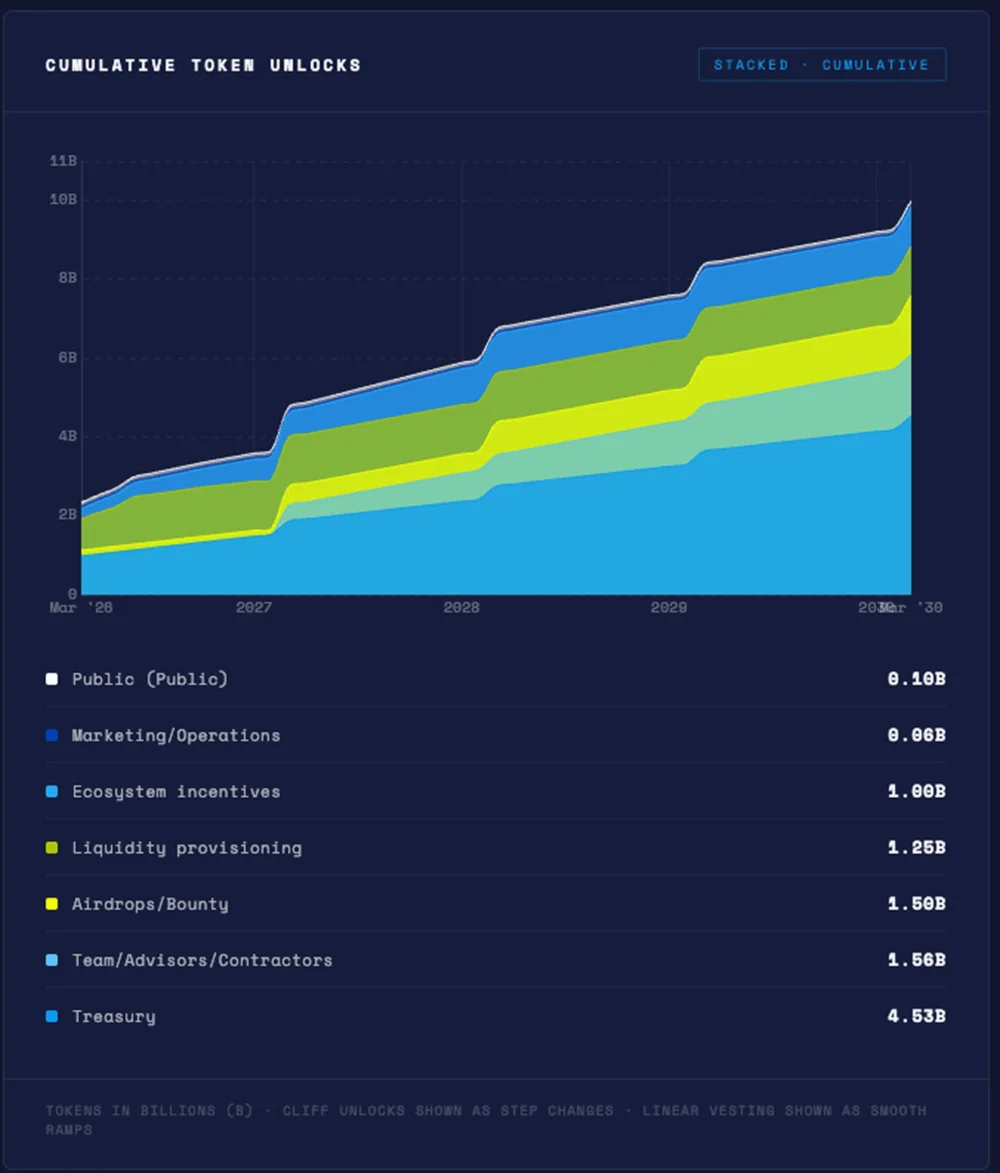
Binance, the world’s largest cryptocurrency exchange by trading volume, has officially marked a new chapter for decentralized finance (DeFi) with the listing of Katana (KAT) on its spot market this March, introducing a protocol that aims to move beyond simple yield chasing to establish a robust, self-sustaining financial ecosystem. This significant development, slated for March 18, 2026, at 13:00 (UTC), positions Katana as a high-frontier innovation in the Layer 2 space, underscored by Binance’s application of the "Seed Tag" – an indicator of pioneering projects with substantial potential, albeit accompanied by inherent volatility. Investors now have a direct gateway to a network that prioritizes "Real Yield" through sophisticated liquidity management, a unique economic model, and formidable institutional-backed infrastructure.
The listing of Katana on Binance’s premier trading platform represents more than just the addition of another token; it signals a maturing trend within the DeFi landscape. As the sector evolves from its initial speculative "DeFi Summer" phase, there’s a growing demand for protocols that offer sustainable, tangible returns rather than relying on inflationary token emissions. Katana, a specialized DeFi Layer 2 solution, is designed precisely to meet this demand, optimizing capital efficiency through a unique, closed-loop economic model. This approach directly addresses some of the most persistent challenges plaguing the broader DeFi ecosystem, such as fragmented liquidity, impermanent loss, and the so-called "mercenary capital" problem, where liquidity providers jump between protocols in pursuit of the highest, often fleeting, yields.
Understanding Katana: A Paradigm Shift in DeFi Infrastructure
At its core, Katana functions as a dedicated DeFi Layer 2 that fundamentally rethinks how capital is utilized and rewarded within a decentralized environment. Unlike many generic blockchains or fragmented DeFi applications that suffer from shallow market depth and inefficient capital allocation, Katana centralizes its financial resources to ensure deep market liquidity for every user. This innovative structure is primarily achieved through its groundbreaking Chain-Owned Liquidity (CoL) model.
The CoL model is a cornerstone of Katana’s design, wherein the protocol itself owns and manages a significant portion of its liquidity. This contrasts sharply with traditional DeFi models that rely heavily on incentivizing external liquidity providers through high, often unsustainable, token emissions. By owning its liquidity, Katana mitigates the risk of sudden liquidity withdrawals, which can cripple a protocol, especially during periods of market volatility. This self-ownership creates a stable foundation for trading and lending activities, ensuring consistent market depth. Complementing CoL is the "Liquidity Flywheel" mechanism, an ingenious system that recycles network fees and yields directly back into the ecosystem. This perpetual recycling ensures that liquidity remains robust and stable, even when broader market conditions turn volatile, effectively eliminating the "mercenary capital" problem by aligning long-term incentives with the protocol’s health. This self-reinforcing economic loop means that every transaction, every yield generated, contributes to strengthening the network’s liquidity base, creating a virtuous cycle of growth and stability.
The protocol’s architecture extends to its VaultBridge system, which serves as the primary entry point for productive capital into the Katana ecosystem. When users bridge their assets to Katana, the protocol transforms these holdings into yield-generating vbTokens. These vbTokens are not merely static representations; they immediately begin working within the network’s core applications. Katana boasts an integrated application stack featuring prominent DeFi protocols such as Sushi for swapping and liquidity provision, Morpho for lending and borrowing, and Vertex for perpetuals trading. This seamless integration ensures a smooth user flow, allowing participants to swap, lend, and trade derivatives without ever having to leave the Katana ecosystem. This consolidation of activity into high-performance, interconnected tools maximizes rewards for everyone involved, avoiding the inefficiencies and complexities associated with splitting funds across dozens of disconnected dApps on other chains.

A critical component anchoring Katana’s entire financial system is AUSD, its native stablecoin. AUSD provides a reliable, decentralized medium of exchange that supports liquidity concentration across all trading pairs within the ecosystem. The native asset allows the protocol to deliver predictable and sustainable yields by reducing the network’s dependence on external, third-party stablecoins, which can introduce additional layers of risk and volatility. The strategic decision to develop a native stablecoin underscores Katana’s commitment to self-sufficiency and control over its economic destiny.
Technologically, Katana is built on the robust foundation of zkSync Era technology. This integration leverages zero-knowledge proofs to deliver unparalleled security, scalability, and transaction speed, addressing Ethereum’s inherent limitations without compromising decentralization. Furthermore, Katana benefits from the incubation support of Polygon Labs, a testament to its technical prowess and strategic alignment within the broader Web3 ecosystem. Polygon Labs’ involvement lends significant credibility and access to a vast network of developers and users. This strong institutional backing is further solidified by contributions from industry leaders like GSR, a prominent player in crypto market making and investment. Such endorsements provide Katana with the credibility and financial muscle needed to challenge established Layer 2 giants and carve out a significant niche in the highly competitive DeFi landscape. In essence, Katana transforms user activity and network fees into a productive engine that keeps capital working efficiently and continuously, 24/7.
The KAT Token: Fueling a Sustainable Ecosystem
The KAT token is designed as the central heartbeat of the Katana Network, providing both essential utility and decentralized governance power to its holders. It fuels the entire ecosystem by facilitating fee payments, incentivizing long-term participation, and offering multiple earning streams that align with the protocol’s "Real Yield" philosophy.
Beyond its crucial role in governance, where KAT holders can vote on critical protocol upgrades, fee structures, and future developments, the token offers diverse earning options designed to foster deep engagement and capital efficiency. For instance, users can engage in Liquidity Mining on integrated platforms like Sushi and Morpho to earn KAT rewards. These rewards are not merely speculative; they incentivize the provision of essential liquidity, which in turn helps reduce trading slippage and enhances the overall user experience across the network. Furthermore, the Pre-Staking program allows committed holders to lock their KAT tokens for a specified period, receiving avKAT in return. avKAT serves as a liquid representation of their staked assets, enabling participants to retain some liquidity while contributing to network security and earning additional rewards. This mechanism is a sophisticated approach to capital efficiency, allowing staked assets to remain productive.
The tokenomics of KAT are meticulously crafted with a strong focus on sustainability and community-first principles. The Katana Foundation has explicitly prioritized users over traditional venture capital interests by deliberately avoiding VC seed sales and instead exploring public participation opportunities first. This user-centric approach aims to foster a more decentralized and equitable distribution of tokens, reducing the concentration of power typically seen in projects heavily backed by early-stage institutional investors. This philosophy is expected to cultivate a more engaged and loyal community, whose interests are directly aligned with the long-term success of the protocol.
Crucially, Katana allocates a specific, substantial portion of the total token supply to liquidity programs powered by its Chain-Owned Liquidity (CoL) model. This ensures that rewards are directly tied to actual user engagement and contribution to the network’s fundamental liquidity, rather than being driven by temporary hype or speculative trading. This mechanism reinforces the "Real Yield" paradigm by making incentives intrinsic to the protocol’s operational health. With an impressive 150 million KAT tokens dedicated to future marketing and growth initiatives, the project aims to drive massive adoption through strategically planned yield-farming competitions, community airdrops, and educational campaigns. As more users join the Katana network and actively participate in its ecosystem, the demand for KAT is expected to grow organically, creating a healthy and sustainable feedback loop between network utility and token value. This thoughtful token distribution and incentive structure are designed to ensure long-term viability and growth, making KAT an integral component of Katana’s ambition to create a self-sustaining financial ecosystem.

Binance Spot Listing: A Milestone Event and Its Implications
Binance’s official decision to open spot trading for KAT on March 18, 2026, at 13:00 (UTC), marks a major milestone not only for Katana but also for participants in the Binance Alpha program who have been closely following the project’s development. This transition signifies the conclusion of Katana’s successful incubation phase and its full integration into the mainstream cryptocurrency market. Binance has outlined a clear timeline for the listing: users will be able to transfer their KAT holdings to Spot Accounts 15 minutes before trading officially begins. Immediately upon launch, Binance will enable Spot Algo Orders, catering to advanced traders and institutional participants. Within 24 hours of the initial listing, Trading Bots and Spot Copy Trading functionalities will also be activated, ensuring comprehensive market accessibility and diverse trading strategies for its global user base.
A notable aspect of the listing is the application of the "Seed Tag" to KAT. Binance uses the Seed Tag to identify innovative projects that, while holding significant potential for growth and disruption, may also exhibit higher volatility and risk compared to more established assets. This classification serves as a crucial informational tool for investors, urging caution and highlighting the speculative nature often associated with early-stage, high-growth projects. To ensure that users are fully aware of these risks, Binance mandates that all users wishing to trade Seed Tag assets must pass a quiz every 90 days. This requirement underscores Binance’s commitment to responsible trading and investor protection, encouraging users to conduct thorough due diligence and understand the unique characteristics of these nascent projects. For existing Binance Alpha users, the migration process to the spot market is designed to be seamless, reflecting their early engagement and familiarity with Katana.
The implications of this Binance listing are multi-faceted and far-reaching. For Katana, the listing on the world’s largest exchange immediately grants it unprecedented visibility, liquidity, and legitimacy. Access to Binance’s massive global user base, which numbers in the hundreds of millions, is a game-changer for adoption. It is expected to drive significant capital inflow, enhance price discovery, and solidify Katana’s position as a serious contender in the DeFi Layer 2 space. The listing also provides a stamp of approval from a leading industry gatekeeper, which can attract further institutional interest and partnerships.
For Binance, listing Katana reinforces its reputation as a forward-thinking exchange committed to supporting cutting-edge innovation in the crypto space. By identifying and listing projects like Katana, which focus on sustainable "Real Yield" and robust infrastructure, Binance demonstrates its alignment with the evolving demands of a maturing DeFi ecosystem. This strategic move can attract new users specifically interested in high-growth DeFi opportunities, further cementing Binance’s market dominance.
More broadly, the listing signifies a potential shift in market trends within the DeFi landscape. It highlights the increasing recognition and demand for Layer 2 solutions that effectively address scalability and efficiency challenges while offering sustainable economic models. Industry analysts suggest that Binance’s endorsement of Katana could signal a broader market recognition for projects focusing on sustainable yield and robust infrastructure, moving away from purely speculative ventures. This move aligns with a maturing DeFi ecosystem seeking more resilient economic models, pushing the boundaries of what decentralized finance can achieve.
The Evolving DeFi Landscape and Katana’s Future

The decentralized finance landscape has undergone a dramatic transformation since its inception, moving from experimental protocols to sophisticated financial ecosystems. Layer 2 solutions, like Katana, are increasingly critical in this evolution, offering much-needed scalability and efficiency to overcome the limitations of foundational Layer 1 blockchains such as Ethereum. As DeFi continues its trajectory towards mainstream adoption, the emphasis shifts from raw innovation to sustainability, security, and user experience.
Katana’s unique blend of Chain-Owned Liquidity, a native stablecoin (AUSD), and an integrated app stack positions it strongly within this evolving environment. Its commitment to "Real Yield" through a closed-loop economic model stands in stark contrast to the inflationary models that have often led to boom-and-bust cycles in other protocols. Supported by advanced zkSync Era technology and incubated by Polygon Labs, Katana combines cutting-edge technical prowess with strategic ecosystem backing, providing a formidable foundation for future growth.
However, challenges remain. The DeFi space is intensely competitive, with numerous Layer 2s and innovative protocols vying for market share. Regulatory scrutiny of decentralized finance is also increasing globally, which could impact operational frameworks. Furthermore, maintaining robust security in a rapidly evolving technological landscape is paramount. Despite these challenges, Katana’s strong institutional backing, user-centric tokenomics, and clear focus on sustainable value creation provide it with significant advantages.
Looking ahead, Katana has opportunities to expand its offerings, potentially integrating with additional DeFi primitives, exploring cross-chain interoperability beyond its current scope, and continually enhancing its user experience to attract an even broader audience. The 150 million KAT allocated for marketing and adoption initiatives indicates a clear strategy to drive community growth and engagement, which will be vital for its long-term success. The Binance listing is not merely an event but a catalyst, propelling Katana into a new phase of development and adoption, with the potential to significantly impact the future trajectory of decentralized finance. By turning user activity and network fees into a productive engine, Katana exemplifies the next generation of DeFi protocols designed for lasting value and widespread utility.