admin
admin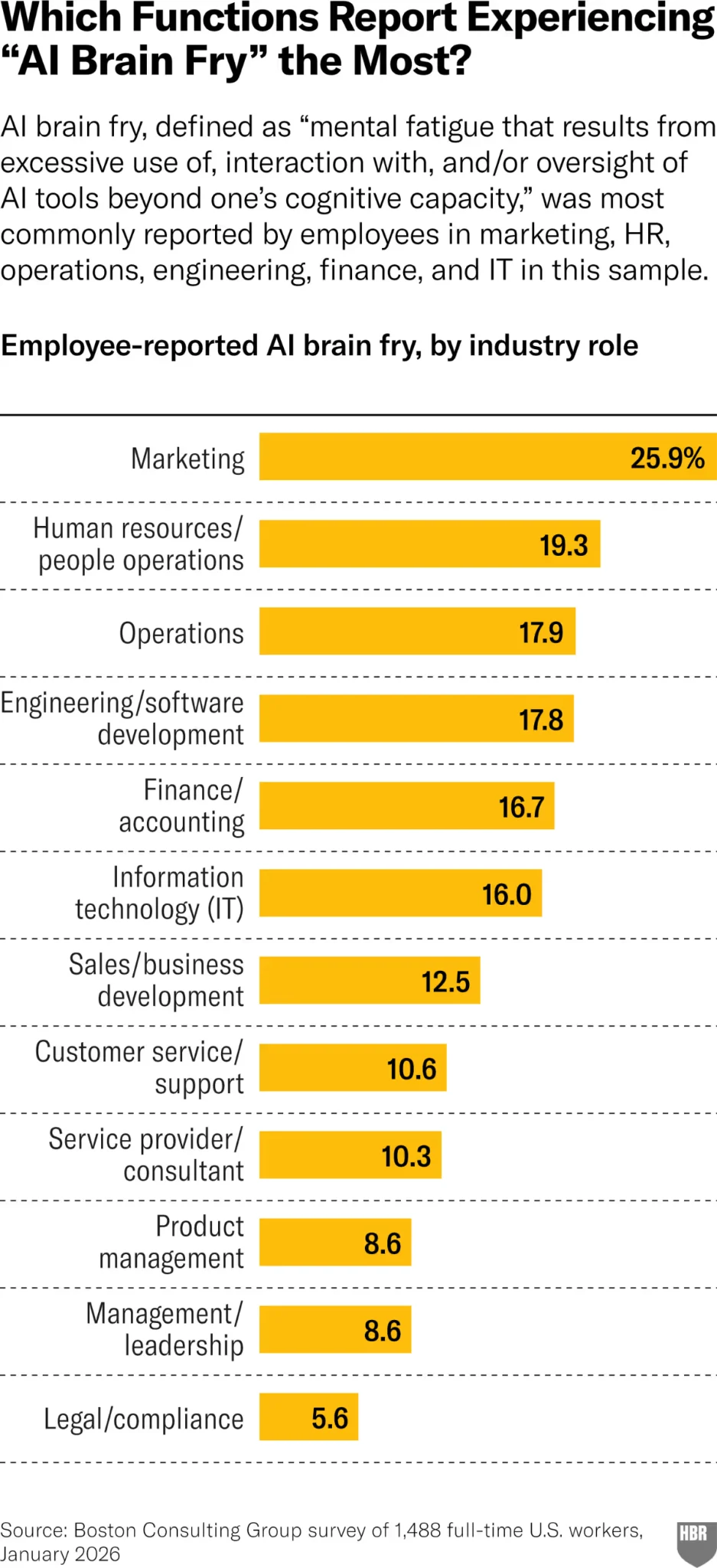
The rapid proliferation and often unmanaged integration of artificial intelligence tools into the modern workplace are paradoxically leading to significant mental fatigue among employees, a phenomenon researchers are terming "AI brain fry." This outcome stands in stark contrast to the technology’s widely touted assurance that it would alleviate job pressures and streamline tasks, ushering in an era of unprecedented productivity. Instead, a growing body of evidence suggests that for many, AI is intensifying the demands of work rather than simplifying it.
A recent study, conducted by researchers from Boston Consulting Group (BCG) and the University of California and published in the Harvard Business Review, illuminates this emerging challenge. The findings reveal that workers engaging with AI tools frequently report a heightened sense of stress and cognitive overload. The study, which surveyed nearly 1,500 full-time U.S. workers across various industries, offers a critical look at the unforeseen human costs associated with unchecked AI adoption.
Understanding "AI Brain Fry" and Its Symptoms
"AI brain fry" is precisely defined by the researchers as "mental fatigue that results from excessive use of, interaction with, and/or oversight of AI tools beyond one’s cognitive capacity." The study found that a significant 14% of the surveyed workforce admitted to experiencing this specific form of mental exhaustion. This isn’t merely general stress; it’s a distinct form of cognitive strain directly linked to the demands of navigating and managing AI systems.
Respondents detailed a range of debilitating symptoms that resonate with a profound sense of mental exhaustion. Many described a "mental hangover," characterized by a persistent "fog" or "buzzing" sensation in their minds, impeding their ability to think clearly. Accompanying these cognitive disruptions were physical manifestations such as headaches, noticeable slowdowns in decision-making processes, and significant difficulties in maintaining focus. These symptoms collectively paint a picture of a workforce struggling to keep pace with the cognitive demands imposed by new AI interfaces and workflows, undermining their ability to perform optimally.
The research further highlighted that certain professional domains are more susceptible to AI-induced mental fatigue. Specifically, workers in marketing and human resources departments reported the highest levels of "AI brain fry," suggesting that roles requiring extensive communication, creative problem-solving, and nuanced human interaction might be particularly burdened by the current state of AI integration. This observation points to a critical need for tailored AI deployment strategies that consider the specific cognitive loads and skill sets required in different professional fields.
The Unfulfilled Promise: AI as a Productivity Panacea
The current wave of AI integration has largely been driven by the narrative that these tools are potent productivity boosters, designed to enable workers to offload mundane or even complex parts of their workloads. This message has been enthusiastically embraced by AI companies and, subsequently, by many corporate leaders eager to leverage technological advancements for competitive advantage. Consequently, the adoption of AI has not only been encouraged but, in some instances, mandated, with companies beginning to measure AI usage as a key performance metric for employees.
High-profile examples underscore this aggressive push. Brian Armstrong, CEO of leading crypto exchange Coinbase, has publicly articulated a strong stance on AI adoption within his company. He revealed having terminated engineers who expressed reluctance to use AI tools, signaling a zero-tolerance policy for non-compliance with the company’s AI strategy. Furthermore, late last year, Armstrong set an ambitious goal for AI to generate half of the platform’s code, illustrating the depth of commitment to AI integration at an organizational level. Such directives, while aiming for efficiency, inadvertently place immense pressure on employees to adapt rapidly, often without adequate support or consideration for potential negative impacts.
The researchers observe that this push for extensive AI integration often leads to a proliferation of "multi-agent systems" within enterprises. This means employees are frequently tasked with toggling between multiple AI tools and interfaces, each designed for a specific function. Far from the promise of having more time to focus on meaningful, high-value work, this environment forces employees into a constant state of "juggling and multitasking," which, according to the study, is becoming "the definitive features of working with AI." This fragmented interaction with technology paradoxically consumes more mental energy, counteracting the intended benefits of automation and simplification.
The Tangible Costs: Errors, Fatigue, and Turnover
The mental strain induced by AI carries significant and measurable costs for both employees and organizations. The study explicitly states that this "AI-induced mental strain carries significant costs in the form of increased employee errors, decision fatigue, and intention to quit." These are not abstract concepts but concrete challenges that can undermine operational efficiency, financial stability, and overall workplace morale.
One of the most concerning findings relates to decision fatigue. Respondents experiencing AI brain fry reported 33% more decision fatigue compared to their counterparts who did not. Decision fatigue is a well-documented psychological phenomenon where prolonged periods of decision-making deplete an individual’s mental energy, leading to poorer judgment, impulsivity, and procrastination. For large companies, the cumulative effect of impaired decision-making across a significant portion of their workforce could translate into millions of dollars in losses annually, stemming from suboptimal strategic choices, missed opportunities, or costly errors in critical operations. This financial burden underscores the economic imperative for companies to address AI brain fry effectively.
Equally alarming is the increase in major errors. Those reporting AI brain fry self-reported making nearly 40% more major errors than those who did not. A "major error" was defined as one with "serious consequences, such as those that could affect safety, outcomes, or important decisions." In industries such as healthcare, finance, engineering, or logistics, such errors can have catastrophic implications, ranging from patient safety risks and financial miscalculations to structural failures and severe reputational damage. The potential for AI to inadvertently contribute to human error, rather than eliminate it, poses a profound challenge to established risk management frameworks.
Furthermore, the study highlights a direct link between AI brain fry and employee retention. Workers experiencing AI brain fry were approximately 40% more likely to express an active intent to quit their jobs. High employee turnover is notoriously expensive for businesses, encompassing recruitment costs, onboarding expenses, lost productivity during transition periods, and the erosion of institutional knowledge. In a competitive talent market, an organizational culture that fosters mental fatigue due to AI integration could face significant challenges in attracting and retaining skilled professionals, jeopardizing long-term growth and innovation.

The AI Paradox: A Nuanced Path to Burnout Reduction
Despite the sobering findings regarding AI brain fry, the research also uncovers a crucial nuance: AI is not inherently detrimental to employee well-being. In fact, when deployed strategically, AI tools can play a significant role in mitigating another prevalent workplace issue: burnout. Burnout, characterized by chronic workplace stress leading to cynicism, feelings of ineffectiveness, and emotional exhaustion, has long plagued modern workforces.
The study found that the use of AI to replace repetitive and routine tasks demonstrably decreased levels of burnout. Respondents who leveraged AI in this manner reported their levels of burnout were 15% lower than those who did not. This critical distinction reveals the paradoxical nature of AI’s impact: while excessive or poorly managed AI interaction can lead to "brain fry," targeted AI application that automates tedious, low-value tasks can free up human workers to focus on more engaging, creative, and strategically important activities, thereby enhancing job satisfaction and reducing chronic stress.
This finding underscores the importance of how AI is integrated. When AI functions as an intelligent assistant, taking over the drudgery of data entry, basic report generation, or scheduling, it allows employees to allocate their cognitive resources to tasks that require uniquely human skills like critical thinking, empathy, and complex problem-solving. The challenge, therefore, lies in distinguishing between AI that augments human capabilities by reducing cognitive load, and AI that inadvertently increases it by demanding constant oversight, context switching, and complex interaction.
Navigating the Integration Challenge: Expert Recommendations
The researchers from BCG and the University of California offer actionable recommendations for company leaders seeking to mitigate AI brain fry and harness the technology’s benefits responsibly. Their advice centers on a more thoughtful, human-centric approach to AI deployment:
-
Clearly Define AI’s Purpose in the Organization: Before implementing any AI tool, companies must articulate its precise role and objectives. This involves answering questions like: What specific problems is this AI designed to solve? How will it interact with existing workflows? What are the expected changes in employee roles and responsibilities? A clear purpose ensures that AI is not adopted merely for the sake of technological advancement but as a strategic tool aligned with organizational goals and employee well-being.
-
Explain How Workloads Will Change with the Tool: Transparency is paramount. Employees need to understand how their daily tasks, responsibilities, and overall workload will evolve with AI integration. This includes communicating which tasks will be automated, which will be augmented, and what new skills might be required. Proactive communication and training can reduce anxiety and equip employees to adapt more effectively, preventing the feeling of being overwhelmed or displaced.
-
Stick to "Measurable Outcomes" for AI, Not Just Quantity of Use: The study strongly cautions against incentivizing the sheer "quantity of use" of AI tools. Measuring performance based solely on how often an employee interacts with AI can lead to superficial engagement, low-quality work, and unnecessary mental strain as workers might feel compelled to use AI even when it’s not optimal, simply to meet a metric. Instead, companies should focus on measurable outcomes such as improved efficiency, enhanced accuracy, reduced task completion time, or increased innovation directly attributable to AI. This shifts the focus from tool adoption to value creation, encouraging thoughtful and effective AI utilization.
Broader Implications for the Future of Work
The findings of this study carry profound implications for the future of work, extending beyond individual companies to influence HR policies, AI development, and even ethical considerations in technology.
For Human Resources and Organizational Management, the rise of AI brain fry necessitates a re-evaluation of current practices. HR departments will need to develop new training programs that not only teach employees how to use AI tools but also how to manage the cognitive demands associated with them. This includes promoting digital well-being, mindfulness practices, and setting clear boundaries for AI interaction. Mental health support services may also need to be expanded to address AI-induced stress and anxiety. Furthermore, traditional productivity metrics may require an overhaul to reflect the quality and strategic value of work, rather than just the volume or speed facilitated by AI.
AI Developers and Solution Providers also bear a significant responsibility. The study serves as a call to action for the AI industry to prioritize human-centric design. Future AI tools should be developed with cognitive load in mind, featuring intuitive interfaces, clear feedback mechanisms, and perhaps even built-in "break" or "de-stress" functionalities. The emphasis should shift from merely maximizing algorithmic efficiency to optimizing the human-AI collaboration experience, ensuring that technology truly serves human needs.
From a broader societal perspective, the potential for AI to create new forms of workplace stress highlights the need for ongoing research, dialogue, and potentially, regulatory guidelines. As AI becomes more ubiquitous, establishing best practices for ethical deployment, employee protection, and fostering a healthy digital work environment will be crucial. This might involve industry standards for AI integration, educational initiatives for businesses, and policies that encourage responsible technology adoption.
The study underscores that the integration of artificial intelligence into the workplace is not merely a technological challenge but a complex socio-technical one. While AI holds immense promise for transforming productivity and enhancing human capabilities, its successful deployment hinges on a nuanced understanding of its impact on the human element. Ignoring the potential for "AI brain fry" and other cognitive strains risks undermining the very benefits that AI is designed to deliver, leading to a less productive, less satisfied, and ultimately, less sustainable workforce. The path forward demands careful strategic planning, empathetic leadership, and a continuous commitment to prioritizing employee well-being alongside technological advancement.