Dwi Wanna
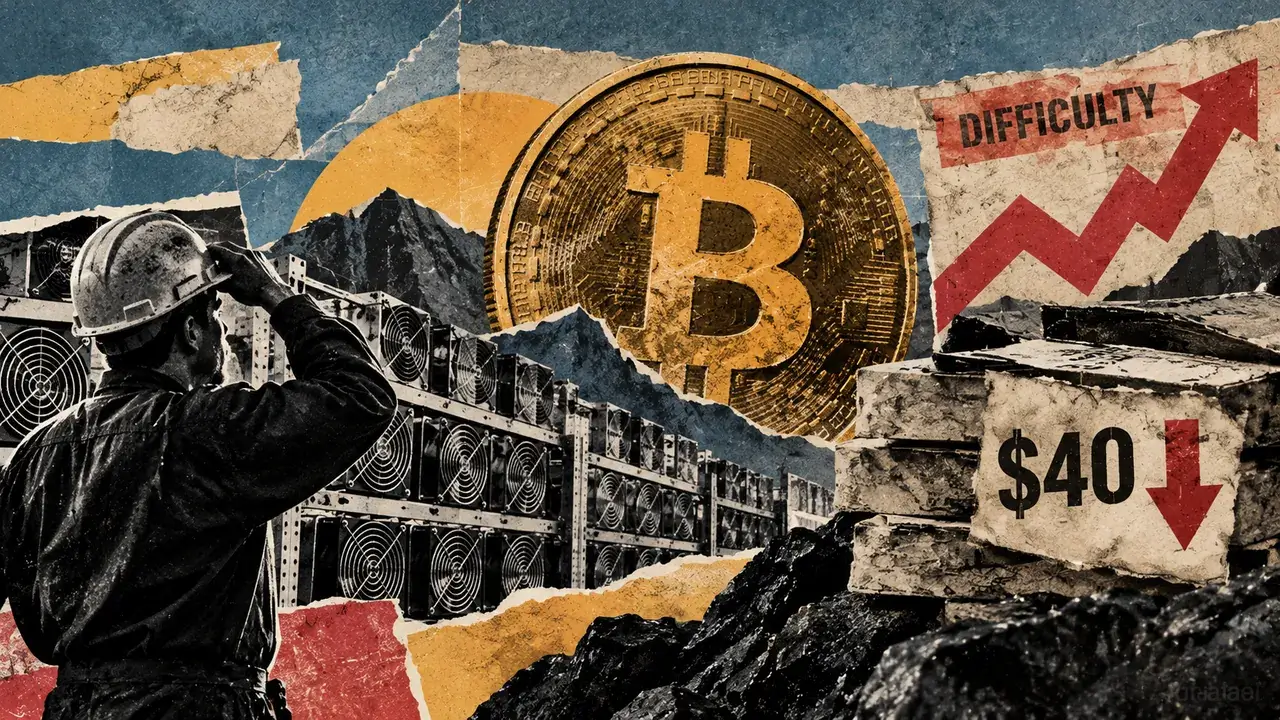
A group of influential lawmakers within the French National Assembly has formally proposed a comprehensive national review to evaluate the integration of Bitcoin mining into the country’s energy infrastructure. The legislative initiative, submitted on June 12, 2024, marks a significant shift in how European policymakers view digital asset production, moving away from purely financial regulation toward a strategic assessment of energy management and grid resilience. The proposal urges the French government to investigate whether the high-intensity, yet flexible, nature of Bitcoin mining can serve as a solution to France’s recurring electricity surplus, primarily generated by its extensive nuclear fleet.
The Legislative Framework and the Push for Optimization
The proposal was introduced as an amendment to ongoing economic or energy legislation, signaling a growing appetite among French deputies to modernize the nation’s industrial strategy. The lawmakers argue that France possesses a unique competitive advantage in the digital economy due to its low-carbon energy mix. By harnessing Bitcoin mining, the state could potentially monetize electricity that would otherwise be discarded or sold at a loss to neighboring European markets.
The text of the proposal highlights the specific technical attributes of Bitcoin mining that make it an ideal partner for a modern power grid. Unlike traditional industrial processes or data centers that require constant, uninterrupted power, Bitcoin mining operations are "interruptible." They can be powered down within seconds during periods of peak demand and ramped up instantly when the grid experiences a surplus. This "demand-response" capability is viewed by the proponents as a vital tool for the Réseau de Transport d’Électricité (RTE), the organization responsible for maintaining the balance between supply and demand across the French high-voltage transmission system.
The French Energy Paradox: Nuclear Dominance and Wasted Power
France stands as a global outlier in the energy sector, relying on nuclear power for more than 70% of its total electricity generation. This reliance is managed largely through Électricité de France (EDF), which operates 56 nuclear reactors across the country. While this infrastructure provides France with some of the lowest carbon emissions per capita in the European Union, it also presents a significant engineering challenge: nuclear plants are designed to provide a steady "baseload" of power and cannot easily or rapidly adjust their output to match fluctuating consumer demand.
When domestic demand drops—typically during the night or during mild weather—the grid often produces more electricity than it can consume. According to data highlighted by Raphaël Bloch, co-founder of the French financial news outlet The Big Whale, this overproduction resulted in an estimated loss of nearly €80 million in 2024 alone. This waste occurs because the cost of ramping down a nuclear reactor often exceeds the value of the energy lost, or because excess power is sold into the European market at negative prices, effectively paying other countries to take France’s surplus.
Lawmakers argue that instead of absorbing these losses, the state could invite Bitcoin miners to set up operations directly at the source of production. By acting as a "buyer of last resort," miners would provide a floor for energy prices, ensuring that every megawatt-hour generated by France’s carbon-free fleet contributes to the national economy.
Technical Synergy: Bitcoin Mining as a Virtual Battery
The core of the proposal rests on the concept of "grid balancing." A stable electrical grid must maintain a precise frequency (50 Hz in Europe). If supply exceeds demand, the frequency rises; if demand exceeds supply, the frequency falls. Both scenarios can lead to equipment damage or widespread blackouts. Currently, grid operators manage this by asking large industrial consumers to reduce their load during peaks or by discharging expensive battery arrays.
Bitcoin mining offers a more cost-effective alternative. Because miners are essentially performing mathematical calculations that are not time-sensitive in a traditional sense, they can serve as a "flexible load." The legislative proposal suggests that a regulated mining sector could act as a virtual battery. When the sun is shining and the wind is blowing—adding renewable energy to the nuclear baseload—miners can absorb the excess. Conversely, during a winter cold snap when the grid is strained, these miners can be disconnected immediately, freeing up hundreds of megawatts for residential heating and essential services.
Furthermore, the lawmakers pointed out that Bitcoin mining facilities are modular and can be deployed in remote locations. This allows for the revitalization of "brownfield" industrial sites near power plants that have struggled to attract traditional businesses due to their distance from major urban centers.
Chronology of the French Digital Asset Evolution
The current proposal is the latest step in France’s multi-year effort to become a hub for the "Web3" and blockchain industry.
- 2019: France introduced the PACTE Law, creating one of the first comprehensive regulatory frameworks for Digital Asset Service Providers (DASPs) in the world.
- 2022: President Emmanuel Macron expressed support for the sector, stating his desire for Europe to be a leader in the metaverse and decentralized technologies.
- 2023: Major global exchanges, including Binance and Circle, chose Paris as their European headquarters, citing a clear and predictable regulatory environment.
- June 2024: The submission of the mining amendment marks a transition from focusing on "financial crypto" to "industrial crypto," linking digital assets directly to the nation’s physical energy infrastructure.
This timeline suggests that French policymakers are increasingly viewing Bitcoin not merely as a speculative asset, but as a component of industrial policy that aligns with the country’s decarbonization goals under the European Green Deal.
Economic Implications and Heat Recycling
Beyond grid stability, the proposal explores the secondary economic benefits of a domestic mining sector. One such benefit is "thermal recycling." Bitcoin mining rigs generate significant amounts of heat as a byproduct of their computational work. The lawmakers suggest that this heat could be captured and diverted to district heating systems, greenhouses, or industrial drying processes. This would improve the overall energy efficiency of the mining operations and provide low-cost heating solutions for nearby communities.
From a fiscal perspective, a regulated mining sector would generate new tax revenue. If the €80 million in wasted energy identified by researchers had been used to mine Bitcoin, it would have translated into thousands of BTC added to the economy, supporting job creation in hardware maintenance, software development, and electrical engineering. The proposal argues that this would help France maintain its "technological sovereignty," ensuring that the infrastructure of the future global financial system is partially housed and secured within French borders.
Global Context: A Growing International Trend
France is not alone in its exploration of energy-aligned Bitcoin mining. The proposal notes that other nations are already moving to integrate PoW (Proof of Work) mining into their national strategies:
- Pakistan: Recently announced plans to allocate 2,000 megawatts of electricity specifically for Bitcoin mining and AI data centers to optimize its grid and generate foreign exchange reserves.
- Belarus: President Alexander Lukashenko has previously directed the government to utilize surplus energy from the country’s first nuclear power plant for mining ventures.
- Ethiopia: The government has signed deals with international mining firms to utilize the massive surplus generated by the Grand Ethiopian Renaissance Dam (GERD).
- United States (Texas): The ERCOT grid in Texas has become a global model for Bitcoin mining integration, where miners are paid to shut down during heatwaves, successfully preventing grid failure during record-breaking demand.
Daniel Batten, a prominent Bitcoin mining researcher, has argued that France’s entry into this space would be a "game-changer" for Europe. Batten’s research suggests that Bitcoin mining is the only global industry that can profitably scale to consume stranded energy in any location, making it a unique tool for increasing the "bankability" of new renewable energy projects.
Anticipated Challenges and Official Responses
While the proposal has gained traction among forward-thinking lawmakers, it is expected to face scrutiny from environmental groups and certain regulatory bodies. Critics of Bitcoin mining often point to its high total energy consumption. However, the French proposal seeks to counter this by emphasizing that the mining would be "low-carbon" by default, given France’s energy mix.
The French government has yet to issue a definitive response to the amendment, as it must first pass through the relevant parliamentary committees. However, officials from the Ministry of Economy and Finance have previously signaled a willingness to explore "innovative uses for surplus energy." The outcome of the report, should it be commissioned, will likely depend on a cost-benefit analysis conducted by RTE and the French Environment and Energy Management Agency (ADEME).
Conclusion: A Strategic Pivot for the Eurozone
The French National Assembly’s move to study Bitcoin mining represents a sophisticated understanding of the intersection between digital technology and physical infrastructure. By framing Bitcoin mining as a solution to energy waste rather than just a consumer of power, French lawmakers are attempting to rewrite the narrative surrounding the industry.
If the proposal leads to formal policy, France could become the first major European power to officially integrate Bitcoin mining into its national energy strategy. This would not only provide a financial buffer for the country’s nuclear sector but also set a precedent for other nations grappling with the challenges of balancing a modern, green energy grid. The move reinforces the idea that in the 2020s, energy policy and digital asset policy are becoming inextricably linked, with France positioned at the forefront of this industrial evolution.