Dwi Wanna
The Bitcoin network currently presents a stark economic paradox: while its fundamental security, measured by the aggregate computing power known as hashrate, has climbed to unprecedented heights, the financial viability for the entities providing that security has reached a historic nadir. As the network’s hashrate maintains its position above the one-zettahash watermark—a milestone representing one sextillion hashes per second—the revenue earned per unit of compute has disintegrated. This "high-security, low-profitability" phase marks a transformative period for the digital asset industry, signaling a shift from a decentralized hobbyist pursuit to a highly consolidated industrial-scale competition where only the most efficient and well-capitalized survive.
The Erosion of Mining Economics
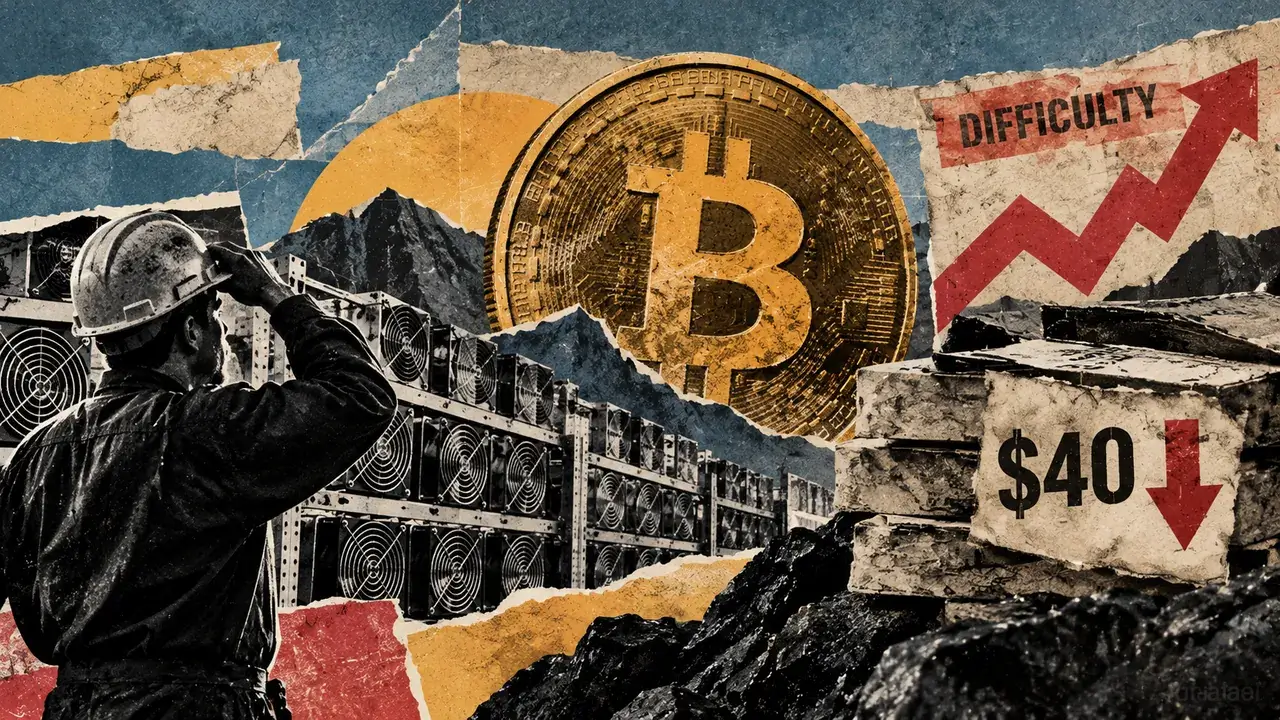
The primary metric for gauging the health of the mining sector is "hashprice," a term popularized by industry analysts to describe the expected daily revenue per petahash per second (PH/s). Recent data indicates that hashprice has collapsed by nearly 50% over the last several weeks, touching an all-time low of approximately $34.20 per PH/s. This decline is the result of a "perfect storm" of factors: the quadrennial halving event in April 2024, which slashed block rewards from 6.25 BTC to 3.125 BTC, and a surge in global hashrate that has increased the difficulty of earning those diminished rewards.
According to Nico Smid, founder of Digital Mining Solution, the current economic climate has created a brutal breakeven threshold. For mining fleets operating hardware with an efficiency of approximately 30 joules per terahash (J/TH)—standard for many previous-generation rigs—all-in power costs must remain below 5 cents per kilowatt-hour (kWh) just to cover operational expenses, including labor, rent, and maintenance. At these levels, gross margins for the average operator have effectively evaporated, forcing a bifurcation of the industry.
A Chronology of Difficulty and Network Resilience
The technical mechanics of the Bitcoin protocol are designed to ensure that blocks are produced approximately every ten minutes, regardless of how much computing power is online. This is managed through the mining difficulty adjustment, which occurs every 2,016 blocks, or roughly every two weeks.
On November 27, at block height 925,344, Bitcoin mining difficulty experienced a downward adjustment of approximately 2%, settling at 149.30 trillion. This followed a previous decline earlier in the month, marking the first consecutive set of downward adjustments in recent history. Typically, a falling difficulty suggests that miners are turning off their machines because they are no longer profitable. However, the total hashrate has remained stubbornly high, hovering near the one-zettahash level.

This indicates that while thousands of older, inefficient rigs are "going dark," they are being almost immediately replaced by industrial-scale deployments of next-generation hardware, such as the Bitmain Antminer S21 or MicroBT Whatsminer M60 series. These machines offer significantly higher hashes per watt, allowing large-scale operators to maintain their market share even as smaller participants are forced out.
The Great Consolidation: Market Value and Capital Shifts
The strain on the mining sector is most visible in the public equity markets. Throughout November, the total market capitalization of publicly traded Bitcoin mining companies saw a staggering contraction. At its peak, the sector’s market cap reached approximately $87 billion, but it cratered to nearly $55 billion during the month—a $32 billion wipeout—before staging a modest recovery toward the $65 billion mark.
Investors are no longer viewing mining stocks as simple "beta" plays on the price of Bitcoin. Instead, the market is beginning to reclassify these entities as power-rich infrastructure businesses. This shift in sentiment is driven by the realization that a miner’s most valuable asset may not be its fleet of ASICs (Application-Specific Integrated Circuits), but rather its long-term Power Purchase Agreements (PPAs) and its physical connection to the electrical grid.
In response to falling Bitcoin revenue, approximately 70% of top-tier mining firms have begun pivoting toward High-Performance Computing (HPC) and Artificial Intelligence (AI) workloads. By repurposing data center space to host GPUs for AI training, miners can secure steady, fiat-denominated cash flow that is decoupled from the volatility of the crypto markets. This "dual-track" business model allows firms to survive the lean periods of the Bitcoin cycle while retaining the upside potential of their remaining mining operations.
Geopolitical Realignment and the "Zombie" Hashrate
The geography of Bitcoin mining is also undergoing a significant shift. Despite the blanket ban on cryptocurrency mining enacted by the Chinese government in 2021, recent estimates from the Hashrate Index suggest that China still accounts for roughly 14% of global hashrate. This "underground" capacity often utilizes surplus hydroelectric power in remote provinces or coal-adjacent industrial loads that operate off the official radar.
This "zombie capacity" serves as a permanent tax on compliant Western miners. Because these operations often bypass the regulatory, environmental, and labor costs associated with Western markets, they can remain profitable at lower hashprices. In contrast, Western operators face a narrowing path characterized by higher financing costs and stricter disclosure requirements.

The difficulty of operating in the current environment is perhaps best illustrated by Tether, the issuer of the world’s largest stablecoin. Despite its massive cash reserves, Tether reportedly halted its mining venture in Uruguay recently, citing concerns over high energy costs and uncertainty regarding government tariffs. If a firm with Tether’s financial clout finds the economics of a specific region untenable, it underscores the immense pressure facing smaller, less-liquid operators.
Risk of Centralization and Protocol Implications
While the record-high hashrate is a testament to the security of the Bitcoin protocol, it carries structural risks. As the mining sector consolidates, the number of entities capable of funding the network’s security work is shrinking. This concentration creates potential single points of failure.
If a handful of large-scale corporations control the majority of the hashrate, the network becomes more vulnerable to localized disruptions, such as extreme weather events affecting the Texas power grid—a major hub for US mining—or shifts in national energy policy. Furthermore, the reliance on fixed-price energy contracts and institutional financing means that the "independent" nature of mining is being replaced by a model that is deeply integrated with traditional financial and utility systems.
From a protocol perspective, however, the system is functioning exactly as intended. The difficulty adjustment mechanism continues to calibrate, ensuring the ten-minute block target is met. The "distress" felt by miners is a feature, not a bug; it is the process by which the network sheds inefficiency and incentivizes the development of more advanced hardware and cheaper energy sources.
Indicators for the Near Future
Industry analysts are monitoring three key metrics to determine how long the current state of distress will persist.
First is the frequency and depth of difficulty adjustments. If the network sees deeper negative retargets in the coming months, it will confirm that even some mid-tier fleets are reaching their breaking point. Conversely, a sharp snapback in difficulty would suggest that sidelined capacity is being re-energized, likely due to a spike in Bitcoin’s price or a temporary drop in energy costs.

Second is the role of transaction fees. While block rewards are fixed, miners also earn revenue from fees paid by users to have their transactions included in a block. Periodic surges in network activity—such as those caused by Ordinals or Inscriptions—can significantly boost miner revenue. However, in the absence of sustained "mempool" congestion, miners remain dependent on the "lean" base-case revenue of the block subsidy.
Third is the regulatory and supply chain landscape. Any escalation in export controls on high-end chips or changes in how grid operators treat "flexible" loads like Bitcoin miners could alter the cost of capital overnight.
Conclusion: The Paradox of Strength
The "zettahash age" of Bitcoin is defined by a paradox. At the protocol level, the network has never been more robust, boasting a level of computational security that was once considered theoretical. Yet, beneath the surface, the business of mining is undergoing a painful, slow-motion liquidation.
The transition from "pure-play" miners to diversified data infrastructure firms represents the next evolution of the industry. In this new era, Bitcoin mining serves as a "flexible sink" for global energy production—absorbing volatility and surplus power—while the companies themselves seek stability through AI and HPC. For the miners who remain, the challenge is no longer just about finding the fastest machine; it is about surviving an economic environment where the price of security has never been higher, and the rewards for providing it have never been lower.