Dwi Wanna
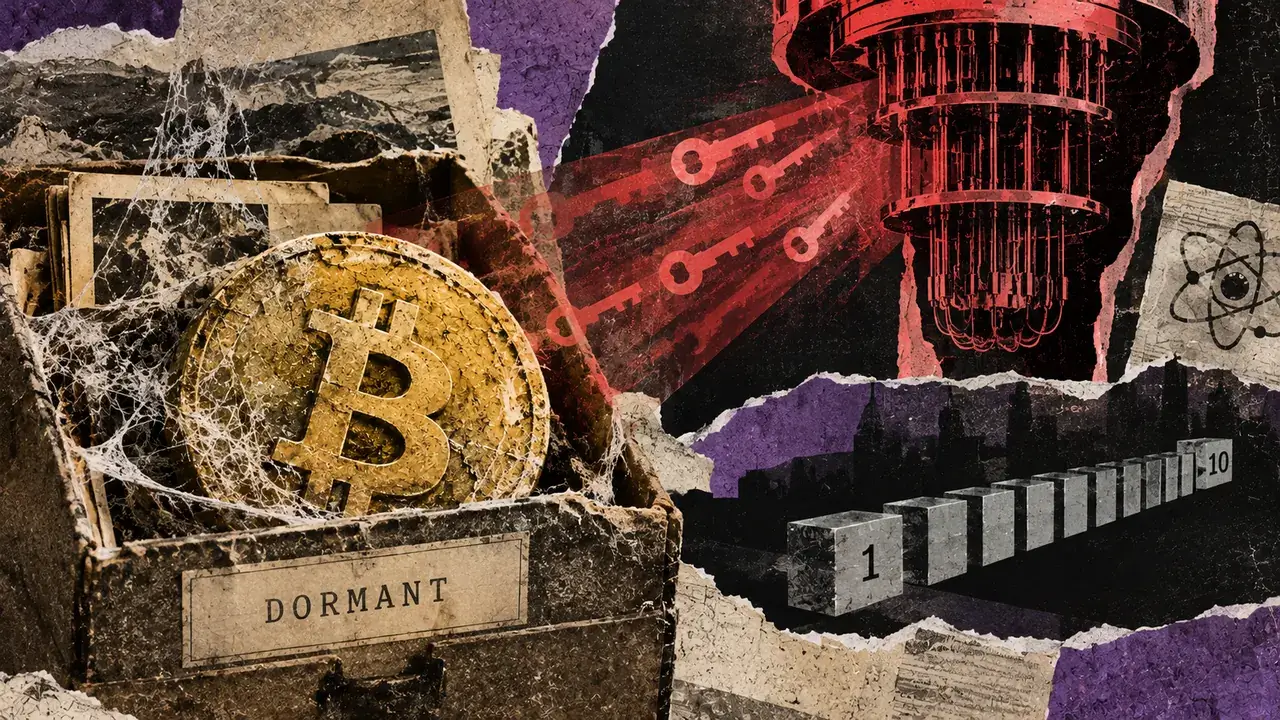
The Bitcoin network crossed a monumental threshold in its monetary evolution on November 17, as the total number of coins successfully mined surpassed 19.95 million. This milestone signifies that more than 95% of Bitcoin’s total immutable supply of 21 million coins has entered circulation, ushering the protocol into what industry analysts and operators are calling the "5% Era." While this event serves as a powerful validation of the programmatic scarcity that has attracted trillions of dollars in institutional interest, it also marks the beginning of the most precarious and capital-intensive phase in the network’s history. For the industrial miners who secure the blockchain, the celebration of scarcity is overshadowed by the reality of a looming revenue cliff and the necessity of a radical business model transformation.
The Mathematics of Scarcity: A 115-Year Horizon
Bitcoin’s issuance is dictated by a geometric decay function hard-coded into its core protocol by its pseudonymous creator, Satoshi Nakamoto. This mechanism, known as the "halving," reduces the block reward—the amount of new Bitcoin awarded to miners for processing transactions—by 50% every 210,000 blocks, or roughly every four years.
At the network’s inception in 2009, the block reward was 50 BTC. Following subsequent halvings in 2012, 2016, and 2020, the reward was reduced to 25, 12.5, and 6.25 BTC, respectively. The most recent halving, occurring in April 2024, brought the reward down to 3.125 BTC. Because of this decaying schedule, the final 5% of the supply—approximately 1.05 million BTC—will not be fully extracted for another 115 years. The final partial Bitcoin is projected to be mined around the year 2140.

This trajectory creates a stark dichotomy between the asset’s utility as a store of value and its operational requirements as a decentralized network. For macro investors and sovereign entities, the "5% Era" represents the final transition of Bitcoin into a mature commodity with an inflation rate lower than that of gold. However, for the mining industry, it signals the end of the "subsidy era," where new coin issuance provided a consistent and predictable financial cushion.
Chronology of the Bitcoin Supply Evolution
To understand the gravity of the 95% milestone, one must look at the timeline of Bitcoin’s distribution and the increasing difficulty of extraction:
- 2009–2012 (The Genesis Era): The first 10.5 million BTC (50% of supply) were mined in just four years. During this period, mining could be performed on basic personal computers, and the network’s security was maintained by a small group of enthusiasts.
- 2012–2021 (The Industrialization Era): As the supply moved from 50% toward 90%, mining transitioned from hobbyist CPUs to specialized ASIC (Application-Specific Integrated Circuit) hardware. Large-scale data centers began to dominate the landscape, primarily in regions with cheap hydroelectric or coal power.
- 2021–2024 (The Institutional Era): The network crossed the 90% supply mark in late 2021. This period saw the entry of public mining companies on the NASDAQ and the eventual approval of spot Bitcoin ETFs in the United States, which fundamentally changed the liquidity and demand profiles of the asset.
- November 2024 (The 5% Era): With 19.95 million coins mined, the network enters its final long-tail issuance phase. The competition for the remaining 1.05 million coins is expected to be more fierce than the competition for the first 19 million combined.
The Miner’s Paradox: Rising Costs and Record Low Revenue
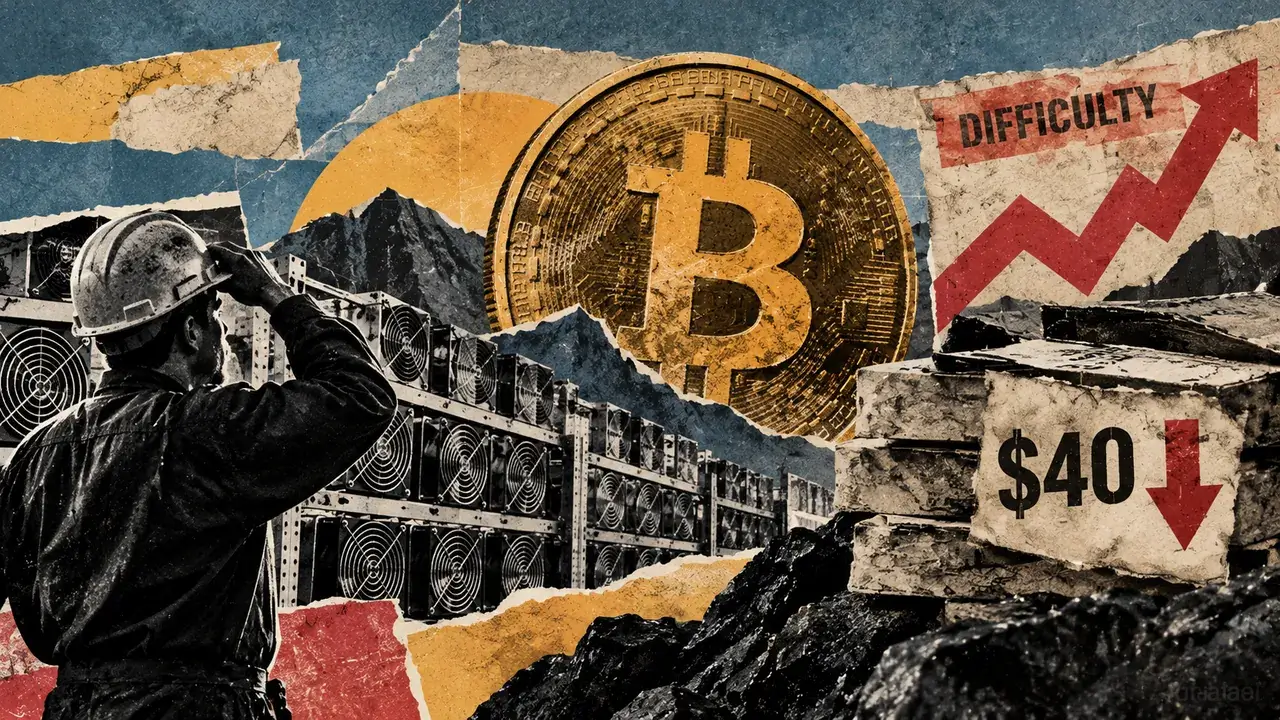
The "5% Era" is commencing under some of the most challenging economic conditions the mining sector has ever faced. A primary metric for assessing industry health is "Hashprice," which measures the expected value of 1 petahash per second (PH/s) of hashing power per day. In late 2024, Hashprice plummeted to approximately $38.82, a 12-month low and a fraction of the $80 to $100 levels seen during previous market cycles.
This decline is the result of what experts call the "Miner’s Paradox." In a traditional commodity market, when the price of extraction exceeds the market value, producers shut down, supply decreases, and prices eventually stabilize. In Bitcoin mining, however, the mechanism is more complex. When inefficient miners are forced to unplug, the network’s "Difficulty Adjustment" algorithm eventually makes it easier for the remaining miners to find blocks.

However, in the current landscape, many large-scale operators are choosing to mine at a loss or at break-even levels. Flush with capital from previous bull markets or bound by rigid, long-term power purchase agreements (PPAs), these firms are continuing to deploy more efficient machines even as revenues shrink. This has kept the network’s total hashrate—and thus its difficulty—at near-all-time highs, further squeezing margins for everyone involved. On-chain data indicates that industry-wide daily revenue recently averaged just $37 million, down from over $40 million earlier in the year, despite Bitcoin’s price remaining near record highs.
The Great Pivot: From Mining to Artificial Intelligence
Faced with the mathematical certainty of dwindling block rewards, a significant portion of the mining industry is diversifying into High-Performance Computing (HPC) and Artificial Intelligence (AI). This shift is driven by the realization that the infrastructure required for Bitcoin mining—massive power capacity, advanced cooling systems, and high-voltage electrical grids—is almost identical to what is needed to train Large Language Models (LLMs).
The economic incentive for this pivot is substantial. According to an analysis by VanEck, Bitcoin miners could generate an additional $38 billion in annual revenue by 2027 if they transitioned just 20% of their energy capacity toward AI and HPC workloads. The revenue per megawatt-hour for AI compute is currently estimated to be significantly higher than that of Bitcoin mining, creating a massive arbitrage opportunity.
Several major players have already begun this transition:

- Bitfarms: Recently announced a strategic shift to wind down certain underperforming mining operations in favor of AI-focused data centers.
- Core Scientific: Following its restructuring, the company signed multi-billion dollar deals with AI firms like CoreWeave to provide infrastructure for GPU-based computing.
- Hive Digital Technologies: A pioneer in the space, Hive has been retrofitting its facilities in the Nordics and Canada to support both Bitcoin mining and HPC services.
This evolution suggests that the "Bitcoin miner" of the future may actually be an "energy utility and compute provider" that uses Bitcoin mining as a secondary, flexible load to monetize excess power during periods of low AI demand.
The Fee Market and Long-Term Security Concerns
The most critical question of the "5% Era" is how the network will remain secure once the block subsidy effectively disappears. In Satoshi Nakamoto’s original design, the network is intended to transition from a subsidy-based model to a fee-based model. As the reward for mining new coins vanishes, miners must be compensated by transaction fees paid by users to have their transactions included in the block.
For this transition to be successful, the demand for Bitcoin blockspace must be consistently high. Recent innovations such as "Inscriptions" and "Runes"—protocols that allow users to embed data and create tokens directly on the Bitcoin blockchain—have provided glimpses of a robust fee market. During peak periods of activity in 2023 and early 2024, transaction fees briefly accounted for more than 20% of miner revenue.
However, the fee market remains highly volatile. When network activity cools, fees often drop to negligible levels, leaving the network’s "security budget" (the total compensation for miners) dangerously low. Critics, including Ethereum researcher Justin Drake, have warned that if the security budget does not find a sustainable floor through transaction fees, the cost of attacking the network (a "51% attack") could become low enough to threaten the system’s integrity. Drake has argued that a failure in Bitcoin’s security model could have a systemic "fallout" that impacts the entire global cryptocurrency ecosystem.

Broader Implications and the Geopolitical Reality
The entry into the "5% Era" also has significant geopolitical implications. As the remaining supply of Bitcoin becomes increasingly difficult to acquire, the asset is becoming a tool for national strategic reserves. Countries like El Salvador have already integrated Bitcoin into their sovereign balance sheets, and political discourse in the United States has recently shifted toward the possibility of a "Strategic Bitcoin Reserve."
Furthermore, the concentration of hashrate is shifting. While the United States remains the dominant hub for mining due to its stable energy markets in states like Texas, the rising cost of operations is driving some miners to explore "frontier" markets in Africa, the Middle East, and Latin America, where stranded energy—such as flared natural gas or excess geothermal power—can be harnessed at near-zero cost.
The survival of the mining industry over the next 115 years will likely depend on three factors:
- Energy Innovation: Miners must become the most efficient energy consumers on the planet, utilizing waste energy and participating in sophisticated grid-balancing programs.
- Layer 2 Development: The growth of Layer 2 solutions like the Lightning Network, Stacks, and Rootstock will be essential to drive the high-volume, high-value transaction activity necessary to fund the fee market.
- Institutional Integration: As Bitcoin becomes a core component of the global financial system, the "security" of the network may be viewed as a public good, leading to more stable, long-term capital investments in mining infrastructure.
Conclusion: The Final Million
The milestone of 19.95 million coins is a testament to the resilience of the Bitcoin protocol. It has survived technical bugs, regulatory crackdowns, and multiple market collapses to reach a point where its scarcity is undisputed. However, the "5% Era" represents a fundamental shift from the "Gold Rush" phase of Bitcoin’s history to a phase of "Mature Extraction."

The next 1.05 million coins will be the most difficult to mine, not just because of the increasing cryptographic difficulty, but because the economic environment surrounding the network is becoming more unforgiving. For miners, the "dangerous part" is not the risk of Bitcoin failing, but the risk of being unable to afford the cost of its success. As the subsidy continues to bleed out, only the most efficient, diversified, and strategically positioned operators will remain to secure the final frontier of the digital gold era.