Dwi Wanna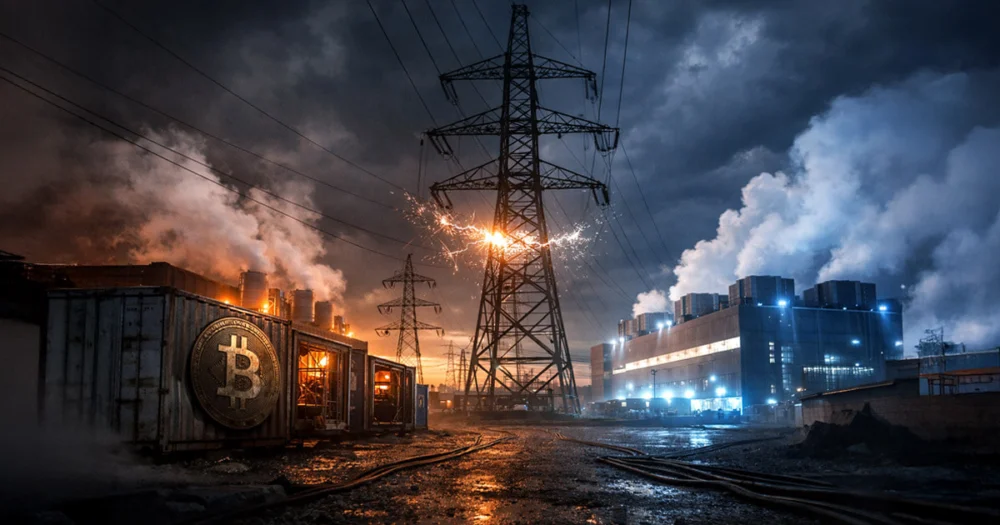
The central thesis of the BlackRock report suggests that the rapid buildout of AI-driven data centers is underestimating the friction of the physical world. While the market has focused on the scarcity of high-end semiconductors, BlackRock contends that the true bottleneck is grid access. The report projects that AI data centers could consume up to 24% of total U.S. electricity by 2030. This aggressive forecast represents a seismic shift in industrial planning, threatening to displace other heavy power users—most notably the Bitcoin mining industry, which has spent the last five years establishing itself as the primary consumer of flexible, low-cost energy in the United States.
A Chronology of the Energy Convergence
The tension between these two digital giants has been building since the "Great Migration" of Bitcoin miners to North America in 2021 following China’s ban on the practice. At that time, miners were welcomed by grid operators in states like Texas and Georgia as a "flexible load" that could soak up excess renewable energy.
By 2023, the emergence of generative AI created a new, competing demand for high-density computing infrastructure. Throughout 2024 and 2025, a narrative of "AI-Crypto Synergy" took hold in the markets. This theory suggested that AI agents would naturally utilize blockchain networks for permissionless payments and that miners could use their existing power footprints to host AI workloads. However, as the scale of AI infrastructure has ballooned from megawatt-scale projects to gigawatt-scale "megacampuses," the cooperative narrative has fractured. BlackRock’s 2026 outlook serves as the formal acknowledgement that the era of cooperation is being replaced by a zero-sum competition for interconnection rights and baseload power.
The Statistical Reality: Mapping US Electricity Demand
The scale of the projected energy consumption is unprecedented in the modern era of the American utility sector. To put BlackRock’s "24% by 2030" figure into perspective, it is necessary to examine the broader consensus of energy researchers. While BlackRock sits at the high end of the spectrum, other institutions have issued similarly alarming data:
- The Electric Power Research Institute (EPRI): In its 2024 modeling, EPRI estimated that data centers would account for 4.6% to 9.1% of U.S. generation by 2030, a figure that has been revised upward as AI uptake accelerated.
- The Department of Energy (DOE): A report tied to the Lawrence Berkeley National Laboratory noted that data center load growth in the U.S. has tripled over the last decade and is on track to double or triple again by 2028.
- World Resources Institute (WRI): Citing Berkeley Lab studies, the WRI projects a range of 6.7% to 12% of total consumption by 2030.
BlackRock’s more aggressive 24% projection accounts for the "total capital spending intentions" for the AI buildout, which the firm estimates will reach between $5 trillion and $8 trillion through 2030. This spending is not merely going toward chips but toward the construction of massive energy infrastructure, transformers, and dedicated power plants. In an environment where the North American Electric Reliability Corporation (NERC) has already warned of reliability threats due to rapid load growth and the retirement of traditional generators, the entrance of such a massive new consumer creates an immediate squeeze on existing industrial users like Bitcoin miners.
Operational Friction: Baseload Certainty vs. Flexible Interruption
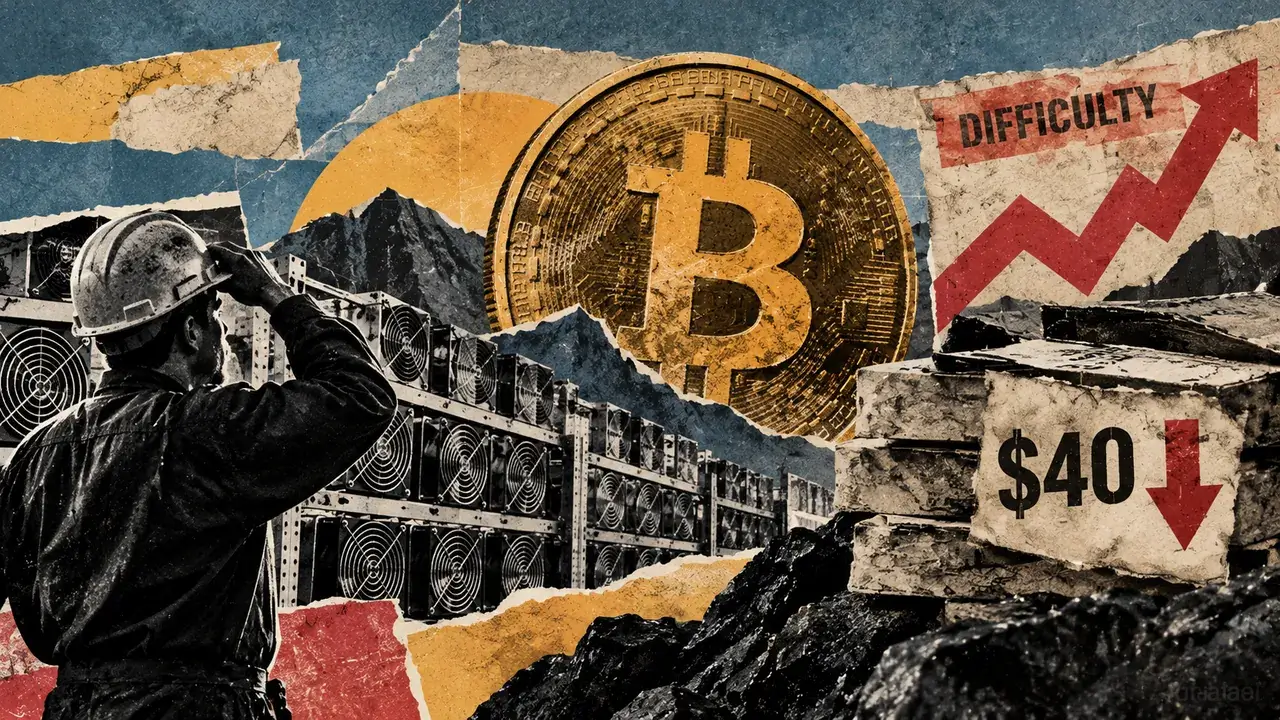
The fundamental conflict between AI and Bitcoin mining is found in their respective consumption profiles. Bitcoin mining is "brutally simple" at the physics layer, relying on specialized ASIC (Application-Specific Integrated Circuit) computers to perform hashing. The dominant cost is electricity, but the industry’s unique advantage has always been its flexibility. Because the Bitcoin network does not suffer if a single mine shuts down for several hours, miners can act as a "shock absorber" for the grid.
In Texas, the Electric Reliability Council of Texas (ERCOT) has institutionalized this flexibility. During the heatwaves of August 2023, Riot Platforms—one of the largest miners in the U.S.—curtailed its power usage by more than 95% during peak demand periods. This allowed the grid to remain stable while Riot earned $31.7 million in energy credits. This "demand-response" model has been the industry’s primary defense against claims of energy waste.
In contrast, AI data centers require "baseload certainty." Training a large language model (LLM) or providing real-time inference for consumer products cannot be easily interrupted. A hyperscaler like Microsoft, Google, or Meta signing a multi-year power purchase agreement (PPA) requires 99.9% uptime. They do not want to power down during a heatwave; they want the grid to prioritize their delivery above all else. As BlackRock points out, if Bitcoin miners are the shock absorbers, AI is the "shock creator." When the grid reaches its physical limits, the "flexible" user is often the first to be asked to step aside—or the first to be priced out by a competitor willing to pay a premium for guaranteed, uninterrupted flow.
The Regulatory and Political Asymmetry
Beyond the technical requirements of the grid, a significant political divide is opening between the two industries. Historically, Bitcoin mining has struggled with political optics, often being framed by critics as a speculative activity that consumes vast amounts of energy for no tangible social benefit. AI, however, is being framed by both the public and private sectors as a matter of "national competitiveness."

The BlackRock report notes that AI is increasingly viewed by lawmakers as the backbone of future defense, medical research, and economic productivity. This gives AI developers a significant advantage in the "regulatory contest" for interconnection approvals. It is politically easier for a utility commission to approve a 500-megawatt connection for a data center that promises thousands of high-tech jobs and national security benefits than for a Bitcoin mine that operates with a skeleton crew and supports a decentralized financial network.
As power markets tighten, the risk of "preferential siting" increases. This could manifest as higher electricity tariffs for crypto miners or more stringent reporting requirements, such as those recently proposed by the U.S. Energy Information Administration (EIA). The EIA estimated that crypto mining represented between 0.6% and 2.3% of U.S. electricity consumption in 2024—a significant enough portion to make it a target for lawmakers looking to free up capacity for AI development.
The Megawatt Arbitrage: Miners Pivoting to AI Infrastructure
Faced with the prospect of being squeezed out of the power market, many Bitcoin mining firms are pursuing a strategy of "megawatt arbitrage." This involves pivoting from hashing Bitcoin to hosting AI and high-performance computing (HPC) workloads. The logic is based on the value of the underlying asset: the power permit.
In the current market, a permitted substation with hundreds of megawatts of capacity is often more valuable than the mining hardware itself. Companies like Core Scientific and Terawulf have already begun signing deals to lease their infrastructure to AI firms. By doing so, they trade the volatility of Bitcoin mining for the steady, contracted cash flows of the AI sector.
However, BlackRock warns that this pivot is not a simple "plug-and-play" transition. AI data centers require vastly different cooling systems (often liquid cooling), more robust network architecture to handle low-latency data transfer, and much higher levels of physical security and power redundancy. The cost of retrofitting a "containerized" Bitcoin mine into a Tier 3 data center can be astronomical, and miners must compete with specialized data center operators who have deeper pockets and longer-standing relationships with utility providers.
Macroeconomic Implications and the End of Cheap Abundance
The overarching message of BlackRock’s 2026 Global Outlook is that the era of "cheap energy abundance" for the digital economy is ending. The AI boom is so capital-intensive and energy-hungry that it is forcing a reordering of industrial priorities. For the Bitcoin mining industry, this means the "center of gravity" may shift once again.
While the U.S. has been the preferred destination for miners due to its legal stability and (formerly) abundant power, the "energy war" with AI may push hash power toward regions with stranded energy assets that are unsuitable for AI—such as remote hydroelectric sites in South America, volcanic geothermal pockets in Iceland, or flared gas sites in the Middle East.
Ultimately, the Bitcoin network is designed to survive this pressure. Its difficulty adjustment mechanism ensures that if miners in the U.S. shut down due to high power costs, the network will remain secure as other miners elsewhere become more profitable. However, the industrial-scale mining operations that have gone public on U.S. exchanges face a more complex future. They must decide whether to become "AI utilities," integrate more deeply with the grid as stability providers, or find new frontiers where AI’s thirst for baseload power hasn’t yet reached.
BlackRock’s warning serves as a reminder that in the digital age, code may be infinite, but the wires, permits, and turbines that power it are finite. The next phase of the technological revolution will be won not just by those with the best algorithms, but by those who secure the right to plug them in.