admin
admin
The 2021 Growth Catalyst: From Retail Interest to Institutional Integration
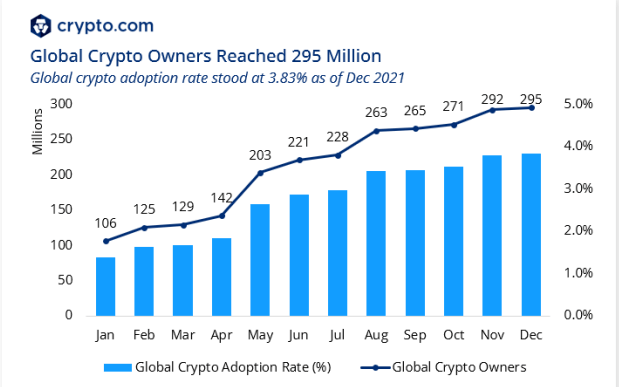
The transition of cryptocurrency from a niche interest to a mainstream financial asset class was accelerated by several high-profile developments throughout 2021. While retail investors have historically been the primary engine of adoption, the past year was characterized by a significant influx of institutional capital and state-level recognition.
A pivotal moment in this timeline was the implementation of El Salvador’s Bitcoin Law in September 2021. By becoming the first sovereign nation to adopt Bitcoin as legal tender, El Salvador provided a real-world case study for the integration of decentralized assets into a national economy. This move was accompanied by the rollout of the "Chivo" wallet, which reportedly onboarded millions of Salvadorans into the crypto ecosystem in a matter of weeks.
Parallel to state-level adoption, the corporate sector showed unprecedented interest. Major financial institutions, including legacy firms such as Goldman Sachs and Morgan Stanley, began offering crypto-related services to their high-net-worth clients. Simultaneously, companies like MicroStrategy and Tesla integrated Bitcoin into their corporate treasuries, signaling a new era of "institutionalization" for the asset class. These factors combined to create a robust environment for user growth, leading to the 178% increase in global owners documented over the calendar year.

Analyzing the 2021 Adoption Timeline
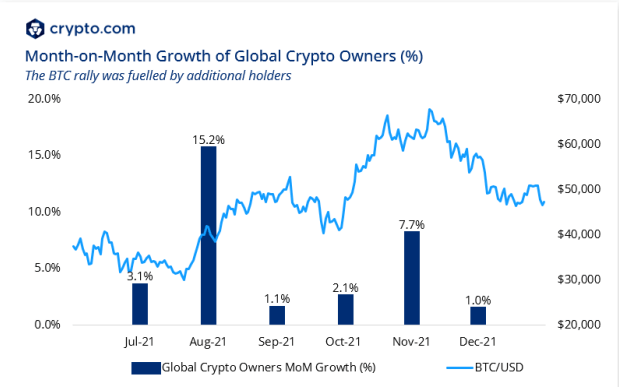
The growth of the cryptocurrency user base in 2021 was not linear, but rather marked by specific periods of rapid acceleration tied to market performance and external news cycles. According to the Crypto.com data, which aggregates user statistics across two dozen major centralized exchanges, the most significant month-on-month growth occurred in August 2021. During this period, the user base expanded by 15.2% compared to July.
This August surge coincided with a broader market recovery following the significant price correction seen in May 2021. As Bitcoin and other major assets began their climb toward new all-time highs, retail FOMO (Fear Of Missing Out) returned to the market. This influx of new participants is widely credited with providing the liquidity and momentum necessary for Bitcoin to reach its peak price of approximately $69,000 in November 2021.
However, the latter months of the year saw a stabilization in growth rates. In September and October 2021, month-on-month growth slowed to 1.1% and 2.1%, respectively. Analysts suggest that this cooling period reflected a market that had become "top-heavy," with many potential new users waiting for a clearer entry point or being deterred by the rising costs of transaction fees on networks like Ethereum.
Bitcoin Remains the Primary Gateway for New Entrants
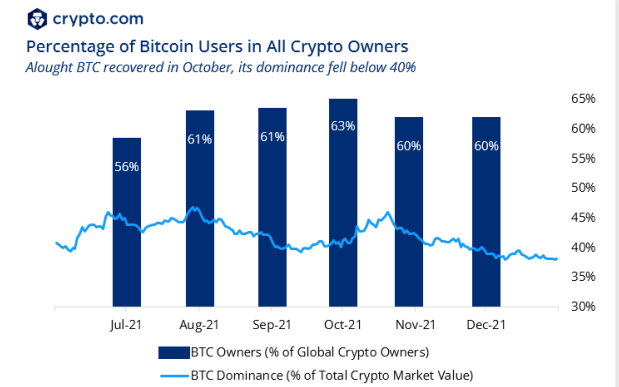
Despite the proliferation of thousands of alternative cryptocurrencies (altcoins), Bitcoin maintains its status as the dominant entry point for the vast majority of global users. As of the end of 2021, approximately 176 million people—representing just under 60% of the total crypto-owning population—held Bitcoin in their portfolios.
The report highlights a notable resilience in Bitcoin’s market share among users. In July 2021, Bitcoin owners accounted for 56% of the market. This figure climbed to 63% by October as the market anticipated the launch of the first Bitcoin futures Exchange-Traded Funds (ETFs) in the United States. Although Bitcoin’s price began a drawdown in the final two months of the year, its share of the user base only slightly retracted to 60%.
The enduring appeal of Bitcoin is often attributed to its perceived role as "digital gold" and its relative simplicity compared to the broader decentralized finance (DeFi) ecosystem. For many new investors, Bitcoin represents a familiar investment thesis: a finite-supply asset that serves as a hedge against fiat currency inflation. This clarity of purpose continues to drive adoption even when the broader market experiences volatility.
The Ethereum Divergence: Adoption Hurdles and Network Competition
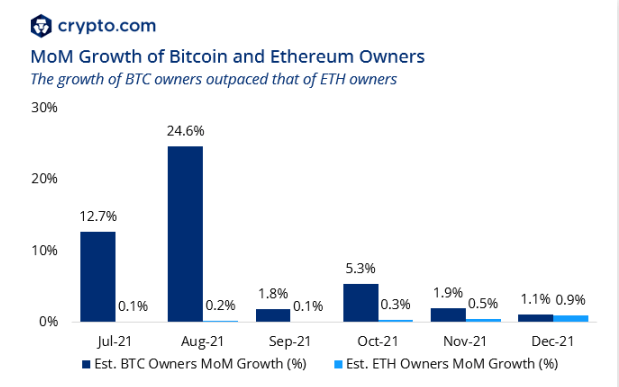
One of the more surprising findings in the 2021 data was the relative stagnation of Ethereum adoption in the second half of the year. While Bitcoin’s user base grew by 37.5% between July and December, Ethereum’s user count grew by a mere 1.4%, holding steady at approximately 23 million users.
This divergence is particularly striking given that Ethereum began 2021 with strong momentum, seeing a 64% increase in its user base during the first six months of the year. Several factors have been identified as potential contributors to this slowdown:
- Network Congestion and High Gas Fees: Throughout much of 2021, the Ethereum network struggled with scalability issues. High demand for transactions, driven by the NFT (Non-Fungible Token) craze and DeFi activity, pushed "gas fees" to levels that were often prohibitive for small-scale retail investors. A single token swap on a decentralized exchange like Uniswap could cost hundreds of dollars in fees, effectively pricing out the average newcomer.
- The Rise of Competitors and Layer-2 Solutions: The report notes that various Ethereum Virtual Machine (EVM)-compatible blockchains, such as Binance Smart Chain (now BNB Chain), Avalanche, and Solana, as well as Layer-2 scaling solutions like Polygon and Arbitrum, began siphoning away users and assets. These platforms offered faster and cheaper transactions, appealing to users who were primarily interested in utility rather than just holding an asset.
- Complexity and Educational Barriers: Unlike Bitcoin, which is primarily a store of value, Ethereum is a programmable blockchain. Participating in the Ethereum ecosystem often requires a higher degree of technical literacy, including the use of non-custodial wallets like MetaMask and an understanding of smart contract interactions.
It is important to note that the Crypto.com report relies on data from centralized exchanges (CEXs). This methodology may underrepresent the true number of Ethereum users who interact exclusively with decentralized protocols and do not keep their assets on exchanges.
Projections for 2022: The Road to One Billion
The forecast of 1 billion users by the end of 2022 is based on the assumption that the growth rate seen in 2021 will persist. If the current ratio of Bitcoin ownership holds, a 1-billion-user milestone would imply that approximately 600 million people worldwide will own Bitcoin by the end of the year.
The path to this milestone is expected to be paved by several key themes. First, the continued development of regulatory frameworks in major economies—such as the United States, the European Union, and India—could provide the legal clarity necessary for even greater institutional and retail participation. While some fear that regulation could stifle innovation, many industry leaders argue that "clear rules of the road" are essential for mass adoption.
Second, the maturation of the "Web3" narrative is expected to bring in users who are interested in decentralized social media, gaming, and identity management, rather than just financial speculation. The integration of blockchain technology into everyday applications could onboard users who are not even aware they are using cryptocurrency.
Third, the macro-economic environment may continue to play a role. With global inflation reaching multi-decade highs in many regions, the narrative of cryptocurrency as a non-sovereign store of value remains a powerful draw for populations experiencing currency devaluation.
Broader Economic and Geopolitical Implications
The transition to a world with 1 billion cryptocurrency users would represent a significant milestone in the history of finance. Such a level of adoption would likely force a more rapid evolution of the global banking system. Central banks around the world are already accelerating their efforts to develop Central Bank Digital Currencies (CBDCs) in response to the rise of private digital assets.
Furthermore, the widespread adoption of Bitcoin could have profound implications for international trade and remittances. In regions with underdeveloped banking infrastructure, mobile-based cryptocurrency wallets provide a viable alternative for financial inclusion, allowing individuals to bypass traditional intermediaries and reduce the costs of cross-border transfers.
However, the journey to 1 billion users is not without risks. Security remains a paramount concern, as the increase in users also increases the target surface for cybercriminals and hackers. Additionally, the environmental impact of Proof-of-Work mining continues to be a point of contention in political and social circles, potentially leading to restrictive policies in certain jurisdictions.
In conclusion, the data from 2021 underscores a period of historic transformation for the digital asset industry. While market prices remain subject to the whims of sentiment and macro-economic shifts, the consistent growth in the number of global owners points toward a future where cryptocurrency is an integral part of the global financial fabric. If 2021 was the year of institutional entry, 2022 is positioned to be the year of global scale.