admin
admin
The beleaguered cryptocurrency lender Celsius Network’s impending liquidation of its substantial altcoin holdings is poised to exert significant downward pressure on the broader digital asset market, according to a detailed analysis by blockchain data firm Kaiko. The firm’s report, released on July 10, highlights that the planned conversion of these altcoins into Bitcoin (BTC) and Ethereum (ETH) could trigger cascading effects, particularly impacting the liquidity and valuation of smaller-cap digital currencies.
Background: The Fall of a Crypto Giant
Celsius Network, once a titan in the decentralized finance (DeFi) space, filed for Chapter 11 bankruptcy protection in July 2022, following a severe liquidity crisis exacerbated by the broader market downturn and significant asset mismanagement. The company’s collapse sent shockwaves through the crypto industry, impacting countless investors who had entrusted their funds to the platform for yield-generating services. The subsequent bankruptcy proceedings have been a lengthy and complex process, with creditors and stakeholders vying for the recovery of assets. A pivotal development in these proceedings was the court’s recent approval, granted on July 6, 2023, allowing Celsius to begin liquidating its altcoin portfolio. This decision marks a significant step towards potentially satisfying creditor claims, but it also introduces a new set of market dynamics that analysts are closely monitoring.
Kaiko’s Analysis: Liquidity Erosion and Market Depth Concerns
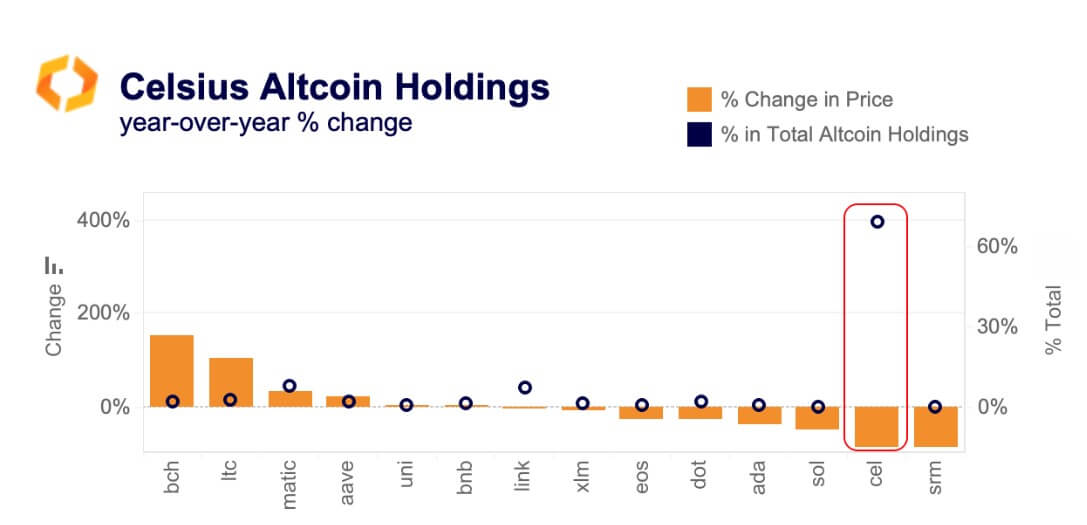
Kaiko’s research delves into the current state of Celsius’s altcoin holdings and their potential market impact. The firm observed that a majority of the altcoins held by Celsius have already experienced substantial depreciation in their market liquidity over the past year. These declines range from a concerning 6% to a staggering 84%, indicating a significant drying up of trading volume and order book depth for these assets.
"The aggregated market depth for Celsius’s altcoin holdings has declined by 40% since 2022, totalling around $90 million in early July," stated the Kaiko report. Market depth, a crucial metric in financial markets, refers to the ability of a market to absorb large orders without causing significant price fluctuations. A decline in market depth suggests that even relatively small trades could lead to substantial price slippage, making it difficult to execute large orders efficiently and without impacting the asset’s value.
Specific Altcoin Performance and Market Dynamics
The Kaiko report identified specific altcoins that have seen more pronounced changes in their liquidity situations. While many have experienced general declines, a few, namely Litecoin (LTC), Bitcoin Cash (BCH), Polygon (MATIC), and Aave (AAVE), have exhibited more dynamic shifts.
Notably, both BCH and LTC saw a surge in their liquidity following the June launch of EDX Markets. This new cryptocurrency exchange is backed by established traditional financial institutions, including Fidelity, Charles Schwab, and Citadel, signaling a potential institutional interest in specific digital assets. The backing of EDX Markets appears to have provided a temporary boost to the liquidity of these particular cryptocurrencies.
However, this positive development for a select few contrasts sharply with the overall trend for Celsius’s altcoin holdings. The total value of these holdings, exceeding $90 million, presents a significant challenge for orderly liquidation. Kaiko anticipates that Celsius will face considerable difficulty in selling these assets without incurring substantial price slippage. This means that as Celsius attempts to offload its altcoins, the act of selling itself could drive down the price of those assets, leading to a less favorable outcome for both Celsius and its creditors.
Concentration of Liquidity: A Double-Edged Sword
The analysis further sheds light on the geographical concentration of altcoin market depth. According to Kaiko, more than 60% of altcoin market depth is currently concentrated on Binance, the world’s largest cryptocurrency exchange, and other offshore platforms. The remaining 30% is found on U.S.-based exchanges. This concentration means that any large-scale liquidation efforts by Celsius are likely to primarily impact liquidity on these major venues. While Binance’s deep liquidity pools might absorb some of the selling pressure, the sheer volume of assets being liquidated could still overwhelm these markets, leading to price declines. Furthermore, the reliance on offshore exchanges could raise regulatory concerns for some market participants.
The CEL Token: A Liquidity Black Hole
Perhaps the most critical finding of Kaiko’s report concerns the liquidity of Celsius’s native token, CEL. The analysis reveals that there is virtually no discernible liquidity for CEL, making its liquidation an almost insurmountable task. CEL represents nearly 65% of Celsius’s total altcoin holdings, making it the largest single altcoin asset on the company’s balance sheet.
"There is virtually no liquidity for CEL as measured by market depth, which has collapsed to just $30,000, concentrated mostly on OKX and Bybit," the report states. A market depth of a mere $30,000 signifies an extremely illiquid market. This means that even a small sell order could cause a dramatic price crash for the CEL token. The collapse in CEL’s liquidity reflects the diminished interest and value associated with the token since Celsius filed for bankruptcy. Once trading at over $8 in 2021, the CEL token’s value has plummeted to under $1, a stark testament to the company’s downfall and the loss of confidence in its future prospects. The near-total absence of liquidity for its largest altcoin holding poses a significant problem for Celsius’s liquidation strategy and its ability to recover value for its stakeholders.
Potential Market Implications
The impending liquidation by Celsius could trigger a series of negative consequences for the cryptocurrency market, particularly for altcoins.
- Price Declines: The most immediate impact will likely be downward price pressure on the altcoins that Celsius holds. As the company systematically sells these assets to convert them into BTC and ETH, the increased supply entering the market could outstrip demand, leading to price erosion. This effect could be amplified for smaller-cap altcoins with already thin liquidity.
- Contagion Effect: The news of a major player like Celsius liquidating assets can also create a negative sentiment in the market. Investors may become more risk-averse, leading to sell-offs across the board, even in assets not directly held by Celsius. This could trigger a broader market downturn, similar to what was observed during the initial stages of Celsius’s liquidity crisis.
- Reduced Altcoin Dominance: If significant amounts of altcoins are dumped onto the market, it could lead to a further reduction in their overall market capitalization relative to Bitcoin and Ethereum. This could accelerate the trend of Bitcoin and Ethereum dominance within the crypto ecosystem.
- Strain on Exchanges: Major exchanges, particularly Binance, OKX, and Bybit, will likely bear the brunt of these liquidation efforts. While they are equipped to handle large trading volumes, the sustained pressure from Celsius’s sales could still impact their trading dynamics and potentially lead to increased volatility on their platforms.
- Impact on Creditors: The success of Celsius’s liquidation plan is crucial for its creditors, who are seeking to recover as much of their lost investments as possible. However, the illiquidity of certain assets, especially CEL, means that a full recovery might be an unrealistic expectation. The price slippage incurred during liquidation could significantly reduce the net proceeds available for distribution.
Broader Context: Regulatory Scrutiny and Market Maturation
The Celsius bankruptcy and its ongoing liquidation process occur within a broader context of increased regulatory scrutiny of the cryptocurrency industry. The fall of major platforms like Celsius, Three Arrows Capital, and FTX has prompted regulators worldwide to take a closer look at stablecoins, lending platforms, and exchanges. The actions taken by Celsius in its bankruptcy proceedings will be closely watched as they could set precedents for future cases and influence regulatory frameworks.
Moreover, the market’s reaction to Celsius’s liquidation will also be a test of its resilience and maturity. A more robust and liquid market should, in theory, be able to absorb such events with less dramatic consequences. However, the current analysis by Kaiko suggests that significant vulnerabilities remain, particularly in the liquidity of many altcoins.
Looking Ahead: Awaiting Further Developments
The court-approved liquidation plan is a significant development, but the actual execution will be a drawn-out process. The total amount of altcoins to be liquidated and the pace at which Celsius will sell them remain key variables. Investors and market participants will be closely monitoring the company’s actions and the subsequent market reactions. The success of this liquidation could be a crucial step for Celsius in its journey towards exiting bankruptcy, but it simultaneously introduces a period of potential turbulence for the wider cryptocurrency market, especially for the altcoin segment. The insights provided by Kaiko serve as a critical warning, highlighting the delicate liquidity conditions that could be further strained by these significant sell-offs.