Dwi Wanna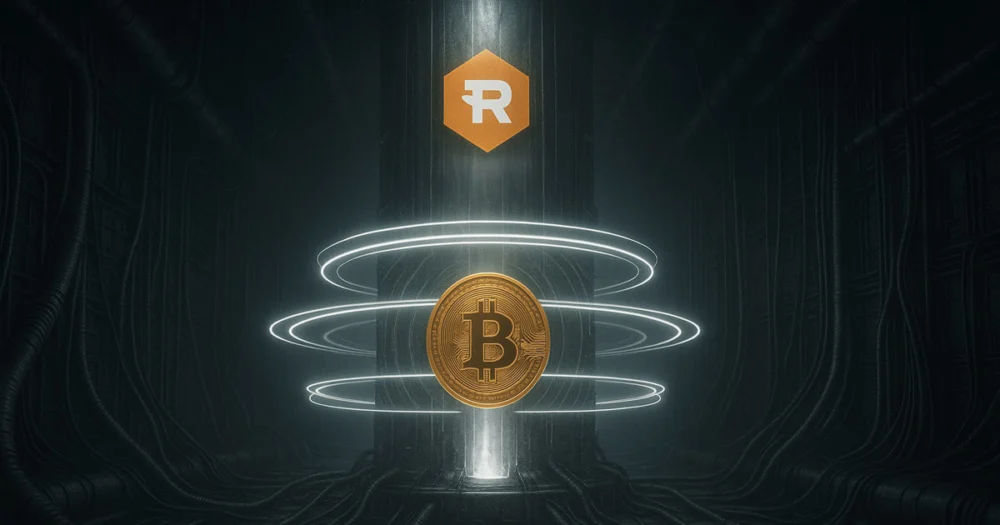
Riot Platforms, one of the largest publicly traded Bitcoin mining operations in North America, has formalized a $100 million credit agreement with Coinbase Financial Services, marking a significant shift in the company’s capital management strategy. By utilizing its substantial Bitcoin holdings as collateral, the firm is securing liquidity without the need to liquidate its primary digital assets or further dilute shareholder equity through secondary stock offerings. This move comes at a critical juncture for the cryptocurrency mining industry, which is currently grappling with increased operational costs, record-high mining difficulty, and shifting investor preferences toward spot Bitcoin exchange-traded funds (ETFs).
The credit facility, structured as a revolving line of credit, allows Riot to access capital through staged withdrawals over a two-month period. Once fully drawn, the $100 million will be deployed toward general corporate purposes, including the expansion of its mining infrastructure and the enhancement of its technological capabilities. The agreement highlights a growing trend among "mega-miners" to treat their Bitcoin treasuries as productive assets that can be leveraged for traditional financing, rather than merely holding them as passive reserves.
Strategic Financial Terms and Collateralization
The terms of the loan reflect a sophisticated approach to debt in the digital asset space. According to regulatory filings and company statements, the interest rate for the facility is floating. It is calculated based on the higher of the federal funds rate upper limit or a floor of 3.25%, with an additional margin of 4.5%. Given current macroeconomic conditions and the Federal Reserve’s prevailing interest rate environment, the effective annual percentage rate is expected to sit in the high single to low double digits.
The maturity of the credit line is set for 364 days from the date of the agreement. However, the contract includes a provision allowing Riot to request a one-year extension, subject to the approval of Coinbase. This short-term duration is typical for crypto-backed loans, providing the lender with a mechanism to reassess risk while giving the borrower a bridge to long-term operational milestones.
What makes this transaction particularly noteworthy is the scale of the collateral. Riot Platforms currently maintains a treasury of approximately 19,233 BTC. At contemporary market valuations, this "trove" is worth roughly $1.8 billion. By borrowing $100 million against $1.8 billion in assets, Riot is maintaining an exceptionally low loan-to-value (LTV) ratio of approximately 5.5%. This conservative LTV provides a massive cushion against Bitcoin’s inherent price volatility, significantly reducing the risk of margin calls or forced liquidations that have plagued smaller, more aggressively leveraged miners in previous market cycles.
Chronology of Riot’s Financial Evolution
The transition to a Bitcoin-backed loan represents a new chapter in Riot’s financial history. Historically, Riot and its peers, such as Marathon Digital and Core Scientific, relied heavily on "at-the-market" (ATM) equity offerings to fund their massive capital expenditure requirements. While effective for raising billions during bull markets, this strategy often led to significant share dilution, which frequently drew criticism from long-term investors.
In early 2024, following the Bitcoin halving event in April, the revenue per terahash for miners—often referred to as the "hashprice"—began to decline. This forced miners to seek more efficient ways to fund the purchase of next-generation ASIC (Application-Specific Integrated Circuit) hardware. In mid-2024, Riot began signaling a shift toward more diversified financing. The company has been aggressively expanding its facility in Corsicana, Texas, which is slated to become one of the largest dedicated Bitcoin mining sites in the world.
The partnership with Coinbase, the largest U.S.-based cryptocurrency exchange, underscores the maturing relationship between the mining sector and institutional crypto service providers. By choosing Coinbase Financial Services, Riot is tapping into a regulated domestic partner that can provide the necessary compliance and custody infrastructure required for a publicly traded entity listed on the NASDAQ.
Official Responses and Corporate Strategy
Jason Les, CEO of Riot Platforms, emphasized the strategic importance of this facility in a statement regarding the company’s long-term vision. Les noted that the agreement provides "non-dilutive funding at an attractive cost of financing." He further explained that the credit facility is a "key part of our efforts to diversify sources of financing to support our operations and strategic growth initiatives, with a view towards long-term stockholder value creation."
The sentiment within the company suggests that this $100 million is just one component of a broader multi-pillar strategy. Riot is not only focused on mining but also on "power strategy," which involves participating in demand-response programs with the Electric Reliability Council of Texas (ERCOT). By leveraging its Bitcoin to pay for the infrastructure needed to balance the Texas power grid, Riot effectively turns its mining hardware into a flexible industrial load that generates revenue even when it isn’t hashing blocks.
Industry Headwinds: Tariffs and Technical Challenges
The decision to secure new funding comes as the mining industry faces a "perfect storm" of economic pressures. A recent industry analysis by Bitwise highlighted two primary threats to the profitability of U.S.-based miners: geopolitical trade tensions and increasing network difficulty.
First, the cost of the hardware required to remain competitive is rising due to U.S. trade policies. Many of the most efficient mining rigs are manufactured in Southeast Asia, specifically in countries like Vietnam, Thailand, and Malaysia. Recent tariffs on equipment imported from these regions range from 24% to 46%. For a company like Riot, which is in the process of deploying tens of thousands of new units, these duties add tens of millions of dollars to their capital expenditure budgets. This makes access to low-cost, non-dilutive capital like the Coinbase loan essential for maintaining a competitive edge.
Second, the Bitcoin network’s difficulty—a self-adjusting mechanism that ensures blocks are found every ten minutes regardless of how much computing power is online—recently hit an all-time high. As more powerful machines come online globally, each individual miner’s share of the total network rewards diminishes. The "hashprice," a metric that calculates the expected value of 1 petahash of computing power per day, has fallen to approximately $48. This is a significant drop from the $60+ levels seen earlier in the year and well below the peaks of previous cycles.
Shifting Investor Sentiment and the ETF Effect
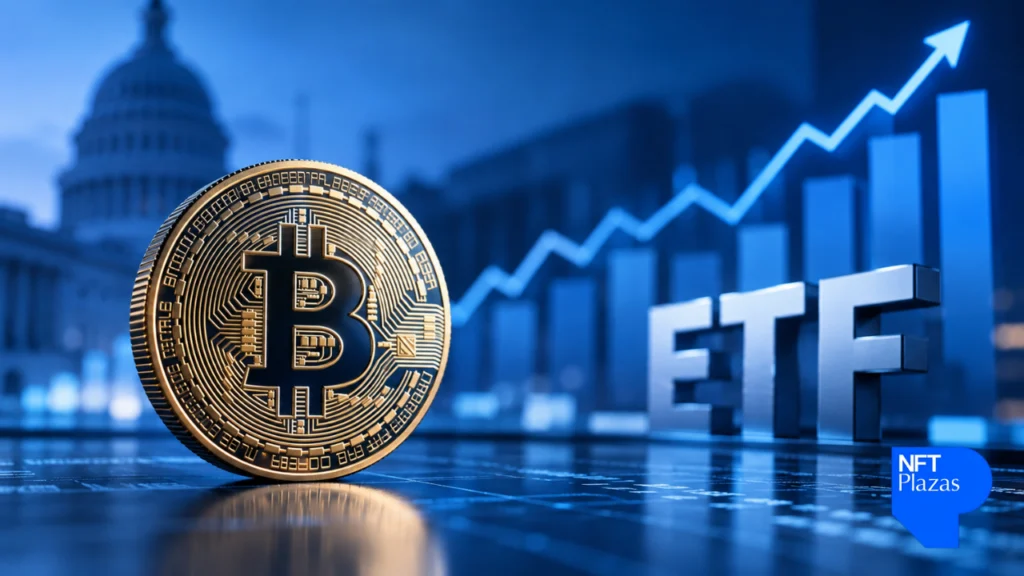
Beyond the technical and regulatory hurdles, Bitcoin miners are facing a shift in how investors gain exposure to the digital asset ecosystem. Before the approval of spot Bitcoin ETFs in the United States in January 2024, mining stocks were often used as a "proxy" for Bitcoin. Investors seeking exposure in traditional brokerage accounts would buy RIOT or MARA because they could not hold the underlying asset directly.
However, the massive success of ETFs like BlackRock’s IBIT and Fidelity’s FBTC has changed the landscape. Investors can now track the price of Bitcoin with lower volatility and without the operational risks associated with industrial-scale mining. Furthermore, "Bitcoin treasury" companies like MicroStrategy and Japan’s Metaplanet have emerged as alternative vehicles for BTC exposure. These firms do not face the high electricity and hardware costs of miners, making them more attractive to certain segments of the market.
By securing this loan, Riot is attempting to prove that its mining operations can be managed with the same financial sophistication as a traditional industrial or tech firm. The ability to borrow against its "digital gold" allows it to keep its Bitcoin for potential future price appreciation while using the borrowed cash to weather the current low-margin environment.
Analysis of Broader Implications
The Riot-Coinbase agreement may serve as a blueprint for other well-capitalized miners. If the industry moves toward a model where Bitcoin is used primarily as collateral rather than an asset to be sold, it could lead to a reduction in sell-side pressure on the market. Historically, miners were forced to sell their "block rewards" to pay for electricity and payroll. If the largest players can instead use credit facilities, more Bitcoin remains off the market, potentially supporting higher prices over the long term.
Furthermore, this transaction validates the role of institutional custodians and lenders in the crypto space. For Coinbase, providing a $100 million loan to a major public company demonstrates the depth of its liquidity and its ability to service the complex needs of the mining sector.
As Riot Platforms moves forward with its expansion in Texas and navigates the challenges of high network difficulty and equipment tariffs, the $100 million Coinbase facility provides a vital buffer. The success of this strategy will likely be measured by the company’s ability to increase its total hash rate—and thus its share of the global Bitcoin network—without further diluting the value held by its shareholders. In an era where mining margins are thinner than ever, such financial engineering is no longer optional; it is a prerequisite for survival in the competitive world of digital asset production.