Dwi Wanna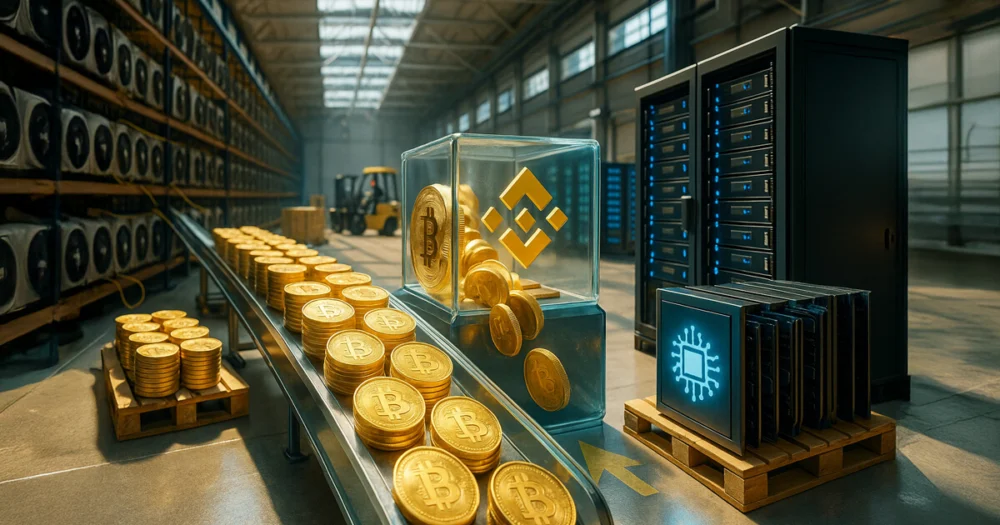
The largest single-day spike during this period occurred on October 11, when over 14,000 BTC was moved to exchange wallets. This specific transaction marked the highest daily miner deposit since July 2024, catching the attention of analysts who monitor exchange inflows as a primary indicator of impending sell pressure. In the context of the cryptocurrency market, such large-scale movements are rarely incidental; they often suggest that miners are seeking liquidity to manage operational overhead, hedge against further price volatility, or reallocate capital toward alternative business models.
The Economic Context of Miner Capitulation
The current movement of Bitcoin reserves marks a distinct departure from the behavior observed throughout much of early 2024. Following the Bitcoin halving event in April, which reduced the block reward from 6.25 BTC to 3.125 BTC, many mining firms adopted an "accumulation" strategy. These operators were banking on the historical precedent that post-halving scarcity would drive prices to new all-time highs, thereby offsetting the 50% reduction in their primary revenue stream. However, the anticipated price surge has been met with significant resistance, leaving many miners with shrinking profit margins and rising debt obligations.
The industry is currently navigating what analysts describe as a "zero-sum environment." As the Bitcoin network difficulty continues to climb, miners are forced to deploy more computing power—measured in terahashes—just to maintain their existing share of the network rewards. When the price of Bitcoin remains stagnant or declines while difficulty rises, the "hashprice"—a metric representing the expected value of 1 TH/s of hashing power per day—drops. Current data from the Hashrate Index shows that the hashprice has fallen to approximately $45, its lowest level since April’s halving.
Rising Network Difficulty and Operational Strains
The technical challenges facing miners are evidenced by the relentless climb in network difficulty. In September, Bitcoin mining difficulty peaked above 150 trillion following seven consecutive positive adjustments. This mechanism, which recalibrates roughly every two weeks (or every 2,016 blocks), ensures that the time between blocks remains approximately ten minutes. A rising difficulty is a testament to the network’s security and the amount of hardware being deployed globally, but for individual operators, it represents a more expensive and competitive landscape.

According to data from Cloverpool, the most recent difficulty epoch, which concluded at block 919,296, saw a modest decrease of 2.73%. While this offered a temporary reprieve, it followed months of upward pressure that effectively priced out less efficient operations. A decline in difficulty typically indicates that "weak" miners—those using older hardware or facing high electricity costs—have powered down their rigs because they are no longer profitable.
Compounding the issue is the state of transaction fees. Historically, transaction fees act as a secondary revenue stream for miners, becoming particularly important during periods of high network activity. However, 2025 has seen a significant cooling in on-chain activity. The average fee per block has hovered around 0.036 BTC, the lowest level recorded since 2010. Jaran Mellerud, a prominent Bitcoin mining analyst, noted that the industry’s disregard for transaction fees is a growing paradox. He suggested that as block rewards continue to halve every four years, these fees will eventually become the sole source of income for the network’s keepers.
On-Chain Analysis and Market Signaling
The movement of 51,000 BTC to Binance has been categorized by researchers as a bearish on-chain signal. ArabChain, a blockchain research entity, explained that such large transfers from miner-controlled wallets to exchanges generally serve one of three purposes: direct liquidation, collateralization, or technical reallocation.
When miners move coins to an exchange like Binance, they may be preparing to sell the assets on the spot market to cover immediate costs, such as electricity bills or hardware lease payments. Alternatively, they may use the Bitcoin as collateral to open short positions in the derivatives market, effectively hedging their downside risk. In some instances, these transfers are purely operational, moving funds to trading platforms to comply with regulatory requirements or to facilitate corporate financing. Regardless of the specific intent, the removal of Bitcoin from long-term storage into an exchange environment increases the available supply for sale, which often precedes a period of price consolidation or downward adjustment.
The Pivot to Artificial Intelligence and HPC
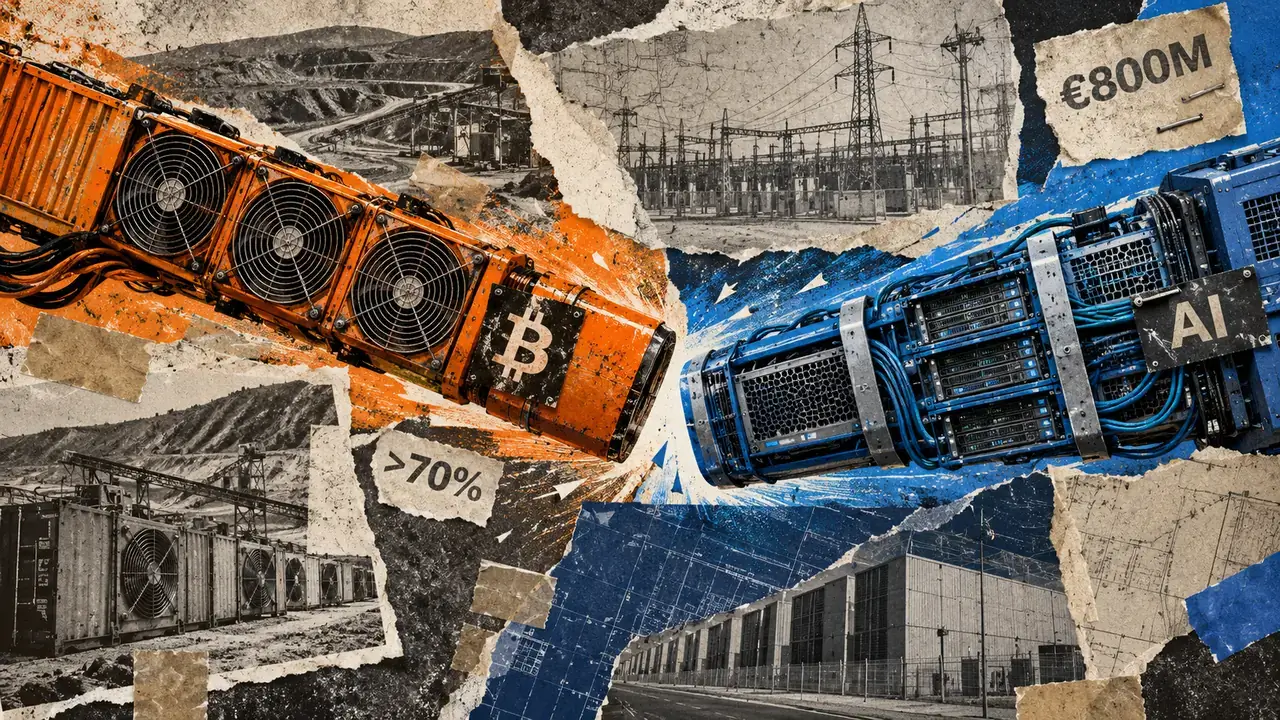
As the traditional mining model faces structural headwinds, a new "escape plan" has emerged: Artificial Intelligence (AI) and High-Performance Computing (HPC). Large-scale mining firms are increasingly realizing that the infrastructure they built for Bitcoin—massive data centers with access to gigawatts of power, advanced cooling systems, and high-speed fiber connectivity—is perfectly suited for the burgeoning AI industry.

Companies such as Core Scientific have led this transition, retooling their facilities to host GPUs (Graphics Processing Units) instead of ASICs (Application-Specific Integrated Circuits). The economic incentive for this pivot is stark. Reports from Hashlabs indicate that a 1-megawatt (MW) mining site operating the latest generation of efficient Bitcoin rigs can generate roughly $896,000 in annual revenue, assuming a Bitcoin price of $100,000. In contrast, the same 1-MW of power capacity, when leased to AI clients for compute-intensive workloads, can yield up to $1.46 million in annual revenue.
Furthermore, AI hosting contracts are typically long-term and denominated in fiat currency, providing a level of revenue stability that the volatile Bitcoin mining market cannot offer. Nico Smid, founder of Digital Mining Solutions, observed that Bitcoin mining and AI are no longer parallel industries but are now competitors for the same critical resources: energy and infrastructure.
Chronology of the Recent Liquidation Event
To understand the scale of the current shift, a timeline of the recent activity provides necessary context:
- April 2024: The fourth Bitcoin halving occurs, reducing block rewards to 3.125 BTC. Miners begin a period of net accumulation, hoping for a price rally.
- May – August 2024: Mining difficulty continues to climb. Hashprice begins a steady decline as the "halving hangover" sets in.
- September 2024: Network difficulty hits a record peak of 150 trillion. Several public mining companies announce expansion into AI data centers.
- October 9, 2024: Large-scale transfers from miner wallets to Binance begin.
- October 11, 2024: A single-day peak of 14,000 BTC ($1.5B+) is moved to exchanges, the largest such movement in months.
- October 15, 2024: Total transfers for the week reach 51,000 BTC ($5.6B).
Broader Implications for the Bitcoin Network
The transition of mining power toward AI hosting carries significant implications for the long-term security and decentralization of the Bitcoin network. Bitcoin’s security is fundamentally tied to its "hashrate"—the total computational power dedicated to processing transactions and securing the blockchain. If a significant portion of the global hashrate is diverted to AI or if mining becomes so unprofitable that only the largest, most diversified firms survive, the network could see a concentration of power.
However, some analysts view this diversification as a net positive for the industry’s resilience. By integrating AI and HPC into their business models, mining firms can remain solvent during prolonged crypto bear markets. This financial stability ensures that they do not have to engage in "fire sales" of their Bitcoin holdings at the bottom of a market cycle, which could prevent even more severe price crashes.

In the short term, the $5.6 billion move to exchanges remains a point of concern for traders. While it represents a strategic "escape plan" for operators facing an increasingly difficult economic environment, it also places a significant amount of "overhang" on the market. Whether this Bitcoin is sold immediately or used as collateral for complex financial maneuvers, the era of miners acting as the ultimate "HODLers" of last resort appears to be evolving into a more pragmatic, corporate-driven phase of asset management.
As the industry moves toward the end of 2024, the success of the AI pivot will likely determine which mining giants remain standing. For the Bitcoin network itself, the challenge will be maintaining sufficient incentives for miners to continue securing the chain as block rewards diminish and the competition for global energy resources intensifies.