admin
admin
Bankrupt cryptocurrency lender Celsius Network’s court-approved plan to liquidate a significant portion of its altcoin holdings and convert them into Bitcoin (BTC) and Ethereum (ETH) is poised to exert considerable downward pressure on the broader cryptocurrency market, according to a comprehensive report released on July 10 by blockchain analytics firm Kaiko. This strategic move by Celsius, a company that once stood as a titan in the decentralized finance (DeFi) lending space before its dramatic collapse, introduces a new layer of complexity and potential volatility to an already sensitive market environment.
Background: The Unraveling of Celsius
Celsius Network filed for Chapter 11 bankruptcy protection in July 2022, following a severe liquidity crisis that saw it freeze customer withdrawals. The company’s downfall was a stark illustration of the risks inherent in the burgeoning crypto lending sector, exacerbated by macroeconomic headwinds and a sharp decline in asset prices. At its peak, Celsius managed billions of dollars in customer assets, offering attractive yields on deposits and enabling users to borrow against their crypto holdings. However, its aggressive investment strategies, including substantial exposure to riskier altcoins and DeFi protocols, proved unsustainable when market conditions deteriorated.
The bankruptcy proceedings have been a protracted and complex affair, involving extensive legal battles and negotiations to determine the fate of customer assets. The recent court approval to liquidate altcoins represents a significant step towards the eventual distribution of assets to creditors and account holders, but it also signals a potential flood of assets into the market.
Kaiko’s Analysis: Liquidity Decline and Market Impact
Kaiko’s report highlights a critical trend: the liquidity of most altcoins held by Celsius has experienced a precipitous decline over the past year. This decline, ranging from a modest 6% to a staggering 84% for some assets, signifies that these cryptocurrencies have become less tradable and more susceptible to significant price swings when large volumes are introduced into the market.
"The aggregated market depth for Celsius’s altcoin holdings has declined by 40% since 2022, totalling around $90 million in early July," the report states. Market depth refers to the quantity of buy and sell orders at various price levels for a particular asset on an exchange. A shallower market depth means that a larger trade can cause a more significant price movement, a phenomenon known as price slippage.
The analysis further breaks down the liquidity situation for specific altcoins. While most have seen a deterioration, a few notable exceptions stand out. Litecoin (LTC), Bitcoin Cash (BCH), Polygon (MATIC), and Aave (AAVE) have exhibited more pronounced changes in their liquidity profiles over the past year, indicating varying degrees of market resilience or external influences.
The EDX Markets Effect: A Temporary Buoy for Select Altcoins
Interestingly, Kaiko points to a specific event that temporarily boosted the liquidity of Bitcoin Cash (BCH) and Litecoin (LTC). The launch of EDX Markets, a cryptocurrency exchange backed by traditional financial institutions such as Fidelity, Charles Schwab, and Citadel Securities, in June 2023, saw it enable support for these particular altcoins. This institutional backing and the subsequent listing on a reputable exchange likely contributed to an increase in trading activity and, consequently, liquidity for BCH and LTC. However, the impact of Celsius’s liquidation on these assets, even with improved liquidity, remains a significant concern.
The Scale of Celsius’s Holdings and Liquidation Challenges
The sheer volume of altcoins held by Celsius presents a formidable challenge for orderly liquidation. Kaiko estimates that Celsius’s total altcoin holdings exceed $90 million. The firm cautions that "it will be difficult for the company to liquidate without incurring high price slippage." This means that as Celsius attempts to sell large quantities of these altcoins, the price is likely to drop significantly with each transaction, potentially reducing the net proceeds for creditors and creating a ripple effect across the market.
The report also sheds light on the geographical distribution of altcoin liquidity. "More than 60% of altcoin market depth is concentrated on Binance and other off-shore exchanges while 30% is on U.S. exchanges," Kaiko notes. This concentration implies that significant selling pressure from Celsius’s holdings could disproportionately impact liquidity on these major trading platforms, potentially leading to wider price dislocations.
The CEL Token: A Liquidity Black Hole
Perhaps the most acute challenge identified by Kaiko concerns Celsius’s native token, CEL. The report unequivocally states that "CEL token liquidity is almost non-existent." This poses a critical problem for Celsius, as the CEL token represents nearly 65% of the bankrupt firm’s total altcoin holdings, making it their most significant exposure.
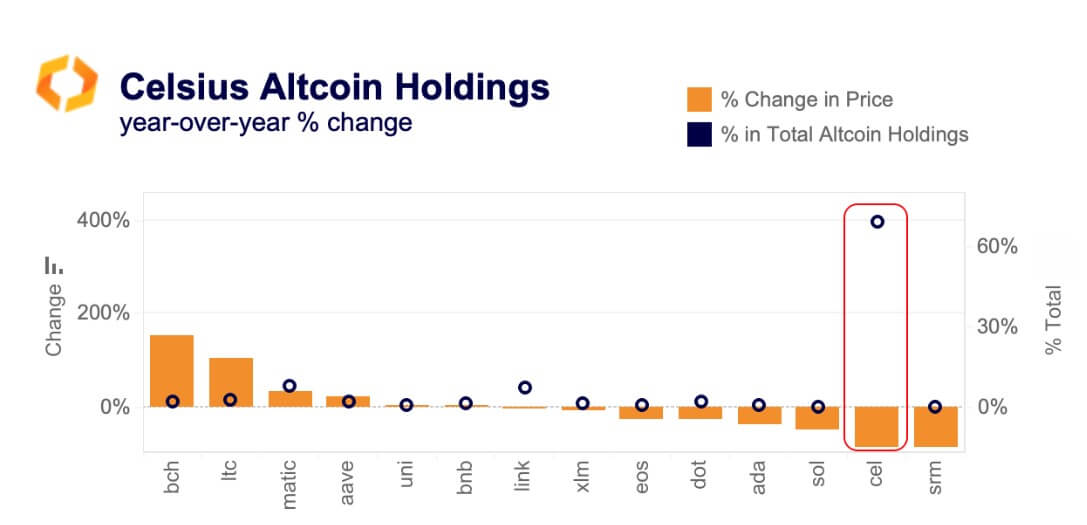
"There is virtually no liquidity for CEL as measured by market depth, which has collapsed to just $30k, concentrated mostly on OKX and Bybit," Kaiko asserts. A market depth of only $30,000 indicates an extremely thin market, meaning even minor selling pressure could trigger catastrophic price drops. This lack of liquidity for the company’s largest altcoin holding suggests that any attempt to liquidate it could be extremely damaging, potentially rendering a substantial portion of the holdings unsellable without incurring massive losses.
The decline in the CEL token’s value since Celsius filed for bankruptcy is a testament to this illiquidity and waning investor interest. The token, which once traded at over $8 in 2021, has since fallen to under $1, reflecting the diminished prospects and confidence surrounding the company and its native asset.
Broader Market Implications and Potential Scenarios
The impending liquidation of Celsius’s altcoin holdings carries several potential implications for the broader cryptocurrency market:
- Increased Volatility: A large volume of altcoins entering the market, particularly those with low liquidity, can lead to increased price volatility across the board. This could spook investors and lead to further sell-offs, especially if the liquidations are perceived as a sign of distress within the crypto ecosystem.
- Downward Pressure on Altcoin Prices: The most direct impact will be on the prices of the specific altcoins that Celsius holds in significant quantities. As these assets are sold, their prices are likely to fall, creating a domino effect on other related cryptocurrencies and the broader altcoin market.
- Impact on Bitcoin and Ethereum: While Celsius plans to convert altcoins into BTC and ETH, the net effect on these major cryptocurrencies is complex. On one hand, increased demand from Celsius could provide some support. On the other hand, if the overall market sentiment turns negative due to altcoin liquidations, even BTC and ETH could face downward pressure as investors seek safer assets or exit the market entirely.
- Regulatory Scrutiny: The ongoing fallout from Celsius’s collapse and its liquidation plans could further intensify regulatory scrutiny on crypto lending platforms and the broader digital asset industry. This could lead to stricter regulations and compliance requirements, potentially impacting innovation and market participation.
- Investor Confidence: The successful and orderly resolution of Celsius’s bankruptcy proceedings is crucial for restoring investor confidence in the crypto market. However, a chaotic or highly damaging liquidation process could further erode trust and deter new investment.
Future Outlook and Expert Commentary
The timeline for the full liquidation of Celsius’s altcoin holdings remains uncertain, contingent on court approvals, market conditions, and the efficiency of the chosen liquidation mechanisms. Industry observers are closely watching the developments, with many echoing Kaiko’s concerns about potential market pressure.
"The sheer volume of assets Celsius holds, combined with the declining liquidity in many altcoin markets, creates a challenging scenario," commented a senior market analyst at a prominent crypto research firm, who requested anonymity due to the sensitive nature of ongoing market analysis. "The key will be how these liquidations are managed. If they are staggered and executed strategically, the impact might be mitigated. However, a fire sale, especially of illiquid assets like CEL, could be quite disruptive."
The situation underscores the interconnectedness of the crypto market and the significant impact that the failure of large centralized entities can have. As the industry matures, the focus increasingly shifts towards robust risk management, transparent operations, and regulatory clarity to prevent such large-scale collapses and their subsequent market ramifications. The outcome of Celsius’s liquidation will undoubtedly be a significant event to monitor for anyone invested in or observing the cryptocurrency landscape.