admin
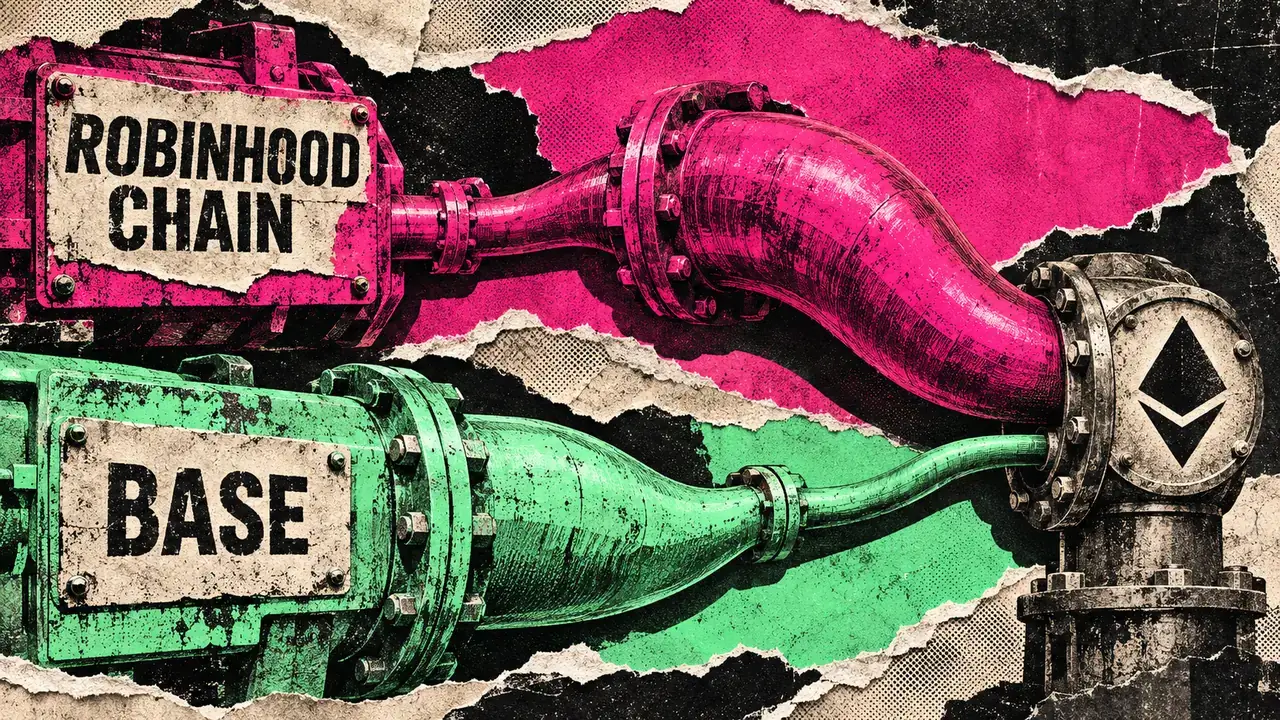
A recent analysis of Ethereum Layer-2 network economics has revealed a striking disparity in transaction settlement costs, with Robinhood Chain incurring significantly higher expenses on the Ethereum mainnet compared to Coinbase-backed Base, despite processing substantially less user activity and collecting far fewer fees. This divergence raises pertinent questions about the efficiency of different scaling solutions and the economic model that underpins Ethereum’s burgeoning Layer-2 ecosystem.
Core Findings: A Tale of Two Networks
Between October 23 and November 21, a 30-day period, Robinhood Chain spent approximately $25,700 on Ethereum settlement costs. In stark contrast, Base, a prominent Layer-2 solution developed by Coinbase, incurred a significantly lower settlement cost of $15,100 over the same timeframe. This represents a 70% higher expenditure for Robinhood Chain, according to data meticulously compiled by Castle Labs from growthepie.
The economic inefficiency becomes even more pronounced when examining user fee generation. Over the same 30-day period, Base generated a substantial $2.97 million in transaction fees from its users. This figure is nearly three times the $1.07 million collected by Robinhood Chain.
This imbalance has led to a critical ratio: Robinhood Chain spent approximately $2.41 on Ethereum settlement for every $100 it collected from its users. For Base, this ratio was a far more economical 51 cents for every $100 collected. This stark difference underscores a fundamental inefficiency in Robinhood Chain’s approach to settling transactions on the Ethereum mainnet.
Unpacking the Discrepancy: Blobs, Fees, and Data Capacity
The analysis further delves into the technical underpinnings of these costs, particularly concerning the use of Ethereum’s "blobs." Blobs are a relatively new feature on Ethereum designed to facilitate the posting of transaction data for Layer-2 networks at a lower cost, thereby enhancing scalability.
Intriguingly, Base consumed considerably more Ethereum data capacity during the observed period. According to data from Blobscan, Base posted approximately 350,000 blobs, nearly double the 182,000 blobs posted by Robinhood Chain. This higher data commitment meant Base spent about $4,478 on blob fees, while Robinhood Chain’s expenditure for blobs was $2,315.
However, the narrative shifts dramatically when excluding these blob fees. Robinhood Chain’s remaining settlement costs surged to approximately $23,379, more than double Base’s $10,602. These additional expenses are attributed to standard Ethereum transaction fees, which are incurred for posting data to the mainnet and for updating the settlement states of the Layer-2 networks. This suggests that while blobs offer a cost-saving mechanism for data availability, the underlying transaction fees for other essential settlement operations are disproportionately higher for Robinhood Chain.
A Wider Perspective: Ethereum’s Layer-2 Economic Landscape
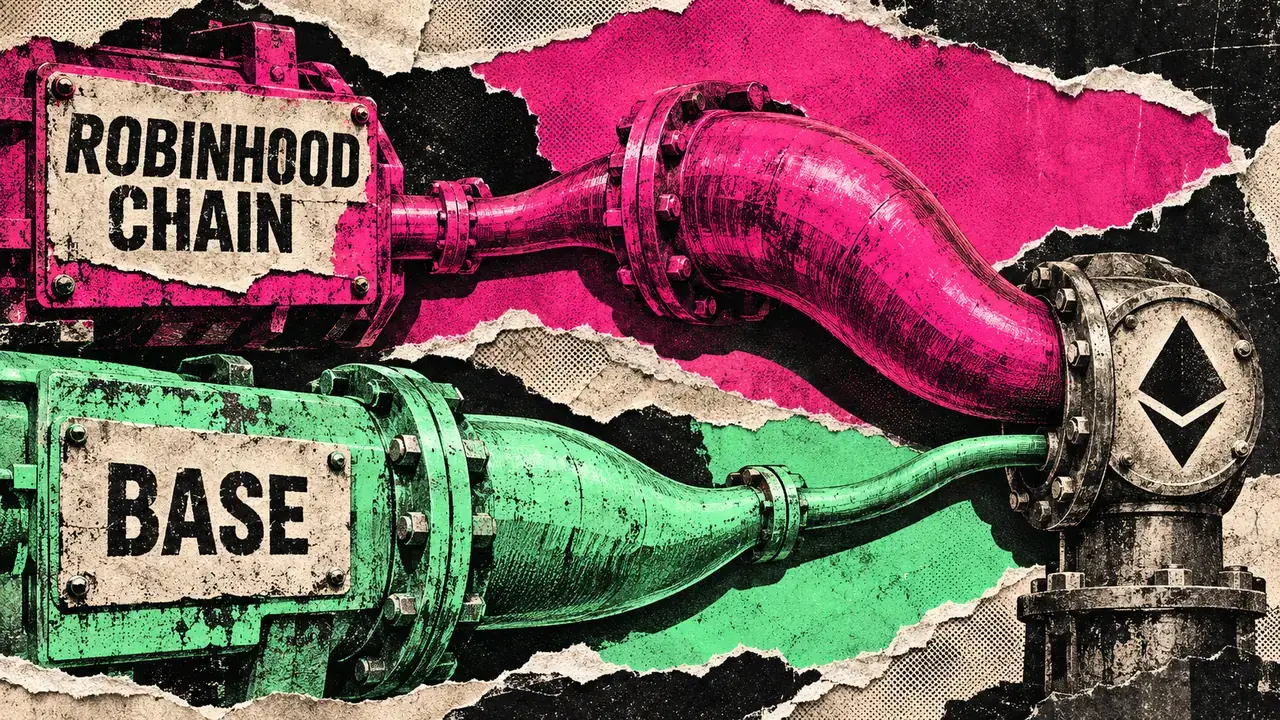
The findings regarding Robinhood Chain and Base are not isolated incidents but rather indicative of a broader economic trend within Ethereum’s Layer-2 ecosystem. The analysis highlights a significant imbalance where Layer-2 networks, designed to scale Ethereum, capture the vast majority of user-generated transaction fees while contributing a relatively small portion back to the Ethereum mainnet for the security and infrastructure they leverage.
Across all tracked Ethereum Layer-2 networks during the 30 days ending November 21, users collectively paid approximately $5 million in fees. In return, these networks paid Ethereum a mere $74,500 for settlement and data availability services. This translates to Ethereum capturing roughly 1.5% of the total user fees generated by its scaling solutions. After covering Ethereum settlement expenses, the Layer-2 networks are left with approximately 98.5% of the fees, before accounting for their own operational costs and any revenue-sharing agreements.
Robinhood Chain and Base alone accounted for a significant portion of this user-generated fee revenue, totaling around $4.04 million. Yet, their combined payment to Ethereum for settlement and data availability was only $40,800. This further accentuates the economic dynamic: Layer-2 networks are the primary beneficiaries of user activity, while Ethereum serves as a cost-effective settlement layer.
This distribution is a direct consequence of Ethereum’s scaling architecture. Layer-2 networks are engineered to handle the bulk of user transactions, thereby collecting the associated fees. Ethereum, in turn, provides the crucial services of final settlement and data availability at a comparatively low cost. For Ethereum, these payments contribute to the network’s fee-burning mechanisms and provide income for validators, but these contributions remain modest when measured against the immense economic activity occurring on its scaling networks.
Implications and Future Considerations
The November figures bring two critical questions to the forefront of discussions surrounding Ethereum’s scalability and its economic model.
Firstly, the substantial cost disadvantage faced by Robinhood Chain relative to Base necessitates an examination of its operational efficiency. Can Robinhood Chain optimize its settlement processes to reduce its Ethereum expenditures and align more closely with the economic efficiency demonstrated by Base? This could involve exploring alternative data availability solutions, optimizing transaction batching, or potentially leveraging newer Ethereum upgrades as they become available. The ability to narrow this settlement-cost gap will be crucial for Robinhood Chain’s long-term economic viability and its competitiveness within the burgeoning Layer-2 landscape.
Secondly, the data raises questions about Ethereum’s potential to capture a greater share of the revenue generated by its rapidly expanding Layer-2 ecosystem. As Layer-2 networks continue to absorb the majority of user activity, the current economic model, where Ethereum receives a small fraction of fees, might warrant re-evaluation. While the current system fosters Layer-2 innovation and adoption, there is an ongoing debate about how to ensure that the base layer of Ethereum benefits more equitably from the immense value being created on its scaling solutions. Future Ethereum upgrades, such as further enhancements to data availability solutions or novel fee mechanisms, could play a role in recalibrating this economic balance.
The ongoing evolution of Ethereum’s scaling solutions, exemplified by the contrasting performance of Robinhood Chain and Base, underscores the dynamic and complex nature of decentralized technology. As these networks mature, continuous analysis and adaptation will be essential to ensure a sustainable and prosperous future for the entire Ethereum ecosystem. The efficiency of settlement, the cost of data availability, and the distribution of economic value are all critical factors that will shape the trajectory of blockchain technology in the years to come.