Dwi Wanna
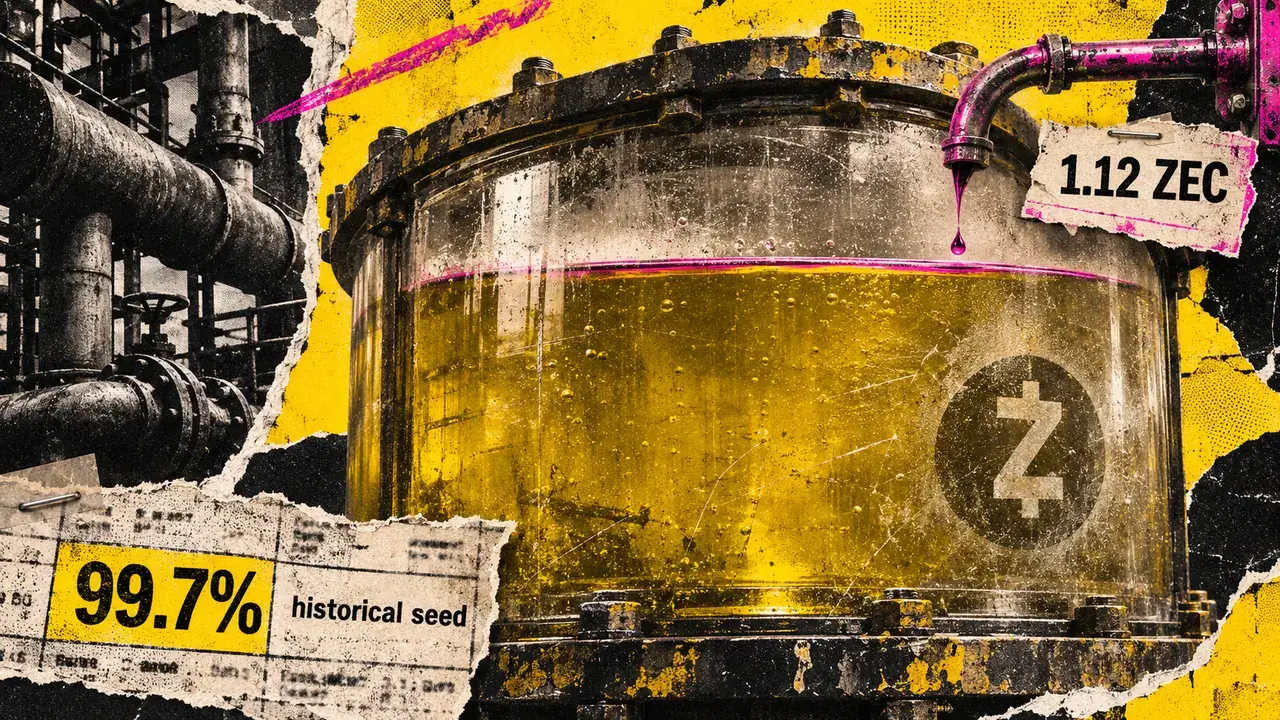
The activation of Zcash’s Network Upgrade 7 (NU7) has officially inaugurated the Network Sustainability Mechanism (NSM), a strategic protocol shift designed to bolster the blockchain’s long-term security through the recycling of transaction fees. Early mainnet observations conducted on November 7, 2026, reveal that the nascent reserve is currently dominated by inherited value rather than new contributions. According to data retrieved from the Zakura NU7 monitoring dashboard at 05:08:38 UTC, the NSM balance stood at 369.7 ZEC at block height 3,547,068. Of this total, approximately 99.7% is comprised of a "historical seed" consisting of previously unclaimed subsidies and fees, leaving only 1.12 ZEC—roughly 0.3% of the balance—as value accumulated under the newly implemented fee-sharing rules.
This initial snapshot provides a critical baseline for assessing Zcash’s transition from a pure block-reward model to a hybrid system that leverages transaction demand to sustain network security. As the protocol navigates the complexities of diminishing block subsidies, the performance of the NSM will serve as a primary indicator of the network’s ability to fund its own defense in the decades to come.
The Architecture of the Network Sustainability Mechanism
The NSM is governed by a series of Zcash Improvement Proposals (ZIPs) that collectively redefine how value flows through the network. At the core of this transition is ZIP 237, which provides the formal specification for the reserve’s accounting. This ZIP establishes the "historical seed" at a fixed value of 368.58445520 ZEC. This figure represents the sum of block subsidies and transaction fees that miners historically chose not to claim in coinbase transactions prior to the NU6 upgrade. By bringing this unclaimed value into the NSM, the protocol ensures a positive starting balance, providing a buffer before the mechanism begins its reissuance phase.
The operational mechanics of fee accumulation are defined by ZIP 235. Under these rules, 60% of the aggregate transaction fees in each block are directed into the NSM reserve. The remaining 40% is awarded to the miner who mines the block. To ensure precision in consensus accounting, the 60% contribution is rounded down to the nearest whole zatoshi—the smallest unit of Zcash, equivalent to 0.00000001 ZEC. Any remainder from this rounding, along with the 40% share, is retained by the miner. This structure marks a significant departure from the traditional Proof-of-Work model where miners typically claim 100% of transaction fees, signaling a shift toward prioritizing collective long-term network stability over immediate individual miner revenue.
Chronology of the NU7 Deployment
The road to NU7 was marked by extensive community debate and technical audits, reflecting the high stakes involved in altering Zcash’s economic incentives. The deployment specification, ZIP 259, set the mainnet activation at block height 3,543,405. The observation on November 7, 2026, occurred just 3,663 blocks after activation, explaining the relatively low amount of newly accumulated fees (1.12 ZEC) compared to the historical seed.
The timeline for the NSM is divided into two distinct phases: the accumulation phase and the reissuance phase.
- Accumulation Phase (Current): Starting from block 3,543,405, the network began sequestering 60% of fees into the reserve. During this period, the NSM balance grows, but no funds are distributed back to the network.
- Reissuance Phase (Future): According to the parameters set in ZIP 259, the reissuance of the reserve balance will not begin until block 8,939,664.
This multi-year delay is intentional. It allows the reserve to build a substantial capital base from transaction activity before it begins supplementing the block subsidy. Based on current block times, the reissuance phase is not expected to commence for several years, ensuring that the mechanism does not prematurely exhaust its resources before the network truly requires the additional support.
Technical Accounting and Exclusions
The current implementation of the NSM is a streamlined version of earlier, more complex proposals. ZIP 259 specifically excludes certain mechanisms that were originally discussed during the development of the sustainability framework. Notably, ZIP 233, which proposed a separate "removal" mechanism for certain types of value, and ZIP 234, which detailed an alternative issuance design, were not included in the NU7 deployment.
By focusing solely on ZIP 237’s fee-recycling model, the Zcash community has opted for a more conservative and predictable accounting method. The NSM balance is treated as public consensus accounting for value that exists outside the circulating supply. This "out-of-circulation" status is crucial for maintaining the integrity of Zcash’s 21-million-coin cap. The funds held in the NSM are not "burned" in the traditional sense; rather, they are held in a protocol-controlled state, awaiting distribution according to future subsidy rules.
Security Funding and the Role of Funding Streams
The long-term viability of Zcash depends on its ability to fund both network security (miners and validators) and ongoing development. The NSM is designed to integrate seamlessly with Zcash’s existing "funding streams," which allocate a portion of the block reward to entities like the Electric Coin Co. (ECC), the Zcash Foundation, and the Zcash Community Grants (ZCG) program.
Once the reissuance phase begins at block 8,939,664, the additional subsidy drawn from the NSM will be added to the scheduled block subsidy. The prescribed percentages for funding streams will then be applied to this combined total. For example, if a funding stream is set to receive 20% of the block reward, it will receive 20% of the sum of the standard halving-based subsidy plus the NSM-derived supplement. This ensures that as the standard block subsidy decreases through the halving process, the NSM can potentially offset the reduction, maintaining a consistent level of support for both security and development.
Quantitative Analysis of Future Payouts
To illustrate the potential impact of the NSM, ZIP 237 provides a hypothetical scenario. If 100,000 ZEC were removed from circulation and held in the reserve, the post-NU7 formula would initially contribute approximately 0.01375 ZEC per block to the total subsidy. While this may seem modest, the power of the mechanism lies in its gradual nature. The reissuance rule specifies that each block will add a small fraction of the preceding reserve balance to the subsidy, rounded up to the nearest zatoshi.
This "smoothing" effect is intended to prevent the "security cliff" that many Proof-of-Work blockchains fear—a scenario where the block reward drops so low that miners no longer have a financial incentive to secure the network. By recycling fees, Zcash creates a self-sustaining loop: higher network usage leads to a larger reserve, which in turn provides higher security subsidies during periods of lower block rewards.
Community and Expert Reactions
While official statements from the Zcash Foundation emphasize the technical success of the NU7 activation, independent analysts have pointed to the 1.12 ZEC accumulation as a sobering reminder of the challenges ahead. "The mechanism is now technically sound and active, which is a massive achievement for the protocol’s governance," noted one blockchain researcher. "However, the data shows that the ‘sustainability’ part of the Network Sustainability Mechanism is entirely dependent on future fee demand. Without a significant increase in transaction volume or fee density, the reserve will rely almost entirely on its historical seed for the foreseeable future."
Miners have expressed a cautious but generally cooperative stance. Although they are now forfeiting 60% of their transaction fees, the current low volume of fees means the impact on their immediate bottom line is negligible. The trade-off—sacrificing a small portion of today’s fees for a more secure and valuable network in the future—is a proposition that the majority of the Zcash mining community has accepted, as evidenced by the smooth transition during the NU7 hard fork.
Broader Implications for the Privacy Coin Landscape
Zcash’s move toward a sustainable fee-recycling model sets a precedent in the privacy coin sector. As regulatory pressures mount and the "halving" cycles of major cryptocurrencies like Bitcoin and Zcash continue to reduce primary issuance, the question of long-term economic sustainability has moved to the forefront of blockchain research.
The NSM represents a middle ground between the fixed-supply model of Bitcoin and the "tail emission" model adopted by Monero. By recycling existing supply rather than creating new coins indefinitely, Zcash attempts to preserve its scarcity while still providing a "floor" for security funding. The success of this experiment will be closely watched by other projects facing similar subsidy-decline issues.
Conclusion: The Road to Block 8,939,664
The observation of the NSM balance on November 7, 2026, marks the end of the beginning for Zcash’s new economic era. The 1.12 ZEC in accumulated fees is a modest start, but it represents the first steps toward a self-funding future. The primary challenge for the Zcash ecosystem now shifts from protocol engineering to driving adoption.
The utility of the NSM is directly proportional to the usage of the network. For the reserve to grow into a formidable security fund, Zcash must see increased demand for its shielded transaction capabilities. As the countdown to the reissuance phase at block 8,939,664 continues, the focus will remain on whether the 60% fee allocation can turn the 0.3% accumulation into a substantial pillar of network defense. For now, the "inherited value" of the historical seed provides the necessary bridge, but the network’s ultimate security will be written by the users who pay the fees of tomorrow.