admin
admin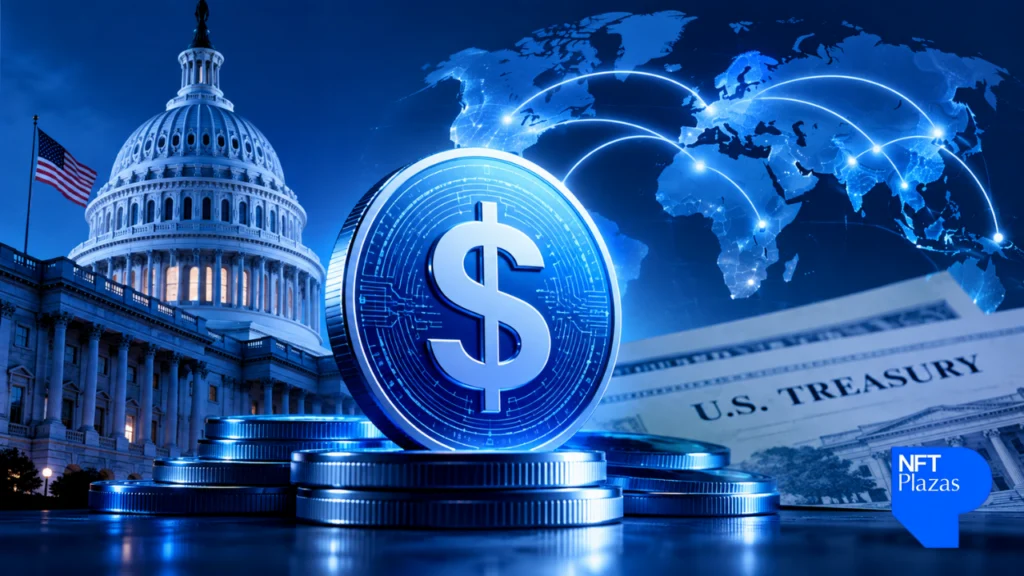
The initiative, as detailed in reports, contemplates active collaboration between the U.S. Treasury Department, the State Department, and the U.S. International Development Finance Corporation (DFC). This multi-agency approach signals a comprehensive governmental effort to encourage the adoption of dollar-backed stablecoins in foreign markets, particularly in regions where traditional banking systems are inefficient, costly, or less accessible. The overarching goals are explicitly clear: to solidify the U.S. dollar’s status as the world’s leading reserve currency and to foster additional, consistent demand for U.S. Treasury securities, which underpin American fiscal stability.
A Strategic Pivot: Reinforcing Dollar Hegemony in the Digital Age
The U.S. dollar has long been the undisputed anchor of the global financial system, serving as the primary currency for international trade, foreign exchange transactions, and central bank reserves. Its dominance, cemented by historical events like the Bretton Woods Agreement and the petrodollar system, provides the U.S. with significant geopolitical and economic advantages, often referred to as "exorbitant privilege." However, the advent of digital currencies and geopolitical shifts has prompted major economies, including China and the European Union, to explore alternative digital payment systems and central bank digital currencies (CBDCs). This global race for digital financial infrastructure has spurred Washington to innovate, seeking new avenues to maintain its financial preeminence.
Stablecoins, designed to maintain a stable value relative to a fiat currency like the U.S. dollar, represent a unique opportunity in this evolving landscape. Unlike volatile cryptocurrencies such as Bitcoin, stablecoins are intended to function as digital cash, enabling rapid, low-cost transfers of dollar-denominated value across blockchain networks. The vast majority of the stablecoin market, which currently boasts a combined market capitalization exceeding $150 billion, is dominated by dollar-linked tokens. Tether’s USDT and Circle’s USDC are the two largest players, collectively accounting for the bulk of this value. Their utility has expanded significantly beyond speculative crypto trading, increasingly facilitating cross-border transfers, remittances, and payments, especially in regions underserved by traditional financial institutions.
The Mechanics of Influence: Stablecoins and Treasury Demand
A critical aspect of the proposed U.S. strategy lies in the intrinsic link between stablecoin growth and demand for U.S. government debt. To maintain their dollar peg and inspire user confidence, stablecoin issuers are required to hold reserves equivalent to the value of the tokens they issue. These reserves typically consist of highly liquid assets, predominantly cash, bank deposits, and crucially, short-term U.S. Treasury securities. As the supply and adoption of dollar-backed stablecoins expand globally, the demand for these underlying reserve assets, particularly U.S. Treasuries, naturally increases.
This relationship has already made stablecoin issuers significant players in the U.S. government debt market. Reports indicate that major stablecoin issuers hold tens of billions of dollars in short-term U.S. Treasury bills, placing them among the ranks of some major sovereign investors. This growing demand provides a stable, non-speculative buyer for U.S. debt, potentially offering a buffer against market volatility and contributing to lower borrowing costs for the U.S. government. Treasury Secretary Scott Bessent has reportedly highlighted stablecoins as a powerful tool for reinforcing the dollar’s global position, acknowledging their potential to extend the dollar’s reach in an increasingly digital world. The dollar already accounts for nearly 90% of foreign-exchange transactions, and stablecoins could provide a novel digital layer to this existing dominance.
The GENIUS Act: A Regulatory Foundation for Global Expansion
The proposed overseas push is built upon a significant legislative milestone: the passage of the GENIUS Act (Generating New Innovations in U.S. Stablecoins Act), signed into law by President Donald Trump in 2025. This landmark federal legislation established a clear regulatory framework for "payment stablecoins," mandating that issuers maintain robust reserves fully backing their tokens. Crucially, eligible reserve assets under the GENIUS Act explicitly include U.S. dollars and short-term Treasury securities.
The GENIUS Act provides the necessary regulatory clarity and confidence for expanding dollar-backed stablecoins both domestically and internationally. By establishing clear rules and reserve requirements, the law aims to mitigate risks associated with stablecoin stability and consumer protection, thereby strengthening trust in their ability to maintain their dollar peg. For Washington, this framework is more than just regulation; it’s a strategic enabler, offering a credible foundation for promoting these digital instruments as a safe and reliable form of digital dollarization. This legal certainty could encourage broader adoption, giving the U.S. an innovative channel to extend the dollar’s influence beyond traditional banking corridors and SWIFT networks. If stablecoins become widely adopted for international commerce, remittances, and digital payments, individuals and businesses abroad could gain direct, blockchain-based access to dollar-denominated financial instruments, potentially embedding the dollar more deeply into everyday transactions outside the United States.
Statements and Industry Perspectives

While official statements on the specific overseas promotion plan are pending, the inferred positions of key stakeholders are clear. Treasury Secretary Scott Bessent’s reported comments underscore the administration’s recognition of stablecoins as a strategic asset. Hypothetically, he might articulate that "stablecoins represent a modern evolution of the dollar’s global role, providing efficient, transparent, and secure rails for international commerce that complement our traditional financial infrastructure." Industry leaders from companies like Circle and Tether would likely welcome such governmental backing. A representative from Circle, for instance, might state, "The GENIUS Act provided essential clarity, and a government-led initiative to promote dollar stablecoins globally would be a monumental step towards financial inclusion and a more efficient global economy, solidifying the U.S.’s leadership in digital finance." This collaboration between government and private innovation is seen as crucial for realizing the full potential of stablecoins.
Global Implications: Digital Dollarization and Emerging Market Risks
While the potential benefits for U.S. influence and Treasury demand are evident, the widespread adoption of dollar-backed stablecoins in foreign markets presents a complex set of challenges, particularly for emerging economies. Both the International Monetary Fund (IMF) and the Bank for International Settlements (BIS) have issued strong warnings regarding these risks.
The IMF has cautioned that dollar-backed stablecoins could significantly accelerate "currency substitution" in countries struggling with weak domestic currencies, high inflation, or limited access to foreign exchange. Easier and faster access to digital dollars via blockchain networks could incentivize households and businesses to shift their savings and transactional activities away from local currencies, exacerbating existing economic vulnerabilities. This pressure could intensify dramatically during periods of financial instability, leading to rapid capital flight. Because stablecoins can traverse blockchain networks with reduced reliance on conventional banking channels, monitoring and controlling such flows becomes significantly harder for central banks, potentially undermining their monetary policy autonomy and financial stability efforts.
The BIS has echoed these concerns, emphasizing that widespread use of dollar-denominated stablecoins could amplify financial vulnerabilities in emerging markets and further entrench the dollar’s dominance, making it harder for these nations to develop independent monetary strategies. Critics in emerging markets might view this initiative as a form of "digital colonialism," where the U.S. extends its financial power without fully addressing the potential disruption to local economies. An emerging market central bank governor might express apprehension, stating, "While we appreciate efficiency gains, unrestricted digital dollarization could erode our monetary sovereignty and complicate our efforts to manage inflation and stimulate local economic growth."
However, it is also important to acknowledge the potential benefits for emerging markets. Stablecoins offer the promise of making cross-border transfers faster, significantly reducing transaction costs that often burden migrant workers and small businesses, and providing access to dollar liquidity where traditional financial services are expensive, slow, or altogether unavailable. For populations in countries with hyperinflation or unstable local currencies, dollar-backed stablecoins could serve as a vital hedge, preserving savings and facilitating international trade. The ultimate impact will likely be highly dependent on each country’s specific monetary stability, the robustness of its existing financial infrastructure, and its current level of dollarization.
A Race for Digital Financial Infrastructure: U.S. vs. Global Competitors
The U.S. initiative to promote dollar-backed stablecoins is not occurring in a vacuum; it is part of a broader global competition among major economies to shape the future of digital payments and financial infrastructure. China, for instance, has been a pioneer in this space, actively participating in Project mBridge, a multi-jurisdictional platform for cross-border payments built around central bank digital currencies (CBDCs) and distributed-ledger technology. This project aims to create a more efficient and less dollar-reliant system for international settlements. Similarly, Europe is advancing its own digital strategy through the development of a digital euro and the establishment of infrastructure to connect tokenized financial markets with central bank money.
This emerging competition transcends mere technological innovation; it is fundamentally about which currencies, and by extension, which economic powers, will become embedded in the foundational networks through which global money moves in the digital era. For the United States, dollar-backed stablecoins offer a potentially powerful and agile combination: expanding the dollar’s digital reach without requiring the direct issuance of a U.S. CBDC, while simultaneously creating another significant source of demand for its Treasury securities. This strategy allows the U.S. to leverage private sector innovation and existing market dynamics rather than relying solely on a government-led digital currency.
Looking Ahead: Navigating a Complex Digital Future
If Washington proceeds with this ambitious initiative, it will mark a significant turning point in the evolution of global finance. The success of the plan will hinge on several factors: the ability to forge effective public-private partnerships, navigate complex international regulatory landscapes, and address the legitimate concerns of emerging economies regarding financial stability and monetary sovereignty.
The initiative presents a profound trade-off for emerging markets: the undeniable advantages of more efficient international payments, lower transaction costs, and greater access to stable dollar liquidity versus the potential for increased pressure on domestic currencies and diminished monetary policy independence. The outcome of this strategic push could determine whether stablecoins remain primarily a tool within the cryptocurrency ecosystem or whether they evolve into a central component of the global financial system, with the U.S. dollar firmly at its core, digitally reasserting its dominance for decades to come. The world watches as the U.S. charts a course to embed its currency in the very fabric of future digital commerce.