Dwi Wanna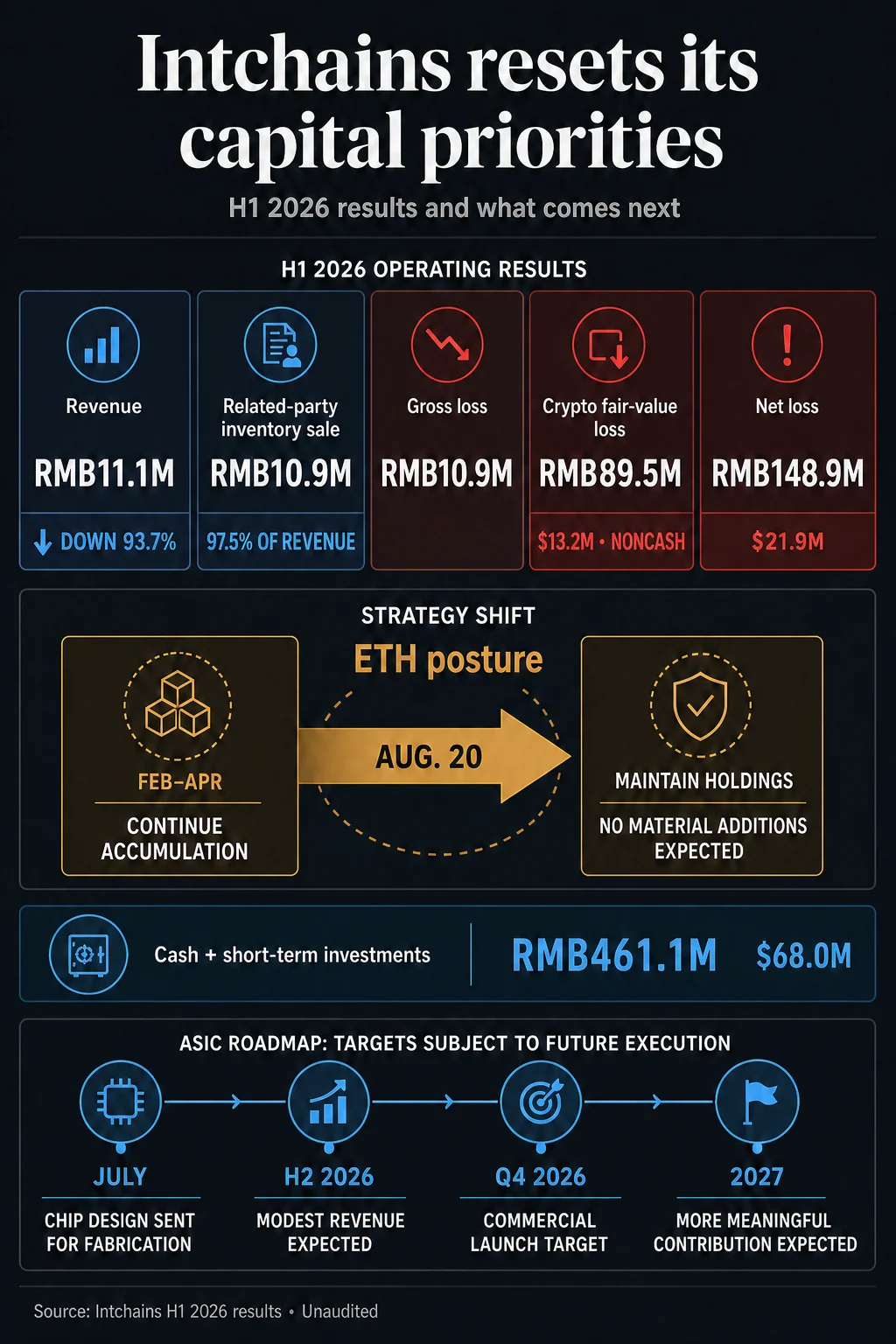
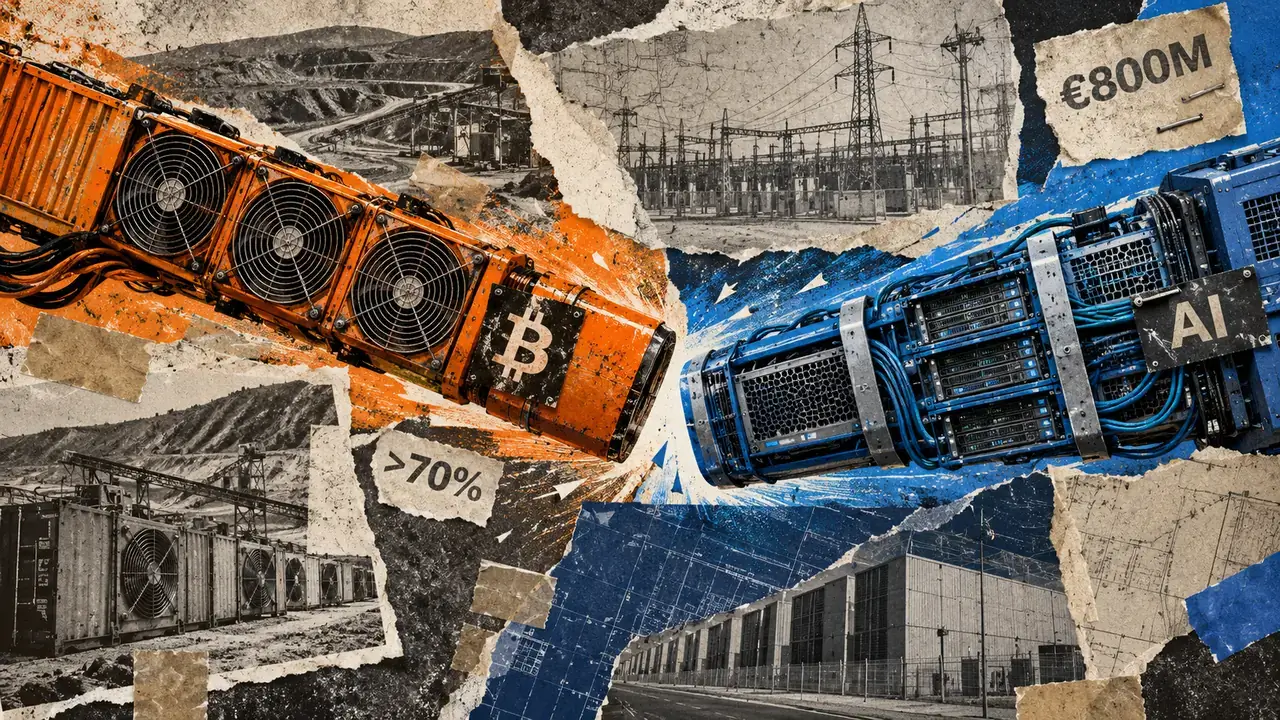
Intchains Group Limited, a prominent provider of integrated circuit (IC) solutions and high-performance computing hardware, has announced a dramatic shift in its corporate strategy following a period of extreme financial volatility and shifting regulatory landscapes. The Nasdaq-listed company, which had previously positioned itself as an aggressive accumulator of Ethereum (ETH), is now halting additional cryptocurrency purchases to focus its capital on the development of next-generation mining hardware and the burgeoning field of artificial intelligence (AI). This pivot comes in the wake of a fiscal report that revealed a staggering 94% collapse in first-half revenue for 2026, signaling a moment of existential transition for the firm as it attempts to navigate a challenging altcoin mining market and restrictive domestic policies in China.
A Fiscal Crisis: Dissecting the 94% Revenue Collapse
The scale of the financial downturn for Intchains Group is underscored by its most recent earnings report, released on August 20, 2026. The company reported that its revenue for the first half of the year plummeted to just RMB 11.1 million (approximately $1.6 million). To put this figure in perspective, the company generated RMB 175.6 million during the same period in 2025. This precipitous drop highlights the near-total evaporation of demand for the company’s core product line: application-specific integrated circuit (ASIC) mining machines designed for various altcoins.
A closer inspection of the revenue figures reveals an even more precarious situation for the firm’s core operations. Of the RMB 11.1 million reported, nearly the entire sum—RMB 10.9 million—was derived from a one-time sale of non-core chip inventory to a related party. This suggests that the company’s primary sales to external customers in the mining sector have effectively ground to a halt. The cost of revenue further exacerbated the situation, reaching RMB 22.1 million. This figure, which is double the actual revenue generated, was driven largely by inventory impairments. As the market for mining hardware softened and selling prices fell, Intchains was forced to write down the value of its excess mining machine inventory, resulting in a gross loss.
The bottom line for the first half of 2026 was a net loss of RMB 148.9 million ($21.9 million). This stands in stark contrast to the RMB 4.3 million profit recorded in the first half of 2025. While operational challenges played a significant role, the company’s balance sheet was also battered by the volatility of the cryptocurrency market itself. A significant decline in the price of Ethereum led to a fair-value loss of RMB 89.5 million ($13.2 million) on the company’s digital asset holdings.
The Strategic Reversal: From Ethereum Accumulator to AI Aspirant
The decision to cease "material additional accumulation" of Ethereum represents a sharp 180-degree turn from the strategy Intchains articulated earlier this year. In February 2026, the company had publicly committed to a dollar-cost-averaging (DCA) strategy, intended to steadily build a massive treasury of ETH. By April, Chief Executive Officer Qiang Ding had doubled down on this sentiment, stating that the firm would continue to make "prudent and opportunistic" purchases of the second-largest cryptocurrency by market capitalization.
However, the combination of a core business slowdown and the negative impact of ETH price fluctuations on the corporate balance sheet has forced a re-evaluation. As of June 30, 2026, Intchains held approximately 9,176 units of ETH-based cryptocurrencies, valued at roughly RMB 98.1 million. Rather than continuing to buy, the company now intends to hold its current treasury and focus on maximizing yields through staking.
As of late August, the company had allocated 4,556 ETH to staking protocols. This includes 3,556 ETH deposited through its proprietary Goldshell platform, which are currently awaiting validator activation, and an additional 1,000 ETH staked through the institutional platform FalconX. By pivoting away from active accumulation toward passive yield generation, Intchains hopes to preserve its remaining capital for research and development (R&D) in sectors with higher growth potential.
Regulatory Headwinds: The Impact of China’s Mining Restrictions
The collapse in Intchains’ hardware sales cannot be viewed in isolation from the regulatory environment in China. In February 2026, Chinese regulators introduced stringent new restrictions on the domestic sale of mining equipment. These regulations barred manufacturers from providing sales, maintenance, or related services to entities within mainland China, effectively closing off one of the world’s historically largest markets for ASIC hardware.
In response to these measures, Intchains ceased accepting new orders from mainland China. This regulatory wall forced the company to look toward international markets, but the transition has been hampered by broader market conditions and the transition of many blockchain networks toward more energy-efficient consensus mechanisms. The "crypto winter" of 2026, characterized by lower mining profitability for altcoins, further dampened international demand for the specialized chips that Intchains produces.
The Path to Recovery: Next-Generation ASICs and AI Expansion
To rebuild its revenue base, Intchains is betting heavily on two primary pillars: a technological upgrade of its mining hardware and an entry into the artificial intelligence sector.
The company recently reached a significant milestone with the "tape-out" of its next-generation mining ASIC in July 2026. In semiconductor manufacturing, a tape-out is the final stage of the design cycle before a chip is sent for sample production and validation. This new chip is designed to offer significantly higher efficiency and hashing power than its predecessors, which Intchains hopes will make it competitive in a global market where operational costs (electricity) are the primary concern for miners.
CEO Qiang Ding expressed optimism regarding the new hardware, noting that while it may only contribute modestly to the second half of 2026, it is expected to be a "meaningful driver" of growth in 2027. "It is a core part of our strategy to build a more resilient, diversified revenue base," Ding stated. The goal is to provide a platform that improves operating efficiency for customers while solidifying Intchains’ position as a leader in purpose-built mining hardware.
Parallel to its hardware efforts, Intchains is actively exploring opportunities in the AI space. This move follows a broader industry trend where high-performance computing (HPC) firms and former crypto miners are repurposing their expertise in chip design and data center management to serve the skyrocketing demand for AI processing power. While the company’s AI initiatives are currently in the early stages, Intchains has indicated that it is evaluating potential acquisitions and strategic partnerships. Detailed plans for the AI division are expected to be unveiled in 2027.

Liquidity as a Lifeline: Assessing the 12-Month Outlook
Despite the massive net loss and revenue drop, Intchains is not facing an immediate liquidity crisis. The company ended the first half of June with RMB 461.1 million (equivalent to approximately $68 million) in cash and short-term investments. Management has stated that this capital reserve is sufficient to fund the current ASIC development program internally and support all planned corporate activities for at least the next 12 months.
This cash cushion provides the company with a vital window of opportunity to execute its pivot. Unlike many of its competitors who may be burdened by high debt levels, Intchains’ relatively clean balance sheet allows it to pursue R&D and potential AI acquisitions without the immediate need for dilutive equity raises or high-interest loans.
Broader Market Implications and Analysis
The pivot of Intchains Group reflects a broader maturation and diversification within the crypto-hardware industry. The era of "pure-play" altcoin mining manufacturers appears to be evolving into a more complex landscape where hardware expertise must be applied to multiple sectors to survive market cycles.
- The Shift to AI: The decision to move into AI is a logical extension of Intchains’ core competency. The design of ASIC chips for mining is fundamentally about optimizing processing power for specific mathematical tasks. These skills are highly transferable to the development of AI accelerators and NPUs (Neural Processing Units). However, the AI hardware market is dominated by giants like NVIDIA and specialized startups with significant venture backing, meaning Intchains will face stiff competition.
- Ethereum as a Treasury Asset: By choosing to stake its remaining 9,176 ETH rather than selling it, Intchains is signaling long-term confidence in the value of the Ethereum network, even as it stops buying. The yield from staking (which typically ranges from 3% to 5% annually) provides a non-dilutive source of income that can help offset operational overhead while the company waits for its new ASIC to reach the market.
- The Survival of Altcoin Mining: The company’s continued investment in a new ASIC chip suggests it still sees a future for Proof-of-Work (PoW) altcoins. While Ethereum has moved to Proof-of-Stake, dozens of other networks continue to rely on specialized hardware. Intchains is banking on the idea that as older hardware becomes obsolete, miners will be forced to upgrade to more efficient chips like the one they are currently developing.
Conclusion: A High-Stakes Transformation
Intchains Group finds itself at a critical crossroads. The 94% revenue decline serves as a stark reminder of the risks inherent in the volatile cryptocurrency hardware market and the impact of shifting geopolitical regulations. However, with $68 million in cash and a new technological roadmap, the company is attempting to transform from a niche mining firm into a diversified high-performance computing entity.
The success of this pivot will depend on the commercial reception of its Q4 ASIC launch and the company’s ability to find a viable niche in the crowded AI sector. For investors, the next 12 months will be a period of intense scrutiny as Intchains attempts to prove that its "resilient, diversified revenue base" is more than just a corporate talking point, but a sustainable path back to profitability.